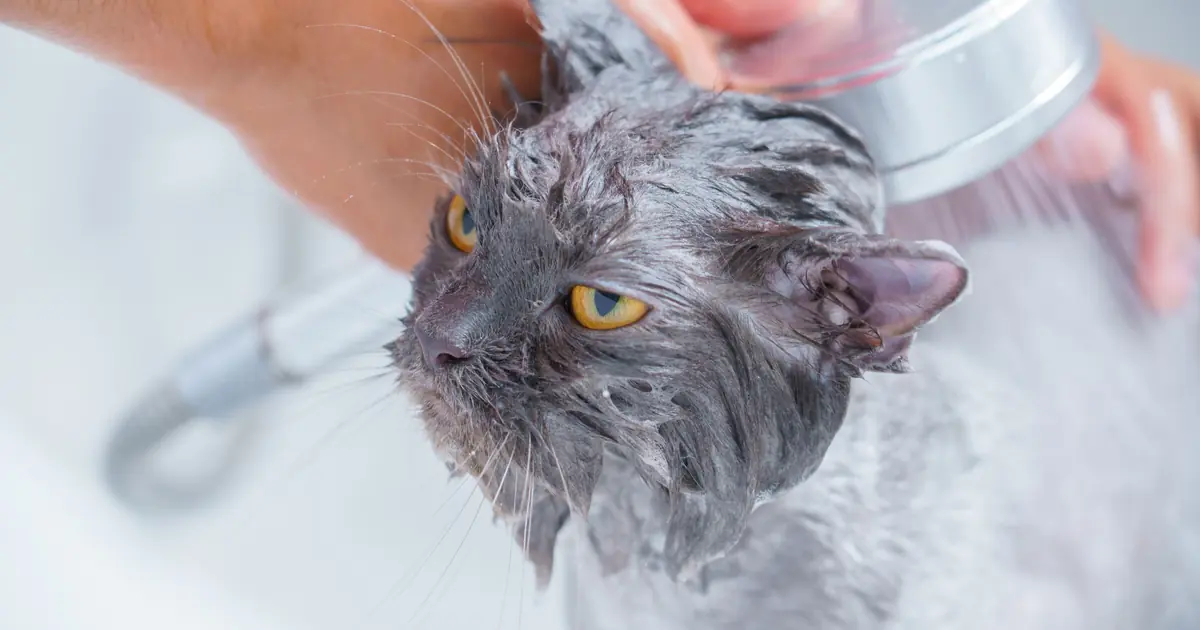
So there you are, cat in the tub, water running, and it hits you: you don’t actually have cat shampoo. Maybe the bottle’s empty. Maybe you never bought any because your cat has never needed a bath before now. Either way, your hand is hovering over your own shampoo, wondering if it’ll do in a pinch.
Don’t reach for it. And whatever you do, don’t grab the dog shampoo sitting next to it either. A wet, unhappy cat in your bathroom is stressful enough without adding the wrong soap into the mix. Here’s exactly what’s safe, what’s dangerous, and what to do if you’re stuck without cat shampoo right now.
- Cat-specific shampoo is the only soap made to match a cat’s skin pH, which is more alkaline than human skin.
- Human shampoo, soap, and dish soap can strip a cat’s natural oils and leave residue that the cat later ingests while grooming.
- Dog flea shampoos often contain permethrin, an insecticide that is highly toxic to cats and can be fatal even in small amounts.
- Dish soap like Dawn is sometimes used by vets for heavy grease or flea buildup, but it’s too drying for regular bathing.
- Most cats rarely need a bath at all since they groom themselves for hours every day.
What Soap Can You Actually Use to Wash a Cat?
The only soap you should use on a cat is a shampoo formulated specifically for cats. Cat shampoo is balanced for feline skin, free of ingredients that are toxic to cats, and gentle enough for a species that grooms itself constantly. Look for one labeled “for cats” on the bottle, not just “for pets” or “for cats and dogs.”
If you’re building a small grooming kit, it’s worth keeping a bottle of cat shampoo on hand before you actually need it. That way you’re never standing in the bathroom with a wet cat and no good options.
Why Can’t You Use Human Shampoo or Soap on a Cat?
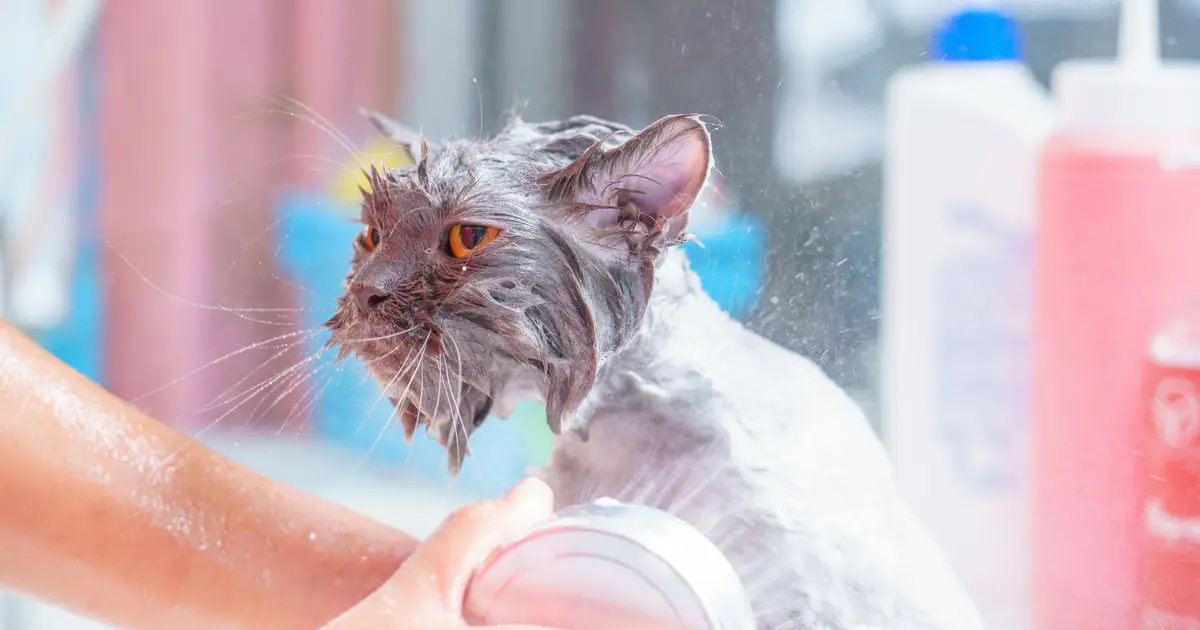
Human shampoo is the wrong pH for a cat’s skin, and that mismatch causes irritation. Human skin sits around a pH of 5.5, while a cat’s skin runs closer to 6 or 7, meaning it’s more alkaline. Shampoo formulated for our skin can strip a cat’s natural oils and disrupt the skin barrier that keeps bacteria and moisture in balance.
There’s a second problem too. Cats groom with their tongue, not a towel, so any leftover shampoo residue, fragrance, or dye gets licked off and swallowed. Human products often contain essential oils, sulfates, and perfumes that are fine for us but hard on a cat’s stomach and skin. Dryness, flaking, and itchy patches are the most common result, according to International Cat Care, which recommends cat-specific products for exactly this reason.
Why Is Dog Shampoo Never Safe for Cats?
Dog shampoo is never safe for a cat because many formulas, especially flea and tick shampoos, contain permethrin. Permethrin is an insecticide that’s perfectly fine for dogs but highly toxic to cats, and it can cause tremors, seizures, and death even in small amounts. This isn’t a minor sensitivity. It’s one of the most common and serious poisoning emergencies vets see in cats.
The danger comes down to how cats process chemicals. Cats lack a liver enzyme that dogs and humans have, so a dose that’s safe for a dog can build up to a toxic level in a cat’s body. The Pet Poison Helpline lists permethrin-based flea products among the top calls it gets about cat poisonings each year, and VCA Hospitals notes that even indirect exposure, like snuggling a freshly treated dog, can make a cat sick. Never use dog shampoo, dog flea treatment, or any product not labeled safe for cats.
What About Dish Soap Like Dawn, Can You Use That on a Cat?
Dish soap is sometimes used by vets and rescue groups for a specific job: cutting through heavy grease, motor oil, or a severe flea infestation on a cat’s coat, since it strips oil far more aggressively than a normal shampoo. That’s exactly why it’s not a good everyday choice. Dish soap will dry out a cat’s skin fast, and repeated use can leave the coat brittle and the skin flaky or irritated.
If your cat has gotten into something greasy or oily, call your vet first and ask what they recommend. A one-time supervised bath with a small amount of dish soap, followed by a thorough rinse, is very different from using it as a regular bathing routine. Save it for emergencies only, and never use scented or antibacterial dish soap, since the extra additives make irritation more likely.
What Should You Look for in a Safe Cat Shampoo?
A safe cat shampoo is unscented or lightly scented, free of essential oils, and labeled specifically for cats. Skip anything with tea tree oil, since it’s toxic to cats even in small concentrations, and be cautious with other essential oils too, since cats are especially sensitive to compounds their liver can’t process well.
Here’s a simple checklist:
- Labeled “for cats,” not just “for pets”
- Free of tea tree oil, pine oil, and other essential oils
- Fragrance-free or very lightly scented
- Medicated shampoos only if your vet prescribed them for a specific skin condition
- pH-balanced for feline skin
If you’re not sure which bottle to grab, our guide to the best cat shampoo options breaks down which formulas work well for sensitive skin, dandruff, and everyday use.
Are Waterless Shampoos and Cat Wipes a Good Alternative?
Waterless shampoo and cat wipes are a good alternative for cats who hate water or only need a quick freshen-up between real baths. These products let you clean a dirty patch of fur, a smelly spot, or an oily coat without wrestling your cat into a tub at all.
They’re not a substitute for a full bath if your cat has gotten into something seriously messy or has a heavy flea infestation, but for routine touch-ups they’re genuinely useful. If you want to try one, our roundup of the best waterless cat shampoo picks covers the formulas that actually work on cat fur. Baby wipes are not the same thing as cat wipes, and it’s worth checking whether baby wipes are safe for cats before you reach for what’s in the diaper bag.
Do Cats Even Need Baths in the First Place?
Most cats don’t need baths at all. Cats spend up to a third of their waking hours grooming themselves, using their rough tongue to clean their coat, spread natural oils, and keep themselves remarkably fresh without any help from you.
A bath is usually only necessary if your cat gets into something sticky, oily, or toxic, has a skin condition your vet is treating, or is a hairless breed like a Sphynx that can’t groom oil off its skin the way a haired cat can. Long-haired breeds may also need an occasional bath to manage mats and buildup. Outside of those situations, regular brushing does most of the work. For the basics on keeping your cat clean between baths, see our guide on how to groom a cat at home.
How Do You Safely Bathe a Cat If You Have To?
You can safely bathe a cat by using lukewarm water, a cat-specific shampoo, and a calm, quick approach that limits stress. Here’s how to do it step by step:
- Brush your cat first to remove loose fur and tangles before they get wet and matted.
- Place a non-slip mat in the sink or tub so your cat has something to grip.
- Fill the basin with a few inches of lukewarm water before your cat gets in, not a running faucet that might startle them.
- Wet the body gently with a cup, avoiding the face, ears, and eyes.
- Apply a small amount of cat shampoo and massage it in, then rinse thoroughly. Leftover shampoo is what causes most of the itching afterward.
- Wrap your cat in a towel right away and dry them somewhere warm and draft-free.
- Reward them with a treat and some quiet time afterward.
If your cat treats bath time like a full-body wrestling match, our guide on how to bathe a cat that hates water has techniques for making it far less dramatic for both of you.
| Soap or Shampoo Type | Safe for Cats? | Why |
|---|---|---|
| Cat-specific shampoo | Yes | Matched to feline skin pH, free of toxic ingredients |
| Human shampoo or body wash | No | Wrong pH, strips natural oils, often fragranced |
| Dish soap (Dawn) | Emergency use only, ask a vet | Cuts grease and oil but is very drying with regular use |
| Dog shampoo (including flea shampoo) | No, never | May contain permethrin, which is highly toxic to cats |
| Baby shampoo | Not recommended | Formulated for human skin pH and often fragranced |
A quick safety note: never use a dog flea product or dog shampoo on a cat, since permethrin exposure can cause tremors, seizures, and death, and it’s treated as a genuine emergency by vets. Also skip anything containing tea tree oil or other concentrated essential oils. This article is educational, not a substitute for veterinary advice. If your cat has been exposed to dog flea shampoo, a permethrin-based product, or any soap that isn’t labeled safe for cats and starts drooling, twitching, stumbling, or seems disoriented, call your vet or an animal poison control line immediately.
Q: Can I use baby shampoo on my cat?
Baby shampoo isn’t recommended for cats. It’s formulated for human skin pH, not feline skin, and even “tear-free” versions can leave a residue that irritates a cat’s skin once they groom it off. Stick with a shampoo labeled specifically for cats.
Q: Is Dawn dish soap safe for cats?
Dawn is sometimes used by vets and shelters for a single, supervised bath to cut through severe grease or flea infestations, but it’s not safe for regular use. It strips oils so aggressively that repeated washing can leave a cat’s skin dry, flaky, and irritated. Ask your vet before using it.
Q: What happens if I accidentally wash my cat with human shampoo?
A single accidental wash with human shampoo usually isn’t an emergency, but rinse thoroughly and watch for dryness, redness, or excessive scratching over the next day or two. If irritation shows up or your cat seems uncomfortable, call your vet.
Q: Can I use dog shampoo on my cat in an emergency?
No. Never use dog shampoo on a cat, even in an emergency, because many formulas contain permethrin, an insecticide that’s highly toxic to cats and can cause seizures or death. Use a cat-specific shampoo or plain lukewarm water instead until you can get real cat shampoo.
Q: What ingredients should I avoid in cat shampoo?
Avoid tea tree oil, pine oil, and other concentrated essential oils, along with heavy fragrances and dyes. Cats lack the liver enzymes to safely process many essential oil compounds, so even products marketed as “natural” can cause harm.
Q: How often should I bathe my cat?
Most healthy cats never need a routine bath since they groom themselves for several hours a day. Hairless breeds like the Sphynx may need a bath every one to two weeks to manage skin oil buildup, while other cats only need one if they get visibly dirty or a vet recommends it for a skin condition.
Q: Are waterless cat shampoos actually effective?
Waterless cat shampoos work well for light cleaning, odor control, and touch-ups between full baths, especially for cats who are afraid of water. They’re not strong enough for heavy grease, oil, or a serious flea problem, which still call for a real bath or a vet visit.
Q: What should I do if my cat shows signs of permethrin poisoning?
Call your vet or an animal poison control hotline immediately if your cat shows tremors, drooling, twitching, wobbliness, or seizures after contact with a dog flea product. Permethrin poisoning can become fatal quickly, so treat any of these signs as an emergency, not a wait-and-see situation.

Hello and welcome to The Ideal Cat!
We are some passionate cat owners from different professions. We love our cats and have a lot of experience in how to care for our pets. We are incredibly excited to share our knowledge, experience, and research with you. So you can take good care of your loving cat. We will answer most of the common questions about owning cats, taking care of them, etc. If you have any question contact with us. Thanks for visiting! Enjoy the content.
)