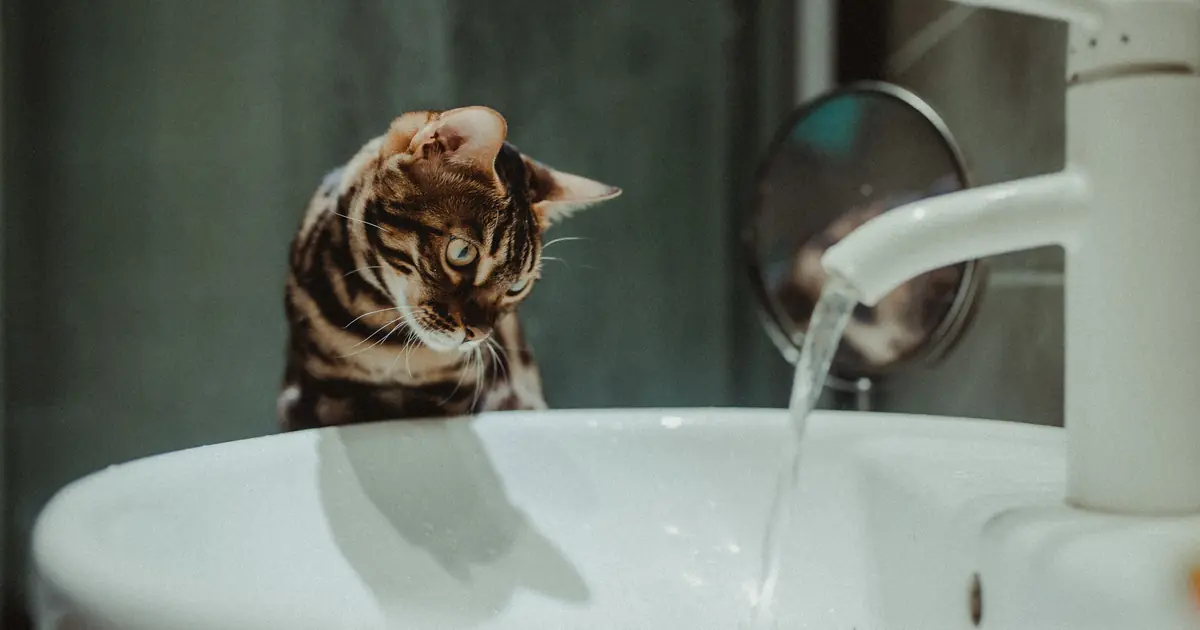
Turn on the shower and your cat vanishes. Fill the tub and suddenly they’re a blur of paws and betrayal. Yet the same cat will happily bat at a dripping faucet for twenty minutes. So why are cats afraid of water in some moments and weirdly obsessed with it in others?
Here’s the thing. “Afraid” is a little strong for a lot of cats. Most just really, really don’t want to be soaked. And once you understand why, it makes total sense. Their whole body, history, and grooming routine are built around staying dry. Let’s break down the real reasons, meet the breeds that flip the rule on its head, and talk about how to skip the drama at bath time.
- Domestic cats descend from desert-dwelling wildcats that rarely encountered large bodies of water, so swimming never became a survival skill.
- A cat’s fur absorbs water and dries slowly, leaving them cold, heavy, and less able to escape danger, which triggers a vulnerable feeling.
- Cats keep themselves clean by grooming with their tongue, so they don’t associate water with getting clean the way people do.
- A handful of breeds, including the Turkish Van, Maine Coon, and Bengal, genuinely like water and some will even swim.
- Most cats rarely need a bath, and waterless options usually work fine when they do get dirty.
Why are cats afraid of water in the first place?
Cats aren’t born hating water. Most simply feel unsafe when they’re wet, cold, and unable to control the situation. The dislike comes from a mix of evolution, physical discomfort, and how cats clean themselves, not from some deep phobia. Understanding those pieces makes your cat’s reaction a lot less mysterious.
Think of it as three overlapping instincts stacking up at once: an ancestry with no water exposure, a coat that behaves badly when soaked, and a grooming routine that never involved a tub. Add the shock of an unfamiliar sensation and you get a cat sprinting for the door.
Did cats evolve to avoid water?
Pretty much, yes. Domestic cats descend from the African wildcat, a species that lived in dry, desert-like regions of the Middle East and North Africa. Those environments had very little standing water, so cats never developed the need or the instinct to swim.
Compare that to dogs. Many dog breeds were shaped over centuries for jobs that involved water, like retrieving ducks or working alongside fishermen. Cats got no such training from history. Their ancestors hunted rodents and birds on dry land, so their entire survival playbook was built around stalking, pouncing, and staying out of the wet stuff. According to International Cat Care, most of a cat’s behavior traces back to that solitary desert hunter, and a fear of unfamiliar situations is part of the package.
So when your cat backs away from the bathtub, that’s thousands of years of desert wiring talking. Nothing in their line ever said, “Hey, jump in the lake.” This same wariness of the strange and new shows up elsewhere too, which is part of why cats get startled by cucumbers and other odd objects that appear out of nowhere.
Why does wet fur bother cats so much?
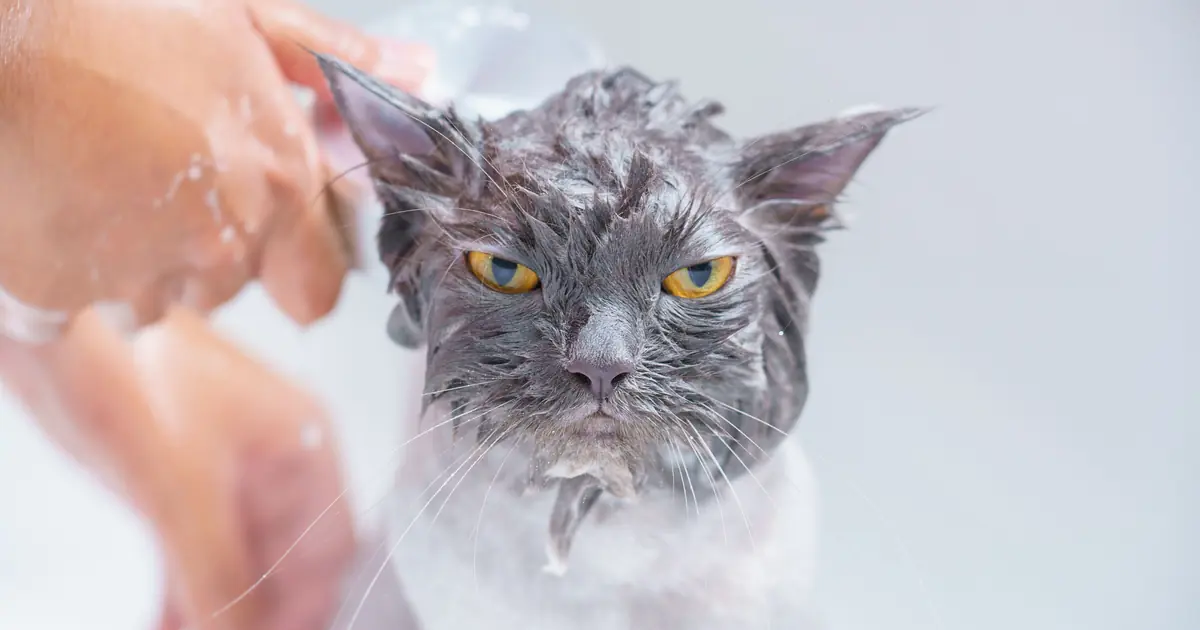
Wet fur is genuinely uncomfortable for a cat, and it’s a bigger deal than it looks. A cat’s coat soaks up water instead of shedding it, which makes the fur heavy, cold, and slow to dry. That leaves your cat feeling weighed down and exposed right when their instincts want them light and ready to bolt.
A dry coat is also a cat’s built-in insulation. Once it’s soaked, that insulation stops working, and body heat drops fast. Small cats can get cold quickly, so a chilly, dripping coat feels genuinely miserable, not just annoying.
Then there’s the survival angle. Cats are both predator and prey. A soggy, slowed-down cat can’t spring away from a threat the way a dry one can. Even a pampered indoor cat still carries that instinct, so being soaked flips a switch that says “you’re vulnerable right now.” Reading your cat’s body language during bath time makes this obvious: flattened ears, wide eyes, and a low crouch all say the same thing.
Do cats need water to stay clean?
No, and this is a big reason the whole idea of a bath confuses them. Cats clean themselves by licking their coat, and their rough, barbed tongue works like a built-in comb. A healthy cat spends a good chunk of the day grooming, so water simply isn’t part of their cleaning routine.
People associate water with getting clean. Cats don’t. To your cat, being dunked in a tub doesn’t compute as “now I’m fresh,” it computes as “now I’m wet and stressed for no reason.” That mismatch is part of why bath time feels like a betrayal to them.
Grooming does more than tidy the fur, too. It spreads natural oils, regulates temperature, and helps a cat calm down. Water washes some of that away, which is another small reason cats would rather handle hygiene their own way. If your cat ever stops grooming or looks greasy and matted, that’s worth a vet chat, since a drop in grooming can signal pain or illness.
Is it about control and the unfamiliar too?
Absolutely. A lot of the fear isn’t the water itself, it’s the loss of control. Cats are creatures of routine who feel safest when they can predict and manage their surroundings. Being lifted, held, and lowered into a slippery tub takes all of that away at once.
Stack up everything that happens during a bath from a cat’s point of view. The footing gets slick. The temperature changes suddenly. There’s a strange rushing sound. Their body feels different and heavy. And they can’t just walk away. For an animal that lives on control and familiarity, that’s a lot of stress in one moment.
Cats also have an incredible sense of smell, with far more scent receptors than we have. Tap water can carry chlorine and other faint odors we’d never notice, and to a sensitive nose that adds one more off-putting layer. Put it all together and a bath becomes a pile-up of unfamiliar, unpleasant signals.
Which cat breeds actually like water?
Not every cat runs from the tub. Several breeds genuinely enjoy water, and a few will even swim on purpose. These cats tend to have water-resistant or semi-water-resistant coats and a history that put them near water, so the usual “wet equals danger” instinct is dialed way down.
Kittens matter here too. A kitten gently introduced to water early, with calm, positive, low-pressure sessions, often grows into a cat that tolerates it fine. Early exposure won’t turn every cat into a swimmer, but it can take the panic out of the equation.
| Breed | Why it likes water |
|---|---|
| Turkish Van | Nicknamed the “swimming cat,” it has a soft, water-resistant coat and comes from the Lake Van region of Turkey, so swimming is part of the breed’s story. |
| Maine Coon | Has a shaggy, semi-water-resistant coat and a working history on ships, and many love splashing in sinks or pawing at faucets. |
| Bengal | Highly curious and playful, often joins owners near water, and many have slightly webbed feet that help with swimming. |
| Turkish Angora | Active and confident, this breed frequently enjoys playing in and around water. |
| Abyssinian | Endlessly curious and busy, Abyssinians often get fascinated by dripping taps and running water. |
How do I make a necessary bath less scary?
First, know that most cats rarely need a full bath at all. A healthy cat handles its own grooming, so baths are for special cases: a cat that got into something sticky or toxic, a senior or overweight cat that can’t reach everywhere, a skin condition your vet is treating, or a hairless breed that needs regular wipe-downs. Don’t force baths just because.
When a real bath is unavoidable, keep it calm and quick:
- Brush your cat first to remove loose fur and mats, since wet mats tighten and hurt.
- Use a rubber mat in the sink or tub so your cat has secure footing and doesn’t slip.
- Fill just a few inches of lukewarm water ahead of time, so there’s no scary running faucet during the bath.
- Wet and lather gently from the neck down, keeping water away from the ears, eyes, and nose.
- Use a cat-safe shampoo only, never a human or dog product, and rinse thoroughly so no residue is left.
- Wrap your cat in a warm towel right away and let them dry somewhere draft-free.
- Finish with a treat or two, so the whole thing ends on a good note.
If you’d rather skip the tub war entirely, you often can. A good waterless cat shampoo or a damp cloth handles most light messes without a drop of standing water, which suits a water-hating cat far better. When a wet bath truly is needed, this walkthrough on how to bathe a cat that hates water covers the calm-down tricks in detail, and picking the right gentle cat shampoo makes a real difference for sensitive skin. For anything beyond a routine rinse, like a medicated bath, check with your vet first. The ASPCA notes that reducing stress and going slow is key with any handling a cat finds frightening.
One more note: this article is here to help you understand your cat, not replace real medical advice. If your cat’s coat suddenly looks poor, or they stop grooming, or a skin problem shows up, talk to a licensed veterinarian. The Cornell Feline Health Center is a solid, trustworthy place to read up on feline health between vet visits.
Frequently Asked Questions
Q: Are all cats afraid of water?
No. Most domestic cats dislike being soaked, but “afraid” is often too strong. Several breeds, including the Turkish Van, Maine Coon, and Bengal, genuinely enjoy water, and some will even swim by choice.
Q: Can cats actually swim?
Yes, most cats can swim instinctively if they end up in water, they just usually choose not to. Swimming tires them out fast because their fur soaks up water and gets heavy, so it’s not something most cats seek out.
Q: Why does my cat love drinking from a running faucet but hate baths?
Playing with a trickle of water is on your cat’s own terms, which feels safe and even fun. A bath is the opposite: being held, unable to escape, and fully soaked. The difference is control, not the water itself.
Q: How often do cats really need a bath?
Most healthy cats never need a routine bath because they groom themselves thoroughly every day. Bathe only for special situations, like a sticky or toxic mess, a skin condition your vet is treating, or a senior cat that can’t reach everywhere.
Q: Is it bad to force my cat into water?
Forcing a terrified cat into water can hurt your bond and cause real stress, and a panicked cat may scratch or bite. It’s better to use a waterless shampoo or a damp cloth, or go slow and calm when a wet bath is truly necessary.
Q: Do kittens grow out of hating water?
Kittens introduced to water early with gentle, positive sessions often tolerate it better as adults. Early exposure won’t turn every cat into a swimmer, but it can take away much of the panic later in life.
Q: Why do cats hate water but need to drink it constantly?
Cats need water to stay hydrated like any animal, but drinking is very different from being submerged. Sipping from a bowl is controlled and safe, while a full-body soaking chills them and leaves them feeling vulnerable.
Q: Does wet fur really make cats cold?
Yes. A dry coat is a cat’s insulation, and once it’s soaked that insulation stops working, so body heat drops quickly. This is a big reason a wet cat feels miserable and wants to dry off fast.

Hello and welcome to The Ideal Cat!
We are some passionate cat owners from different professions. We love our cats and have a lot of experience in how to care for our pets. We are incredibly excited to share our knowledge, experience, and research with you. So you can take good care of your loving cat. We will answer most of the common questions about owning cats, taking care of them, etc. If you have any question contact with us. Thanks for visiting! Enjoy the content.
