- A slicker brush uses fine, bent wire pins to remove loose fur, detangle knots, and lift out small mats.
- Slicker brushes work best on medium-to-long coats but can be used lightly on short-haired cats too.
- Gentle, short strokes in the direction of fur growth prevent the wire pins from scratching or irritating the skin.
- Self-cleaning slicker brushes have a button that retracts the pins so you can wipe collected fur off in one motion.
- Pressing too hard with a slicker brush can cause brush burn, so let the pins do the work without force.
Related reading: best cat brush. cat shedding brush. cat clippers for matted fur.
Our Top Picks
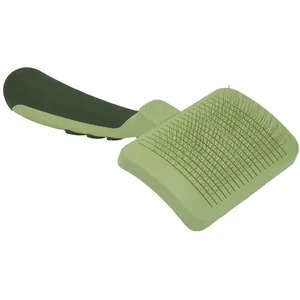
Safari Self-Cleaning Slicker Brush for Cats
Best Overall
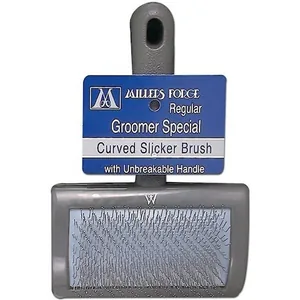
Millers Forge Slicker Brush
Best for Sensitive Skin
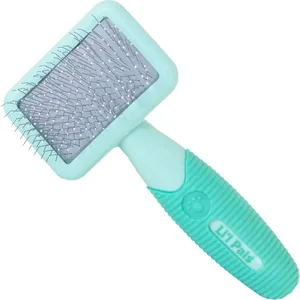
Li’l Pals Coated Tips Dog Slicker Brush
Best for Kittens and Small Cats
What a Cat Slicker Brush Actually Does
A slicker brush is a flat or slightly curved brush with rows of fine, short wire bristles. Those tiny pins do four big things for your cat:- Pull out dead, loose fur from the undercoat before your cat swallows it during self-grooming. Less hair eaten means fewer hairballs.
- Untangle small mats and knots before they grow into painful clumps that need to be cut out.
- Spread natural skin oils through the coat. This is why brushed cats have that gorgeous shine.
- Stimulate the skin like a gentle massage, which improves blood flow and feels good (when done right).
How to Pick the Right Cat Slicker Brush (Decision Guide)
Not every slicker brush works for every cat. Before you buy one, check these four things.1. Bristle Tip Style: Coated vs Uncoated
This is the single most important feature. Slicker brushes come with either bare stainless steel tips or plastic-coated tips (small rounded balls at the end of each bristle). Coated tips are gentler. They glide over sensitive skin without scratching. If your cat is older, has thin skin, has flinched at brushing before, or is a kitten, go coated. Uncoated tips grab more fur per stroke but can irritate skin if you press too hard. They’re better for thick double coats on healthy adult cats.2. Bristle Length
Short bristles work best on short-haired cats like American Shorthairs, Bengals, and Russian Blues. They reach the skin without snagging. Longer bristles (still on a slicker brush) are made for long-haired breeds like Maine Coons, Persians, Ragdolls, and Norwegian Forest Cats, where you need to reach down into the dense undercoat.3. Self-Cleaning Button
Self-cleaning slicker brushes have a button that retracts the bristles, letting all the trapped fur fall off in one neat clump. If you’ve ever spent ten minutes picking matted fur out of bristles with a comb, you understand why this matters. It’s a small feature that makes a huge difference in whether you actually brush your cat consistently.4. Handle Grip and Brush Head Size
You’ll hold this brush for 10 to 20 minutes per session. An ergonomic, non-slip handle prevents wrist fatigue. For cats under 8 pounds or kittens, look for a smaller brush head. A big brush on a small cat makes it impossible to get around their face, legs, and tail without clobbering them.Quick Pick Chart
| Your Cat’s Situation | Best Brush Type |
|---|---|
| Short-haired adult cat | Short-pin self-cleaning slicker |
| Long-haired cat (Maine Coon, Persian) | Longer pins, ergonomic handle |
| Kitten or small cat | Coated tips, small head |
| Senior cat or sensitive skin | Coated tips, soft slicker |
| Cat hates being brushed | Coated tips, smaller brush, slow intro |
| Multiple cats, daily use | Self-cleaning, durable steel pins |
The 5 Best Cat Slicker Brushes on Chewy (2026)
Every brush below is currently in stock, rated 4.0 stars or higher, and has hundreds (or thousands) of real owner reviews. We matched each one to the cat it works best for, so you can skip to the section that fits your situation.1. Best Overall: Safari Self-Cleaning Slicker Brush
Millers Forge Slicker Brush: Best for Sensitive Skin
The Millers Forge Slicker Brush is a no-frills, sturdy slicker with fine wire pins set into a firm pad and an unbreakable handle that holds up to daily use. It’s a favorite among groomers because it just works, without the flashy extras or the flimsy build you see on cheaper brushes.
Here’s why it earns the sensitive-skin pick: the pins are fine and flexible, so a light hand glides through loose fur and small tangles without digging in. If your cat flinches at rougher brushes, this one lets you groom gently. Just keep your strokes soft and let the pins do the work.
Pros:
- Sturdy, well-made build with an unbreakable handle that lasts for years
- Fine wire pins detangle and remove loose fur effectively
- Gentle on sensitive skin when used with a light hand
- Groomer-trusted quality at a budget-friendly price
Cons:
- Not self-cleaning, so you’ll pull fur off the pins by hand
- Wire pins can scratch if you press too hard
3. Best for Kittens and Small Cats: Li’l Pals Coated Tips Cat Slicker Brush
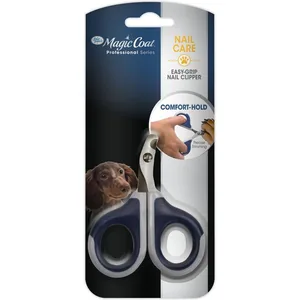
4. Best Ergonomic Pick: Four Paws Magic Coat Professional Series Comfort-Grip Cat Slicker Brush
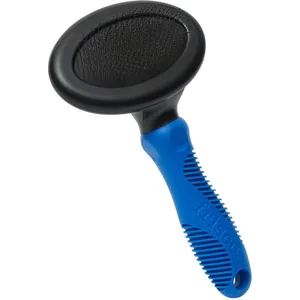
5. Best Budget Pick: Frisco Slicker Cat Brush
How to Actually Brush Your Cat with a Slicker (Without Hurting Them)
The brush is only half the equation. Bad technique can hurt even the gentlest brush user. Here’s the right way.Where to Brush (and Where to Avoid)
Brush these areas: sides, back (parallel to the spine, not on it), chest, shoulders, hips, and the base of the neck. These spots have enough muscle and fat to handle the pressure of a slicker brush. Be gentle or avoid:- Directly on the spine – the vertebrae sit close to the skin and slicker pins can poke painfully.
- Belly – most cats are protective of this area. Use a soft pin brush or your fingers instead.
- Base of the tail – this area is sensitive and can trigger nerve reactions.
- Face, ears, and around the eyes – way too risky with metal bristles. Use a smaller brush like the Li’l Pals or a soft cloth.
- Armpits and groin – thin skin folds here. Mats often form, but you’ll need to tease them out with your fingers first.
Step-by-Step: The 6-Step Brushing Method
- Wait until your cat is calm. Right after a meal or a nap is best. Never brush a cat who just sprinted up the cat tree.
- Let them sniff the brush first. Put it on the floor. Let your cat investigate it like a new toy. This lowers their guard.
- Start with the cheeks and neck. Most cats love being scratched here. Use short, light strokes in the direction the fur grows.
- Move to the back and sides. Use 4 to 6 inch strokes, parallel to the spine. Never go against the grain.
- Lift the brush at the end of each stroke. Don’t drag it off the body, it pulls hair. Lift up cleanly.
- Stop while they still like it. Five minutes of brushing they enjoy beats fifteen minutes that ends in a hiss. End on a good note and treat them right after.
5 Mistakes That Make Your Cat Hate Brushing
If your cat is already brush-shy, one of these is probably the reason.- Pressing too hard. Slicker pins should glide, not dig. Heavy pressure scratches the skin and your cat will associate the brush with pain.
- Brushing against the grain. Always follow the direction of hair growth. Brushing backwards is uncomfortable and pulls.
- Going over the same spot too many times. Three to four passes is plenty. More than that irritates the skin even with a gentle brush.
- Ignoring mats and ripping through them. If you hit a knot, stop. Tease it apart with your fingers or use a steel comb first. Yanking is the fastest way to lose your cat’s trust forever.
- Long sessions with no breaks. Cats have a tolerance window. Five to ten minutes max for short hair, ten to fifteen for long hair. Beyond that, you’re pushing it.
What If Your Cat Already HATES the Slicker Brush?
I get it, watching your cat run from you with a brush in your hand is rough. The good news is that most brush-hating cats can be won back. It just takes patience. Step 1: Reset their association. Put the brush away for a week. Out of sight, out of mind. Let them forget the bad sessions. Step 2: Pair the brush with food. Bring the brush out at dinner time. Don’t brush yet. Just have it nearby. Do this for several days. Step 3: One stroke, one treat. Once they’re calm around the brush, give them a quick stroke on the cheek (their favorite spot) and immediately hand over a high-value treat like lickable cat treats or a small piece of chicken. Step 4: Build slowly. Add one stroke per day. After two weeks, you should be able to do a full mini-session. Never push past their tolerance, even by 30 seconds. Step 5: Try a different brush. If they still hate the slicker, try a rubber brush or grooming glove first to build positive associations, then circle back to the slicker. Sometimes the texture is the issue, not brushing itself.How Often Should You Slicker Brush Your Cat?
The answer depends on coat length, but here’s a quick guide most vets agree on.- Short-haired cats: 1 to 2 times per week is plenty. More than that and you risk over-brushing and damaging the coat.
- Medium-haired cats: 2 to 3 times per week. Watch the armpits and behind the ears for early mats.
- Long-haired cats (Persians, Maine Coons, Ragdolls): Daily, no exceptions. Skip a few days and mats start forming.
Shedding Season Strategy
Cats shed heavily twice a year, once in spring (losing winter coat) and once in fall (losing summer coat). During these windows, double your normal brushing frequency for 2 to 3 weeks. You’ll be shocked at how much fur comes off, and you’ll thank yourself when you’re not vacuuming your couch every day.Slicker Brush vs Other Cat Brushes: Quick Comparison
If you’re not sure whether a slicker is the right tool for the job, here’s how it stacks up.| Brush Type | Best For | Skip If |
|---|---|---|
| Slicker Brush | All coat types, small mats, daily shedding | Very sensitive cats (use coated tips) |
| Pin Brush | Long, silky coats; gentle finishing | Short hair (won’t reach skin) |
| Bristle Brush | Distributing oils, adding shine | Removing undercoat |
| Rubber Brush/Glove | Nervous cats, short hair, bonding | Long-haired cats with mats |
| De-shedding Tool | Heavy shedding seasons | Daily use (can damage coat) |
| Steel Comb | Working through specific tangles | Whole-body daily grooming |
When to Replace Your Cat Slicker Brush
Nobody talks about this, but using a damaged slicker brush is one of the fastest ways to hurt your cat. Replace the brush if you see any of these signs:- Bent or splayed bristles. Once pins bend sideways, they catch and pull healthy fur instead of just dead fur.
- Missing bristles. A gap in the bristle field creates a sharp edge that scratches skin.
- Loose coating on coated-tip brushes. If those little plastic balls start falling off, the brush is now a bare-pin brush. Either retire it or be extra careful.
- Bristles no longer retract on self-cleaning models. The push mechanism wears out over time. If it stops working, you’ll trap fur permanently.
- Rust on metal pins. Rare, but happens if the brush gets wet repeatedly. Toss it immediately. Rust is bad for skin.
FAQ: Cat Slicker Brush Questions
Q: Are slicker brushes safe for cats?
Yes, when used correctly. Slicker brushes designed for cats have finer, shorter pins than dog versions, and many come with coated tips for extra safety. The risk comes from using a dog slicker on a cat (too aggressive), pressing too hard, or brushing over sensitive areas like the spine and belly.Q: Can I use a slicker brush on a kitten?
Yes, but choose a small-headed brush with coated bristle tips, like the Li’l Pals Coated Tips Cat Slicker Brush. Kitten skin is thinner than adult cat skin and burns easily. Start with very short, gentle sessions of 1 to 2 minutes to build positive associations early.Q: Why does my cat bite the slicker brush?
Usually one of three reasons: they’re overstimulated and giving you a warning, they think it’s a toy, or they’re trying to claim it by scenting it. If it’s biting, stop, give a treat, and try again later with shorter strokes on a less-sensitive area like the cheeks.Q: How do I clean a slicker brush?
Pull out the trapped fur with your fingers or a comb after every session. Once a month, wash the brush in warm water with a drop of mild soap, then air dry completely before storing. Self-cleaning brushes need this deeper wash less often, but still benefit from it.Q: Will a slicker brush hurt my cat’s coat?
No, if you use it correctly. Brushing 1 to 3 times per week (depending on coat length), in the direction of hair growth, with gentle pressure, is healthy. Over-brushing daily with hard pressure can thin the coat and damage the topcoat hairs.Q: What’s the difference between a slicker brush and a Furminator?
A slicker brush has fine wire bristles for general grooming, detangling, and shedding maintenance. A Furminator has a metal blade that strips out dead undercoat. Furminators are more aggressive and should only be used during heavy shedding seasons. Slickers are safe for everyday use.Q: Can I brush my cat’s belly with a slicker?
Not recommended. The belly has thinner skin and most cats are protective of this area. Use a softer pin brush, a grooming glove, or just your fingers to check the belly for mats. If there’s a knot, tease it apart by hand, never with a slicker brush.Q: How long does a cat slicker brush last?
A good quality slicker brush lasts 2 to 5 years with weekly use. Cheaper brushes may bend or lose bristles within 6 to 12 months. Inspect the bristles every few months and replace immediately if you see bent pins, missing bristles, or chipped coatings.Final Thoughts
The best cat slicker brush for your cat is the one that matches their coat, their skin sensitivity, and your patience for cleaning out trapped fur. For most cat parents, the Safari Self-Cleaning Slicker Brush is the safest bet. For sensitive cats, go coated-tip with the Millers Forge slicker. For kittens, the Li’l Pals is perfectly sized. But the real secret isn’t the brush, it’s the technique. Brush in the direction of hair growth, keep sessions short, avoid the spine and belly, and always end on a positive note with a treat. Do that, and your cat will start looking forward to grooming time instead of running from it. Pick the cat slicker brush that fits your cat’s specific needs, and you’ll be set for years of less shedding, fewer hairballs, and a shinier coat. Your couch will thank you too.
Hello and welcome to The Ideal Cat!
We are some passionate cat owners from different professions. We love our cats and have a lot of experience in how to care for our pets. We are incredibly excited to share our knowledge, experience, and research with you. So you can take good care of your loving cat. We will answer most of the common questions about owning cats, taking care of them, etc. If you have any question contact with us. Thanks for visiting! Enjoy the content.
