
You’re looking at your cat one day and suddenly it hits you: their head seems kind of… tiny. Especially next to that round belly or long body. Is something wrong, or is your cat just built that way?
Almost always, it’s just normal feline variety. Here’s what actually drives head size, and the rare cases worth a second look.
- Head size is mostly genetic and varies naturally from cat to cat.
- Females and cats neutered young often have smaller, finer heads than intact males.
- Breed matters: Siamese and Oriental types have slim, wedge-shaped heads; Persians look round and broad.
- A long body, big frame, or primordial pouch can make a normal head look small by contrast.
- A small head paired with stunted growth, weight loss, or other symptoms is the rare case that needs a vet.
Why does my cat have a small head?
Most cats with small heads are simply built that way, and it’s completely normal. Head size is largely determined by genetics, sex, and breed. A petite head on an otherwise healthy, active, well-fed cat is a variation, not a problem. The perception is also relative, we often notice a “small head” only because the body looks large next to it.
Does sex affect a cat’s head size?
Yes, quite a bit. Intact (unneutered) male cats develop broader, heavier heads and chunky cheeks, sometimes called “tomcat jowls,” driven by testosterone. Females and males neutered before maturity tend to keep slimmer, finer heads. So if your cat has a delicate head, being female or an early-neutered male is one of the most common, and totally healthy, explanations. The ASPCA notes early neutering has many health benefits that far outweigh a smaller head.
Which breeds naturally have small or narrow heads?
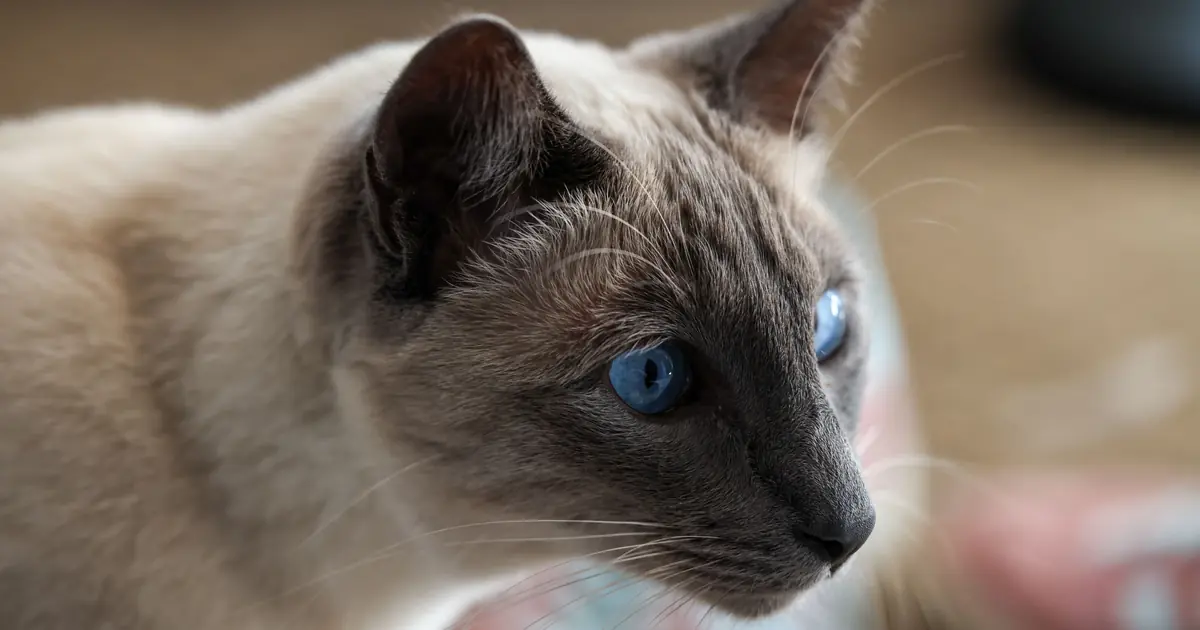
Breed shapes head size dramatically. Some cats are bred for slim, elegant wedges; others for round, broad faces. If your cat leans “small-headed,” breed or ancestry may be why.
| Head style | Typical breeds |
|---|---|
| Small, narrow, wedge-shaped | Siamese, Oriental Shorthair, Balinese, Cornish Rex |
| Medium, balanced | Domestic shorthair, most mixed-breed cats |
| Large, round, broad | Persian, British Shorthair, Maine Coon (males) |
If your cat is slim overall with a fine head, they may carry some Siamese or Oriental ancestry; our piece on whether Siamese cats are naturally skinny covers that lean, long-limbed build.
Is it my cat’s head, or just body proportions?
Often it’s the body making the head look small, not the head being small. A cat with a long torso, a large frame, or a prominent primordial pouch (that normal swinging belly flap) can look top-light by comparison. Overweight cats especially can appear small-headed because the body has bulked up while the skull hasn’t. In those cases the head is normal; the proportions just shifted.
When could a small head signal a problem?
A small head is only a concern when it comes with signs of poor health or stunted development. Watch for a kitten that isn’t growing normally, a cat losing weight or muscle (which can make the head and shoulders look bony), or a small head alongside lethargy, poor appetite, or developmental delays. Congenital conditions and early malnutrition can affect growth, though these are uncommon. If your cat seems underweight rather than just fine-boned, our guide on telling if your cat is underweight helps you check, and PetMD’s body-condition guidance shows what to feel for.
Should you see a vet?
See a vet if the small head appears alongside weight loss, muscle wasting, stunted growth, or any illness signs, or if the change seems new rather than lifelong. For a cat that’s always had a dainty head and is otherwise healthy, active, and eating well, there’s nothing to fix, it’s just their look. This article is educational and not a substitute for veterinary advice; a quick body-condition check at your next visit can put your mind at ease.
Frequently Asked Questions
Q: Is it normal for a cat to have a small head?
Yes, very. Head size varies naturally with genetics, sex, and breed. A small head on a healthy, active, well-fed cat is a normal variation, not a health problem.
Q: Why does my male cat have a small head?
Males neutered before maturity don’t develop the broad, jowly head that testosterone produces in intact toms. An early-neutered male keeping a slimmer head is completely normal and healthy.
Q: Why does my cat’s head look small compared to its body?
Usually it’s proportion. A long body, large frame, primordial pouch, or extra weight can make a normal head look small by contrast. The head is fine; the body simply draws the eye.
Q: Do certain breeds have smaller heads?
Yes. Siamese, Oriental Shorthairs, Balinese, and similar breeds are bred for slim, wedge-shaped heads, while Persians and British Shorthairs have broad, round heads. Mixed cats fall anywhere in between.
Q: Can a small head mean my cat is underweight?
It can look that way if muscle loss makes the head and shoulders appear bony. If you can easily feel the spine and ribs and the cat seems thin, check for underweight signs and see your vet, rather than focusing on head size alone.
Q: When should I worry about my kitten’s small head?
Worry only if the kitten isn’t growing normally overall, or shows poor appetite, low energy, or developmental delays. A proportionally small head on a thriving, growing kitten is usually just their build.

Hello and welcome to The Ideal Cat!
We are some passionate cat owners from different professions. We love our cats and have a lot of experience in how to care for our pets. We are incredibly excited to share our knowledge, experience, and research with you. So you can take good care of your loving cat. We will answer most of the common questions about owning cats, taking care of them, etc. If you have any question contact with us. Thanks for visiting! Enjoy the content.
