You’re rubbing your cat’s tummy, or watching them tear across the living room, and you notice it: a soft pouch of skin swaying under their belly. Your first thought is probably “wait, is my cat fat?” Your second thought might be “did I do this?”
Take a breath. In almost every case, that hanging belly is just your cat’s primordial pouch, a completely normal body part that has nothing to do with how many treats they’ve had this week. Let’s go through what it actually is, why it’s there, and the handful of situations where a saggy belly means something you should get checked out.
- The hanging belly flap under a cat’s lower abdomen is called the primordial pouch, and it’s a normal feature found on every cat, from lean housecats to big wild cats like lions and tigers.
- The pouch is made of loose skin and a layer of fat, and it swings visibly when your cat walks or runs.
- Vets believe it protects the belly during fights, gives the spine extra room to stretch when sprinting or leaping, and may store a small energy reserve.
- A primordial pouch is not the same as obesity. You can feel a lean cat’s ribs easily even when the pouch hangs low; on an overweight cat, a fat layer covers the ribs too.
- Bengals, Egyptian Maus, and Pixiebobs tend to show a more noticeable pouch, and it often becomes more visible after a cat is spayed or neutered or loses weight.
Why does my cat have a hanging belly?
Your cat has a hanging belly because of the primordial pouch, a flap of loose skin and fat that sits along the lower abdomen, just in front of the hind legs. Every cat has one, though it’s far more obvious on some cats than others. It’s not baby fat, it’s not a symptom, and it’s not something that shows up only on lazy cats. Kittens can start developing a visible pouch as early as a few months old, and it usually becomes more pronounced by the time a cat is fully grown, somewhere around one to two years old.
What exactly is the primordial pouch?
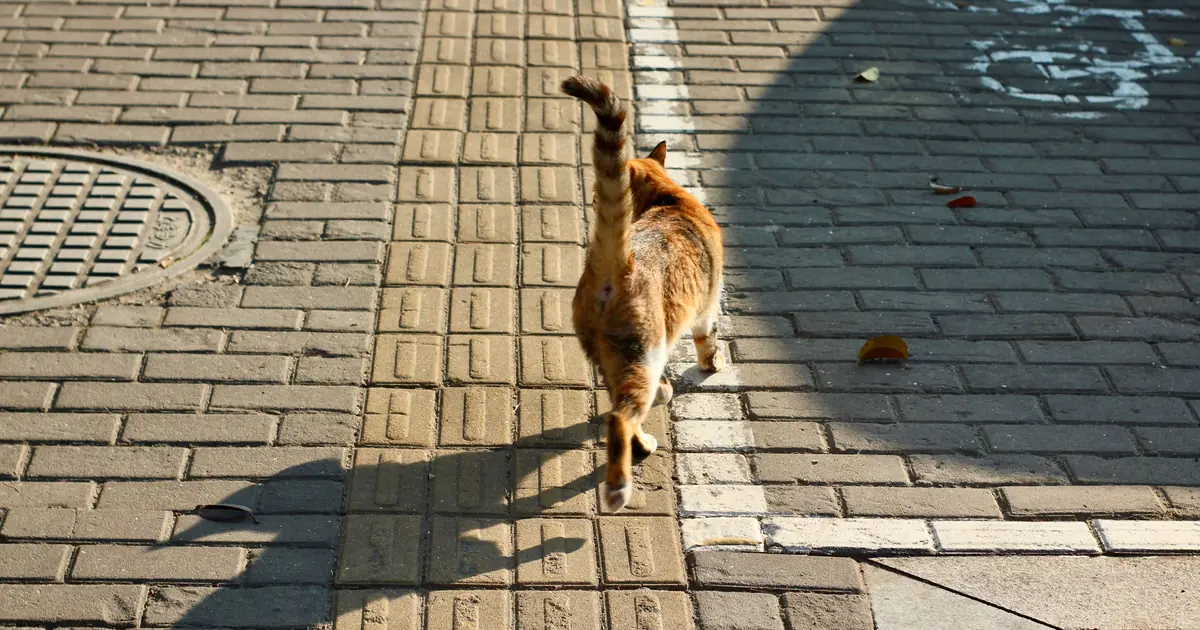
The primordial pouch is a loose fold of skin, connective tissue, and a thin layer of fat that runs along a cat’s lower belly, from roughly the rib cage back toward the hind legs. Unlike the tight skin over a cat’s ribs and chest, this section is deliberately loose, which is exactly why it swings and jiggles when your cat trots, runs, or jumps down from the couch. You’ll usually notice it most when your cat is mid-stride or stretched out on their side.
Every member of the cat family has one, not just house cats. Lions, tigers, and cheetahs all carry a version of the same pouch, which is part of why it’s called “primordial,” meaning it’s an ancient feature that’s been passed down the feline family tree.
What is the primordial pouch actually for?
The primordial pouch most likely protects your cat’s belly, gives their body room to stretch during a full sprint, and may hold a small backup energy supply. Nobody has proven exactly why cats evolved this feature, but a few theories are widely accepted, according to VCA Animal Hospitals:
- Protection during fights. Cats defend themselves by grabbing an opponent and kicking with their back legs, aiming right at the belly. The pouch’s extra skin and padding help shield vital organs from claws in a scuffle.
- Room to stretch and sprint. Cats twist and extend their spine further than most mammals, which is how they manage a full-speed gallop or a sudden vertical leap. Loose belly skin gives the abdomen slack instead of restricting the stride.
- A small energy reserve. Wild cats don’t always eat on a predictable schedule. Some biologists think the pouch’s fat layer works like a modest pantry to draw on between meals.
Is a hanging belly a sign my cat is overweight?
Not necessarily. A primordial pouch shows up on lean cats too, so a hanging belly by itself doesn’t mean your cat is overweight. The pouch stays low on the belly, close to the hind legs, and swings when your cat moves. Overweight fat is different: it spreads across the whole body and covers the ribs in a padded layer you can’t easily feel through.
Here’s a quick way to check which one you have. Run your hands along your cat’s sides, over the rib cage. At a healthy weight, you should feel the ribs fairly easily, similar to running your fingers over the back of your own hand. Struggling to find them means extra fat, not just the pouch. Look from above too: a healthy cat has a visible waist behind the ribs, while an overweight cat looks straight up and down with no tuck at all, according to the body condition guidelines from VCA Animal Hospitals.
If your cat’s overall body shape has you wondering whether their weight is a bigger issue than the belly flap, our guide on why your cat might be so big walks through breed size, muscle, and true overweight signs in more detail.
Do certain cats have bigger primordial pouches?
Yes, some cats naturally show a larger, more visible primordial pouch than others, and it isn’t linked to their weight at all. Breeds like the Bengal, the Egyptian Mau, and the Pixiebob are known for pronounced pouches even when they’re lean and muscular. If you own a Bengal cat or an Egyptian Mau, don’t be surprised if their belly sway looks more dramatic than a typical shorthair’s.
A pouch can also become more noticeable after a cat is spayed or neutered, since the skin and fat distribution around the abdomen shifts slightly as the cat matures without those hormones. The same goes for cats that lose weight: as the fat around the belly and body shrinks, the loose skin of the pouch that was always there becomes easier to see and doesn’t shrink at quite the same rate.
When is a hanging belly not the primordial pouch?
A hanging belly stops being “just the pouch” when it turns firm, feels tight or painful to the touch, or grows noticeably bigger over days or weeks. The primordial pouch stays soft and jiggly and looks the same from one week to the next. A belly that’s changing shape or seems to bother your cat when you touch it can point to:
- Fluid buildup in the abdomen, which can come from heart problems, liver disease, or other internal conditions
- A heavy worm burden, especially roundworms, which is common in kittens and can cause a firm, pot-bellied look
- An enlarged organ, such as the liver or spleen
- Pregnancy, if your cat is intact and the timing lines up
- Bloat or gastric distension, which is rare in cats compared to dogs but still possible
If your cat’s belly looks swollen, tight, or unusually round rather than saggy and loose, our article on why your cat’s belly is bloated covers the medical causes and warning signs in depth.
How do I tell a normal pouch from a real problem, and what should I do about it?
You tell them apart with your eyes and your hands: a normal primordial pouch is soft, jiggly, and stays roughly the same size week to week, while a problem belly is firm, tender, or visibly growing. Run your hand under your cat’s belly. A loose bag of skin that moves easily, with no reaction from your cat, is the pouch doing its job. Tight, swollen, hot, or painful means it’s time to book a vet visit rather than wait it out.
Beyond that, you don’t need to do anything about a normal primordial pouch. It’s not a medical issue, and no amount of dieting will make it disappear completely, since it’s loose skin as much as fat. The one thing worth doing is keeping your cat at a healthy weight overall, since obesity raises a cat’s risk of diabetes and joint disease according to the Cornell Feline Health Center. A quick weigh-in at the vet once or twice a year, alongside the rib check above, is really all the monitoring a pouch needs.
This article is meant to help you understand what’s normal, not replace a vet’s hands-on exam. If your cat’s belly is firm, painful, growing quickly, or paired with other symptoms like vomiting, lethargy, or loss of appetite, please see a licensed veterinarian rather than waiting to see if it resolves on its own.
Primordial pouch vs. overweight belly vs. swollen belly: quick comparison
| Belly type | How it looks and feels | What to do |
|---|---|---|
| Primordial pouch | Soft, jiggly flap low on the belly near the hind legs; swings when your cat walks or runs; ribs are still easy to feel | Nothing needed, it’s a normal feature |
| Overweight belly | Fat spread across the whole body, no visible waist from above, ribs hard to feel under a padded layer | Talk to your vet about a weight plan and portion control |
| Firm or swollen belly | Tight, round, or drum-like; may be painful; often grows over days or comes with other symptoms | See a vet promptly to rule out fluid, worms, or organ issues |
Frequently Asked Questions
Q: Is a hanging belly normal in cats?
Yes. Nearly every cat, from housecats to lions, has a primordial pouch, a loose flap of skin and fat on the lower belly. It’s a normal anatomical feature, not a sign of poor health or overfeeding.
Q: What is the flap of skin under a cat’s belly called?
It’s called the primordial pouch. It’s the loose skin and fat that hangs along a cat’s lower abdomen, just in front of the hind legs, and it’s present on all cats regardless of weight.
Q: Does spaying or neutering cause a hanging belly?
Spaying or neutering doesn’t create the primordial pouch, since it’s already present, but the pouch can become more noticeable afterward as a cat’s body composition shifts slightly during adulthood.
Q: Can I get rid of my cat’s primordial pouch by putting them on a diet?
Not completely. Since the pouch is loose skin as well as fat, dieting may shrink the fat portion slightly, but the skin will still hang. Diets should target true overweight cats, not the pouch itself.
Q: Which cat breeds have the most noticeable primordial pouches?
Bengals, Egyptian Maus, and Pixiebobs are known for larger, more visible primordial pouches, even at a lean, healthy weight. It’s considered a normal breed trait rather than a weight problem in these cats.
Q: Could a hanging belly mean my cat is pregnant?
It’s possible if your cat is intact and unspayed. Pregnancy causes the belly to firm up and expand steadily over a few weeks, which looks and feels different from the loose, jiggly primordial pouch.
Q: Why does my cat’s belly sway from side to side when they run?
That sway is the primordial pouch in motion. The skin and fat in that area are loose by design, so they swing naturally as your cat’s back legs drive forward during a run or a big jump.
Q: When should I take my cat to the vet for a swollen belly?
See a vet if the belly feels firm, tight, or painful, grows noticeably within days or weeks, or comes with symptoms like vomiting, lethargy, or appetite loss. These signs point to fluid, worms, or an organ problem rather than the normal pouch.

Hello and welcome to The Ideal Cat!
We are some passionate cat owners from different professions. We love our cats and have a lot of experience in how to care for our pets. We are incredibly excited to share our knowledge, experience, and research with you. So you can take good care of your loving cat. We will answer most of the common questions about owning cats, taking care of them, etc. If you have any question contact with us. Thanks for visiting! Enjoy the content.
