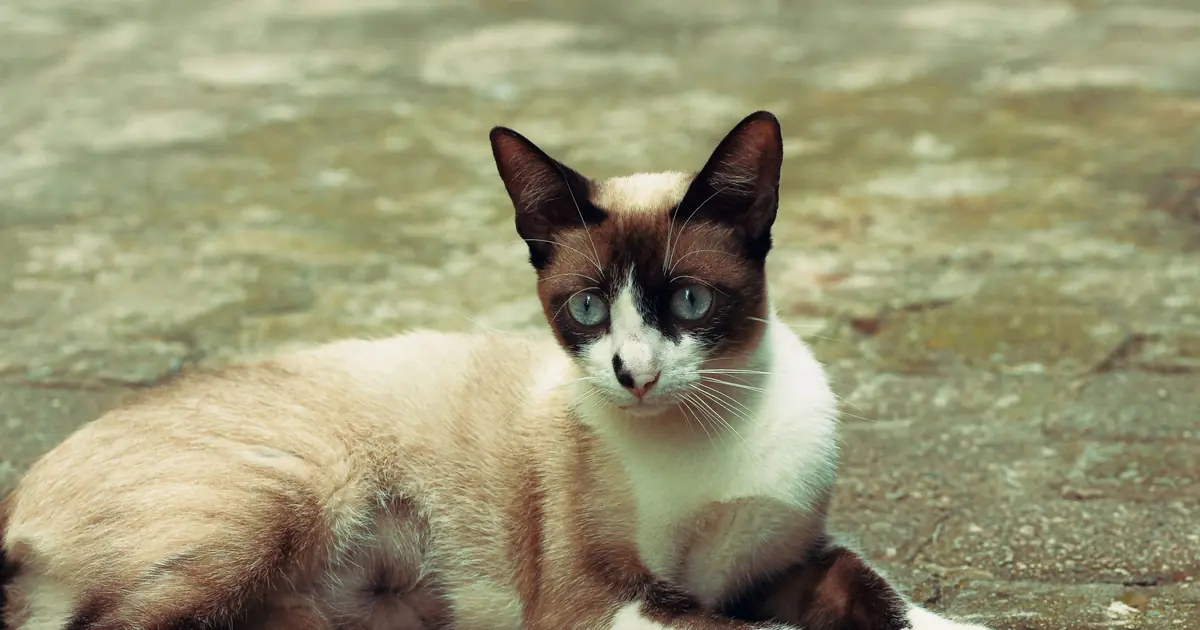
You run your hand down your Siamese and there they are: ribs, hip bones, that long whippy tail. Your friend’s tabby feels like a soft loaf of bread, and yours feels like a coat hanger in a fur coat. So you start to wonder. Are Siamese cats naturally skinny, or is something wrong with mine?
Here’s the reassuring part. A slim Siamese is usually just being a Siamese. This breed was built lean on purpose, and that elegant, slinky look is written right into the breed standard. But “naturally lean” and “underweight” are not the same thing, and knowing the difference matters. Let’s walk through exactly what a healthy Siamese should feel like, and when a thin cat is actually a sick cat.
- Siamese cats are naturally skinny by breed standard, with a long, tubular “Oriental” body, fine bones, and lean muscle.
- A healthy adult Siamese usually weighs 8 to 12 pounds and looks slimmer than stocky breeds even at an ideal weight.
- Naturally lean is not underweight: you should still feel a thin layer of fat over the ribs, not sharp bones with nothing on them.
- Because Siamese are so slender, feeling your cat (palpation) is more reliable than just looking at them.
- Sudden weight loss, newly sharp bones, or poor appetite is not normal and needs a vet, since Siamese can develop dental disease, GI issues, and hyperthyroidism.
Are Siamese cats naturally skinny?
Yes, Siamese cats are naturally skinny, and it’s part of the breed’s whole design. The Siamese has what breeders call an “Oriental” body type: long, svelte, and tubular, carried on fine bones and long, slim legs, and finished with a long tapering tail. Add hard, athletic muscle and very little body fat, and you get a cat that reads as slender even when perfectly healthy.
This look didn’t happen by accident. Over decades, breeders and show judges favored an increasingly elongated, fine-boned cat, so the modern Siamese is deliberately lean. The Governing Council of the Cat Fancy standard even describes the breed as svelte and graceful with long lines and angular features. In plain English: skinny is the point. If you want the full picture of the breed’s build and personality, our Siamese cat breed guide covers it in detail.
Why do Siamese cats look so slim?
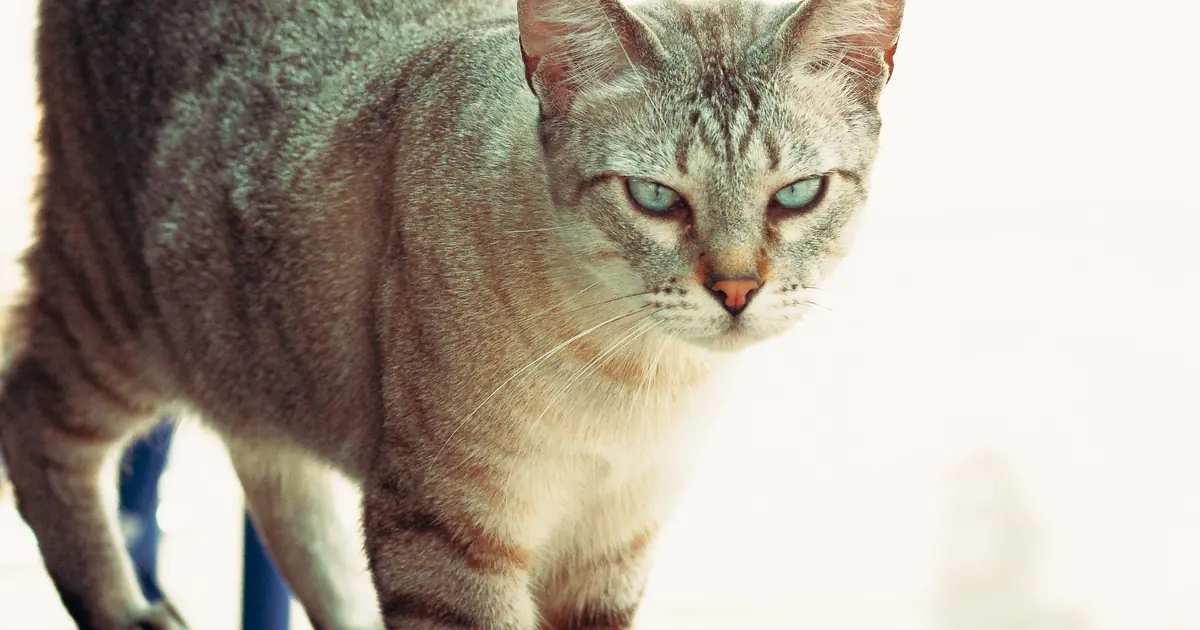
Siamese cats look slim because of three things working together: their skeleton, their metabolism, and their energy level. Understanding each one helps you see why your cat can be healthy and still look like a supermodel.
First, the frame. Siamese have fine, light bones and a long, narrow build, so there’s simply less bulk to fill out. A stocky breed like a British Shorthair carries a heavy, cobby body, while a Siamese carries a long, lean one. Same health, totally different silhouette.
Second, the metabolism and energy. Siamese are famously busy cats. They run, climb, chase, and “talk” all day, and all that activity burns calories fast. A high-energy cat with a quick metabolism tends to stay trim without trying. It’s a big reason your Siamese can eat well and still feel bony compared to a lazier housemate.
Naturally lean or actually underweight? How to tell
The difference between naturally lean and underweight comes down to what you feel over the ribs, not just what you see. Because Siamese are so slender, vets stress that touch beats appearance every time. Fine-boned breeds like the Siamese can look underweight even when their weight is perfectly fine.
Vets use a body condition score (BCS), usually on a 1 to 9 scale, where 5 is ideal. Many naturally lean Siamese sit comfortably at a 4, which is still healthy. A score of 1 to 3, though, is a real medical concern.
Try the knuckle trick. Make a fist and feel your knuckles: that hard, no-padding feel is what an underweight cat’s ribs feel like. Now lay your hand flat and feel those same knuckles under a thin cushion. That slight padding is what a healthy Siamese should feel like: ribs easy to feel, but with a thin layer of fat over them, not poking out sharp and bare.
Do a quick three-part check. Look from above (you want a visible waist behind the ribs, not a caved-in one), look from the side (a slight tummy tuck is normal), then gently feel the ribs, spine, and hips. If you can feel bones under a thin layer of padding, that’s a lean, healthy cat. If bones feel sharp with nothing over them, your cat may be underweight. Our guide on how to know if your cat is underweight walks through this step by step.
| What you notice | Naturally lean (healthy) | Underweight (check with a vet) |
|---|---|---|
| Ribs | Easy to feel, thin layer of fat over them | Sharp and bare, no padding at all |
| Spine and hips | Palpable but smooth | Very prominent, jutting out |
| Waist from above | Clear, gentle hourglass | Severely tucked, almost caved in |
| Muscle | Firm, athletic, well-toned | Wasted, especially over the shoulders and back |
| Energy and appetite | Bright, active, eating well | Lethargic, picky, or losing weight |
How big should a healthy Siamese be?
A healthy adult Siamese usually weighs between 8 and 12 pounds, with males on the higher end and females on the lower end. That range sounds normal, but remember it’s spread over a long, tall frame, so the same weight looks leaner on a Siamese than on a compact breed.
Kittens and young adults often look especially rangy and coltish before they fill out with muscle, which can take up to a year or two. If your cat’s weight is holding steady in a healthy range and their energy is good, the slim look is almost certainly just their build. What matters most isn’t a single number on the scale, it’s whether the weight stays stable over time.
How do I keep my Siamese at a healthy lean weight?
Keep your Siamese lean and healthy by feeding a high-quality, protein-rich diet in measured portions, and by weighing your cat now and then to catch changes early. Naturally slim doesn’t mean you skimp on food. It means you feed the right amount of good food to fuel that busy body.
- Feed for muscle. Choose a diet built around real animal protein to support that lean, athletic frame. Our roundup of the best cat food options is a good starting point, and our Siamese cat diet guide gets breed-specific.
- Measure portions. Follow the feeding guide on the label as a starting point, then adjust based on your cat’s body condition, not guesswork. Free-feeding an energetic Siamese usually works out fine, but measure so you’d notice if intake drops.
- Weigh regularly. A monthly weigh-in (hold your cat, step on the scale, subtract your own weight) catches slow loss before it becomes a problem.
- Feed the mind and body. Siamese burn energy through play. Interactive toys and climbing space help them stay fit and stop boredom-eating.
Which health issues can make a Siamese lose weight?
A Siamese who is genuinely losing weight, not just naturally slim, may have an underlying health problem, and the breed is prone to a few. Naturally lean is stable. Weight loss is a change, and change is the red flag.
Watch for these common culprits behind unexpected thinness in cats:
- Dental disease. Painful teeth or gums make eating hard, so cats quietly eat less and drop weight.
- Hyperthyroidism. This overactive-thyroid condition speeds up metabolism and often causes weight loss despite a big appetite, usually in middle-aged and senior cats.
- Gastrointestinal (GI) disease. Chronic vomiting, diarrhea, or inflammatory bowel issues stop the body from absorbing nutrients properly.
- Diabetes and kidney disease. Both are common in older cats and both can cause steady weight loss, often with extra thirst.
Siamese also carry some breed-linked risks worth knowing about, including certain heart and respiratory conditions and, in some lines, a higher tendency toward amyloidosis affecting the liver. None of that should scare you off the breed. It just means changes in weight or appetite deserve attention rather than a shrug.
A quick note: this article is educational and isn’t a substitute for veterinary care. You know your cat’s normal better than anyone, so trust that instinct.
When should a skinny Siamese see a vet?
See your vet if your Siamese is losing weight, feels newly bony, or shows any change in appetite, energy, or bathroom habits. A cat that has always been slim and stays that way is usually fine. A cat that is getting thinner is telling you something.
Book a vet visit if you notice any of these red flags:
- Visible or steady weight loss, or ribs and spine that suddenly feel sharper than before
- Eating much less, or eating a lot but still shrinking
- Vomiting, diarrhea, or constipation that keeps happening
- Increased thirst or peeing more than usual
- Low energy, hiding, or a dull, unkempt coat
- Bad breath, drooling, or pawing at the mouth
You can read more about spotting a healthy weight from trusted sources like the Cornell Feline Health Center and International Cat Care, and you can compare breed traits over at PetMD’s breed library. When in doubt, a two-minute chat with your vet beats weeks of worrying.
Frequently asked questions about skinny Siamese cats
Q: Are Siamese cats supposed to be skinny?
Yes, Siamese cats are supposed to look skinny. The breed standard calls for a long, svelte, fine-boned body with lean muscle and low body fat, so a healthy Siamese naturally appears slimmer than stocky breeds. As long as you can feel a thin layer of fat over the ribs, the slim look is normal.
Q: How much should a Siamese cat weigh?
A healthy adult Siamese usually weighs between 8 and 12 pounds. Males tend toward the higher end and females toward the lower end. Because the weight is spread over a long, slender frame, a Siamese looks leaner than a compact cat of the same weight.
Q: Why can I feel my Siamese cat’s spine and ribs?
You can feel a Siamese cat’s spine and ribs because the breed is fine-boned with very little body fat. On a healthy Siamese, those bones are easy to feel but sit under a thin layer of padding. If the bones feel sharp and completely bare, or you notice recent weight loss, have a vet check for a problem.
Q: Is my Siamese cat underweight or just lean?
Feel the ribs to tell the difference. A lean, healthy Siamese has ribs you can feel under a thin cushion of fat, plus firm muscle and good energy. An underweight cat has sharp, bare bones, visible muscle wasting, and often poor appetite or low energy. Palpation is more reliable than appearance for this breed.
Q: Do Siamese cats eat a lot?
Many Siamese eat well because they are high-energy cats with fast metabolisms that burn plenty of calories. Eating a good amount and staying slim is normal for the breed. But a cat eating a lot while still losing weight can be a sign of hyperthyroidism or another condition, so that combination is worth a vet visit.
Q: Why is my Siamese cat losing weight?
Unexpected weight loss in a Siamese is not part of the breed’s normal leanness and can point to dental disease, hyperthyroidism, gastrointestinal problems, diabetes, or kidney disease. If your cat is getting thinner, feeling bonier than usual, or eating differently, book a vet appointment to find the cause.
Q: Are male or female Siamese cats bigger?
Male Siamese cats are generally a bit larger and heavier than females, often landing in the 10 to 12 pound range, while females tend toward 8 to 10 pounds. Both sexes share the same long, slender build, so the size difference is modest and both look naturally lean.
Q: Do Siamese kittens look skinnier than other kittens?
Yes, Siamese kittens often look lanky and rangy compared to stockier breeds. They can appear all legs and ears while they grow into their long frame, and filling out with muscle can take up to a year or two. Steady growth and good energy are the signs to watch.

Hello and welcome to The Ideal Cat!
We are some passionate cat owners from different professions. We love our cats and have a lot of experience in how to care for our pets. We are incredibly excited to share our knowledge, experience, and research with you. So you can take good care of your loving cat. We will answer most of the common questions about owning cats, taking care of them, etc. If you have any question contact with us. Thanks for visiting! Enjoy the content.
