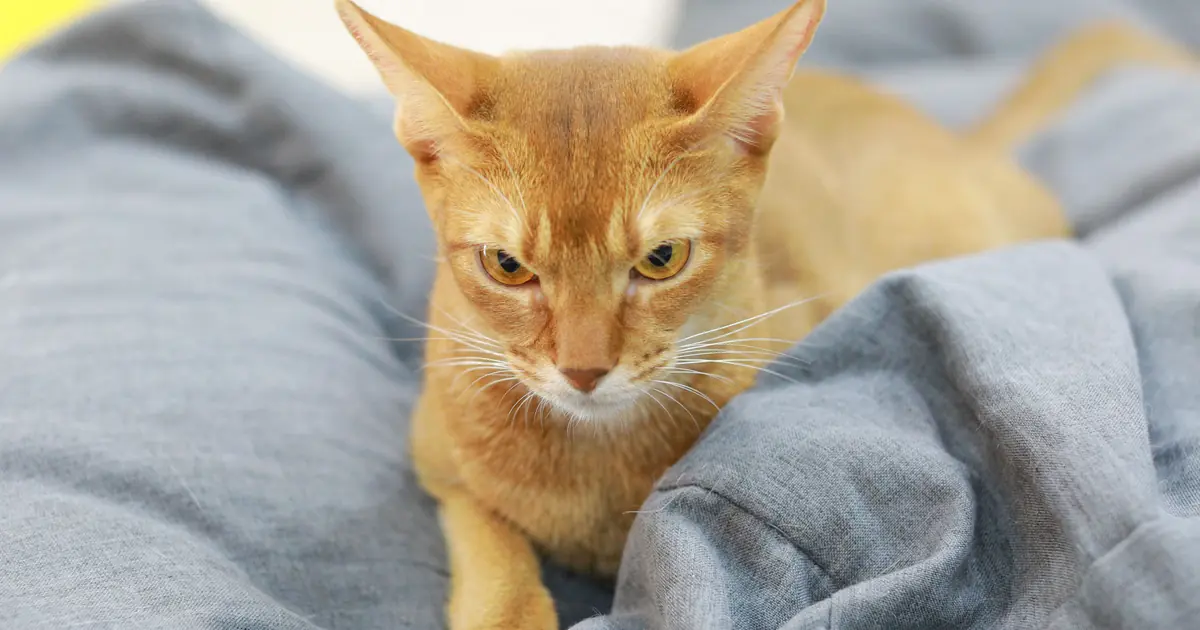
You come home, and the cupboard door is open. Again. The treat bag is on the floor. Your cat is sitting nearby, looking mildly bored, like solving your childproof latch was beneath her. Sound familiar?
Some cats just seem to be running a few steps ahead of us. They open doors. They flip light switches. They figure out the exact spot to sit that gets you off the couch. It’s fair to wonder how far that goes, right down to whether cats can do math. If you’ve ever wondered whether your cat is secretly a genius, you’re in good company.
So which breeds actually top the “smartest” list? And does a clever cat make a better pet, or just a bigger troublemaker? Let’s get into it.
- The Abyssinian is the breed most experts name as the smartest cat, thanks to its problem-solving and constant curiosity.
- Cat intelligence is judged by trainability, problem-solving, memory and how quickly a cat learns, not by any real IQ test.
- Other consistently clever breeds include the Bengal, Siamese, Cornish Rex, Savannah, Burmese and Turkish Van.
- Smart cats tend to get bored fast, so they need puzzle feeders, play and training to stay happy and out of trouble.
- Mixed-breed cats can be every bit as smart as pedigree cats, since intelligence isn’t limited to fancy bloodlines.
How is cat intelligence actually measured?
Cat intelligence isn’t measured by any real IQ test. There’s no feline SATs, no scorecard. Instead, people judge how smart a cat is by watching four things: problem-solving, trainability, memory, and plain old curiosity.
Here’s the honest part. “Smartest cat breed” is a soft ranking built from breeder notes, vet observations and owner stories, not lab data. Cats are famously hard to test, mostly because they don’t care about pleasing us the way dogs do. A cat that ignores your puzzle toy isn’t dumb. She might just be unbothered.
Still, some patterns hold up. When experts and breed groups describe the cleverest cats, they keep pointing to the same handful of traits.
- Problem-solving: opening cupboards, working out latches, getting to food that’s “hidden.”
- Trainability: learning tricks, coming when called, walking on a harness, even using the toilet.
- Memory: remembering routines, people, hiding spots and where the good stuff lives.
- Curiosity and activity: a busy, investigate-everything brain that never fully switches off.
Notice a theme? The “smart” breeds are almost always the high-energy ones. A cat that’s driven to explore gets more practice solving problems. For more on reading what your cat is telling you, this guide on cat body language is a great next stop.
Which is the smartest cat breed overall?
The Abyssinian is the breed most often crowned the smartest cat overall. It’s a slender, ticked-coat cat that acts less like a lap warmer and more like a tiny problem-solving machine that never sits still.
Abyssinians are relentlessly curious. They climb everything, investigate everything, and get into cupboards you thought were sealed. The Cat Fanciers’ Association describes them as willful, highly active cats that want to be part of whatever you’re doing. Bored Abyssinians invent their own entertainment, and you may not love their choices.
Still, the “smartest” title isn’t a solo act. A whole cluster of breeds trades places near the top depending on who’s writing the list. Here are the ones that show up again and again.
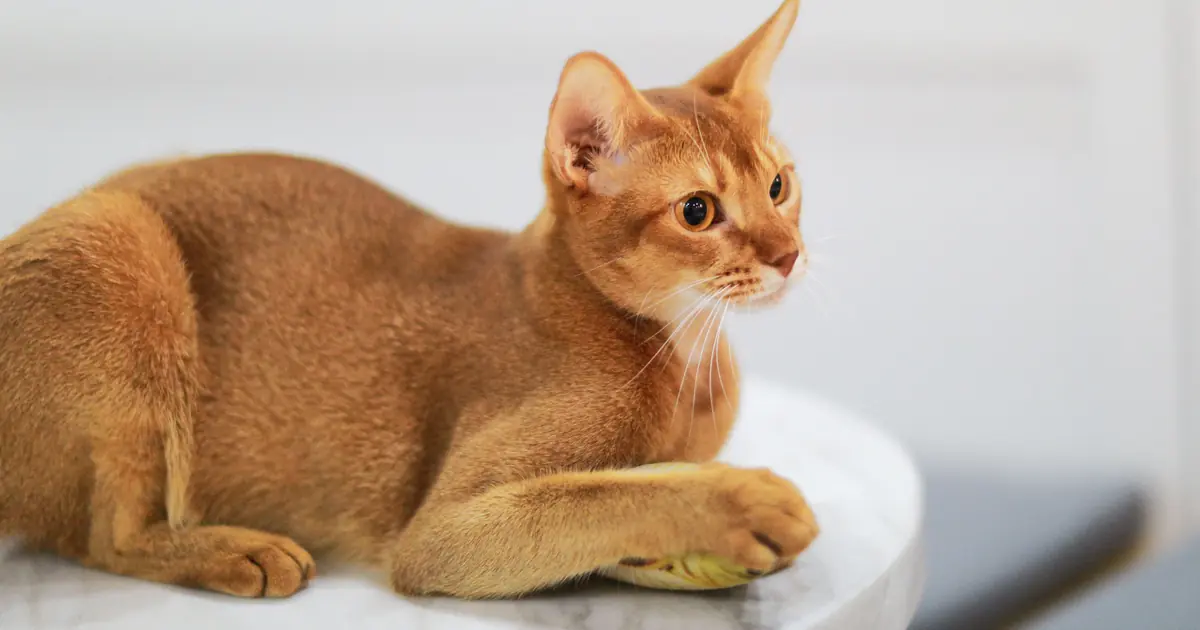
Abyssinian
The Abyssinian is a high-energy, ticked-coat breed prized for problem-solving and endless curiosity. These cats learn routines fast, open things they shouldn’t, and thrive on climbing and interactive play. Whip-smart, but they need a job to do or they’ll make one up.
Bengal
The Bengal is a muscular, leopard-spotted breed known for both looks and brains. Bengals learn tricks quickly, love water and puzzles, and crave physical and mental stimulation. A bored Bengal turns faucets on and opens drawers, so this is a cat that keeps you on your toes.
Siamese
The Siamese is a vocal, people-focused breed that ranks near the very top for smarts. Siamese cats are quick to learn tricks, love conversation, and follow their humans room to room. They’re social to the core, which is why they hate being left alone all day. You can read more in our Siamese cat breed guide.
Cornish Rex
The Cornish Rex is a slim, curly-coated breed with a playful, kitten-like brain that lasts for life. These cats fetch, learn tricks, and stay busy well into their senior years. Agile and social, the Cornish Rex loves a good game and figuring out how things work.
Savannah
The Savannah is a tall, wild-looking hybrid (part domestic cat, part African serval ancestry) with serious problem-solving drive. Savannahs are athletic, dog-like, and quick to learn leash walking and fetch. This is a demanding, ultra-active cat best suited to experienced owners.
Burmese
The Burmese is a sturdy, affectionate breed that pairs a playful mind with a strong need for company. Burmese cats learn tricks, enjoy interactive toys, and stay engaged with their people. Social and clever, they do best in homes where someone’s around.
Turkish Van
The Turkish Van is an athletic, semi-longhaired breed famous for its love of water and its lively intelligence. Vans are strong swimmers, agile climbers, and enthusiastic players. Their curiosity and energy keep them exploring long after other cats would nap.
A quick honorable mention: the Scottish Fold and the Maine Coon
Plenty of other breeds are sharp too. The Maine Coon is a gentle giant that learns tricks and even plays fetch, and the Scottish Fold is a laid-back charmer that solves puzzles at its own pace. Intelligence shows up across many breeds, not just the top-ranked few.
Smartest cat breeds at a glance
Here’s a quick side-by-side of the cleverest breeds, what makes each one sharp, and who each cat suits best. Use it to match a smart cat to your actual lifestyle, not just your wish list.
| Breed | Smart traits | Energy level | Good for |
|---|---|---|---|
| Abyssinian | Problem-solving, curiosity, learns routines fast | Very high | Active owners who want an involved, busy cat |
| Bengal | Trick-learning, puzzle-loving, quick study | Very high | Owners ready to provide heavy enrichment |
| Siamese | Trainable, vocal, deeply people-focused | High | Homes with company and lots of interaction |
| Cornish Rex | Playful for life, fetches, agile | High | Families wanting a lively, social cat |
| Savannah | Athletic, dog-like, leash-trainable | Extremely high | Experienced owners with time and space |
| Burmese | Playful, affectionate, learns tricks | Medium to high | Homes where someone’s usually around |
| Turkish Van | Loves water, agile, endlessly curious | High | Active households that don’t mind splashing |
Curious how your own cat stacks up, pedigree or not? Our guide on figuring out what breed your cat is can help you spot the clues.
Are smart cats harder to live with?
Yes, smart cats are often harder to live with, mostly because a clever brain gets bored fast. A bored, intelligent cat doesn’t just nap it off. She goes looking for a project, and her projects are usually your problems.
Think open cupboards, unrolled toilet paper, faucets left running, and midnight zoomies with a soundtrack. High-intelligence breeds like the Bengal and Abyssinian need real mental work, or they’ll invent their own. That’s not bad behavior, exactly. It’s an under-stimulated genius filling the gap.
So the trade-off is honest. You get a cat that’s engaging, interactive and fun to teach. You also get a cat that notices everything, holds you to the routine, and demands attention when she’s underworked. If you want a quiet, low-maintenance couch cat, one of the top brainiac breeds probably isn’t your match.
How do you keep a smart cat busy and happy?
You keep a smart cat happy by giving her daily mental and physical work: puzzle feeders, interactive play, training, and things to climb and explore. A tired, engaged brain is a well-behaved brain. Here’s how to actually do it.
- Use puzzle feeders. Make her work for meals through a treat ball or foraging toy. It turns eating into a problem to solve, which clever cats love.
- Schedule real play. Two or three short sessions a day with a wand toy beats one long one. Let her stalk, chase and “catch” so the hunt feels complete, a form of play the ASPCA recommends for a cat’s wellbeing.
- Teach tricks. Smart breeds pick up sit, high-five, come-when-called and even fetch. Short, positive sessions with treats keep it fun for both of you.
- Rotate the toys. Put half away for a couple of weeks, then swap. Old toys feel new again, and novelty keeps a busy mind interested. Our roundup of the best cat toys is a solid starting point, and you can even make your own with these DIY cat toys.
- Build vertical space. Cat trees, shelves and window perches give an active cat somewhere to climb, watch and patrol. Height matters more than floor space to most cats.
- Try harness training. Many smart breeds take to a harness and enjoy safe outdoor time. Go slow and let her set the pace.
The International Cat Care team stresses that enrichment isn’t a luxury for active cats. It’s how you prevent stress, boredom and the destructive habits that follow. Ten focused minutes, a few times a day, changes everything.
Are mixed-breed cats smart too?
Yes, mixed-breed cats can be just as smart as any pedigree. Intelligence isn’t locked inside fancy bloodlines. Plenty of clever, trainable, problem-solving cats are ordinary domestic shorthairs and longhairs from the shelter down the road.
Your average house cat, the classic domestic shorthair, comes from a huge, varied gene pool. That mix can produce cats with all the curiosity and street smarts of the top breeds, minus the pedigree price tag. A lot of the sharpest cats people know are rescue moggies.
Here’s the thing about individual personality. It matters more than breed. Two Abyssinians can be wildly different, and one shelter tabby might out-think them both. So don’t rule out a mixed cat if you want a clever companion. Judge the cat in front of you, not the label.
Want to explore beyond the usual suspects? Take a look at our guides to rare cat breeds and striking long-haired cat breeds for more clever, characterful cats.
The bottom line on the smartest cat breed
The Abyssinian usually wins the “smartest cat breed” title, with the Bengal, Siamese, Cornish Rex, Savannah, Burmese and Turkish Van right behind. But remember, this is a soft ranking, not a science. There’s no feline IQ test, and your own cat, breed or not, may be quietly brilliant in ways no list captures.
If you bring home one of these smart breeds, come prepared. Puzzle feeders, daily play and a little training keep that big brain happy and your cupboards closed. A clever cat is a joy. She just needs you to keep up.
Frequently asked questions about the smartest cat breeds
Q: What is the #1 smartest cat breed?
The Abyssinian is the breed most experts name as the number one smartest cat. It stands out for problem-solving, constant curiosity and how quickly it learns routines. Because there’s no true feline IQ test, this ranking is based on observation, not lab measurement.
Q: Are Bengal cats smarter than other breeds?
Bengal cats are among the smartest breeds and are known as fast learners. They pick up tricks quickly, love puzzles, and even turn on faucets and open drawers. Bengals need heavy mental and physical enrichment, or their cleverness turns into mischief.
Q: How can I tell if my cat is smart?
Signs of a smart cat include solving puzzle toys, opening doors or latches, learning tricks, remembering routines, and coming when called. Intense curiosity and quick learning are strong clues. Keep in mind that a cat ignoring a task may be uninterested, not unintelligent.
Q: Do smart cats get bored easily?
Yes, smart cats get bored quickly, and boredom often leads to destructive or attention-seeking behavior. High-intelligence breeds like the Abyssinian and Bengal need daily puzzle feeders, play and training. A busy, engaged cat is far less likely to cause trouble around the house.
Q: Is the Siamese cat intelligent?
Yes, the Siamese is one of the most intelligent cat breeds and ranks near the very top. Siamese cats learn tricks fast, are extremely vocal, and bond closely with their people. They need lots of interaction and enrichment, since they dislike being left alone for long stretches.
Q: Are mixed-breed cats as smart as purebred cats?
Yes, mixed-breed cats can be just as smart as purebred cats. Intelligence isn’t limited to pedigree bloodlines, and many domestic shorthairs are excellent problem-solvers. Individual personality matters more than breed, so a shelter cat may easily out-think a fancy pedigree.
Q: Can you train a cat like a dog?
Yes, you can train many cats using short, positive, treat-based sessions. Smart breeds learn sit, high-five, come-when-called, fetch and harness walking. Cats work for rewards rather than to please you, so patience and good timing matter more than with dogs.
Q: What cat breed is easiest to train?
The Bengal, Abyssinian, Siamese and Savannah are among the easiest cat breeds to train, thanks to their high intelligence and energy. These breeds pick up tricks and leash walking quickly. Start young, keep sessions short, and reward every success to build the habit.

Hello and welcome to The Ideal Cat!
We are some passionate cat owners from different professions. We love our cats and have a lot of experience in how to care for our pets. We are incredibly excited to share our knowledge, experience, and research with you. So you can take good care of your loving cat. We will answer most of the common questions about owning cats, taking care of them, etc. If you have any question contact with us. Thanks for visiting! Enjoy the content.
