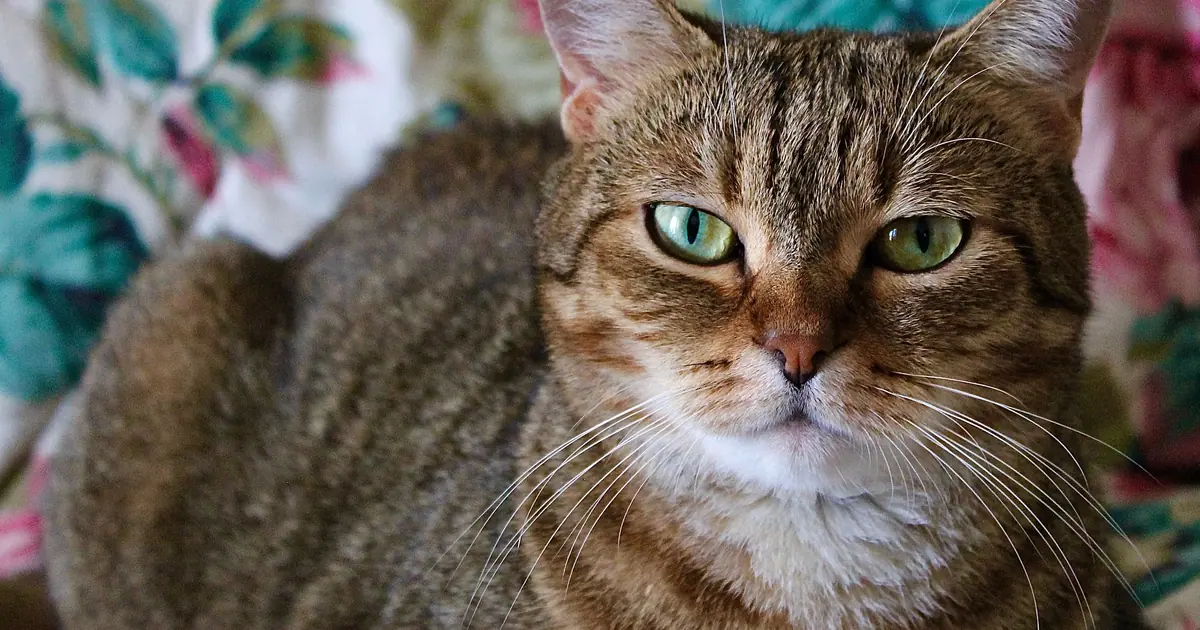
Picture this. You just adopted a cat, you’re filling out the shelter paperwork, and next to “breed” someone has written “DSH.” So you Google it, expecting some rare pedigree, and instead you learn your new best friend is basically the cat version of a lovable mutt.
Don’t feel silly. A lot of new cat parents hit this exact moment of confusion. The truth is a little anticlimactic and honestly kind of wonderful. DSH means Domestic Shorthair, and it describes the everyday house cat that makes up most of the cat population in America. Your cat isn’t “no breed.” Your cat is the most classic cat there is.
- DSH stands for Domestic Shorthair, a term for a short-haired cat of mixed or unknown ancestry, not a recognized pedigree breed.
- Roughly 80% of pet cats in the US are domestic shorthair, medium hair, or longhair cats rather than registered breeds.
- The American Shorthair is a real, registered pedigree breed, while the domestic shorthair is a catch-all mixed-breed label, so the two are not the same thing.
- Domestic shorthair cats usually live 12 to 15 years, and many reach their late teens with good care.
- DSH cats come in every coat color and pattern, from orange tabby to tuxedo to calico, and their personalities vary widely because their genetics do too.
What does DSH mean on a cat’s paperwork?
DSH means Domestic Shorthair, which is the standard shelter and veterinary shorthand for a short-haired cat with mixed or unknown parentage. It’s a description, not a pedigree. Think of it the way “mixed breed” or “mutt” works for dogs. The cat has a short coat and no traceable purebred lineage, so it gets filed under DSH.
You’ll see this label everywhere. Adoption listings, vet records, microchip forms, and pet insurance applications all lean on DSH because it’s quick and accurate for the huge number of cats that don’t belong to a registered breed. In the UK and much of the world, the friendly nickname for the same cat is a “moggy” (or “moggie”).
Here’s the part that surprises people. A DSH cat can look absolutely stunning and still be “just” a domestic shorthair. Breed status is about documented ancestry and registration papers, not about how gorgeous your cat is. If nobody bred your cat on purpose to a written standard, it’s a DSH, full stop. Curious what actually might be in the mix? Our guide on how to figure out what breed your cat is walks through the clues.
Is a Domestic Shorthair an actual breed?
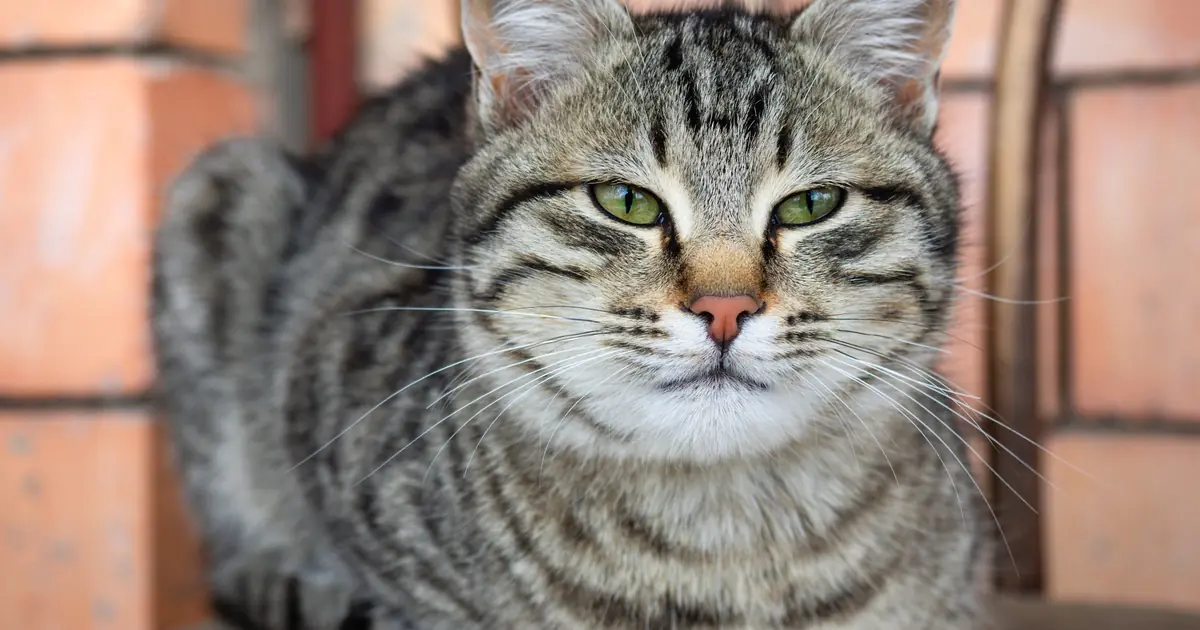
No, a Domestic Shorthair is not an actual breed. It’s an umbrella term for non-pedigree short-haired cats, which is why two DSH cats can look nothing alike. One might be a chunky orange tabby and the other a sleek black cat, and both are correctly called DSH.
This trips people up because it feels like it should be a breed. It has an official-sounding name and it shows up on formal documents. But a breed, in the technical sense, means cats bred selectively over generations to match a written standard and registered with an organization like The Cat Fanciers’ Association (CFA) or TICA. Domestic shorthairs have no standard because nobody is breeding them to one. Their “look” is whatever nature and the neighborhood tomcat handed down.
According to the Cornell Feline Health Center, the vast majority of pet cats are these mixed-ancestry domestics rather than pedigreed breeds. So if your cat is a DSH, it’s in very good and very large company.
DSH vs American Shorthair: what’s the difference?
The difference is simple: the American Shorthair is a real registered breed, and the Domestic Shorthair is not. They sound almost identical, which causes endless mix-ups, but only one has a pedigree behind it.
An American Shorthair is a specific breed with a documented history, a written standard, and registration papers from groups like the CFA. Breeders select for a certain build, a round face, a dense coat, and classic markings. A Domestic Shorthair is any short-haired cat of unknown or mixed background, so it has no papers and no guaranteed look. Your DSH might have some American Shorthair in its family tree, but without documentation, it stays a DSH.
| Feature | Domestic Shorthair (DSH) | American Shorthair (ASH) |
|---|---|---|
| Breed status | Not a breed, a catch-all term | Recognized pedigree breed |
| Ancestry | Mixed or unknown | Documented, registered lineage |
| Papers | None | Registration papers from CFA / TICA |
| Appearance | Varies wildly, every color and pattern | Consistent look, sturdy body, round face |
| Cost | Usually free to low adoption fee | Higher, breeder price |
Want the full picture on the pedigree side? Read our American Shorthair breed guide. And if your cat has longer or medium fur, the same logic applies to the DMH and DLH labels below. You can double-check the registered standard on the CFA’s American Shorthair page.
What do DSH, DMH, and DLH mean?
DSH, DMH, and DLH all describe non-pedigree domestic cats, sorted only by coat length. The letters stand for Domestic Shorthair, Domestic Medium Hair, and Domestic Longhair. Coat length is the single thing that separates them, not breed, ancestry, or personality.
| Term | Stands for | What it means |
|---|---|---|
| DSH | Domestic Shorthair | Mixed-breed cat with a short, close coat |
| DMH | Domestic Medium Hair | Mixed-breed cat with medium-length, slightly fluffy fur |
| DLH | Domestic Longhair | Mixed-breed cat with long, flowing fur |
| ASH | American Shorthair | An actual registered pedigree breed (not a mix) |
So a fluffy shelter cat with no papers gets labeled DLH, and its short-haired sibling would be a DSH. Same background, different coat. Only the American Shorthair on that last row is a true breed.
What do DSH cats look like?
DSH cats look like just about anything, because their genes are a mixed bag. There is no standard appearance. You’ll find domestic shorthairs in every color and coat pattern out there, usually with a medium, muscular build and a rounded head, though even that varies from cat to cat.
Common looks include the striped or swirled tabby, the orange tabby, the black-and-white tuxedo, the tortoiseshell, the calico, the solid black, and the gray. That variety is exactly why DSH isn’t a breed. If you’re trying to name your cat’s markings, our guides on what a tabby cat is and the different cat coat patterns break it down. And yes, that friendly ginger on your couch counts too, as our orange tabby cat guide explains.
What is a DSH cat’s temperament like?
A DSH cat’s temperament varies a lot, precisely because these cats have mixed and unpredictable ancestry. With a pedigree breed you can often predict personality traits. With a domestic shorthair, you’re getting a one-of-a-kind mix, so the safest answer is “it depends on the individual cat.”
Even so, many domestic shorthairs land in a lovely middle ground. Plenty are friendly, adaptable, playful, and easygoing, which is part of why they make such popular family pets. Some are chatty lap cats and some are aloof hunters who tolerate you on their terms. The best way to know a shelter DSH is to spend real time with that specific cat, not to guess from the label. If affection is your top priority, our roundup of the most affectionate cat breeds can help you spot promising traits.
How long do DSH cats live, and are they healthy?
Domestic shorthair cats usually live 12 to 15 years, and many reach their late teens or even early twenties with good care. As a group they tend to be hardy, since their mixed genetics spread the odds around rather than concentrating breed-specific problems.
This is the upside of being a mix. Purebred cats sometimes carry inherited conditions tied to their narrow gene pool, while a diverse background can lower that risk, an effect people loosely call hybrid vigor. It’s not a guarantee of perfect health, though. DSH cats still get the common feline issues: dental disease, obesity, kidney trouble in older age, and diabetes, especially if they carry extra weight. Keep up with yearly vet visits, feed a proper portion, and watch that waistline.
This section is educational and isn’t a substitute for veterinary care. If your cat shows red-flag signs like not eating for more than a day, straining in the litter box, labored breathing, or sudden hiding, call your vet right away. For solid baseline care habits, the ASPCA’s general cat care guide is a reliable starting point.
Are DSH cats good pets?
Yes, DSH cats make excellent pets, and they’re the most popular cats in America for good reason. They’re generally hardy, low-maintenance in the grooming department thanks to that short coat, adaptable to most homes, and they come without the price tag or waitlist of a pedigree breed.
Adopting a domestic shorthair also means giving a home to a cat that genuinely needs one, since shelters are full of wonderful DSH cats of every age and personality. You get all the love of a fancy breed with none of the fuss. Honestly, for most families, a DSH is the smart, kind, and easy choice.
How can I guess what’s in my DSH cat’s mix?
You can make an educated guess about your DSH cat’s ancestry by reading its coat, body shape, and behavior, but you can’t confirm it without a feline DNA test. Since a domestic shorthair has no papers, any “breed” you spot is really just a resemblance, not proof.
Look for clues. A slim, talkative, blue-eyed cat with points might carry some Siamese heritage. A stocky, round-faced tabby could hint at American Shorthair somewhere back there. A very fluffy tail on a “shorthair” might mean a longer-haired ancestor slipped in. For a real answer, a cat DNA kit can estimate breed makeup and flag some genetic health risks. Until then, enjoy the mystery. Our guide on identifying what breed your cat is covers the telltale signs in more depth.
The bottom line on the DSH cat breed
The DSH cat “breed” isn’t really a breed at all. It’s the everyday domestic shorthair, the mixed-ancestry moggy that fills our homes and shelters and steals our hearts. Your DSH cat is healthy, unique, and every bit as lovable as any pedigree, and it came with a one-of-a-kind design you’ll never find in another cat. That’s not a downgrade. That’s the whole charm of a domestic shorthair.
Frequently Asked Questions
Q: Is a DSH a specific breed?
No, a DSH is not a specific breed. Domestic Shorthair is a catch-all term for short-haired cats of mixed or unknown ancestry, similar to calling a dog a mixed breed. Because they aren’t bred to a standard, two DSH cats can look completely different from each other.
Q: What is the difference between a DSH and an American Shorthair?
The American Shorthair is a recognized pedigree breed with registration papers and a documented lineage, while a Domestic Shorthair (DSH) is a non-pedigree mixed-breed cat. They share a similar name and can look alike, but only the American Shorthair has an official breed standard.
Q: How long do DSH cats live?
Domestic shorthair cats typically live 12 to 15 years, and many reach their late teens with good care. Their mixed genetics tend to make them hardy, but regular vet checkups, a healthy weight, and good dental care all help extend their lifespan.
Q: What do DSH, DMH, and DLH mean?
DSH means Domestic Shorthair, DMH means Domestic Medium Hair, and DLH means Domestic Longhair. All three describe non-pedigree mixed-breed cats, and the only thing separating them is coat length, not ancestry or personality.
Q: Are domestic shorthair cats good with families and other pets?
Many domestic shorthair cats are friendly, adaptable, and easygoing, which makes them popular family pets. Because their temperament varies from cat to cat, it’s best to spend time with an individual DSH before adopting to see how it responds to kids and other animals.
Q: Why is my cat labeled DSH at the shelter or vet?
Shelters and vets label a cat DSH when it has a short coat and no documented pedigree, which describes most cats in the US. It’s a quick, accurate way to record a mixed-breed cat’s basic type on adoption, medical, and insurance paperwork.
Q: Can I find out what breeds are in my DSH cat?
You can estimate your DSH cat’s ancestry with a feline DNA test, which analyzes a cheek swab and reports likely breed makeup along with some genetic health markers. Without a test, any breed you spot is just a resemblance based on looks and behavior, not proof.
Q: Do DSH cats need a lot of grooming?
DSH cats are low-maintenance groomers thanks to their short coats. A weekly brushing to remove loose fur, plus routine nail trims and dental care, is usually enough to keep a domestic shorthair looking and feeling healthy.

Hello and welcome to The Ideal Cat!
We are some passionate cat owners from different professions. We love our cats and have a lot of experience in how to care for our pets. We are incredibly excited to share our knowledge, experience, and research with you. So you can take good care of your loving cat. We will answer most of the common questions about owning cats, taking care of them, etc. If you have any question contact with us. Thanks for visiting! Enjoy the content.
