
Bengals look like tiny leopards, so it’s fair to wonder if these exotic-looking cats purr like an ordinary house cat. They absolutely do, and then some.
Here’s the scoop on Bengal purring and their big, chatty vocal range.
- Bengal cats purr like all domestic cats, it’s a normal, healthy behavior.
- Despite their wild ancestry, Bengals are fully domestic and purr to show contentment.
- Bengals are very vocal and pair purrs with chirps, trills, and loud meows.
- Like all cats, Bengals may also purr to self-soothe when stressed or unwell.
- Read a purr with body language; a relaxed, purring Bengal is a happy one.
Do Bengal cats purr?
Yes, Bengal cats purr, just like every other domestic cat. Although Bengals descend from the wild Asian leopard cat, generations of breeding have made them fully domestic, and purring is a universal domestic-cat behavior. A Bengal purrs to express contentment, bond with you, and soothe itself, the same as any house cat. What sets Bengals apart isn’t whether they purr, but how vocal and expressive they are overall, layering purring with a wide range of other lively sounds.
Why are Bengals so vocal beyond purring?
Bengals are famously chatty and expressive because they’re intelligent, energetic, and interactive cats. On top of purring, they use chirps, trills, chatters, and loud, insistent meows to communicate with their people, especially when they want attention, play, or food. This big vocal repertoire reflects the breed’s high energy and social nature. So a Bengal that purrs and “talks” a lot is being completely typical, and that liveliness ties into their need for stimulation, covered in our Bengal cat guide and Bengal behavior problems.
What does a Bengal’s purr mean?
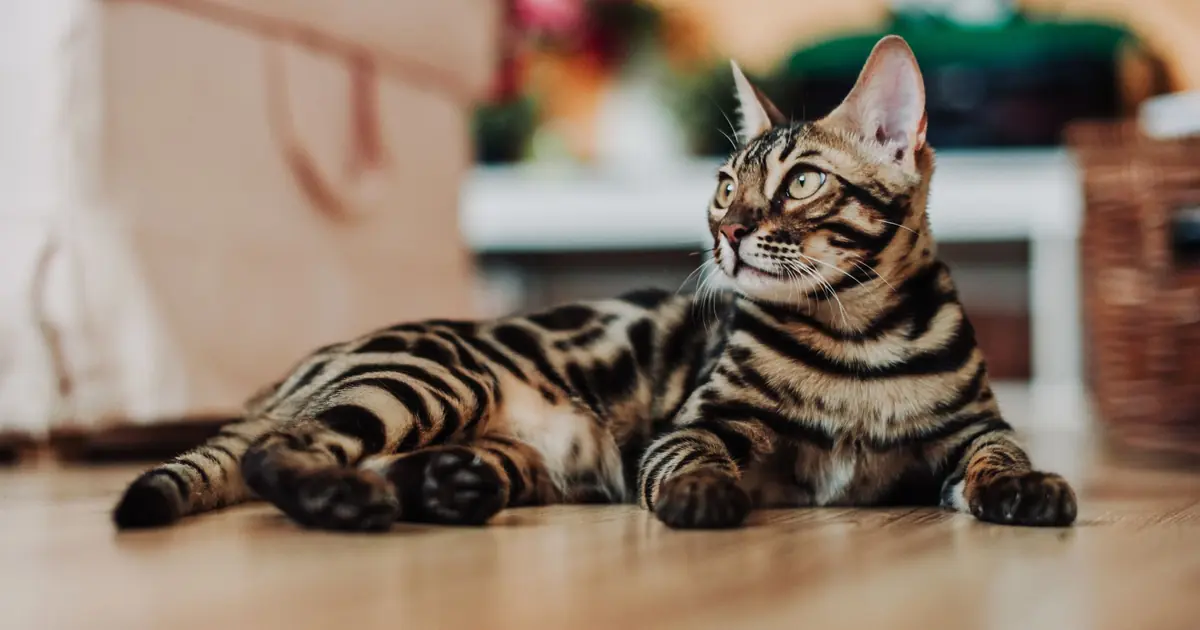
A Bengal’s purr usually means contentment, but context matters, as with all cats. Most often your Bengal purrs when it’s relaxed, happy, being petted, or bonding with you. However, cats also purr to comfort themselves when stressed, anxious, in pain, or unwell, so a purr isn’t always a happy sign. A purr paired with a loose, relaxed body means a content Bengal; a purr alongside hiding, tension, or illness signs means look closer. Understanding this is key, as we explain in what a cat’s purring means.
Bengal sounds and what they mean
Here’s a guide to the Bengal’s vocal range.
| Sound | Usual meaning |
|---|---|
| Purring (relaxed body) | Contentment, comfort, bonding |
| Chirps and trills | Excitement, greeting, or “come here” |
| Loud, insistent meowing | Attention, play, or food demands |
| Chattering | Excitement at prey or toys (window “hunting”) |
| Purring with tension or hiding | Possible stress, pain, or illness |
When should a Bengal’s purring or vocalizing worry you?
Pay attention if purring or other sounds suddenly change or come with worrying signs. Because cats can purr when unwell, a purring Bengal that’s also hiding, off its food, lethargic, or breathing hard may be self-soothing through discomfort. Likewise, a sudden surge in meowing or yowling can signal pain, hyperthyroidism, high blood pressure, stress, or, in older cats, cognitive decline. This article is educational and not a substitute for veterinary care; a clear change in your Bengal’s normal sounds warrants a vet visit. For how purring works and whether cats can control it, see can cats control their purr, and for another breed, do Siamese cats purr. Trusted guidance comes from the ASPCA and International Cat Care.
Frequently Asked Questions
Q: Do Bengal cats purr like normal cats?
Yes. Bengals are fully domestic despite their wild ancestry, and purring is universal among domestic cats. A Bengal purrs to show contentment, bond, and self-soothe, just like any house cat, plus it adds lots of other lively sounds.
Q: Why is my Bengal so vocal?
Bengals are intelligent, energetic, and interactive, so they communicate a lot, using chirps, trills, chatters, and loud meows on top of purring. It’s normal breed behavior, often to seek attention, play, or food. Meeting their needs reduces demanding vocalizing.
Q: Does a Bengal’s purr always mean it’s happy?
Usually, but not always. Cats mainly purr when content, yet they also purr to self-soothe when stressed, in pain, or ill. Read the purr with body language, relaxed means happy; tense, hiding, or unwell means look closer or see a vet.
Q: What sounds do Bengal cats make?
A wide range: purring, chirps, trills, chattering (often at prey through windows), and loud, insistent meows. Bengals are one of the more talkative, expressive breeds, using all these to interact with their people.
Q: Why doesn’t my Bengal purr much?
Purring frequency varies by individual. Some cats, including Bengals, are quieter purrers or express contentment in other ways, like slow blinks or seeking closeness. As long as your Bengal is eating, playing, and acting normally, less purring is fine.
Q: Should I worry if my Bengal suddenly gets very vocal?
A sudden increase in meowing or yowling can signal pain, illness like hyperthyroidism, stress, or cognitive decline in seniors. Note any other changes like weight loss or hiding, and have your vet check your Bengal to be safe.

Hello and welcome to The Ideal Cat!
We are some passionate cat owners from different professions. We love our cats and have a lot of experience in how to care for our pets. We are incredibly excited to share our knowledge, experience, and research with you. So you can take good care of your loving cat. We will answer most of the common questions about owning cats, taking care of them, etc. If you have any question contact with us. Thanks for visiting! Enjoy the content.
