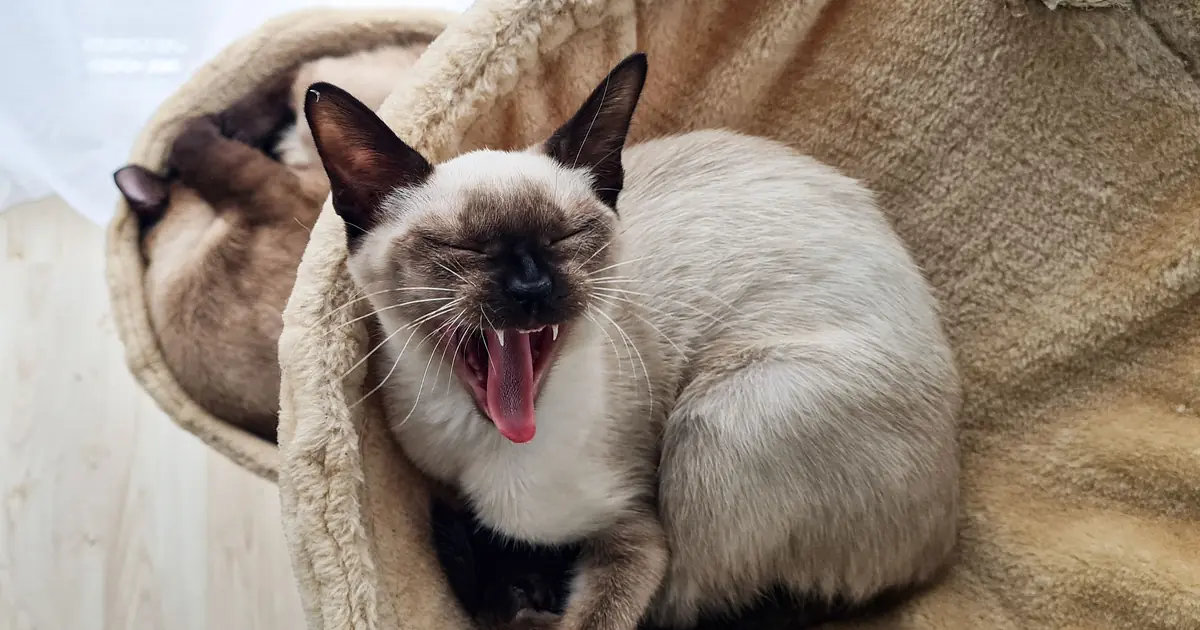
Siamese cats are famous for their loud, opinionated meowing. But do these chatterboxes also do the cozy, rumbly purr thing? Absolutely.
Here’s the scoop on Siamese purring, and how it fits with their legendary vocal personality.
- Siamese cats purr like all domestic cats, it’s a normal, healthy behavior.
- Siamese are also among the most vocal breeds, pairing purrs with loud, frequent meowing.
- A purr usually signals contentment, but cats also purr to self-soothe when stressed or in pain.
- Read the purr with body language and context to know what your Siamese means.
- A purring cat that’s also hiding, off food, or breathing hard may be unwell, see a vet.
Do Siamese cats purr?
Yes, Siamese cats purr, just like every other domestic cat. Purring is a universal feline behavior, not something limited to certain breeds, so a Siamese will happily rumble away when content. What makes Siamese distinctive isn’t whether they purr, but that they’re also extremely vocal, layering purring with lots of loud, conversational meowing. So your Siamese purrs and talks, often at the same time. Both are completely normal for this expressive breed.
Why are Siamese cats so vocal on top of purring?
Siamese are famously chatty because the breed is highly social, intelligent, and people-oriented. They use frequent, loud, almost conversational meows to communicate with their humans, ask for attention, and stay connected. Purring is their quiet contentment signal, while meowing is their louder “let’s talk” mode. This combination gives Siamese a big vocal range, from soft purrs to demanding yowls. It’s part of why the breed can be so engaging, as we cover in whether Siamese cats are mean (they’re usually just talkative and intense, not mean).
What does a Siamese purr mean?
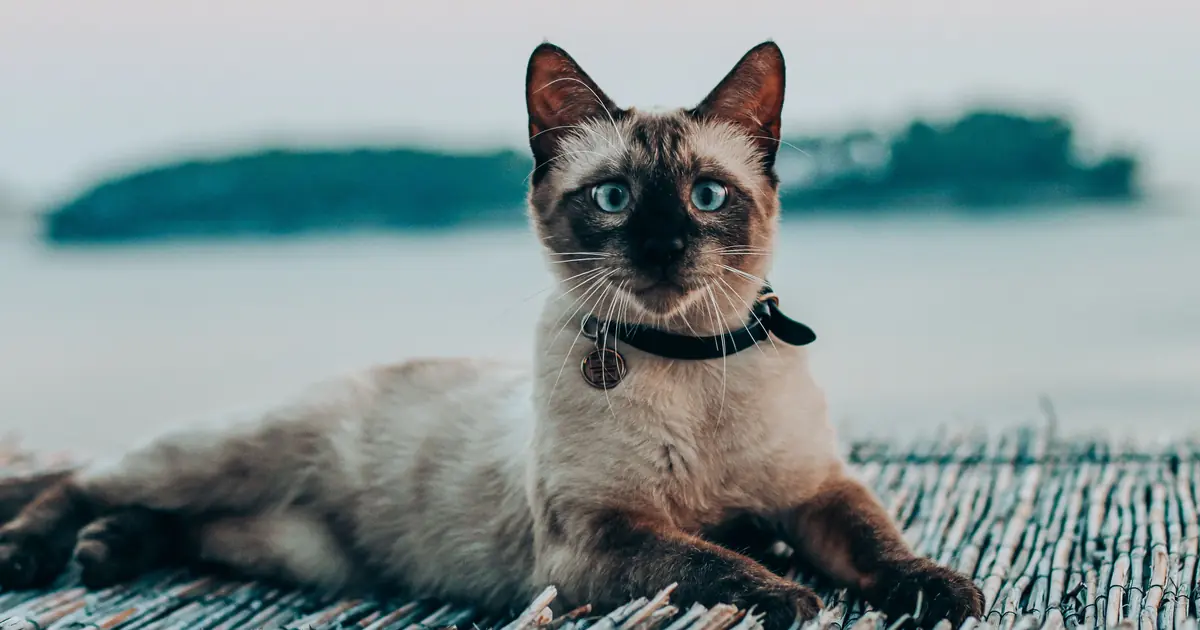
A Siamese purr usually means contentment, but not always, context matters. Most often your cat purrs when it’s happy, relaxed, being petted, or bonding with you. However, cats also purr to self-soothe when they’re anxious, in pain, or unwell, a purr can be comforting to the cat itself. So a purr paired with relaxed, happy body language means a content cat, while a purr alongside hiding, tension, or illness signs means something else. Understanding this is key, as we explain in what a cat’s purring means.
Siamese sounds and what they mean
Here’s a quick guide to the Siamese vocal range.
| Sound | Usual meaning |
|---|---|
| Purring (relaxed body) | Contentment, comfort, bonding |
| Loud, frequent meowing | Attention, conversation, requests |
| Yowling | Strong demand, or (in seniors) confusion |
| Purring with tension or hiding | Possible stress, pain, or illness |
When should a Siamese’s purring or meowing worry you?
Be alert if purring or meowing changes suddenly or comes with other symptoms. Because cats can purr when unwell, a purring Siamese that’s also hiding, off its food, lethargic, or breathing with effort may need help. Likewise, a sudden surge in meowing or yowling can signal pain, hyperthyroidism, high blood pressure, or cognitive decline in older cats. This article is educational and not a substitute for veterinary care; a clear change in your cat’s normal sounds warrants a vet visit. For how vocalness varies across cats, see whether black cats are more vocal, and for another chatty breed, why Ragdolls meow so much. Trusted guidance comes from the ASPCA and International Cat Care.
Frequently Asked Questions
Q: Do Siamese cats purr like other cats?
Yes. Purring is a universal feline behavior, so Siamese purr just like all domestic cats. They’re simply also very vocal, so they combine purring with lots of loud, conversational meowing, giving them a wide range of sounds.
Q: Why is my Siamese so loud if it also purrs?
Siamese are one of the most vocal breeds, highly social and people-oriented, so they meow loudly and often to communicate. Purring is their quiet contentment signal; loud meowing is their “let’s talk” mode. Both are normal for the breed.
Q: Does a Siamese purr always mean it’s happy?
Usually, but not always. Cats mainly purr when content, yet they also purr to self-soothe when stressed, in pain, or unwell. Read the purr with body language, relaxed and happy means content; tense or hiding means check further.
Q: Are Siamese cats louder than other breeds?
Yes, Siamese are among the most vocal cat breeds, known for loud, frequent, almost conversational meowing. Related breeds like the Oriental and Balinese are similar. They still purr softly too; it’s the meowing that stands out.
Q: Should I worry if my Siamese purrs but seems unwell?
Yes, monitor it. Cats can purr to comfort themselves when sick or in pain. A purring Siamese that’s also hiding, off food, lethargic, or breathing hard should see a vet, since the purr may be masking discomfort.
Q: Why did my Siamese suddenly get more vocal?
A sudden increase in meowing or yowling can signal pain, hyperthyroidism, high blood pressure, stress, or cognitive decline in seniors. Note any other changes like weight loss or hiding, and have your vet check your cat.

Hello and welcome to The Ideal Cat!
We are some passionate cat owners from different professions. We love our cats and have a lot of experience in how to care for our pets. We are incredibly excited to share our knowledge, experience, and research with you. So you can take good care of your loving cat. We will answer most of the common questions about owning cats, taking care of them, etc. If you have any question contact with us. Thanks for visiting! Enjoy the content.
