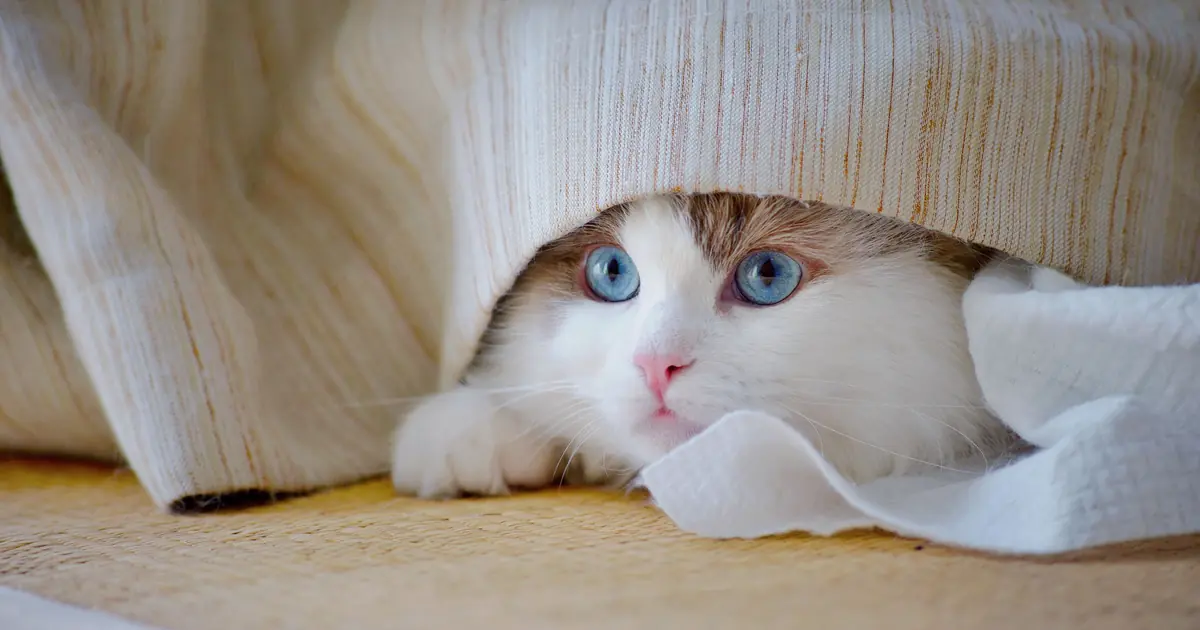
Picture the carrier coming out of the closet. Your cat vanishes under the bed before you’ve even opened it. Or maybe it’s the yowling that starts the second you pick up your keys, the over-grooming that’s left a bald patch, the peeing outside the box that no cleaner seems to fix. Anxiety in cats is real, and it’s exhausting to watch when you can’t explain to them that everything’s okay.
So you start wondering: is there a medication that could actually help? The short answer is yes, and this guide walks you through what your vet may consider, how each option works, and why medication almost always works best alongside changes at home.
- All cat anxiety medications require a veterinary prescription. There is no safe over-the-counter anxiety pill for cats.
- Daily medications like fluoxetine (an SSRI) can take 4 to 6 weeks to reach full effect and treat ongoing anxiety.
- Situational medications like gabapentin and trazodone work in about 1 to 2 hours and are given before a stressful event.
- Human antidepressants and OTC calming products can be toxic to cats and should never be given without a vet’s direction.
- Medication works best paired with pheromones, calming supplements, enrichment, and behavior changes, not on its own.
What does anxiety actually look like in a cat?
Cat anxiety shows up as behavior changes, not words, so it’s easy to miss or mistake for “just being difficult.” An anxious cat is reacting to fear or stress, often triggered by changes at home, new people or pets, loud noises, or a trip to the vet.
Here are the signs cat parents notice most:
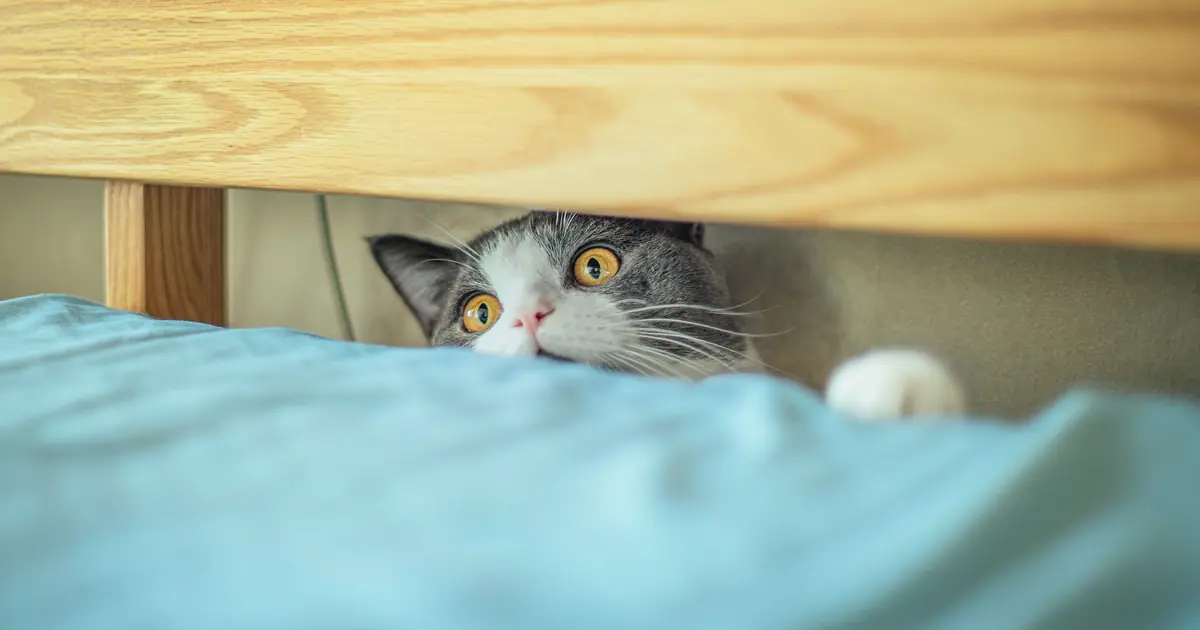
- Hiding for long stretches or bolting at small sounds
- Peeing or spraying outside the litter box
- Over-grooming, sometimes to the point of bald patches
- Excessive meowing or yowling, especially at night
- Aggression, hissing, or swatting that seems out of character
- Pacing, trembling, flattened ears, or a tucked tail
- Eating less, or refusing food during stressful events
One sign on its own isn’t proof of an anxiety disorder. A cat who hides during a thunderstorm is having a normal reaction. It’s the pattern, the frequency, and how much it disrupts your cat’s daily life that matter. If your cat is suddenly hissing at you or meowing far more than usual, those shifts are worth mentioning to your vet.
When is cat anxiety medication worth considering?
Medication is worth considering when anxiety is frequent, severe, or hurting your cat’s quality of life, and when environment and behavior changes alone haven’t been enough. It’s rarely the first thing a vet reaches for, and it’s almost never the only thing.
Before any prescription, a good vet rules out medical causes first. Pain, thyroid problems, urinary issues, and other conditions can look exactly like anxiety. A cat peeing outside the box might have a bladder infection, not a behavior problem. That’s why a vet exam comes before pills, every time.
Your vet may suggest medication when:
- Anxiety is daily or near-daily and clearly distressing your cat
- Behavior and environmental changes helped a little, but not enough
- The anxiety is causing self-harm, like over-grooming or not eating
- A specific, predictable event (a vet visit, a move, travel) reliably terrifies your cat
Think of medication as a tool that lowers the volume on fear so your cat’s brain can actually learn to feel safe again. It gives behavior work a chance to stick.
What are the main types of cat anxiety medication?
Cat anxiety medications fall into two broad groups: daily medications for ongoing, long-term anxiety, and situational medications given before a specific stressful event. Which one fits depends on whether your cat is anxious all the time or only in certain moments. Every one of these is prescription-only and chosen by your veterinarian, who weighs your cat’s health, age, and the type of anxiety. The Merck Veterinary Manual covers how these drug classes work in animals in more detail.
Daily, long-term medications (SSRIs and TCAs)
Daily anxiety medications build up in your cat’s system over weeks and treat ongoing, generalized anxiety. They’re taken every day, not just when stress hits.
Fluoxetine (sold as Reconcile, and the same drug as human Prozac) is a selective serotonin reuptake inhibitor, or SSRI. Vets commonly prescribe it for long-term anxiety, urine marking, aggression, and compulsive behaviors like over-grooming. It raises serotonin, a brain chemical tied to calm and stable mood.
Clomipramine is a tricyclic antidepressant (TCA) sometimes used for chronic anxiety and compulsive behaviors. Like SSRIs, it’s a daily, long-game medication.
Situational, short-term medications
Situational medications are given a few hours before a known stressful event and wear off within a day. They’re the go-to for cats who are mostly fine but fall apart in specific moments.
Gabapentin is widely used for vet visits, car travel, and loud events. It typically works within 1 to 2 hours and is usually given 2 to 3 hours before the stressful moment. It can cause sedation and wobbliness, which is expected and temporary.
Trazodone is another short-term option used to calm and mildly sedate cats before travel or exams. It also takes effect in roughly 1 to 2 hours.
Alprazolam is a benzodiazepine that boosts a calming brain chemical called GABA. It’s fast-acting, taking effect in about 1 to 2 hours, and is sometimes used for acute, predictable fear.
Buspirone (a middle ground)
Buspirone is an anti-anxiety medication that works on serotonin receptors and is often used for social anxiety between cats and for stress-related urine marking. It’s given daily and can take several weeks to work, so it isn’t a quick fix for one scary event.
Cat anxiety medication comparison table
Here’s a quick side-by-side of the medications vets most often discuss. Doses are deliberately left out because they depend entirely on your individual cat and must come from your veterinarian.
| Medication (type) | Typically used for | Notes |
|---|---|---|
| Fluoxetine (SSRI) | Daily, long-term anxiety; urine marking; aggression; over-grooming | Given every day; takes about 4 to 6 weeks for full effect |
| Clomipramine (TCA) | Chronic anxiety; compulsive behaviors | Daily medication; builds up over weeks |
| Gabapentin | Situational stress: vet visits, travel, loud events | Works in 1 to 2 hours; given 2 to 3 hours before the event; can cause sedation |
| Trazodone | Short-term calm before travel or exams | Works in about 1 to 2 hours; mild sedative effect |
| Alprazolam (benzodiazepine) | Acute, predictable fear | Fast-acting, roughly 1 to 2 hours; short-acting |
| Buspirone | Social anxiety between cats; stress-related marking | Daily; can take several weeks to work; not for sudden events |
How long does cat anxiety medication take to work?
It depends entirely on the type. Situational medications like gabapentin and trazodone work within 1 to 2 hours, which is why they’re given shortly before a stressful event. Daily medications work on a much slower timeline.
Fluoxetine and other SSRIs often take 4 to 6 weeks to show their full effect, because the drug needs to build up in your cat’s system. Vets usually recommend giving a daily medication a fair trial of at least 4 to 8 weeks before deciding whether it’s helping. Buspirone also needs several weeks.
Here’s the part that trips people up: with daily medications, you won’t see an overnight change, and stopping early because “it isn’t working yet” is a common mistake. Patience is part of the plan. Never stop a daily anxiety medication suddenly without your vet’s guidance, since some need to be tapered.
What are the side effects to watch for?
Most cats tolerate anxiety medication well, but side effects can happen, especially in the first week or two as your cat adjusts. Knowing what’s normal helps you tell the difference between “settling in” and “call the vet.”
With daily medications like fluoxetine, the most common side effects are:
- Drowsiness or lower energy
- Reduced appetite
- Mild stomach upset: nausea, vomiting, or loose stool
- Changes in litter box habits
These usually ease within a week or two. Situational medications like gabapentin tend to cause sedation and a bit of wobbliness, which is expected and fades as the dose wears off.
Call your vet promptly if your cat won’t eat for more than a day, seems more anxious or agitated rather than calmer, is very lethargic, or has ongoing vomiting or diarrhea. Report anything that worries you. Your vet can adjust the dose or switch medications.
Should you try non-drug options first?
Yes, in most mild to moderate cases, vets recommend starting with non-drug approaches, and often keeping them going even when medication is added. Medication rarely works well on its own. It works best as one part of a bigger plan.
Here’s what usually comes first, or alongside:
- Pheromone diffusers. Products like Feliway release a synthetic version of a calming feline facial pheromone. They’re plugged in near where your cat spends time.
- Calming supplements. Vet-recommended options include L-theanine products (like Anxitane), alpha-casozepine (Zylkene), and combination supplements like Solliquin. Some cat parents also try calming cat treats for milder, everyday stress.
- Environment and enrichment. More vertical space, hiding spots, scratching posts, play sessions, and a predictable routine all lower baseline stress. In multi-cat homes, enough litter boxes and separate feeding stations matter a lot.
- Behavior work. Slow desensitization and counter-conditioning help your cat unlearn fear. This is where a certified behaviorist earns their keep.
One important safety note: no over-the-counter human product is considered safe to give a cat for anxiety. Human antidepressants and many OTC medicines are toxic to cats, and it’s dangerously easy to overdose a small animal. Even “natural” supplements should get a thumbs-up from your vet first.
Who prescribes cat anxiety medication, a vet or a behaviorist?
Your regular veterinarian can prescribe anxiety medication, and for many cats that’s exactly the right starting point. Your vet knows your cat’s health history, can rule out medical causes, and can start a first-line medication like fluoxetine or gabapentin.
For complex, severe, or stubborn cases, your vet may refer you to a veterinary behaviorist. A board-certified veterinary behaviorist (a DACVB) is a vet with advanced training in animal behavior and psychiatric medication. They build detailed behavior-modification plans and fine-tune medication when standard approaches aren’t cutting it.
Either way, the throughline is the same: a licensed professional prescribes and monitors the medication. This isn’t something to source online or borrow from a friend’s pet. The ASPCA and PetMD both offer solid background reading before your appointment, and VCA Hospitals has a helpful guide on medications used specifically to ease vet-visit stress.
- This article is educational and not a substitute for veterinary advice. Every cat is different.
- All anxiety medications for cats are prescription-only. Talk to your vet before starting, changing, or stopping any of them.
Frequently asked questions
Q: What can I give my cat for anxiety?
Only give your cat medication or supplements that your veterinarian prescribes or approves. There is no safe over-the-counter anxiety pill for cats, and human medications like Prozac or Xanax should never be given without a vet’s exact direction, since human doses can be toxic. For mild stress, vets often suggest pheromone diffusers, vet-approved calming supplements, and environmental changes first.
Q: Is fluoxetine (Prozac) safe for cats?
Fluoxetine is commonly and safely prescribed to cats by veterinarians for long-term anxiety, urine marking, and compulsive behaviors. It’s the same drug as human Prozac but dosed specifically for cats, so it must come from your vet. Mild side effects like reduced appetite or drowsiness can occur in the first week or two.
Q: How long does it take for cat anxiety medication to work?
Situational medications like gabapentin and trazodone work within 1 to 2 hours and are given before a stressful event. Daily medications like fluoxetine take longer, often 4 to 6 weeks, because they build up in your cat’s system over time. Vets usually recommend a trial of at least 4 to 8 weeks for daily medications.
Q: Can I give my cat gabapentin before a vet visit?
Only if your veterinarian has prescribed it for your cat. Gabapentin is a popular choice for vet-visit and travel anxiety because it works within 1 to 2 hours and is usually given 2 to 3 hours before the event. Your vet will decide the right amount based on your cat’s weight and health.
Q: Are there natural alternatives to cat anxiety medication?
Yes. Pheromone diffusers like Feliway, vet-approved calming supplements such as L-theanine or alpha-casozepine products, environmental enrichment, and behavior training can all reduce anxiety. For mild cases these are often tried first. Always run any supplement past your vet, since “natural” does not automatically mean safe for cats.
Q: Do cats need to take anxiety medication forever?
Not always. Situational medications are used only around specific events. Daily medications are sometimes used for months and then tapered off once behavior work has taken hold, while some cats with chronic anxiety benefit from long-term treatment. Your vet decides the timeline, and you should never stop a daily medication suddenly without guidance.
Q: Can anxiety medication change my cat’s personality?
Properly dosed anxiety medication should make your cat calmer and more like themselves, not sedated or “zombie-like.” If your cat seems overly drowsy, withdrawn, or more anxious after starting a medication, tell your vet. That usually means the dose or the drug needs adjusting, which is common and fixable.
Q: What triggers anxiety in cats in the first place?
Common triggers include changes in the home, new pets or people, moving, loud noises, a new baby, boredom, and a lack of safe hiding spots. Past trauma or poor early socialization can play a role too. Medical problems can also mimic anxiety, which is why a vet exam comes first. If your cat suddenly starts peeing outside the box, that’s worth a checkup.
Anxiety is one of the hardest things to watch in a cat you love, partly because they can’t tell you what’s wrong. The good news is that vets have real, effective tools now, from daily SSRIs like fluoxetine to fast-acting options like gabapentin for the dreaded carrier ride. Pair the right cat anxiety medication with pheromones, enrichment, and a little patience, and most anxious cats can feel genuinely safe again. Start with a vet visit, and if travel stress is your main battle, a well-chosen calm-friendly cat carrier makes that first appointment easier too.

Hello and welcome to The Ideal Cat!
We are some passionate cat owners from different professions. We love our cats and have a lot of experience in how to care for our pets. We are incredibly excited to share our knowledge, experience, and research with you. So you can take good care of your loving cat. We will answer most of the common questions about owning cats, taking care of them, etc. If you have any question contact with us. Thanks for visiting! Enjoy the content.
