
Your cat keeps disappearing down to the basement like it’s running a secret operation. What’s the appeal of the cold, dim underworld beneath your house?
Turns out basements tick a lot of feline boxes. Here’s why cats love them.
- Cats like basements for their quiet, cool, dark, den-like feel and abundant hiding spots.
- Basements offer a retreat from noise, activity, and other pets in the home.
- Interesting smells and potential prey (insects, mice) make basements exciting to explore.
- Cool temperatures appeal to cats, especially in warm weather.
- Sudden or constant basement hiding can signal stress, fear, or illness, worth watching.
Why do cats like basements?
Cats like basements because they provide the safe, quiet, den-like environment cats instinctively seek. Basements are typically cool, dark, and low-traffic, with plenty of nooks, shelves, and boxes to hide in, all of which make a cat feel secure. They also carry intriguing smells and sometimes prey like insects or mice. For a cat, a basement is part cozy hideaway, part hunting ground, part escape from the busy household. In most cases, this attraction is completely normal comfort-seeking.
What makes a basement so appealing to cats?
Several feline preferences line up perfectly in a basement. The main draws:
- Quiet and low traffic: a peaceful retreat from noise and people.
- Darkness: cats are crepuscular and comfortable in low light, and see well in the dark.
- Cool temperatures: a comfortable spot, especially in summer.
- Hiding spots: shelves, boxes, and corners that feel safe and enclosed.
- Smells and prey: interesting scents and possible bugs or rodents to hunt.
Cats’ comfort in dim spaces ties into how well they see in the dark, which makes a shadowy basement feel easy to navigate, not scary.
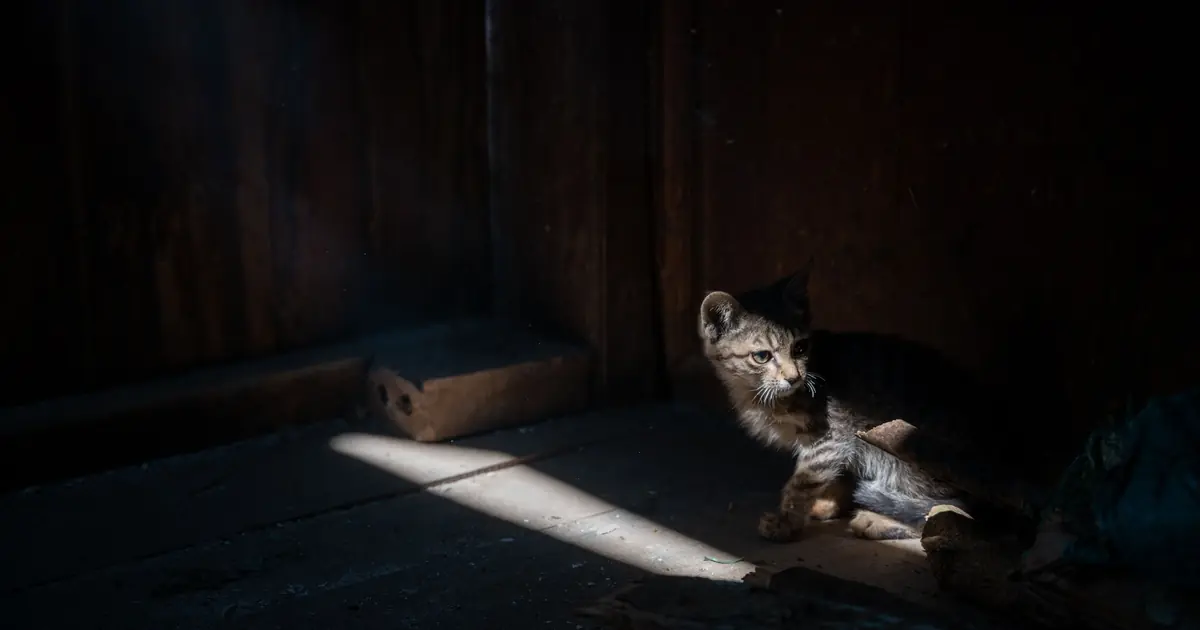
Is it normal for my cat to hide in the basement?
Yes, retreating to the basement for peace and quiet is usually normal cat behavior. Cats value having a safe, private space to nap and decompress, and a calm basement fits the bill. As long as your cat is eating, using the litter box, and acting normally otherwise, occasional basement time is nothing to worry about. It’s the same instinct that draws cats to closets, boxes, and other enclosed spots where they feel protected.
When could basement hiding be a concern?
A sudden change, hiding in the basement far more than usual, can signal stress, fear, or illness. Cats often retreat and hide when they feel unwell, anxious, or overwhelmed, so a normally social cat that suddenly vanishes downstairs deserves attention. Watch for accompanying signs like not eating, lethargy, litter-box changes, or hiding combined with other symptoms. This is different from ordinary comfort-seeking, and it overlaps with why a cat hides and won’t eat. This article is educational and not a substitute for veterinary care; a sudden hiding change with other symptoms warrants a vet visit.
Normal retreat vs a warning sign
Here’s how to tell comfort from a problem.
| Normal comfort-seeking | Worth a closer look |
|---|---|
| Occasional naps and quiet time downstairs | Sudden, constant hiding in the basement |
| Eats, plays, and interacts normally otherwise | Not eating, lethargic, or withdrawn |
| Comes up to greet you and eat | Refusing to come out even for food |
| Relaxed body language | Signs of fear, pain, or illness |
How do you keep a basement-loving cat safe?
If your cat loves the basement, make sure it’s a safe place to hang out. Remove or secure hazards like toxic chemicals, pest poisons, small swallowable objects, exposed wiring, and gaps where a cat could get stuck. Provide a cozy bed, water, and a litter box if your cat spends lots of time there, and make sure it can always get back upstairs. This article is educational; for general safety, keep rodenticides and cleaners locked away. If your cat hides due to stress, the calming steps in how to calm a scared cat help. Trusted guidance on feline behavior and enrichment comes from the ASPCA and International Cat Care.
Frequently Asked Questions
Q: Why does my cat love the basement so much?
Basements are quiet, cool, dark, and full of hiding spots, exactly the safe, den-like space cats crave. They also offer interesting smells and possible prey. For most cats, it’s normal comfort-seeking and a peaceful retreat from household activity.
Q: Is it bad for my cat to spend time in the basement?
Not if the basement is safe and your cat is otherwise normal, eating, using the litter box, and coming up to interact. Just secure hazards like chemicals and pest poisons, and provide water, a bed, and litter if it stays a lot.
Q: Why is my cat suddenly hiding in the basement?
A sudden increase in hiding can signal stress, fear, or illness. Cats retreat when they feel unwell or overwhelmed. Watch for not eating, lethargy, or other symptoms, and see your vet if the change is abrupt or paired with other signs.
Q: Do cats like the dark and cool of basements?
Yes. Cats are comfortable in low light and see well in the dark, so a dim basement feels easy to navigate, not scary. The cool temperature is also appealing, especially in warm weather, adding to the basement’s comfort.
Q: How do I make the basement safe for my cat?
Lock away toxic chemicals and rodent poisons, remove small swallowable objects, cover exposed wiring, and block gaps where a cat could get trapped. Add a bed, water, and a litter box if your cat spends lots of time there, and ensure easy access upstairs.
Q: Should I stop my cat from going to the basement?
Not necessarily, if it’s safe and your cat is happy and healthy, basement time is fine. Only restrict access if the space has hazards you can’t secure, or if hiding there seems tied to stress or illness that needs addressing.

Hello and welcome to The Ideal Cat!
We are some passionate cat owners from different professions. We love our cats and have a lot of experience in how to care for our pets. We are incredibly excited to share our knowledge, experience, and research with you. So you can take good care of your loving cat. We will answer most of the common questions about owning cats, taking care of them, etc. If you have any question contact with us. Thanks for visiting! Enjoy the content.
