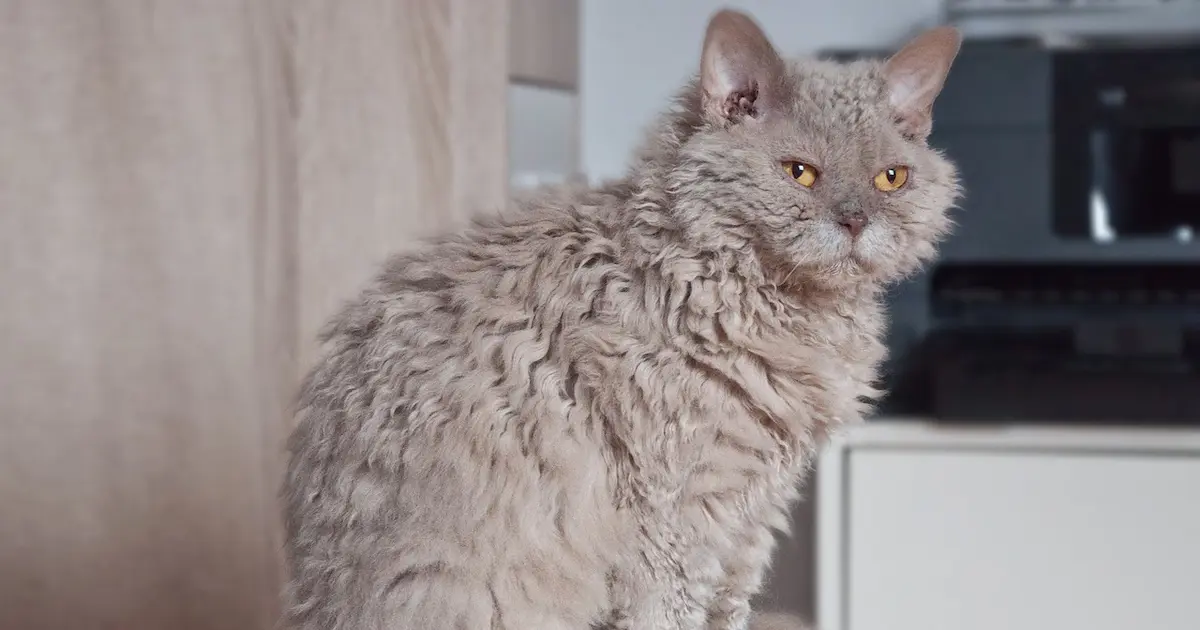
Picture this: a friend swears they just saw a cat with a perm. You laugh, then they show you a photo, and sure enough, there’s a round-faced cat covered in soft, woolly ringlets, with curly whiskers to match. You weren’t being teased. You were looking at a Selkirk Rex.
This is the breed people nickname “the cat in sheep’s clothing,” and once you’ve petted one, you get it. The coat feels like a plush toy that purrs. But here’s the thing most curly-cat fans don’t realize: the Selkirk Rex is built completely differently from the other curly breeds you might be picturing.
So let’s walk through all of it, the irresistible looks, the mellow personality, the surprising grooming rules, and the honest health stuff, so you know exactly what life with this curly charmer would be like.
| Origin | United States (Montana, 1987) |
| Weight (Male) | 11 to 16 lbs |
| Weight (Female) | 6 to 12 lbs |
| Lifespan | 14 to 20 years (a long-lived breed) |
| Coat | Dense, curly double coat; shorthair or longhair |
| Colors | All recognized colors and patterns, including pointed |
| Energy Level | Low to Moderate |
| Grooming Needs | Moderate (but less is more, see below) |
| Good With Kids | Yes |
| Good With Other Pets | Yes |
| Average Price | $800 to $2,000 from breeders |
The Selkirk Rex Story: A Shelter Kitten That Started a Breed
Most fancy cat breeds have grand origin stories full of palaces and ancient temples. The Selkirk Rex started in an animal shelter in Sheridan, Montana, in 1987. Honestly, that’s part of the charm.
A rescued cat gave birth to a litter, and one kitten stood out. While her siblings had normal straight fur, she came out with random curly waves and curly whiskers. A Persian and British Shorthair breeder named Jeri Newman spotted her, adopted her, and named her Miss DePesto, after a curly-haired character on the TV show Moonlighting. The name fit twice over, since the kitten was a pest for attention.
Newman did the smart thing and bred Miss DePesto to one of her black Persians. The litter came out half curly, half straight, which proved the curl was caused by a dominant gene. To build the breed, breeders carefully folded in Persians, Exotic Shorthairs, and British Shorthairs, which is where the Selkirk gets its round head and solid body. Every Selkirk Rex alive today traces back to that one shelter kitten.
One last fun detail: Newman named the breed “Selkirk” after her stepfather’s family name, which makes it the only cat breed named after a real person. The Cat Fanciers’ Association granted it full championship status in 2000, and it’s now recognized worldwide. As of 2025, CFA requires registered Selkirk kittens to have two Selkirk Rex parents, a sign the breed has matured past its outcrossing phase.
What a Selkirk Rex Cat Looks Like
If you’ve always wanted a living teddy bear, this is your cat. The Selkirk Rex has a big, round head, large round eyes, full cheeks, and a heavy, solid body that feels reassuringly substantial when you scoop one up. Males in particular can be real chunks, easily into the teens on the scale.
And then there’s the coat. It’s a dense double coat that grows in soft, loose curls all over the body, with the tightest curls usually on the belly, neck, and tail. Even the whiskers curl, which gives them a slightly comical, just-woke-up look. The curl ranges from gentle waves to springy ringlets, and no two cats look exactly alike.
The breed comes in two coat lengths. The shorthair version has dense curls that show off the texture, almost like a teddy bear. The longhair version has looser, more tousled curls that give a softer, fluffier outline. Both come in just about every color and pattern you can name, from solid black and white to tabby, tortoiseshell, calico, and pointed.
The Curly Coat Explained (It’s Stranger Than You Think)
Here’s where the Selkirk gets genuinely interesting, and where most guides skim past the good stuff.
The curl is caused by a gene that’s “incomplete dominant.” In plain English, that means the curl shows up differently depending on whether a cat inherits one copy or two. Cats with one copy tend to have the plush, full, slightly looser coat that show judges love. Cats with two copies often have tighter, curlier coats with a bit less volume. Both are lovely, just different.
Now for the part that catches new owners off guard. Selkirk kittens are usually born curly, then their coat straightens out and looks almost normal for the first several months, sometimes leading owners to panic that their curly cat went straight. Don’t worry. The curls come back, usually settling into their adult texture somewhere between eight and ten months. So if your Selkirk kitten goes through an awkward straight-haired phase, that’s completely normal.
How the Selkirk Differs From Other Rex Breeds
This trips up a lot of people, so let’s clear it up. There are several “rex” cats, meaning curly-coated breeds, and they are not variations of the same cat.
Think of it this way. The Cornish Rex and Devon Rex are the greyhounds of the curly world: slender, fine-boned, big-eared, with thin, sparse coats that feel like suede. The Selkirk Rex is the teddy bear: heavy, cobby, round, with a thick, full coat you can sink your fingers into. They look like cousins on paper but feel totally different in person.
The genetics differ too. The curls in the Cornish and Devon come from recessive genes, while the Selkirk’s curl is dominant. And the Selkirk’s mutation is its own brand-new event from 1987, not related to the older rex breeds at all. So if someone pictures a skinny, bald-ish curly cat when you say Selkirk Rex, gently correct them. You’ve got the fluffy one.
Selkirk Rex Personality: The Laid-Back Cuddler
If the Selkirk’s looks pull you in, its personality is what makes people stay. This is one of the mellowest, most affectionate breeds you can live with.
Selkirks are patient, gentle, and famously tolerant. They’d much rather warm your lap than tear around the house at midnight. They love attention and will happily follow you from room to room, but they’re not pushy or loud about it. Most are quiet cats that communicate with soft sounds rather than constant meowing.
They inherited a nice balance from their founding breeds. From the Persian side comes that calm, snuggly nature. From the British Shorthair comes an easygoing steadiness. The result is a cat that’s playful when you want to play and content to flop next to you when you don’t. They enjoy toys and food puzzles, but they’re not hyperactive, so they fit calmly into a relaxed home.
Trust me, if your idea of a perfect evening is a curly cat purring on your chest while you watch TV, the Selkirk was practically made for you.
Is a Selkirk Rex Right for You?
No breed suits everyone, so let’s be honest about the fit.
A Selkirk Rex is a great match if you:
- Want a calm, cuddly companion that loves lap time.
- Have a relatively relaxed household, including families with gentle kids.
- Don’t mind light, occasional grooming and the odd bath.
- Want a cat that gets along with other pets without much fuss.
A Selkirk Rex might not be your breed if you:
- Want a high-energy, super-athletic cat that entertains itself all day.
- Expect a hypoallergenic pet (more on that myth later, it isn’t one).
- Aren’t prepared to budget for a health-tested kitten and possible vet care down the road.
Grooming and Coat Care (Where Less Is More)
Here’s the counterintuitive truth that surprises almost every new Selkirk owner: you can ruin those gorgeous curls by grooming too much.
Over-brushing pulls the curls straight and leaves the coat frizzy and flat instead of springy. So put down the slicker brush. The breed’s own registry suggests something gentler: use your fingers in a soft scratching motion to fluff the curls and keep them looking their best. A thorough comb-through once or twice a month is usually enough to remove dead hair and stop any mats forming.
The longhair Selkirk needs a touch more attention than the shorthair, and a wide-toothed comb or hair pick helps separate big clumps of curls. Either way, this is not a high-maintenance Persian-level coat. It’s refreshingly low-effort once you learn the rhythm.
One quirk to know: Selkirks can have slightly oily skin, so an occasional bath every few weeks keeps the coat fresh and the curls defined. Introduce baths early, while your cat is a kitten, and it becomes a calm routine rather than a wrestling match. Round things out with regular nail trims, tooth brushing, and a quick ear check.
Selkirk Rex Health Issues to Know About
Good news up front: the Selkirk Rex is generally a robust, long-lived breed, and a well-bred one often sails past 15 years. But because the breed was built using Persians, Exotic Shorthairs, and British Shorthairs, it can inherit a few conditions from those lines. Knowing them helps you ask the right questions before you buy.
Polycystic Kidney Disease (PKD)
This is the most documented concern, inherited from the Persian and British Shorthair side. PKD causes fluid-filled cysts to grow in the kidneys, slowly crowding out healthy tissue and potentially leading to kidney failure later in life, often between ages 7 and 10. The very good news: there’s a reliable DNA test for it. Responsible breeders screen their cats and remove carriers, which is why buying from a testing breeder matters so much.
Hypertrophic Cardiomyopathy (HCM)
HCM is the most common feline heart disease and thickens the heart muscle over time. It’s hereditary and shows up in many breeds, not just Selkirks. There’s no simple DNA test for the common forms, so good breeders have their breeding cats scanned by a veterinary cardiologist. Be skeptical of any breeder who promises “HCM-free lines,” because no one can truthfully guarantee that.
Hip Dysplasia
This is a malformed hip joint that can range from harmless to painful. An affected cat may move stiffly or avoid jumping. It’s less common but worth knowing about, especially given the breed’s heavier build.
Dental Disease and Weight Gain
Like their flat-faced relatives, some Selkirks are prone to dental issues, so regular tooth care pays off. And because they’re mellow and food-motivated, they can pack on weight easily. A lean Selkirk is a healthier, more comfortable Selkirk, so watch those portions.
Feeding Your Selkirk Rex
Cats are meat eaters through and through, so build your Selkirk’s diet around real animal protein. Look for a food that names a meat like chicken, turkey, or salmon as the first ingredient, rather than vague “meal” fillers. A mix of wet and dry food works well, and wet food helps with hydration, which is a small kindness to those kidneys given the breed’s PKD background.
The big rule here is portion control. This is a calm, sturdy cat that loves to eat, which is a recipe for sneaky weight gain. Measure meals, go light on treats, and weigh your cat now and then. Keeping a Selkirk lean protects its joints, heart, and overall health for the long haul.
Exercise and Enrichment
The Selkirk won’t run you ragged, but it still needs an outlet to stay happy and trim. Think gentle, regular play rather than intense workouts.
Wand toys, soft balls, and the occasional game of chase suit them well. They’re clever in a quiet way and genuinely enjoy puzzle feeders, which slow down eating and keep that food drive busy. A sturdy cat tree gives them a perch to survey the room, though they’re just as likely to choose your lap. Aim for a couple of short, fun play sessions a day, and your Selkirk will be content.
Living With Kids, Dogs, and Other Cats
This is one of the Selkirk’s strongest selling points. Their patient, tolerant nature makes them one of the better breeds for a full, busy household.
They tend to be wonderful with respectful children, happy to be carried around and included in the day. They also coexist nicely with dogs and other cats, thanks to that laid-back temperament. As with any cat, take introductions slowly and use positive rewards, and most Selkirks settle into the household crew within a week or two. If you want a peaceful multi-pet home, this breed makes it easy.
Lifespan and Aging Tips
The Selkirk Rex is a long-lived breed, often reaching 14 to 20 years with good care. That’s a real commitment, and a real gift.
As your Selkirk ages, keep up annual or twice-yearly vet visits, since the breed’s main concerns (kidneys and heart) tend to surface in middle and older age. Catching PKD or HCM early gives you far more options. Keep your senior cat lean to protect aging joints, provide soft bedding and easy-access perches, and watch for changes in drinking, appetite, or litter box habits, which can be early hints of kidney trouble. With attentive care, many Selkirks enjoy a long, comfortable old age.
How Much Does a Selkirk Rex Cat Cost?
A Selkirk Rex kitten from a reputable breeder usually costs between $800 and $2,000, with show-quality cats, rarer colors, and longhair coats landing at the higher end. Occasionally you’ll see them advertised for less, but a suspiciously cheap “Selkirk” is often a red flag for skipped health testing.
The kitten price is only the beginning. Plan for first-year vaccines and vet visits, then ongoing food, litter, and routine care. Given the breed’s kidney and heart risks, pet insurance is genuinely worth considering, and choose a policy that covers hereditary and breed-specific conditions. Setting aside a small annual cushion for surprises is smart with any cat, and especially sensible with a longer-lived breed that may need senior care down the road.
Where to Find a Selkirk Rex Ethically
With this breed, the breeder you choose directly affects how healthy your cat will be. So slow down and shop carefully.
Good signs in a breeder:
- They show proof that breeding parents are DNA-tested negative for PKD.
- Their breeding cats are heart-scanned for HCM by a cardiologist.
- They keep kittens until at least 12 to 14 weeks, fully vaccinated and socialized.
- They offer a written health guarantee and ask you plenty of questions in return.
Red flags to walk away from:
- Claims of “HCM-free lines,” which no honest breeder can promise.
- No health testing paperwork, or dodging questions about PKD.
- Kittens available very young or at prices that seem too good to be true.
- Multiple breeds churned out with little focus on health.
Adoption is a lovely route too. Purebred Selkirks are uncommon in shelters, but breed-specific rescues and rehoming groups do exist, and you may find a Selkirk mix that has the same sweet temperament. Either way, the goal is the same: a healthy, well-started cat from someone who truly cares.
Similar Breeds to Consider
If the Selkirk Rex has won you over, you might also love one of these:
- British Shorthair: The Selkirk’s round, plush relative, same calm vibe without the curls.
- Persian: Another mellow lap cat with a luxurious coat, though it needs far more grooming.
- Devon Rex: A curly cat too, but slim, playful, and far more energetic.
- Cornish Rex: Fine-boned and active, with a soft wavy coat instead of dense curls.
- LaPerm: Another curly breed with a lighter coat and a more inquisitive streak.
Common Myths and Misconceptions
The Selkirk attracts a few persistent myths, so let’s set the record straight.
Myth: The Selkirk Rex is hypoallergenic. Nope. No cat breed truly is. The Selkirk produces the same allergy-causing proteins as any cat, and its dense coat sheds moderately. The curl might hold a little loose hair, but it won’t spare an allergy sufferer.
Myth: All rex cats are basically the same skinny, bald-looking cat. Far from it. The Selkirk is heavy, round, and densely furred, the opposite of the slender Cornish and Devon Rex.
Myth: My curly kitten went straight, so it’s not a real Selkirk. Totally normal. Selkirk kittens often straighten out for several months before their adult curls settle in.
Myth: You need to brush a Selkirk constantly to keep the curls nice. Actually the reverse. Over-grooming straightens and frizzes the coat. Gentle, occasional care keeps the curls at their best.
Myth: The curly coat needs special expensive tools. Not really. Your fingers and an occasional comb do most of the job.
Selkirk Rex FAQ
Q: Are Selkirk Rex cats hypoallergenic?
No. Despite the unusual coat, Selkirk Rex cats are not hypoallergenic. They produce the same Fel d 1 protein as other cats and shed moderately, so they aren’t a safe bet for people with cat allergies.
Q: Do Selkirk Rex cats shed a lot?
They’re moderate shedders. A gentle comb once or twice a month and the occasional bath keep loose hair under control. Avoid over-brushing, which damages the curls.
Q: How long do Selkirk Rex cats live?
This is a long-lived breed, often reaching 14 to 20 years with good care. Regular vet visits and a healthy weight help them make the most of that lifespan.
Q: Are Selkirk Rex cats good with kids and other pets?
Yes, they’re one of the friendlier breeds for a busy home. Their patient, tolerant nature makes them great with gentle children, dogs, and other cats, especially with slow introductions.
Q: Why is my Selkirk Rex kitten’s coat straight?
That’s normal. Selkirk kittens are often born curly, then straighten out for several months before their adult curls settle in around eight to ten months of age.
Q: How much does a Selkirk Rex cost?
Expect roughly $800 to $2,000 from a reputable breeder, with show-quality and longhair cats at the higher end. Always factor in ongoing food, vet care, and insurance.
Q: Do Selkirk Rex cats need a lot of grooming?
Less than you’d think. A comb-through once or twice a month, finger-fluffing of the curls, and an occasional bath are usually enough. Over-grooming actually harms the coat.
Q: What’s the difference between a Selkirk Rex and a Devon or Cornish Rex?
Body and coat. The Selkirk is heavy, round, and densely curled, while the Devon and Cornish are slim, fine-boned, and have thin, sparse coats. The Selkirk’s curl gene is also dominant, theirs is recessive.
Final Verdict: Should You Get a Selkirk Rex?
If you want a cat that looks like a teddy bear and acts like one too, the Selkirk Rex is hard to beat. They’re calm, cuddly, patient with kids and pets, refreshingly low-maintenance in the grooming department, and they tend to stick around for a good long time.
The one piece of homework that really matters is sourcing. Because the breed carries some risk for kidney and heart conditions from its founding lines, buying from a breeder who DNA-tests for PKD and heart-scans for HCM makes a genuine difference in the cat you bring home.
Do that, and a Selkirk Rex will reward you with years of lap-warming, soft-purring, curly-whiskered company. For the owner who wants a gentle, affectionate companion in an unforgettable woolly package, this curly charmer is just about perfect.

Hello and welcome to The Ideal Cat!
We are some passionate cat owners from different professions. We love our cats and have a lot of experience in how to care for our pets. We are incredibly excited to share our knowledge, experience, and research with you. So you can take good care of your loving cat. We will answer most of the common questions about owning cats, taking care of them, etc. If you have any question contact with us. Thanks for visiting! Enjoy the content.
