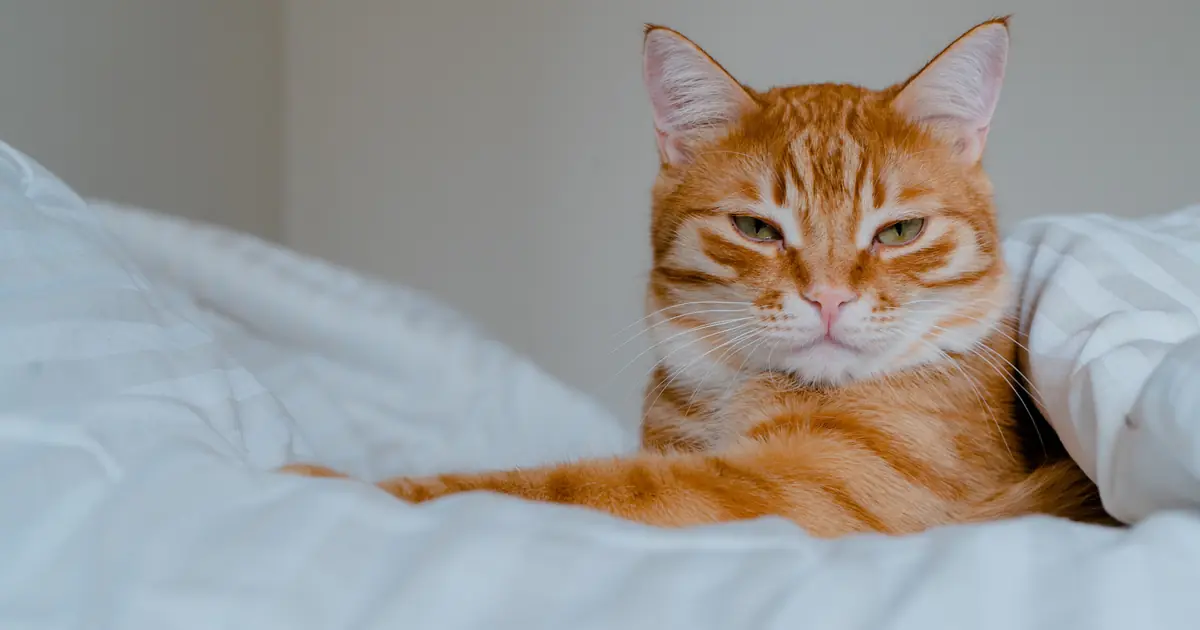
You pull back the covers, and there it is. That unmistakable damp patch and sharp smell. Your stomach drops. If you’re asking why your cat is peeing on your bed, take a breath, because you’re not a bad cat parent and your cat isn’t broken. Cats pee on the bed for real, fixable reasons, and figuring out which one is the key to making it stop.
- A cat peeing on the bed almost always signals a medical problem, stress, or a litter box issue, not bad behavior or spite.
- Sudden urinating outside the litter box should be checked by a vet first, since UTIs, bladder inflammation (cystitis), kidney disease, and diabetes are common causes.
- A male cat straining to pee but producing little or no urine is a life-threatening emergency that can be fatal within 24 to 48 hours.
- Cats often target the bed because it carries your scent, and mixing their scent with yours is self-soothing, not revenge.
- Clean soiled bedding with an enzyme cleaner, because leftover ammonia odor signals your cat to pee in the same spot again.
Why Is My Cat Peeing on My Bed All of a Sudden?
A cat that suddenly starts peeing on your bed is usually telling you something is wrong, and the cause is medical, emotional, or about the litter box. When a cat who has used the box reliably for years changes overnight, vets treat that as a medical red flag until proven otherwise. The good news is that most causes are treatable once you know which one you’re dealing with.
Here’s the thing: your cat can’t tell you their bladder burns or that the new puppy terrifies them. Peeing in an odd, soft, you-scented spot is one of the few ways they can. So before you feel angry or hurt, remember this behavior is communication, not defiance.
The 9 Most Common Reasons Cats Pee on the Bed
Cats pee on the bed for nine common reasons, and they fall into three buckets: medical conditions, stress and anxiety, and litter box problems. Below is a quick map of each cause, so you can spot which one fits your cat before you read the details.
Medical reasons (rule these out first)
Medical problems are the single most common reason a cat pees outside the litter box, which is why a vet visit comes first. When peeing hurts, comes too fast to control, or won’t stop, your cat may not make it to the box and ends up on the nearest soft surface, often your bed.
- Urinary tract infection (UTI): A bacterial infection of the bladder that makes peeing frequent, urgent, and painful. UTIs are less common in cats under 10 than people assume, but they do happen and need a vet’s urine test to confirm.
- Feline lower urinary tract disease (FLUTD) and cystitis: FLUTD is an umbrella term for painful bladder and urethra conditions. The most common form is feline idiopathic cystitis, a stress-linked bladder inflammation that causes straining, frequent small puddles, and accidents outside the box.
- Bladder stones or crystals: Hard mineral deposits that irritate the bladder lining and make urinating painful, so your cat avoids the box that they now associate with pain.
- Kidney disease: Common in older cats, kidney disease makes cats drink and pee much more, so the box fills fast and accidents happen.
- Diabetes: Diabetes floods the urine with sugar and dramatically increases thirst and urine volume, leading to large, frequent puddles in new places.
- Arthritis: Painful joints make climbing into a high-sided box hard, so an older cat resting on your bed may just pee where they are.
Stress and anxiety
Stress is the second big reason cats pee on the bed, and it often shows up after a change in the household. Cats are creatures of routine, and an anxious cat may pee on your bed because your scent there feels safe and comforting. Common triggers include:
- A new pet, baby, or person in the home that shifts your cat’s sense of territory.
- Moving house, new furniture, or rearranged rooms that erase the familiar scent map your cat relies on.
- Separation anxiety, where a cat pees on the bed mainly when you’re at work or away, mixing their scent with yours to self-soothe.
- A change in your schedule, like a new job or work hours, that disrupts feeding and attention times.
- Conflict with another cat, including tension at a shared litter box or guarding behavior you may not even notice.
Litter box problems
A litter box your cat dislikes is the third common reason for bed accidents, and it’s often the easiest to fix. Cats are famously picky about their bathroom, and if the box feels dirty, hard to reach, or just wrong, they’ll look for a cleaner, softer spot. The usual culprits are a box that isn’t scooped often enough, too few boxes, a scented or unfamiliar litter, a covered box that traps odor, or a box tucked somewhere noisy or hard to access.
Medical vs. Behavioral: How to Tell the Difference
You can often get a strong hint about whether the cause is medical or behavioral by watching how, when, and where your cat pees. Medical issues tend to bring physical signs like straining or blood, while behavioral causes track with changes in the home. Use the table below as a guide, but remember it points you in a direction, it does not replace a vet’s exam.
| Clue | Leans medical | Leans behavioral |
|---|---|---|
| How they pee | Straining, crying, frequent tiny amounts, or blood-tinged urine | Normal squat and a full puddle, no signs of pain |
| Litter box use | Goes in the box AND outside it, or makes many trips with little output | Avoids the box entirely, uses bed or other soft spots |
| Timing | Came on suddenly with no household change | Started right after a move, new pet, or schedule change |
| Other signs | Drinking more, weight loss, vomiting, lethargy, over-grooming the belly | Hiding, clinginess, hissing at other pets, peeing only when you’re away |
| Where they go | Wherever they happen to be when the urge hits | Specifically your bed, laundry, or other you-scented items |
When in doubt, treat it as medical and book a vet visit. A simple urine test and exam can rule out infection, crystals, kidney issues, and diabetes, and that single step saves a lot of guesswork.
Why Does My Cat Pee on My Bed Specifically?
Cats target the bed because it carries your scent more strongly than almost anywhere else in your home. To a stressed cat, mixing their own scent with yours is self-soothing, a way to feel close and secure when something feels off. The soft, absorbent surface also feels pleasant under their paws, a bit like fresh litter.
Let’s clear up a myth right now: your cat is not peeing on your bed for revenge or out of spite. Cats don’t plot payback, and they don’t connect “you left me alone” with “I’ll teach you a lesson.” What looks like a grudge is almost always anxiety or a physical problem. Reading it as comfort-seeking, not punishment, changes how you respond, and a calmer response actually helps the behavior stop.
Is This Peeing or Spraying? They Aren’t the Same
Peeing on the bed and urine spraying are two different behaviors, and telling them apart helps you fix the right problem. House soiling means a cat squats and empties their bladder on a horizontal surface like your bed or the carpet. Spraying is a marking behavior where a cat backs up to a vertical surface, lifts a quivering tail, and leaves a small amount of urine on a wall, door, or chair leg.
A wet patch on a flat bed is house soiling, not spraying. That distinction matters because spraying is usually about territory and hormones, while squatting and emptying the bladder points more often to a medical issue, stress, or a litter box the cat is rejecting. Most cats who pee on the bed are house soiling, so that’s the lens this guide uses.
How to Stop Your Cat From Peeing on the Bed
Stopping bed peeing comes down to fixing the root cause, then cleaning thoroughly so your cat isn’t lured back. Work through these steps in order, starting with the vet, because skipping the medical check is the most common mistake cat parents make.
- See your vet first. Book a checkup and ask for a urinalysis to rule out infection, crystals, kidney disease, and diabetes. If your male cat can’t pass urine, skip the appointment and go to an emergency clinic immediately.
- Clean the bedding with an enzyme cleaner. Regular detergent leaves an ammonia scent your cat reads as a bathroom marker. Enzyme cleaners break down those odor compounds so the spot no longer says “pee here.”
- Upgrade the litter box setup. Follow the box math below, scoop daily, switch to a fine, unscented clumping litter, and try an uncovered box, since covers trap odors many cats hate.
- Lower your cat’s stress. Keep feeding and play times predictable, add vertical space and hiding spots, and consider a feline calming pheromone diffuser for anxious cats.
- Make the bed less appealing temporarily. While you fix the cause, keep the bedroom door closed or cover the bed with a waterproof liner so your cat can’t keep practicing the habit.
- Never punish your cat. Punishment raises stress and usually makes house soiling worse. Your cat won’t connect the scolding with the puddle, they’ll just learn to fear you.
How many litter boxes should I have?
The vet-recommended rule is one litter box per cat, plus one extra. So two cats need three boxes, placed in different, quiet, easy-to-reach spots around the home. Spreading boxes out matters in multi-cat homes, where one cat may quietly guard a single box and force the other to go elsewhere, sometimes on your bed.
How Do I Get Cat Pee Out of a Mattress?
To get cat pee out of a mattress, blot up the fresh urine, soak the spot with an enzyme cleaner, let it sit, then blot and air-dry. The key is the enzyme cleaner, because it neutralizes the odor that would otherwise invite your cat back to the same patch.
- Blot, don’t rub. Press clean towels into the spot to pull up as much urine as you can. Rubbing just pushes it deeper.
- Soak with enzyme cleaner. Generously spray or pour an enzymatic cleaner over the area and a little beyond it, since urine spreads wider than the visible stain.
- Wait it out. Let the cleaner sit for at least 10 to 15 minutes (check the label) so the enzymes can break down the odor compounds.
- Blot and dry. Blot up the excess, then let the mattress air-dry fully. Lay clean towels over the spot and swap them daily until it’s completely dry.
An enzyme-based cleaner is genuinely worth keeping on hand for this, because ordinary cleaners leave behind the ammonia smell that tells your cat the bed is a toilet.
Nature’s Miracle Cat Urine Destroyer Plus
This is an enzyme-based spray made to break down dried-in cat urine and the odor that draws cats back to repeat the spot. It’s a practical pick for soaking soiled bedding, mattresses, and washable rugs after an accident. A heads-up for sensitive noses: some cat parents find the scented formula strong, so test a small area first.
When Should I Take My Cat to the Vet?
Take your cat to the vet any time they suddenly start peeing outside the litter box, since that’s often the first sign of a treatable illness. A urine test and exam can catch problems early, when they’re easiest and cheapest to treat. Call your vet promptly if you notice any of these:
- Straining in the box or crying while trying to pee
- Blood in the urine or a strong, unusual smell
- Frequent trips to the box with only small amounts coming out
- Drinking a lot more water than usual
- Weight loss, vomiting, or low energy alongside the accidents
And to say it once more, because it saves lives: a male cat who is straining and passing little or no urine needs an emergency vet immediately. A urinary blockage is a true emergency.
This article is educational and isn’t a substitute for veterinary care. Inappropriate urination can point to serious health problems, so please work with your licensed veterinarian to diagnose and treat the cause for your individual cat.
Frequently Asked Questions
Q: Is my cat peeing on my bed out of spite or revenge?
No, cats do not pee on the bed for spite or revenge. Cats don’t link “you left me” with payback. Bed peeing is almost always a medical issue, stress, or a litter box problem, and the bed gets chosen because it smells comfortingly like you.
Q: Why does my cat only pee on my bed when I’m away?
A cat that pees on your bed mainly when you’re at work or traveling is often showing separation anxiety. Peeing on your scent-rich bedding is a self-soothing behavior that mixes their scent with yours. Rule out medical causes with a vet first, then work on calming routines and enrichment.
Q: Can a UTI make my cat pee on the bed?
Yes, a urinary tract infection can make a cat pee on the bed. A UTI makes urinating frequent, urgent, and painful, so your cat may not reach the litter box in time. Only a vet can confirm a UTI with a urine test, so book an exam if you suspect one.
Q: Why is my older cat suddenly peeing on the bed?
Older cats often start peeing on the bed because of kidney disease, diabetes, arthritis, or age-related cognitive decline. Kidney disease and diabetes increase urine volume, while arthritis makes climbing into the box painful. Any sudden change in a senior cat warrants a vet visit to check for these conditions.
Q: Should I punish my cat for peeing on the bed?
No, never punish a cat for peeing on the bed. Punishment increases stress and tends to make house soiling worse, and your cat won’t connect the scolding to the accident. Focus instead on treating the cause, improving the litter box, and cleaning with an enzyme cleaner.
Q: What’s the difference between my cat peeing and spraying on the bed?
A cat that squats and leaves a full puddle on the flat bed is house soiling, not spraying. Spraying is a marking behavior aimed at vertical surfaces, where a cat leaves small amounts of urine with a quivering tail. A wet patch on a horizontal bed is almost always house soiling.
Q: Does cat pee ruin a mattress for good?
Cat pee does not have to ruin a mattress if you act quickly. Blot the spot, soak it with an enzyme cleaner, let it sit, then blot and air-dry fully. The enzyme cleaner is key because it removes the odor that would otherwise draw your cat back to pee there again.
Q: How long does it take to stop a cat from peeing on the bed?
Once the real cause is fixed, many cats stop peeing on the bed within a few weeks. Medical cases often improve quickly after treatment, while stress and litter box habits can take a bit longer and need consistency. Thorough enzyme cleaning helps prevent repeat accidents during the transition.
Watching your cat pee on your bed is stressful, but it’s a solvable problem with a clear first step. Start with your vet to rule out illness, then fix the litter box and ease your cat’s stress, and clean every accident with an enzyme cleaner so the spot doesn’t call them back. With a little detective work, you can stop your cat from peeing on the bed and get back to sharing it with a happy, healthy cat.

Hello and welcome to The Ideal Cat!
We are some passionate cat owners from different professions. We love our cats and have a lot of experience in how to care for our pets. We are incredibly excited to share our knowledge, experience, and research with you. So you can take good care of your loving cat. We will answer most of the common questions about owning cats, taking care of them, etc. If you have any question contact with us. Thanks for visiting! Enjoy the content.
