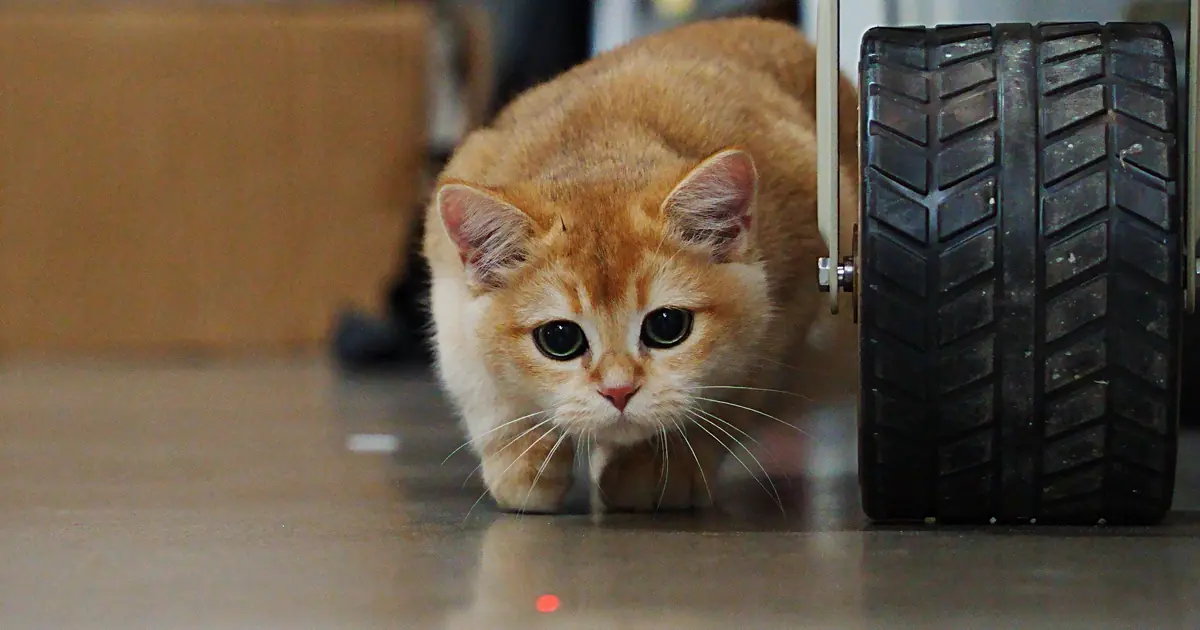
Picture this. Your cat is mid-air, eyes locked, tail whipping side to side, chasing a little red dot across the living room wall. It’s adorable, it’s great cardio, and then the dot just… vanishes. No prey in the paws, no triumphant chirp, nothing. Your cat sits there, twitchy, staring at the spot where the “mouse” disappeared.
So are laser pointers bad for cats? Honestly, it depends on how you play the game. Used wrong, they can leave your cat wound up and frustrated. Used right, they’re one of the easiest tools for keeping an indoor cat fit, sharp, and mentally satisfied. Here’s why, and the one fix most people skip.
- Laser pointers are not inherently dangerous or bad for cats, but they can cause frustration if the cat never gets to physically “catch” the light.
- A cat’s natural hunting sequence has five steps: stalk, chase, pounce, catch, and kill-bite. A laser dot only lets a cat complete the first three.
- A 2021 study published in the journal Animals linked frequent laser pointer play with guardian-reported repetitive behaviors, like obsessively staring at lights or chasing shadows.
- Never aim a laser directly at your cat’s eyes. Toy-grade laser pointers are low-power, but direct eye exposure is still a real risk.
- The fix is simple: always end a laser session by moving the dot onto a physical toy or treat so your cat gets to pounce on something real.
Are Laser Pointers Bad for Cats, or Just Misunderstood?
Laser pointers aren’t the problem. How most people use them is. A laser pointer is a small handheld device that projects a bright dot of light, and cats find it irresistible because it mimics the darting movement of prey. Vets generally agree laser play is fine, even beneficial, for exercise and mental stimulation. The catch (pun intended) is that a beam of light has no body. Your cat can’t bite it or feel the small win of pinning it under a paw. Do that every day with nothing else mixed in, and you’re running your cat on a treadmill that never stops.
Why Laser Pointers Can Frustrate Your Cat
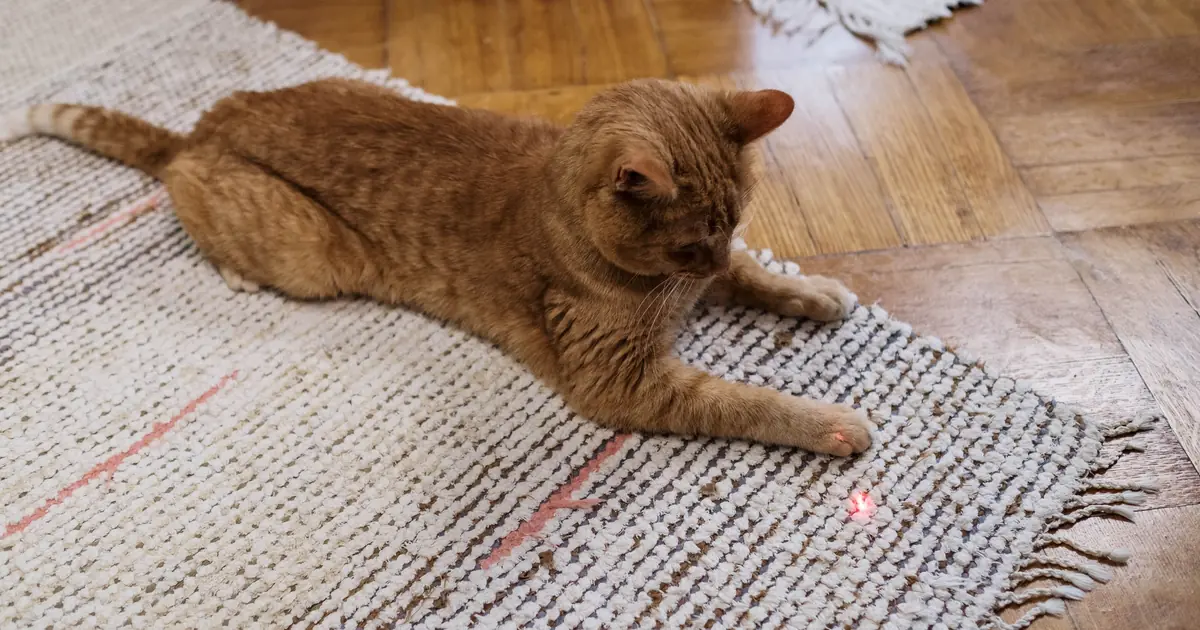
Cats hunt in a specific sequence, and skipping the last step is where laser frustration comes from. That sequence goes stalk, chase, pounce, catch, then kill-bite, wired in from thousands of years as a small, effective predator. A laser dot lets your cat stalk, chase, and pounce. But there’s nothing to catch and nothing to deliver that kill-bite to. The hunt just ends. Nothing resolved.
Do that day after day and some cats carry the tension outside of playtime. A 2021 study published in the journal Animals found a real link between frequent laser play and owner-reported repetitive behaviors, including obsessively staring at lights or reflections and chasing shadows. The ASPCA’s guide to common cat behavior issues lists this kind of fixation among the signs of an under-stimulated or stressed cat. That’s not every cat, and it’s not a reason to swear off lasers. It’s a reason to always give the hunt the ending it’s supposed to have.
What Does Laser Pointer Frustration Actually Look Like?
Laser frustration in cats usually shows up as restlessness, fixation, or redirected aggression right after a session ends, not during it. Watch for:
- Obsessive light or shadow chasing, darting after sunbeams or reflections long after the game is over
- Staring fixation on a spot on the wall or floor, almost waiting for the dot to come back
- Overarousal: panting, wide pupils, or a racing tail that won’t settle
- Redirected aggression, swatting or biting at your hand or another pet
One or two of these once in a while isn’t a crisis, usually just a sign the last session ended without a catch. If your cat seems tense in general, it helps to learn to read their body language for frustration versus genuine play, since the two can look similar at first glance.
Is It Safe to Shine a Laser in My Cat’s Eyes?
No. Never point a laser pointer directly at your cat’s eyes, even for a second. Most cat toy lasers are low-power (typically under 5 milliwatts) and a cat’s blink reflex is fast, but there’s no reason to test it. Direct, sustained beam exposure to the retina is a real, avoidable risk. Keep the beam on the floor, up furniture legs, or along the baseboards, never on your cat’s face.
How Do You Use a Laser Pointer the Right Way?
The right way to use a laser pointer is to keep sessions short, move the beam like real prey, and always finish by letting your cat physically catch something. In practice:
- Keep it short. Aim for 5 to 10 minutes, once or twice a day. Cats sprint in short bursts, not marathons.
- Move it like prey. Skitter the dot and let it “hide” behind furniture. Predictable circles just tire the legs without engaging the brain.
- Watch the energy. Panting or slowing down is your cue to wrap up before things get overstimulating.
- End on a real object. This is the step almost everyone skips. Guide the dot onto a toy or treat in the last 30 seconds, then click it off, so your cat pounces on and “catches” something real.
- Mix in catchable toys. Rotate in wand toys and interactive toys that let your cat actually catch the “prey” so the hunt finishes properly most of the time.
| Laser Play Done Wrong | Laser Play Done Right |
|---|---|
| Session just clicks off with no object to catch | Dot is guided onto a toy or treat, then turned off so the cat catches something real |
| Beam aimed near or into the cat’s face | Beam kept low, on floors, walls, and furniture, away from the eyes |
| Laser is the only toy the cat ever plays with | Laser is rotated with wand toys and catchable prey-style toys |
| Long, unstructured sessions with no clear end | Short 5 to 10 minute bursts with a defined finish |
| Cat left wired and pacing after the game | Cat settles, eats a treat, and often naps after the “kill” |
When Should Laser Fixation Worry You Enough to Call a Vet?
Laser fixation is worth a vet or behaviorist visit when it shows up outside of play, disrupts sleep or eating, or comes with stress signs like overgrooming. A little post-game zoomie energy is normal, and most cats settle within minutes once you swap the laser for a toy. But shadow chasing for hours or hair loss from licking is different, and worth ruling out with your vet, since compulsive behaviors can have other causes too. For more on high-energy bursts in general, this guide on why cats get the zoomies is a good starting point, though ongoing fixation isn’t the same as a normal zoomie sprint. International Cat Care and the Cornell Feline Health Center are solid resources on feline enrichment and compulsive behavior.
A quick safety note: this article is for general education and isn’t a substitute for veterinary advice. Never aim a laser at your cat’s eyes, and if fixation or repetitive light-chasing seems to be taking over your cat’s day, mention it to your vet.
What Other Toys Pair Well With Laser Play?
Laser pointers work best as one tool in a bigger toy box, not the whole toy box. Wand toys and fabric “prey” let your cat finish the hunt
with an actual bite. If you’re not sure where to start, this roundup of the best cat toys covers a few worth having on hand.
Frequently Asked Questions
Q: Are laser pointers bad for cats?
Not on their own. Laser pointers are safe, fun exercise for most cats. The risk comes from using them wrong, meaning shining them in the eyes or never letting the cat “catch” a real object at the end.
Q: Can laser pointers cause anxiety in cats?
Frequent laser play without a physical catch has been linked to repetitive, anxious-looking behaviors like shadow chasing and light fixation. A 2021 study in the journal Animals found this pattern in cats whose guardians reported frequent laser use.
Q: Why does my cat get so obsessed with the laser?
A cat’s brain is wired to chase fast, erratic movement, exactly what a laser dot does. Because the dot has no scent, weight, or texture to “kill,” some cats keep hunting for it long after the light is off.
Q: How long should a laser play session be?
Aim for 5 to 10 minutes, once or twice a day. Cats hunt in short bursts, so a drawn-out session tends to overstimulate rather than tire them out in a healthy way.
Q: What toys can replace or pair with a laser pointer?
Wand toys with feathers or fabric prey work well because your cat can actually grab and bite them. Rotating in a few catchable toys alongside occasional laser play keeps the hunt complete most of the time.
Q: When should I worry about my cat’s laser fixation?
If your cat is chasing shadows or staring at lights for long stretches outside of playtime, losing sleep, or seeming anxious most of the day, mention it to your vet. Occasional post-game zoomies are normal and usually settle within minutes.

Hello and welcome to The Ideal Cat!
We are some passionate cat owners from different professions. We love our cats and have a lot of experience in how to care for our pets. We are incredibly excited to share our knowledge, experience, and research with you. So you can take good care of your loving cat. We will answer most of the common questions about owning cats, taking care of them, etc. If you have any question contact with us. Thanks for visiting! Enjoy the content.
