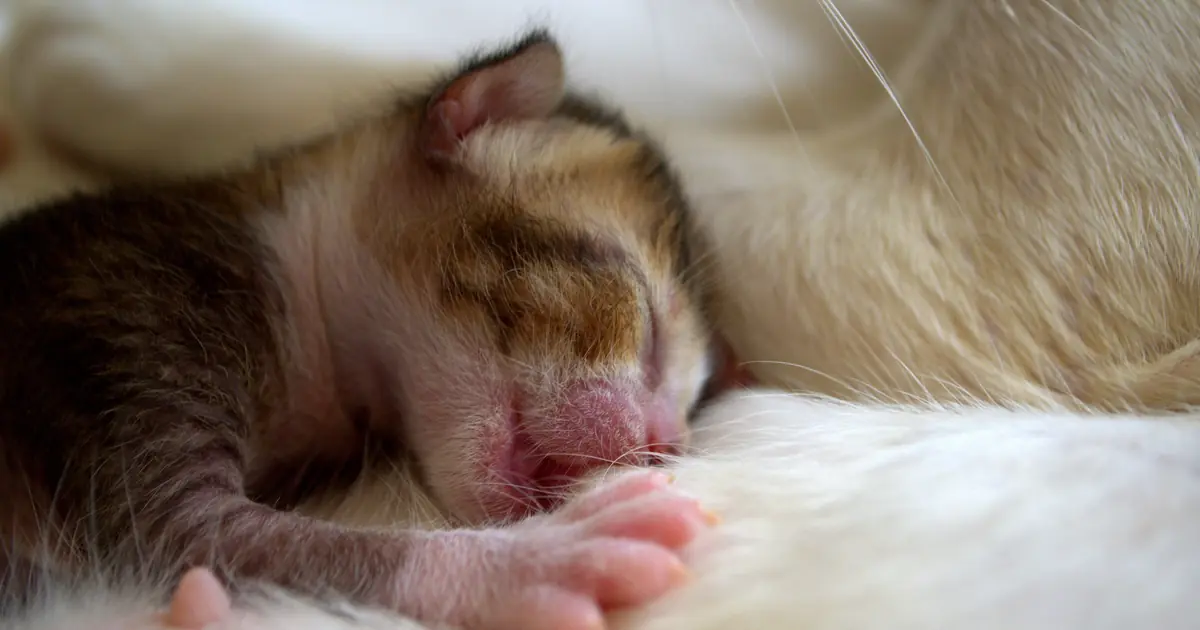
Whether you’ve got a newborn litter or you’re just curious, it’s sweet to wonder when that iconic “meow” first appears. Do kittens come out silent, or squeaking?
They’re actually vocal from day one, just very tiny about it. Here’s how a kitten’s voice develops.
- Kittens make faint mews from birth, calling their mother for warmth, milk, and comfort.
- Meows become clearer and fuller around 3 to 4 weeks as the kitten develops.
- Newborn kittens are born deaf and blind, so early cries are their main way to be found.
- Adult cats mostly meow at humans, not other cats, having learned it gets our attention.
- A kitten that seems unusually silent, or a sudden voice change, is worth a vet check.
When do cats start to meow?
Cats start vocalizing at birth, producing tiny, high-pitched mews from their very first day. These aren’t full “meows” yet, they’re faint squeaks aimed at their mother. Because newborn kittens can’t see or hear well, these little cries are how they signal that they’re cold, hungry, or separated from the litter, prompting mom to respond.
What do newborn kitten sounds mean?
Early kitten mews are survival calls. A newborn uses sound to get its mother’s attention for the essentials: warmth, milk, and closeness. Kittens are born deaf and blind, with senses that develop over the first couple of weeks, so vocalizing is one of the only tools they have to be located and cared for. A mother cat is finely tuned to these cries.
When do kittens develop a real meow?
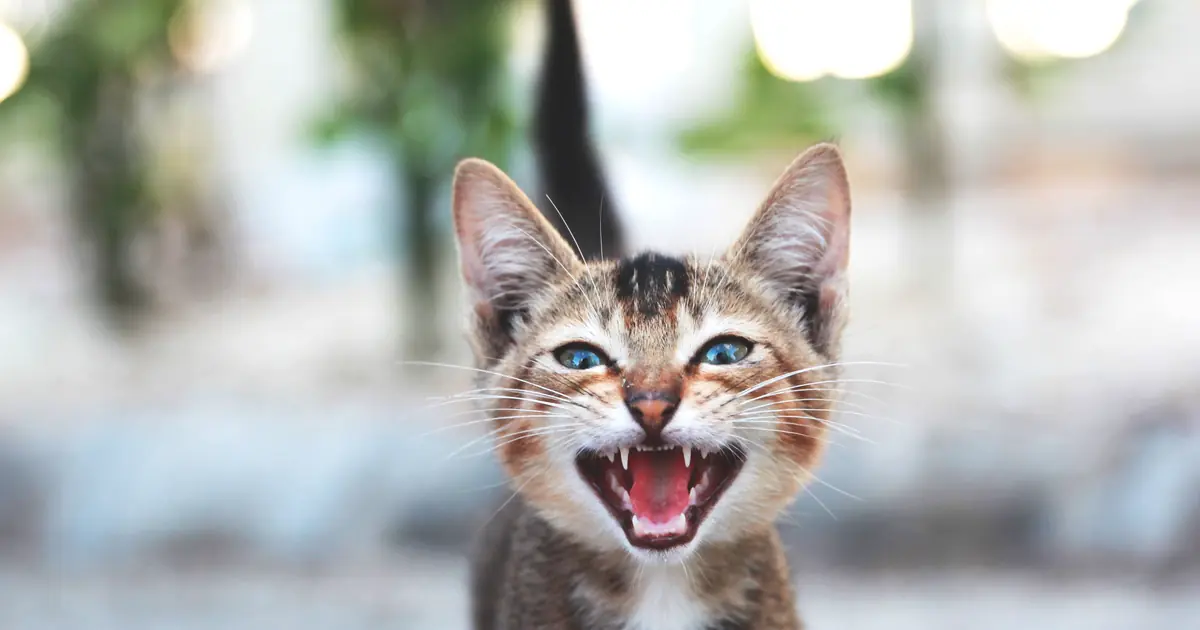
The squeaks grow into recognizable meows around 3 to 4 weeks of age. As a kitten’s hearing, sight, and vocal apparatus mature, its sounds become louder, clearer, and more varied. By the time kittens are exploring and playing, you’ll hear a wider range, mews, trills, and the beginnings of the meows and chirps that will shape their adult “voice.” You can see how that voice expands in can cats talk.
Why do adult cats meow, and who do they meow at?
Here’s the interesting part: adult cats mostly meow at humans, not other cats. Once past kittenhood, cats communicate with each other mainly through body language and scent, and reserve meowing largely for us, because we respond to it. So the meow essentially evolves from a kitten-to-mother call into a cat-to-human request. If your cat is especially chatty, our guide on why cats meow so much explains why.
How does kitten vocalizing change with age?
Here’s the rough timeline of a kitten’s developing voice.
| Age | Typical vocalizing |
|---|---|
| Birth to 2 weeks | Faint mews to call mom for warmth and milk |
| 3 to 4 weeks | Clearer, fuller meows as senses mature |
| 4 to 8 weeks | More variety: mews, trills, play sounds |
| Adult | Meows mainly directed at humans |
When should you worry about a kitten’s voice?
See a vet if a kitten seems unusually silent, isn’t nursing or gaining weight, or if an adult cat’s voice suddenly changes or disappears. A weak, silent newborn can signal a health problem, and voice changes in adults can point to illness, covered in can cats be mute. This article is educational and not a substitute for veterinary care. Cornell’s Feline Health Center and International Cat Care are reliable references on kitten development.
Frequently Asked Questions
Q: Do newborn kittens meow?
Yes, but faintly. Newborns make tiny high-pitched mews from birth to call their mother for warmth and milk. These squeaks develop into fuller meows by around 3 to 4 weeks of age.
Q: At what age do kittens start meowing clearly?
Around 3 to 4 weeks, as hearing, sight, and the vocal system mature, kitten sounds become louder and clearer. By 4 to 8 weeks you’ll hear a wider range of mews, trills, and play sounds.
Q: Why do kittens cry so much?
Young kittens cry to signal basic needs, warmth, hunger, or separation from mom, since they can’t yet see or hear well. Frequent crying in a newborn is normal, but a distressed or non-nursing kitten needs a vet.
Q: Do cats meow at each other?
Rarely, as adults. Grown cats communicate with each other mainly through body language and scent, and reserve meowing largely for humans, having learned it gets our attention.
Q: Is it normal for a kitten to be very quiet?
Some kittens are naturally quieter, but a newborn that’s unusually silent, weak, or not nursing may be unwell. If a quiet kitten also isn’t gaining weight or seems lethargic, see a vet promptly.
Q: Why has my adult cat’s meow changed?
A sudden change in an adult cat’s voice, hoarseness, silence, or a different sound, can indicate a respiratory issue, laryngeal problem, or other illness, and warrants a vet visit.

Hello and welcome to The Ideal Cat!
We are some passionate cat owners from different professions. We love our cats and have a lot of experience in how to care for our pets. We are incredibly excited to share our knowledge, experience, and research with you. So you can take good care of your loving cat. We will answer most of the common questions about owning cats, taking care of them, etc. If you have any question contact with us. Thanks for visiting! Enjoy the content.
