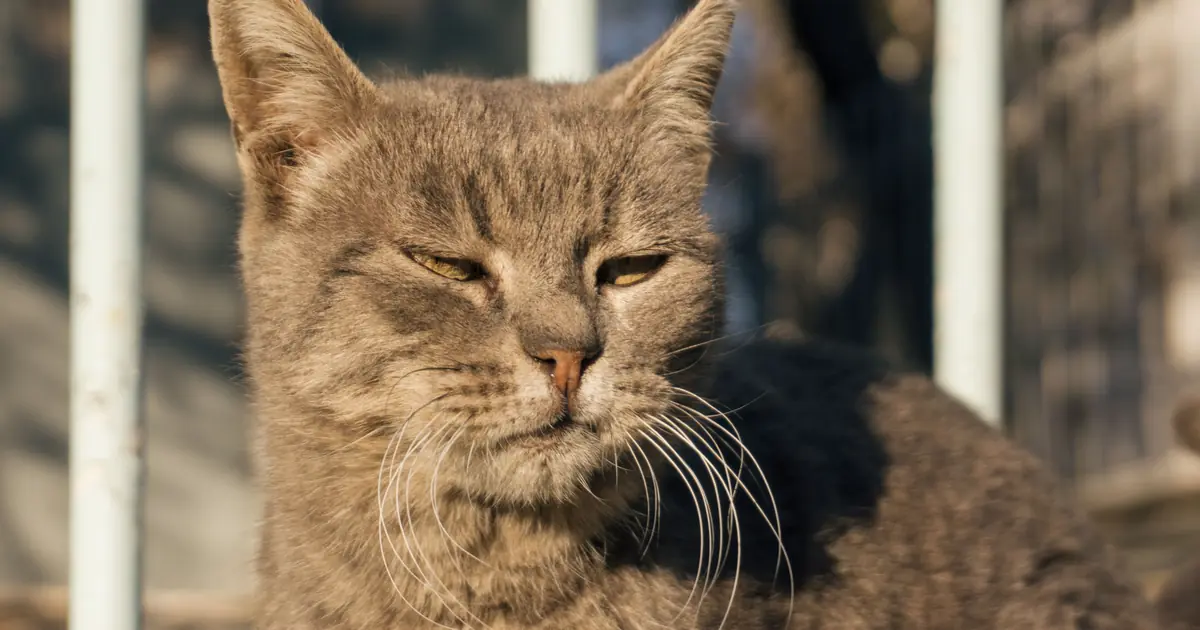
You call your cat for dinner and get nothing back but a wide-open mouth and dead silence. No meow. No squeak. Just a look that says “well, I tried.” If you’ve never seen the silent meow before, it’s a little unsettling the first time.
Here’s the thing: most quiet cats are perfectly healthy. Some cats just don’t talk much, the same way some people are chatty and others aren’t. But there’s a real difference between a cat who’s always been the strong, silent type and a cat who suddenly can’t get a sound out. One is personality. The other might be your cat telling you something’s wrong.
- Some cats are naturally quiet or rarely vocalize, and this is normal personality, not a health problem.
- The “silent meow” happens when a cat opens its mouth as if meowing but makes no audible sound, or a sound too high-pitched for human ears.
- A sudden loss of voice in a cat that’s usually vocal is most often caused by laryngitis or an upper respiratory infection.
- Sneezing, drooling, straining to meow, not eating, or trouble breathing alongside voice loss are red flags that need same-week vet attention.
- True congenital muteness, a cat born unable to vocalize at all, is rare and not well documented in veterinary medicine.
Can cats really be mute?
Yes, a cat can be functionally mute, meaning it rarely or never makes vocal sounds, and this is usually just how that individual cat is wired. Some cats meow constantly and others go their whole lives barely making a peep. Neither is wrong. A cat that’s always been quiet, eats well, plays, and acts like itself is not “broken.” It’s just not a talker.
This is different from a cat suddenly losing a voice it used to have. If your cat used to greet you at the door with a whole speech and now just stares silently, that’s a change worth paying attention to, not a personality trait.
Why are some cats naturally quiet?
Some cats are naturally quiet because of individual temperament, early life experience, and breed tendencies, not any health issue. Vocal habits vary as much between cats as they do between people.
A few things shape how chatty a cat turns out to be:
- Temperament: Confident, demanding cats tend to meow more to get what they want. Reserved or independent cats often don’t bother.
- Early life: Kittens raised around a lot of human interaction, especially bottle-fed kittens, sometimes learn that meowing gets attention and keep doing it as adults. Kittens with less early handling may never pick up the habit.
- Breed tendencies: Siamese cats and other Oriental breeds are famously loud and talkative, while breeds like the Russian Blue, British Shorthair, and Persian are often described as quieter and more reserved. These are general tendencies, not guarantees. You’ll meet a silent Siamese and a chatty Persian eventually.
A cat that has always meowed rarely, and shows no other symptoms, almost certainly falls into this “just quiet” category.
What is the “silent meow” and is it normal?
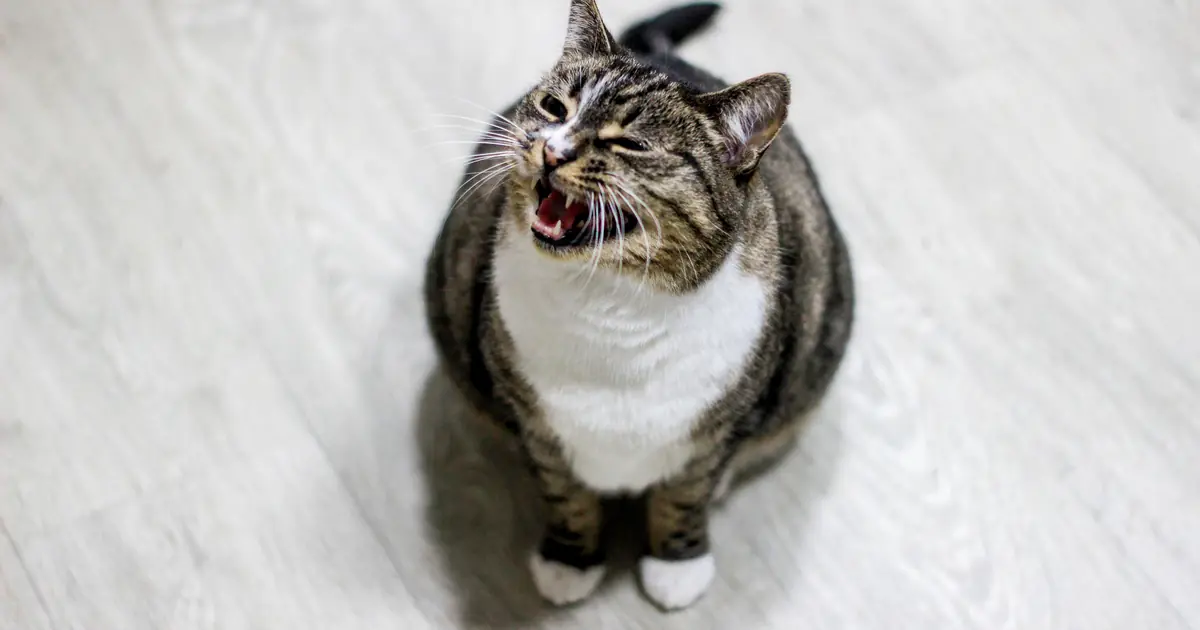
The silent meow is when a cat opens its mouth in a full meowing motion but no sound comes out, or the sound is pitched too high for human ears to pick up. It’s a real, well-documented feline behavior and it’s generally normal, not a sign of illness.
International Cat Care describes the silent meow as a real form of communication where researchers suspect the cat may still be making a sound, just at a frequency too high for humans to hear (source). Cats often use it in close-up, gentle interactions, like when they’re greeting you or asking for attention at close range, rather than when they want something across the room.
If your cat does this occasionally and otherwise meows normally the rest of the time, there’s nothing to worry about. It’s one of those small, weirdly charming things cats do.
What medical problems can make a cat lose its voice?
A cat can lose its voice from laryngitis, an upper respiratory infection, overuse from excessive yowling, a growth near the larynx, or in rare cases nerve damage that affects the voice box. Any of these can turn a normally vocal cat quiet, or make its meow sound raspy, breathy, or absent.
Common medical causes include:
- Laryngitis: Inflammation of the voice box (larynx) is the most common reason a cat suddenly sounds hoarse or silent. It’s often triggered by infection or irritation.
- Upper respiratory infection (cat flu): Feline herpesvirus and calicivirus are common culprits. The infection inflames the throat and larynx, and the meow can turn croaky or vanish for a few days. Cornell Feline Health Center notes these viral infections are widespread in cats and often bring sneezing and nasal discharge along with the voice change (source).
- Overuse: A cat that yowled all night, maybe an unspayed female in heat or a cat stressed by a car ride, can sound hoarse afterward the same way a person loses their voice after screaming at a concert.
- Sore throat or irritation: Swallowing something sharp, inhaling smoke or strong fumes, or a bit of trauma to the throat can all cause temporary voice changes.
- Laryngeal paralysis or nerve issues: Less common, but nerve damage affecting the larynx can weaken or change a cat’s voice, sometimes alongside noisy breathing.
- Growths or polyps: Benign polyps or, rarer, tumors near the larynx can press on the voice box and muffle or silence a cat’s meow.
- Rabies: Extremely rare in vaccinated pet cats, but changes in vocalization can appear in the later stages of rabies in unvaccinated animals. This is a good reminder to keep your cat’s rabies vaccine current.
- Hyperthyroidism: This hormone disorder in older cats usually makes a cat more vocal and demanding, not quieter, but it’s worth knowing it can shift a cat’s usual “voice” and behavior overall. VCA Animal Hospitals lists increased vocalization as a common sign of feline hyperthyroidism (source).
If your cat is meowing constantly and hoarsely before going quiet, that pattern points toward strain or infection rather than a lifelong personality trait.
How can you tell if it’s just a quiet cat or a health problem?
The clearest sign of a health problem is a sudden change. A cat that’s always been quiet needs no worry, but a cat that goes silent overnight, especially with other symptoms, needs a vet visit.
| Sign | Naturally quiet cat | Concerning voice loss |
|---|---|---|
| Onset | Always been this way, since kittenhood | Happened suddenly, over a day or two |
| Trying to meow | Meows softly or rarely, with no visible strain | Opens mouth wide, strains, or looks uncomfortable when trying to meow |
| Other symptoms | None, eating and acting normal | Sneezing, nasal discharge, drooling, not eating, coughing, or noisy breathing |
| Recommended action | None needed, just their personality | Vet visit, especially within a day or two if breathing is affected |
Watch specifically for straining to meow with no sound, drooling, pawing at the mouth or throat, refusing food, or any change in breathing. Those combined with voice loss are the signs that turn this from “quiet cat” into “vet now.”
What should you do if your cat goes quiet?
Monitor a healthy, always-quiet cat and don’t worry about it. But book a vet visit if a normally vocal cat suddenly stops meowing, sounds hoarse for more than a couple of days, or shows any other symptoms alongside the silence.
- Think back: has your cat always been quiet, or is this new? That single question does most of the diagnostic work.
- Check for other symptoms: sneezing, drooling, appetite loss, lethargy, or labored breathing.
- If it’s a sudden change with no other symptoms, give it a day or two, since mild overuse or a minor irritation often resolves on its own.
- Call your vet if the voice loss lasts more than 48 to 72 hours, if your cat seems to be straining or in discomfort, or if any red-flag symptoms show up.
- Treat noisy or labored breathing as an emergency and get your cat seen the same day.
A cat that seems to want to talk to you but can’t get the sound out is one of the more obvious “something’s off” signals your cat can give you, so trust that instinct.
Can a cat be born completely unable to vocalize?
True congenital muteness, a cat born physically unable to ever make vocal sounds, is extremely rare and not well documented in veterinary literature. Most “silent” kittens turn out to simply be quiet by temperament rather than physically unable to vocalize.
Rare congenital abnormalities of the larynx can theoretically affect a kitten’s ability to vocalize normally, but this isn’t something most cat parents will ever encounter. If a kitten seems to have zero vocal ability from birth alongside other developmental concerns, that’s worth mentioning at a routine kitten vet visit, just so it’s on record.
How vocal is “normal” for a cat anyway?
There’s no single normal here. Cat vocalization ranges from cats who meow dozens of times a day to cats who might meow once a week. Both ends of that range are healthy and common.
What matters more than the volume is consistency. A cat that meows twice a day, every day, for years is being perfectly normal for itself. The useful comparison is always your own cat’s baseline, not some other cat down the street. If you’re curious why your own cat leans chatty, it’s worth reading into why cats meow at night or why some cat cries sound almost human, since tone and timing tell you a lot about what’s actually going on.
A quick vet note
This article is meant to help you understand cat vocal behavior, not replace a vet exam. A cat that’s always been quiet and is eating, playing, and acting like herself almost certainly just has a soft personality, and that’s nothing to fix. But a sudden loss of voice, straining to meow, or quietness paired with sneezing, drooling, not eating, or breathing trouble is worth a same-week (or sooner) call to your veterinarian. Only a vet can rule out infection, a growth, or a nerve issue with an actual exam.
Frequently Asked Questions
Q: Why does my cat open its mouth like it’s meowing but no sound comes out?
This is called the silent meow. Your cat is going through the full motion of meowing, but no sound comes out, or the pitch is too high for you to hear. It’s a normal, harmless behavior most cats use during close, gentle interactions.
Q: Is it normal for a cat to never meow?
Yes. Some cats rarely or never meow, and this is simply their personality rather than a health issue. As long as the cat is eating, playing, and acting normally, a naturally quiet cat needs no medical attention.
Q: What is the most common reason a cat suddenly loses its voice?
The most common cause is laryngitis, inflammation of the voice box, often triggered by an upper respiratory infection like feline herpesvirus or calicivirus. The meow typically turns hoarse or disappears until the inflammation settles down.
Q: Can a cold or upper respiratory infection make a cat lose its meow?
Yes. Upper respiratory infections are one of the most frequent causes of temporary voice loss in cats, since the inflammation can spread to the larynx. Sneezing, nasal discharge, and watery eyes usually show up alongside the hoarse or missing meow.
Q: How long does laryngitis last in cats?
Mild laryngitis from a viral infection often improves within a few days as the underlying infection clears. If the voice loss lasts longer than 48 to 72 hours, or your cat seems to be struggling to breathe or swallow, it’s time to see a vet rather than wait it out.
Q: Are certain cat breeds naturally quieter than others?
Yes, in general. Siamese and other Oriental breeds are known for being especially vocal, while breeds like the Russian Blue, British Shorthair, and Persian tend to be quieter on average. These are broad tendencies, though, and individual personality still plays the bigger role.
Q: Should I worry if my cat sounds hoarse but is acting fine otherwise?
A little hoarseness with no other symptoms, especially after a stressful event or a bout of yowling, often resolves on its own within a couple of days. If it persists past that, or your cat starts eating less or seems uncomfortable, get it checked by a vet.
Q: Can stress cause a cat to lose its voice?
Indirectly, yes. Prolonged yowling from stress, such as during a car trip or a move, can strain the voice box the same way shouting strains a human throat, leading to temporary hoarseness. This kind of voice loss usually clears up on its own once the strain settles.

Hello and welcome to The Ideal Cat!
We are some passionate cat owners from different professions. We love our cats and have a lot of experience in how to care for our pets. We are incredibly excited to share our knowledge, experience, and research with you. So you can take good care of your loving cat. We will answer most of the common questions about owning cats, taking care of them, etc. If you have any question contact with us. Thanks for visiting! Enjoy the content.
