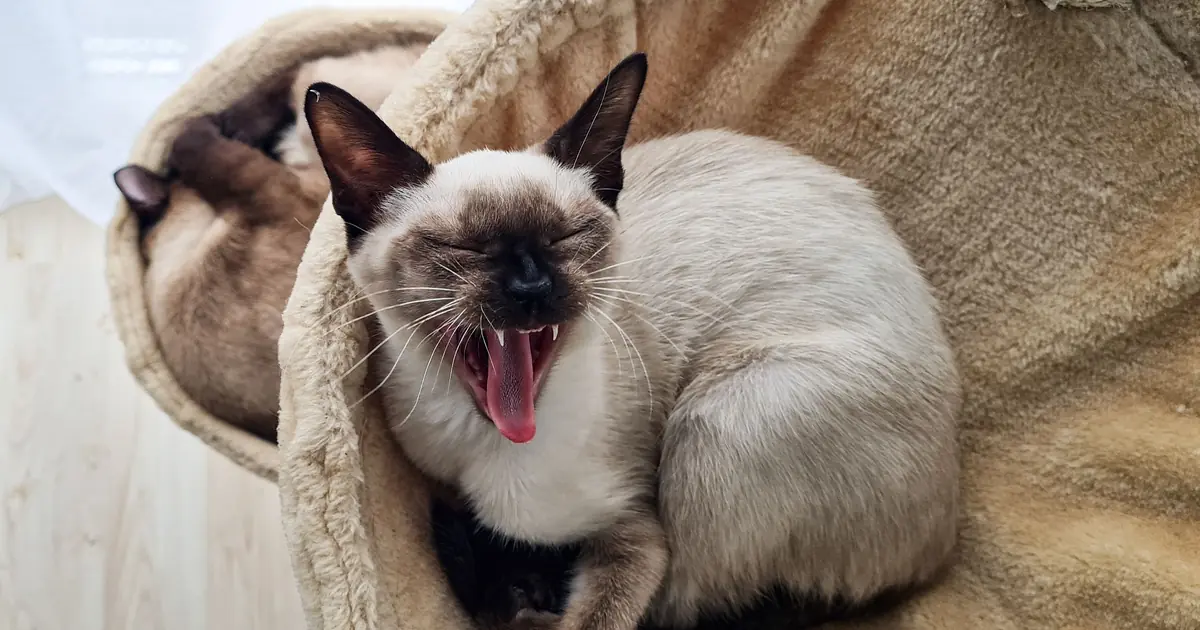
Picture a grown cat that still fits in one hand. Not a kitten you’ll watch double in size next month. A full adult, done growing, who looks like she paused at six months old and just decided to stay there.
That’s the Toybob cat. It’s one of the smallest breeds in the world, and most people have never heard of it.
If you’ve ever wished your kitten would stay tiny forever, this little Russian breed is about as close as nature gets. And the best part? Its small size isn’t a deformity or a fragile gimmick. It’s just a sweet, sturdy, pocket-sized cat with a stubby bobtail and a big personality.
What Is a Toybob Cat?
A Toybob cat is a very small, naturally occurring cat breed from Russia, known for staying kitten-sized into adulthood and for its short, kinked bobtail. Think of it as a regular cat shrunk down: same proportions, same sturdy little body, just packed into a much smaller frame.
The name says it all. “Toy” for the toy-like size, “bob” for the bobtail. You may also see it called the Skif-Thai-Toy-Bob or Russian Toybob, names tied to its early bloodlines.
Here’s the part people get wrong: the Toybob is not a kitten that never grew up, and it’s not a sickly miniature. It’s a stable, recognized breed with a body that’s small all over but built in normal proportions.
Toybob Cat Breed Stats at a Glance
| Origin | Russia (Rostov region), 1980s |
| Weight (Male) | 4 to 7 lb (about 1.8 to 3.2 kg) |
| Weight (Female) | 3 to 5 lb (about 1.5 to 2.3 kg) |
| Lifespan | 14 to 20 years (some live longer) |
| Coat | Short or semi-long, soft and plush |
| Colors | Many colors and patterns; classic seal colorpoint is iconic |
| Energy Level | Moderate; playful in bursts, then cuddly |
| Grooming Needs | Low; a weekly brush is plenty |
| Good With Kids | Yes, with gentle, supervised handling |
| Good With Other Pets | Yes, including cat-friendly dogs |
| Average Price | $1,000 to $3,000+ (rare breed) |
Where Did the Toybob Cat Come From?
The Toybob comes from Russia, where it started with a couple of stray cats and one very small kitten in the 1980s. The breed traces back to the Rostov region in the south of the country.
The story goes like this. In the early 1980s, a breeder named Elena Krasnichenko took in a stray male that looked like an old-style Siamese, seal point coat and all, except for one odd feature: a short, kinked tail. A few years later, her family picked up a small seal-point female with the same unusual bobbed tail.
When those two were bred in the late 1980s, they produced a tiny bobtailed male kitten. That little cat became the founding father of the whole breed. Every Toybob today traces back to those first few cats and that spontaneous double quirk: small size plus a natural bobtail.
The breed was originally built on a Thai and old-style Siamese look, which is why the classic seal colorpoint pattern is so tied to its image. Over the years, breeders expanded the gene pool carefully and added more colors.
Is the Toybob a Recognized Breed?
Yes, the Toybob is a recognized breed, though it’s still building its presence. The International Cat Association (TICA) first listed it in an experimental category around 2008, then advanced it to registration status in January 2017. That’s a real step up the ladder for a breed this rare.
The Toybob is not currently a championship breed in the Cat Fanciers’ Association (CFA) the way long-established cats are, and recognition status can shift over time. If pedigree paperwork matters to you, ask your breeder exactly which registry your kitten is registered with.
How Big Do Toybob Cats Get?
Toybob cats stay tiny their whole lives, usually weighing 4 to 7 pounds full grown, with females often on the smaller end. For comparison, an average house cat weighs around 8 to 10 pounds, so a Toybob is roughly half the size.
An adult Toybob is often compared to a six-month-old kitten in size. They typically stop growing somewhere between 9 and 12 months, and that’s it. What you see is what you get for the next decade or two.
Is the Toybob the Smallest Cat Breed?
The Toybob is widely considered one of the smallest cat breeds in the world, and it’s a strong contender for the very smallest. It regularly competes for that title with the Singapura and the Munchkin.
Here’s the honest answer: there’s no official global ruling on “the single smallest breed,” and weights overlap between these tiny cats. But pound for pound, a full-grown Toybob is about as small as a healthy adult cat gets.
What Does a Toybob Cat Look Like?
A Toybob looks like a miniature version of a normal cat, with a compact, muscular body, a rounded head, big expressive eyes, and a short bobbed tail. The whole package is small but solid, not delicate.
The tail is the signature. A Toybob’s bobtail is short, often just an inch or two, with natural kinks and curves in it. No two tails are exactly alike. It’s a built-in quirk, and it’s part of the charm.
The Coat and Colors
Toybobs come in two coat lengths: short and semi-long. Both are soft and a little plush, with the shorthair lying close and the semi-long carrying a light, fluffy texture. Neither one is high-maintenance.
Color-wise, the breed is open to a wide range, but the classic look is the seal colorpoint: a creamy body with darker face, ears, legs, and tail, plus striking blue eyes. That Siamese-style pointing is the image most people picture when they hear “Toybob.”
Kitten vs Adult: They Barely Change
Most cats grow up and lose that round-faced, big-eyed kitten look. Toybobs mostly keep it. An adult Toybob still reads as a kitten to nearly everyone who meets it, which is exactly why fans call it the “forever kitten” breed.
What Is the Toybob Cat’s Personality Like?
Toybob cats are sweet, calm, and famously dog-like in their attachment to people. They follow you room to room, ride on a shoulder, and would rather be near you than off doing their own thing.
They’re playful, but in gentle bursts. A Toybob will chase a toy with real enthusiasm, then flop into your lap for a nap. They’re not the wall-climbing, chandelier-swinging type. Think cozy companion, not tiny tornado.
These cats are also quiet. They tend to have soft, chirpy little voices rather than a loud demanding yowl. Many Toybobs can be taught to fetch, walk on a harness, or respond to their name, which adds to the dog-like reputation.
One thing to know: Toybobs bond hard. They want company. This is a cat that thrives on attention and can get lonely if left alone all day, every day.
Is a Toybob Cat Right for You?
A Toybob is a great fit if you want a small, affectionate, low-drama lap cat and you’re around enough to give it company. It’s a tougher fit if you’re rarely home or you want an independent, aloof cat.
Let’s be honest about the downsides too. Toybobs are very rare, often expensive, and genuinely hard to find. You may wait months on a breeder’s list, and you’ll likely pay a premium.
A Toybob may be perfect for you if you:
- Want a tiny, gentle, people-focused cat
- Live in an apartment or smaller home
- Have time for daily companionship and play
- Like the idea of a cat that acts a bit like a small dog
Look elsewhere if you:
- Are away from home most of the day
- Want an aloof, independent cat
- Need a cat you can find quickly or cheaply
- Have very young kids who handle pets roughly
Are Toybob Cats Healthy?
Yes, Toybob cats are generally healthy, and this is one of the most reassuring things about the breed. Their small size comes from naturally proportionate small build, not the kind of skeletal mutation that causes problems in some other tiny or short-legged cats.
This is the part worth slowing down on. The Toybob’s bobtail comes from a benign mutation. Unlike the tail gene in Manx cats, which can be linked to spinal issues, the Toybob’s bobtail is not known to be tied to those defects. The tail is short and kinked, but the spine behind it is normal.
Same goes for the small size. The Toybob is small all over in normal proportions, so it does not carry the bone-and-joint concerns that can come with dwarfism-type breeding. Everything is just scaled down.
What Health Issues Should Toybob Owners Watch For?
The main thing to watch in a Toybob is the same thing every cat owner watches: a healthy weight. On a 4-pound frame, even a little extra fat is a lot, so portion control matters more than usual.
Because the breed has a small gene pool, responsible breeders screen their cats and avoid doubling up on hidden problems. Ask any breeder about the health testing they do on their parent cats.
This guide is for general education, not medical advice. If your Toybob seems off, eats poorly, or shows any sudden change, call your veterinarian. A licensed vet who knows your cat is always your best source on health.
How Do You Groom and Care for a Toybob?
Toybob grooming is easy: a quick brush once a week keeps both the short and semi-long coats in good shape. These cats are low-maintenance in the fur department, and they shed only moderately.
A weekly brush does three things. It pulls out loose hair, spreads natural oils, and gives you a minute to check skin, ears, and that signature little tail for anything unusual. The semi-long coat may need slightly more attention during shedding season, but nothing intense.
Round out basic care with the usual: trim nails every couple of weeks, peek in the ears, and keep up with dental care. Small cats still get dental disease, so don’t skip the teeth.
What Should You Feed a Toybob Cat?
Feed a Toybob a high-quality, protein-rich cat food in small, measured portions, since a tiny cat needs far fewer calories than an average one. Overfeeding is the single easiest mistake to make with this breed.
Here’s the math that trips people up. A Toybob might eat half (or less) what a normal cat eats. Free-feeding a bowl that never empties is a fast track to a chubby Toybob, and the extra weight is harder on a small frame.
Stick to measured meals, follow the feeding guide on the label adjusted for your cat’s tiny size, and ask your vet for a target weight. Fresh water always available, and a fountain can encourage drinking if your cat is picky.
If your Toybob ignores still water, a quiet fountain can help. Something like the PetSafe Drinkwell Pagoda Ceramic Fountain gives a steady flow of fresh water in a small footprint, which suits a tiny cat in an apartment. It’s easy to clean and runs quietly enough to leave on a counter.
How Much Exercise Does a Toybob Need?
Toybobs need light daily play, not heavy exercise: two or three short play sessions a day keeps them happy and trim. They’re active in bursts, then perfectly content to curl up with you.
Wand toys, small balls, and puzzle feeders all work well. Because Toybobs are smart and a bit dog-like, they love games with a goal, like fetch or learning a simple trick. Keep sessions short and fun.
A cat tree or a few perches lets them climb and watch the world, which matters even for a homebody. Mental enrichment counts as much as physical play for this clever little breed.
How Are Toybobs With Kids, Dogs, and Other Cats?
Toybobs are easygoing and usually do well with gentle kids, friendly dogs, and other cats. Their calm, social nature makes them adaptable to a busy household, as long as everyone treats them kindly.
With kids, the main caution is size. A Toybob is small and light, so young children need to learn gentle, supervised handling. No carrying the cat around like a toy. With respectful kids, Toybobs are affectionate companions.
With dogs, Toybobs often get along great, especially with calm, cat-savvy dogs. Just supervise early introductions, because even a friendly big dog can accidentally hurt such a tiny cat during play. With other cats, Toybobs are typically social and content to share space.
How Long Do Toybob Cats Live?
Toybob cats typically live 14 to 20 years, and some have been reported to reach their early twenties. Their generally robust health and lack of dwarfism-linked problems help them age well.
To help your Toybob hit the high end of that range, keep them at a healthy weight, schedule yearly (then twice-yearly for seniors) vet checkups, and stay on top of dental care. Indoor living also adds years by avoiding cars, predators, and disease.
As a Toybob ages, watch for subtle shifts: drinking more, eating less, sleeping in new spots, or moving stiffly. Small cats hide illness well, so any change is worth a vet call.
How Much Does a Toybob Cat Cost?
A Toybob cat usually costs between $1,000 and $3,000 from a breeder, with show-quality kittens running higher. The price is steep because the breed is genuinely rare and the breeders are few.
Pricing varies with coat, color, and the kitten’s quality. Some breeders charge less for non-standard (longer) tails and more for the small, short-tailed standard look. Rare colors and especially tiny kittens often cost the most.
| Type of Toybob | Typical Price Range |
|---|---|
| Pet-quality kitten | $1,000 to $2,500 |
| Show- or breed-quality kitten | $2,800 to $4,000+ |
| Adult / retired cat | $1,000 to $3,000 |
Remember the ongoing costs too: food, litter, vet care, and supplies. The good news is that a tiny cat eats less and uses less litter, so day-to-day costs run lower than for a big cat.
Where Can You Find a Toybob Cat Ethically?
The safest place to find a Toybob is through a registered breeder listed with a recognized cat association or the breed’s own club, never a random online ad. Because the breed is so rare and pricey, it’s a magnet for scams.
Start with breed clubs and registry breeder lists, such as the International Toybob Cat Club and TICA’s breeder directory. Reputable breeders health-test their cats, raise kittens in the home, and happily answer questions.
Red flags that scream scam:
- Prices far below the normal range for such a rare breed
- No registration papers or health records offered
- Pressure to pay by gift card, wire, or crypto
- Refusal to video-call or show the kitten with its mother
- Kittens “ready” younger than 12 weeks
Could you adopt one? It’s rare, but possible. Breed-specific rescues and surrender situations do happen, so it’s worth asking around. Just don’t expect to find a Toybob at your local shelter.
What Cat Breeds Are Similar to the Toybob?
If you love the Toybob’s tiny size or bobtail but can’t find one, a few other breeds scratch a similar itch. Each one shares part of the appeal: small size, big personality, or a short tail.
| Breed | How It Compares to the Toybob |
|---|---|
| Singapura | One of the smallest breeds, like the Toybob, but with a full-length tail and a ticked coat. Small, playful, and people-loving. |
| Munchkin | Small overall but mainly short in the legs, not proportionate like the Toybob. The size comes from a different gene. |
| Japanese Bobtail | Shares the short, pom-pom bobtail but is a normal-sized, lively cat. |
| American Bobtail | Another bobtailed breed, but much larger and sturdier than the tiny Toybob. |
Common Myths and Misconceptions About Toybobs
The Toybob’s rarity means a lot of half-truths float around online. Let’s clear up the big ones, because getting these right matters before you spend thousands on a kitten.
Myth 1: “A Toybob Is Just a Munchkin”
False. A Toybob is small in proportion, with normal-length legs, while a Munchkin has very short legs from a dwarfism gene. They’re small for completely different reasons. A Toybob shrinks the whole cat; a Munchkin shortens the legs.
Myth 2: “The Bobtail Means Spine Problems”
False. The Toybob’s short kinked tail comes from a benign mutation that is not known to be linked to the spinal defects seen in some other tailless breeds. The bobtail is cosmetic, not a health flaw.
Myth 3: “It’s Just a Kitten That Stayed Small”
False. A Toybob is a fully grown adult cat that happens to be kitten-sized. It’s a stable, recognized breed, not a stunted or sickly individual. The small size is normal and healthy for the breed.
Myth 4: “Tiny Cats Are Fragile”
Mostly false. Toybobs are small but solid, with compact, muscular bodies. They’re not delicate glass figurines. They just need sensible handling around very young kids and big dogs.
Frequently Asked Questions About Toybob Cats
Q: Is the Toybob the smallest cat breed?
The Toybob is one of the smallest cat breeds in the world and a top contender for the very smallest. Full-grown adults weigh just 4 to 7 pounds. There’s no official ruling on a single smallest breed, since the Toybob, Singapura, and Munchkin all overlap in size.
Q: How big do Toybob cats get?
Toybob cats reach about 4 to 7 pounds full grown, with females often smaller. They’re roughly half the size of an average 8 to 10 pound house cat and stay comparable to a six-month-old kitten for life. Most stop growing between 9 and 12 months.
Q: How much is a Toybob cat?
A Toybob kitten typically costs $1,000 to $3,000 from a registered breeder, and show-quality kittens can run $4,000 or more. The high price reflects how rare the breed is and how few breeders exist worldwide.
Q: Are Toybob cats healthy?
Yes, Toybob cats are generally healthy. Their small size is naturally proportionate, not dwarfism, and their bobtail comes from a benign mutation not linked to spinal problems. The main thing to manage is keeping their tiny frame at a healthy weight.
Q: What is the difference between a Toybob and a Munchkin?
A Toybob is small all over in normal proportions, while a Munchkin is mainly short in the legs due to a dwarfism gene. The Toybob shrinks the whole cat; the Munchkin shortens the legs. They come from completely different genetics.
Q: Do Toybob cats have long or short tails?
Toybob cats have short, kinked bobtails, usually just an inch or two long, though some can be longer. The tail has natural kinks and curves from a spontaneous mutation, and no two are exactly alike.
Q: How long do Toybob cats live?
Toybob cats usually live 14 to 20 years, and some have been reported to reach their early twenties. Their robust health and lack of dwarfism-linked problems help them age well, especially as indoor cats with good vet care.
Q: Are Toybob cats good with kids and dogs?
Yes, Toybobs are easygoing and usually do well with gentle kids and friendly dogs. Their main vulnerability is size, so supervise rough play and teach children to handle the tiny cat gently. They’re also social with other cats.
The Final Verdict on the Toybob Cat
The Toybob cat is a rare gem: a tiny, sweet, dog-like companion that stays kitten-sized for life without the health baggage some other small cats carry. If you want a gentle lap cat with a big heart and a stubby little tail, few breeds match the charm of a Toybob.
Just go in with eyes open. They’re hard to find, they cost a real chunk of money, and they want your company. But for the right home, this pocket-sized Russian breed delivers a lifetime of forever-kitten cuddles. And honestly? That’s tough to beat.

Hello and welcome to The Ideal Cat!
We are some passionate cat owners from different professions. We love our cats and have a lot of experience in how to care for our pets. We are incredibly excited to share our knowledge, experience, and research with you. So you can take good care of your loving cat. We will answer most of the common questions about owning cats, taking care of them, etc. If you have any question contact with us. Thanks for visiting! Enjoy the content.
