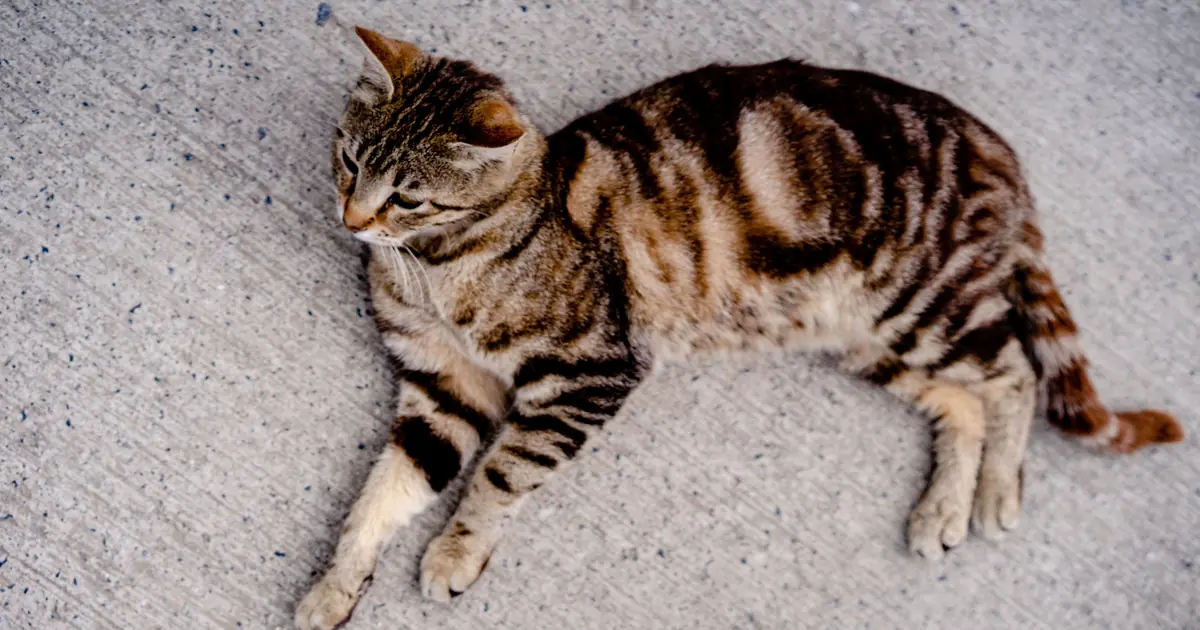
Picture a cat that stops people mid-sentence. Long legs, huge ears, a coat splashed with bold dark spots. It looks like a wild serval shrunk down to apartment size.
Here’s the twist. The Serengeti cat has no wild blood at all. None. It was designed to mimic that exotic serval look using nothing but domestic house cats.
So if you’ve been eyeing one and wondering whether you’re signing up for a tiny leopard or a sweet lap cat, good news. It’s the second one. Mostly. Let’s get into it.
Serengeti Cat at a Glance
| Origin | United States (California), 1994 |
| Weight (Male) | 10 to 15 lbs |
| Weight (Female) | 8 to 12 lbs |
| Lifespan | 10 to 15 years |
| Coat | Short, sleek, spotted tabby |
| Colors | Brown (ebony) spotted tabby, silver, solid black, smoke |
| Energy Level | High |
| Grooming Needs | Low |
| Good With Kids | Yes, with supervision |
| Good With Other Pets | Yes, with slow intros |
| Average Price | $600 to $2,000 from breeders |
Where Did the Serengeti Cat Come From?
The Serengeti cat was created in 1994 by Karen Sausman, a conservation biologist running Kingsmark Cattery in California. Her goal was specific: build a house cat that captured the look of an African serval, without using any actual wild cats.
That last part matters. A lot of people want the serval aesthetic. Tall legs, spotted coat, those satellite-dish ears. But owning real wild or hybrid cats comes with legal headaches, ethical baggage, and a cat that often doesn’t want to live in your living room.
So Sausman went a different route. She crossed a Bengal with an Oriental Shorthair. The Bengal brought the bold spots and athletic build. The Oriental Shorthair brought the long legs, big ears, and chatty, people-loving personality. The result was a cat that looks wild and acts like a velcro shadow.
The International Cat Association (TICA) recognized the Serengeti in 2001. To this day, TICA is essentially the only major registry that registers the breed. The Cat Fanciers’ Association (CFA) does not recognize it.
What Does a Serengeti Cat Look Like?
A Serengeti cat is all about long lines and bold contrast. Long legs, a long neck, an upright posture, and a sleek body that looks like it’s built to sprint across a savanna (it isn’t, but it looks the part).
The two signature features are the legs and the ears. The legs are noticeably longer than your average house cat’s, which gives the breed its leggy, stretched-out look. The ears are large, tall, and rounded at the tips, sitting high on the head.
The Coat and Spots
The coat is short, smooth, and easy to care for. The classic look is a brown spotted tabby: dark spots scattered over a tan, beige, or warm gold background. TICA also recognizes silver (black spots on a silvery base), solid black, and smoke.
The spots are the star of the show. They should be bold, dark, and randomly placed, not striped or swirled. A great Serengeti reads like a wildcat at a glance, even though it’s pure house cat under the hood.
Kitten vs Adult
Serengeti kittens often look a little gangly and unfinished. The spots can be faint or muddy at first, and the legs look almost too long for the body. Give it time. As the cat matures, the spots sharpen, the coat tightens up, and that elegant, leggy adult shape comes into focus, usually by one to two years old.
Serengeti Cat Personality and Temperament
The Serengeti cat is confident, affectionate, and deeply attached to its people. This is a “velcro cat” in the truest sense. It wants to follow you room to room, supervise your every move, and be wherever you are.
And it talks. A lot. The Serengeti chirps, trills, and meows its way through the day, often “answering” when you speak to it. It’s not quite as relentless as a Siamese, but if you want a silent cat, keep looking.
Here’s the thing about that energy: it’s high. Really high. The Serengeti is athletic, curious, and always looking for the next thing to climb, chase, or knock off a shelf. A bored Serengeti is a destructive Serengeti.
They’re smart, too. Many learn to play fetch, open cabinets, and figure out puzzle feeders fast. They can be a touch shy in brand-new situations, but they usually warm up quickly once they feel safe.
Is the Serengeti Cat Right for You?
The Serengeti cat is a great fit for active, attentive homes that want an interactive, dog-like cat. It’s a poor fit for people who are gone all day and want a quiet, low-maintenance roommate.
You’ll probably love a Serengeti if you:
- Want a cat that interacts, follows you, and “talks” back
- Have time for daily play and enrichment
- Like the exotic spotted look without the wild-cat baggage
- Have vertical space for climbing (cat trees, shelves, perches)
- Don’t mind a vocal cat
You might want to skip it if you:
- Work long hours and can’t give it daily attention
- Prefer a calm, sedate, nap-all-day cat
- Want silence (this is not your breed)
- Live somewhere with zero room to climb or run
- Have a tight budget and a low tolerance for finding a rare breeder
Serengeti Cat Health Issues to Know About
The Serengeti cat is generally considered a hardy, healthy breed with no confirmed breed-specific genetic disorders. Because it’s still young (only created in 1994), there simply isn’t a long medical track record yet.
That said, the Serengeti’s parent breeds carry a couple of conditions worth knowing. Both are relatively uncommon, but reputable breeders screen for them.
- Hypertrophic cardiomyopathy (HCM): a heart condition that thickens the heart muscle. It shows up across many breeds, including the Bengal side of the family.
- Progressive retinal atrophy (PRA): a gradual loss of vision linked to the Oriental Shorthair lineage.
Beyond those, the usual house-cat care applies: keep up with dental health, watch the weight, and don’t skip annual checkups. As this breed ages, a vet may suggest a heart screening (an echocardiogram) since HCM can be silent early on.
One honest note: this article is here to help you learn, not to diagnose anything. For any health concern, screening question, or symptom, talk to your veterinarian. They know your cat.
Grooming and Care
The Serengeti cat is about as low-maintenance as grooming gets. The short, sleek coat doesn’t mat and sheds modestly. A quick once-a-week brush with a rubber grooming mitt or soft brush keeps it shiny and cuts down on loose hair.
Beyond that, the basics cover it. Trim the nails every couple of weeks, brush the teeth regularly to protect against dental disease, and check the ears now and then. Those big ears can collect a little debris.
Feeding and Diet
Feed your Serengeti cat a high-protein, meat-first diet that matches its busy, athletic lifestyle. As natural carnivores, cats thrive on animal protein, and this active breed burns through plenty of energy.
Match the food to your cat’s age and life stage, kitten, adult, or senior. Watch portions, because even a leggy, active cat can quietly pack on weight if you free-feed. Always keep fresh water available, and many active cats drink more readily from a fountain.
Exercise and Enrichment
The Serengeti cat needs real daily exercise and mental stimulation, not just a stray toy on the floor. This is a high-energy breed, and an under-stimulated one will find its own entertainment (usually your curtains).
Give it ways to climb and burn energy:
- A tall cat tree or wall-mounted shelves for vertical climbing
- Wand toys and interactive play sessions, at least twice a day
- Puzzle feeders to make mealtime a brain workout
- Fetch games (a lot of Serengetis genuinely enjoy fetch)
Many Serengeti owners also leash-train their cats. With a secure harness and patience, these confident, curious cats often take to outdoor walks beautifully.
If you want one solid piece of gear, a tall, sturdy cat tree earns its keep with this breed.
Frisco 72-Inch Cat Tree
A tall, multi-level tower gives a leggy, climbing-obsessed Serengeti somewhere to perch, scratch, and survey its kingdom. The height suits an athletic cat that wants to be up high.
Living With Kids, Dogs, and Other Cats
The Serengeti cat tends to do well in busy, social households, including homes with children, dogs, and other cats. Its confident, playful nature helps it adapt, and many actually prefer the company.
Kids: The Serengeti’s energy makes it a fun playmate for children. As with any cat, supervise younger kids so play stays gentle on both sides.
Dogs: Many Serengetis get along great with cat-friendly dogs. Their bold personality means they’re rarely intimidated. Go slow with introductions and let everyone set the pace.
Other cats: A Serengeti often enjoys a feline companion, especially another active cat that can keep up. Slow, scent-based introductions over a week or two give the best results.
Lifespan and Aging Tips
The Serengeti cat has a lifespan of around 10 to 15 years, with good care often landing on the higher end of that range. To help yours age well, lean into prevention.
- Kitten and young adult (0 to 2): establish vet visits, vaccinations, and good play habits early.
- Adult (3 to 9): watch the weight, keep up dental care, and stay on top of annual checkups.
- Senior (10+): consider more frequent vet visits, ask about heart screening, and adjust diet and activity as your cat slows down.
Aging cats often hide discomfort well. Small changes (less jumping, more sleeping, a shift in appetite) are worth a vet call rather than a wait-and-see.
How Much Does a Serengeti Cat Cost?
A Serengeti cat typically costs between $600 and $2,000 from a breeder, with show-quality kittens from championship lines running higher. The price swings based on lineage, coat quality, breeder reputation, and where you live.
| Cost Type | Estimated Range |
|---|---|
| Pet-quality kitten | $600 to $1,200 |
| Show or breeding-quality kitten | $1,200 to $2,000+ |
| Initial setup (supplies, neuter, first vet) | $300 to $600 |
| Ongoing yearly costs (food, litter, vet) | $500 to $1,000+ |
Two kittens from the same litter can carry very different price tags. The one with bolder, cleaner spots and better conformation usually costs more. That’s normal for a spotted breed where the look is the whole point.
Where to Find a Serengeti Cat Ethically
Find a Serengeti cat through a TICA-registered breeder who health-tests their cats. This is a rare, relatively new breed, so there are only a handful of dedicated breeders worldwide, and a real one is worth the wait.
Green flags to look for:
- TICA registration and a clear, documented pedigree
- Health screening of parent cats (including heart checks)
- Kittens raised in the home, well socialized, and not rehomed too young
- A breeder happy to answer questions and show you the cattery
Red flags to walk away from:
- “Serengeti” kittens at suspiciously low prices or available instantly in bulk
- No registration, no health records, no questions asked
- Sellers who pressure you or won’t let you meet the parents
- Anyone claiming the cat is part serval or a wild hybrid (it isn’t)
Rescue is a long shot for such a rare breed, but it’s worth checking spotted-cat and Bengal-specific rescues now and then. Occasionally a Serengeti or a close lookalike turns up.
Serengeti vs Savannah vs Bengal: What’s the Difference?
This is where most people get tangled up. The Serengeti, Savannah, and Bengal all look exotic and spotted, but they’re built very differently under the hood. The biggest gap: the Savannah and Bengal carry actual wild-cat ancestry, while the Serengeti does not.
| Breed | Wild DNA? | Created From | Quick Take |
|---|---|---|---|
| Serengeti | No wild blood | Bengal x Oriental Shorthair | Serval look, 100% house cat |
| Savannah | Yes (serval) | Domestic cat x African serval | Real wild ancestry, can be very large |
| Bengal | Yes (Asian leopard cat) | Domestic cat x Asian leopard cat | Wild leopard-cat heritage, athletic |
So if your heart is set on the serval look but you don’t want the legal questions, the cost, or the unpredictability that can come with wild ancestry, the Serengeti is the gentle, all-domestic answer.
Similar Breeds to Consider
If you love the Serengeti cat but want to weigh your options, a few spotted breeds scratch the same itch.
- Savannah: the closest thing to an actual mini serval, with real wild ancestry. Bigger commitment, bigger cat.
- Bengal: athletic, spotted (or marbled), and one of the Serengeti’s own parent breeds. Wildly popular and a little wild in energy.
- Ocicat: a fully domestic spotted breed (no wild blood, just like the Serengeti) that’s affectionate and dog-like.
- Egyptian Mau: the only naturally spotted domestic cat, fast, elegant, and devoted to its people.
Common Myths and Misconceptions
Let’s clear up the confusion that follows this breed around.
Myth: The Serengeti is a wild cat or part serval. It isn’t. The Serengeti was specifically designed to look like a serval using only domestic cats (Bengal and Oriental Shorthair). There is no serval in it.
Myth: You need a special permit to own one. Because the Serengeti is a fully domestic cat, it’s legal to own as a regular pet in places where wild and hybrid cats are restricted. Always double-check your local rules, but the Serengeti is treated like any house cat.
Myth: It’s basically a Savannah. Nope. The Savannah is a domestic-serval hybrid with real wild ancestry. The Serengeti just borrows the look.
Myth: That spotted coat needs tons of grooming. The short, sleek coat is genuinely low-maintenance. A weekly brush is plenty.
Serengeti Cat FAQ
Q: Is the Serengeti cat a wild cat?
No. The Serengeti cat is 100% domestic, with no wild-cat DNA. It was created in 1994 by crossing a Bengal with an Oriental Shorthair, specifically to look like a wild serval using only house cats.
Q: What’s the difference between a Serengeti and a Savannah?
The Savannah is a true hybrid with African serval ancestry, while the Serengeti has no wild blood at all. The Serengeti was bred from a Bengal and an Oriental Shorthair to mimic the serval look without using a real wild cat.
Q: How much is a Serengeti cat?
A Serengeti cat usually costs between $600 and $2,000 from a TICA-registered breeder. Show-quality kittens with strong lineage and bold spots sit at the higher end of that range.
Q: Are Serengeti cats friendly?
Yes. Serengeti cats are confident, affectionate, and famously “velcro,” meaning they bond tightly with their people and follow them around. They’re social, playful, and usually good with kids and other pets.
Q: How big do Serengeti cats get?
Serengeti cats are medium-to-large and long-legged. Males typically weigh 10 to 15 pounds and females 8 to 12 pounds. Their long legs and tall ears make them look bigger than they actually weigh.
Q: Are Serengeti cats vocal?
Very. Serengeti cats are talkative, with chirps, trills, and meows throughout the day. They often “answer” when you speak to them, though they’re generally not as loud as Siamese cats.
Q: How long do Serengeti cats live?
Serengeti cats have a lifespan of about 10 to 15 years. With good diet, regular vet care, and a healthy weight, many reach the upper end of that range.
Q: Do Serengeti cats get along with dogs?
Often, yes. Serengeti cats are confident and social, and many do well with cat-friendly dogs. Slow, gradual introductions give the best chance of a smooth, lasting friendship.
Final Verdict: Should You Get a Serengeti Cat?
If you want the look of a wild serval with the heart of a devoted house cat, the Serengeti cat is hard to beat. You get bold spots, long legs, and big ears, paired with a chatty, affectionate, follow-you-everywhere personality.
Just go in clear-eyed. This is a high-energy, vocal, athletic cat that needs daily play, climbing space, and your attention. It’s also rare and pricey, so finding an ethical breeder takes patience.
Active home, time to spare, no fear of a talkative shadow? The Serengeti cat will reward you with years of personality and one seriously gorgeous silhouette on your bookshelf.

Hello and welcome to The Ideal Cat!
We are some passionate cat owners from different professions. We love our cats and have a lot of experience in how to care for our pets. We are incredibly excited to share our knowledge, experience, and research with you. So you can take good care of your loving cat. We will answer most of the common questions about owning cats, taking care of them, etc. If you have any question contact with us. Thanks for visiting! Enjoy the content.
