If your cat treats the sofa like a scratching post, the counter like a runway, and your phone charger like a chew toy, you are not alone. The good news is you do not have to choose between your stuff and your cat. The right cat repellent gently teaches your cat that some spots are off-limits, without fear, pain, or a single squirt bottle aimed at their face.
I have tried the squirt bottle. It mostly teaches cats to misbehave when you are not looking. Below are the seven best cat repellent picks for 2026, sorted by what you actually need to protect, with honest notes on what works and what does not.
- Physical cat repellents like double-sided sticky tape, clear scratch guards, and plastic surface protectors work more consistently than scent-based sprays.
- Cats avoid sticky tape because they dislike the feel on their paw pads, which makes texture-based deterrents effective without any scent or noise.
- Cat repellent sprays give mixed results, since many cats simply ignore the smell or get used to it within a few days.
- A deterrent only redirects behavior if you offer an approved alternative, such as placing a scratching post directly beside the furniture you’re protecting.
- Repellents should never involve punishment, water spraying, or startling devices, which raise a cat’s stress and can make unwanted behavior worse.
Related reading: best cat scratching post. cat pheromone diffuser. best cat trees.
Our Top Picks
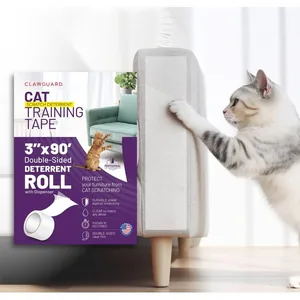
CLAWGUARD Clear Adhesive Training Barrier Cat Scratch Furniture Protection Tape Dispenser
Best Overall
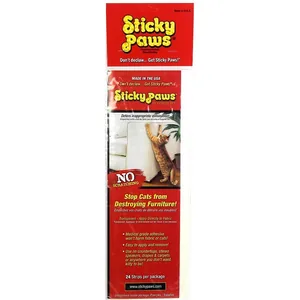
SmartCat Sticky Paws Furniture Strips, 24ct
Best Budget
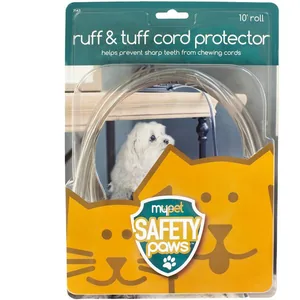
MyPet Safety Paws Ruff & Tuff Cord Protector for Dog & Cat, Clear
Best Cord Protector
Best Cat Repellent Comparison Table
Here is how the seven best cat repellent picks compare on type, what they protect, and price tier. Use this to narrow your choice in under a minute.
| Product | Best For | Type | Price Tier | Rating |
|---|---|---|---|---|
| CLAWGUARD Clear Adhesive Training Barrier | Best Overall, general scratching | Double-sided clear tape | $ | 4.2 stars |
| Sticky Paws Furniture Strips | Best Budget, couches & chairs | Pre-cut adhesive strips | $ | 4.6 stars |
| CLAWGUARD Double-Sided Tape Sheets | Furniture arms & drapes | Large adhesive sheets | $$ | 4.2 stars |
| CLAWGUARD Window Sill Protectors | Window sills | Hard clear shield | $$ | 4.5 stars |
| CLAWGUARD Heavy Duty Door Protector | Doors & frames | Thick clear film | $$ | 4.0 stars |
| CLAWGUARD Universal Scratch Shield | Walls, corners & trim | Flexible clear panel | $$$ | 4.1 stars |
| MYPET Safety Paws Ruff & Tuff Cord Protector | Cords & cable chewers | Wrap-around guard | $ | 4.4 stars |
Price tiers are a rough guide and change with size and bundle. Star ratings reflect Chewy customer feedback at the time of writing.
How We Chose the Best Cat Repellents
We picked these cat repellents by weighing what actually keeps cats safe and what real owners report after weeks of use, not glossy marketing claims. Every product here clears Chewy’s bar of 4.0 stars or higher with at least 50 customer reviews, and each is in stock. We leaned toward physical, scent-free deterrents because they work the same on every cat and carry no toxicity risk, which matters since cats cannot safely process many essential oils used in repellent sprays. We also checked feline-behavior guidance from sources like the ASPCA and Cornell Feline Health Center, prioritized humane training over startle tactics, and gave every pick a clear job so you protect the exact spot that needs it. This article is educational, so check with your vet for any behavior tied to stress, pain, or sudden changes.
The 7 Best Cat Repellents Reviewed
1. CLAWGUARD Clear Adhesive Training Barrier: Best Overall
Best for: cat parents who want one flexible deterrent that works on furniture, doors, and corners.
Mini-spec: clear double-sided adhesive tape on a refillable dispenser, peels and presses onto smooth surfaces, low-profile finish.
The CLAWGUARD Clear Adhesive Training Barrier is the best cat repellent for most homes because it solves the most common problem, scratching, almost anywhere. Cats hate the tacky feel on their paws, so they learn to skip the spot and head for a scratching post instead. Unlike sprays that fade in minutes, this tape keeps working for days, and the clear film hides on couches, door frames, and wall corners. It earns the top spot over Sticky Paws by being sturdier and easier to reposition.
Pros:
- Works on a wide range of smooth surfaces, not just furniture.
- Invisible once applied, so your decor stays intact.
- No scent, so it is safe around cats who react to oils.
- Refillable dispenser format reduces waste over time.
Cons:
- Not for leather, velvet, or microfiber, where it can leave residue.
- Needs replacing as it loses tack over a week or two.
Best for: owners who want one go-anywhere scratch deterrent.
2. Sticky Paws Furniture Strips: Best Budget
Best for: cat parents on a budget who mainly need to save the couch.
Mini-spec: 24 pre-cut double-sided strips, sized for furniture edges, screens, and carpet hot spots.
Sticky Paws Furniture Strips are the best budget cat repellent because they stop couch scratching for a few dollars. The pre-cut strips peel off and stick fast, so you can cover a sofa arm in minutes. Cats dislike the sticky sensation and back off, which redirects them to a post nearby. They are not as broad as the CLAWGUARD barrier, but for the classic “my cat is shredding the couch” problem, they punch well above their price.
Pros:
- Very affordable for a quick fix.
- Pre-cut strips make setup fast and tidy.
- Clear and low-profile on most fabrics.
- Works on carpet edges and screens too.
Cons:
- Adhesion can fail on heavily textured upholstery.
- Strips need swapping every week or two to stay tacky.
Best for: budget-minded owners fighting couch and chair scratching.
3. CLAWGUARD Double-Sided Training Tape Sheets: Best for Furniture & Drapes
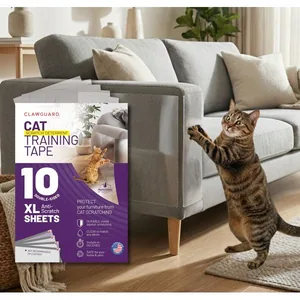
Best for: bigger scratch zones like sofa sides, ottomans, and curtains.
Mini-spec: 10 large sheets, 17 x 12 inches each, clear double-sided adhesive for smooth surfaces.
The CLAWGUARD Double-Sided Training Tape Sheets are the best cat repellent for large furniture areas because each sheet covers far more ground than a thin strip. One sheet can wrap a sofa side or shield a curtain panel, so you patch the whole target instead of dotting it. The clear film stays nearly invisible, and the bigger footprint means fewer gaps your cat can sneak a claw into. It beats narrow strips when the scratch zone is wide.
Pros:
- Large sheets cover wide scratch zones in one piece.
- Clear and discreet on most fabrics and wood.
- Scent-free, so no toxicity worry.
- Redirects scratching when paired with a nearby post.
Cons:
- Should not go on leather, pleather, velvet, or microfiber.
- Big sheets can be fiddly to line up the first time.
Best for: homes with large scratched sofa sides or drapes.
4. CLAWGUARD Window Sill Protectors: Best for Window Sills
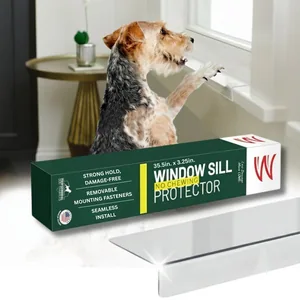
Best for: cats who scratch or gnaw the window sill while bird-watching.
Mini-spec: clear plexiglass shield, 29.5 x 3.25 inches, sits over the sill to block claws and teeth.
The CLAWGUARD Window Sill Protectors are the best cat repellent for window sills because they are a hard barrier, not just sticky tape. Tape struggles on a chewed, gouged sill, but this rigid shield simply covers the wood so claws and teeth find nothing to grab. It is clear, so your cat keeps the view they love while the sill underneath stays protected. For sill-chewers, a physical cover works where scent sprays never will.
Pros:
- Hard shield stands up to chewing and scratching.
- Clear plexiglass preserves the window view.
- Protects the wood sill from further gouging.
- No reapplication once it is in place.
Cons:
- Fixed size may not fit deeper or wider sills.
- Pricier than a roll of tape.
Best for: bird-watching cats who damage the window ledge.
5. CLAWGUARD Heavy Duty Door & Surface Protector: Best for Doors
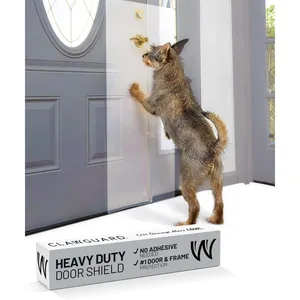
Best for: cats who scratch doors and frames trying to get in or out.
Mini-spec: thick clear protective film, 20 x 44 inches, covers door faces and frames.
The CLAWGUARD Heavy Duty Door & Surface Protector is the best cat repellent for doors because door-scratchers are relentless and need a tough barrier. The thick clear film takes the abuse so your door and paint do not, and it covers a tall area for cats who reach up high. Once it is on, there is nothing to reapply, which suits a closed bedroom or bathroom door your cat keeps attacking. It is sturdier than tape for this high-pressure spot.
Pros:
- Thick film resists determined door-scratchers.
- Tall coverage handles cats who reach up.
- Clear finish blends with most doors.
- No daily reapplication needed.
Cons:
- Adhesive can be tricky to remove cleanly later.
- Larger investment than a tape roll.
Best for: owners with a door or frame their cat keeps shredding.
6. CLAWGUARD Universal Scratch Shield: Best for Walls & Corners
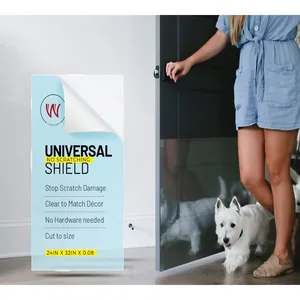
Best for: cats who scratch drywall corners, trim, and painted walls.
Mini-spec: flexible clear panel, 32 x 24 inches, wraps walls, corners, and furniture.
The CLAWGUARD Universal Scratch Shield is the best cat repellent for walls and corners because it bends to fit the spots tape cannot. Cats love to dig at outside wall corners and trim, and this large flexible panel wraps right around them to protect drywall and paint. The clear material keeps your walls looking normal while it absorbs the scratching. For the awkward corner spots, this beats flat tape that will not bend.
Pros:
- Flexible enough to wrap wall corners and trim.
- Large panel covers a wide problem area.
- Clear material keeps walls looking clean.
- Protects paint and drywall from claw damage.
Cons:
- Most expensive option here.
- May need careful application to lie flat on textured walls.
Best for: homes with scratched wall corners or trim.
7. MYPET Safety Paws Ruff & Tuff Cord Protector: Best for Cord & Plastic Chewers
Best for: cats who chew charging cables, cords, and plastic.
Mini-spec: clear wrap-around guard that encloses cables and cords to block chewing.
The MYPET Safety Paws Ruff & Tuff Cord Protector is the best cat repellent for cord chewers because chewing is a safety risk, not just a nuisance. Instead of trying to scare your cat off, this guard simply wraps the cable so there is nothing to bite. That makes it a smart fix for cats drawn to plastic and wires, a habit that can mean boredom, stress, or even a dietary issue worth a vet chat. Enclosing the cord removes the temptation entirely.
Pros:
- Physically blocks access to dangerous cords.
- Clear design stays low-profile in your home.
- Reusable and easy to move to new cables.
- Removes the temptation instead of punishing your cat.
Cons:
- Covers cords only, not the chewing habit’s root cause.
- Very determined chewers may still need a vet check.
Best for: homes with a cat who chews charging cables and plastic.
If your cat chews cords often, it is worth ruling out boredom or pica.
How to Choose the Best Cat Repellent
The best cat repellent is the one matched to your cat’s exact behavior and the surface you are protecting. Here is how to decide.
Match the repellent to the behavior
Scratching, chewing, and counter-surfing each need a different tool. For scratching, use double-sided tape or a clear shield on the target. For cord chewing, enclose the cord. For off-limits surfaces, combine a deterrent with a more appealing alternative nearby, like a scratching post or a window perch.
Pick the right surface protector
Tape works great on smooth, sturdy surfaces but can leave residue on leather, velvet, and microfiber. For those fabrics and for hard chewing, a rigid plexiglass or film shield is the safer bet. Always test any adhesive on a hidden patch for a few days first.
Go scent-free when you can
Many spray repellents rely on essential oils like peppermint, citrus, or eucalyptus. Cats lack a liver enzyme that helps break these down, so concentrated oils can cause drooling, vomiting, or worse, per the ASPCA and VCA. Physical deterrents skip that risk entirely, which is why they fill most of this list.
Always pair a deterrent with a “yes” spot
A repellent tells your cat where not to go. It works far better when you also show them where they can go. Put a sturdy scratching post right next to the spot you taped, or a cozy perch by the window. Punishing without offering an alternative just frustrates everyone.
Building a cat-friendly home from the start prevents many of these battles.
Common Cat Repellent Mistakes to Avoid
The biggest cat repellent mistake is reaching for the squirt bottle, which teaches your cat to fear you, not the spot. Here are the others worth dodging.
- Using essential-oil sprays heavily. Concentrated peppermint, citrus, tea tree, and eucalyptus oils can be toxic to cats. Skip DIY oil blends.
- Deterring without redirecting. A taped couch with no scratching post nearby just sends the scratching somewhere new.
- Expecting one product to fix everything. Match the tool to the surface, as in this guide.
- Ignoring the cause. Sudden scratching, spraying, or peeing outside the box can signal stress or illness. A deterrent does not fix a medical or anxiety problem.
- Skipping the patch test. Adhesives can mark delicate surfaces, so test a hidden area first.
If your cat is suddenly peeing where they should not, a repellent is not the answer.
Redirect, do not punish: the ASPCA and International Cat Care explain how to give cats an approved alternative.
Frequently Asked Questions About Cat Repellents
Q: Do cat repellents actually work?
Yes, cat repellents work when matched to the behavior and paired with a better alternative. Physical deterrents like double-sided tape and clear shields are the most reliable because they work on every cat. Scent sprays are hit or miss and fade quickly.
Q: What is the best cat repellent for furniture?
The best cat repellent for furniture is clear double-sided tape, like the CLAWGUARD Training Barrier or Sticky Paws strips. Cats dislike the tacky feel and learn to avoid the spot. Place a scratching post nearby to redirect them.
Q: Are essential oil cat repellents safe?
Concentrated essential oil repellents are not safe for cats. Cats cannot properly process oils like peppermint, citrus, tea tree, and eucalyptus, which can cause drooling, vomiting, and in severe cases liver damage, per the ASPCA and VCA. Scent-free physical deterrents are the safer choice.
Q: What smell do cats hate the most?
Cats tend to dislike citrus, strong herbs like rosemary, and coffee. Some owners use these scents to deter cats, but concentrated citrus and many essential oils can be toxic, so use them with caution or choose a scent-free deterrent instead.
Q: How do I stop my cat from scratching the door?
To stop a cat from scratching the door, cover it with a thick clear protector like the CLAWGUARD Heavy Duty Door Protector. Door-scratching is often about wanting in or out, so address the trigger too, and give your cat enrichment on their side of the door.
Q: Is double-sided tape safe for cats?
Yes, cat-specific double-sided tape is safe and humane. Cats simply dislike the sticky feeling and avoid the spot, with no pain involved. Avoid using it on leather, velvet, or microfiber, where adhesive can leave residue.
Q: What is the best outdoor cat repellent?
For keeping cats out of a garden, motion-activated sprinklers and ultrasonic deterrents tend to work best because they cover open space. Scent granules wash away in rain and need frequent reapplication. Always choose options labeled safe for pets and wildlife.
Q: How long does it take for a cat repellent to work?
Most cats learn to avoid a deterred spot within one to two weeks of consistent use. Keep the deterrent in place and offer an appealing alternative nearby. If the unwanted behavior is sudden or extreme, check with your vet for an underlying cause.
The Bottom Line on the Best Cat Repellent
The best cat repellent for 2026 is the CLAWGUARD Clear Adhesive Training Barrier, a scent-free double-sided tape that stops scratching almost anywhere without scaring or harming your cat. If you are watching your budget, Sticky Paws Furniture Strips protect the couch for a fraction of the price. For chewed window sills, scratched doors, or wall corners, match one of the CLAWGUARD shields to the spot, and wrap risky cords with the MYPET Safety Paws Ruff & Tuff Cord Protector.
If you only buy one thing, start with the clear training tape, then add a scratching post right beside the spot you protected. Pair a good deterrent with a better alternative and most cats come around fast. Flowers and plants can be another off-limits temptation worth managing safely.
This article is educational and not a substitute for veterinary advice. If your cat’s scratching, chewing, or marking is sudden or intense, talk to your vet to rule out stress, pain, or illness.

Hello and welcome to The Ideal Cat!
We are some passionate cat owners from different professions. We love our cats and have a lot of experience in how to care for our pets. We are incredibly excited to share our knowledge, experience, and research with you. So you can take good care of your loving cat. We will answer most of the common questions about owning cats, taking care of them, etc. If you have any question contact with us. Thanks for visiting! Enjoy the content.
)