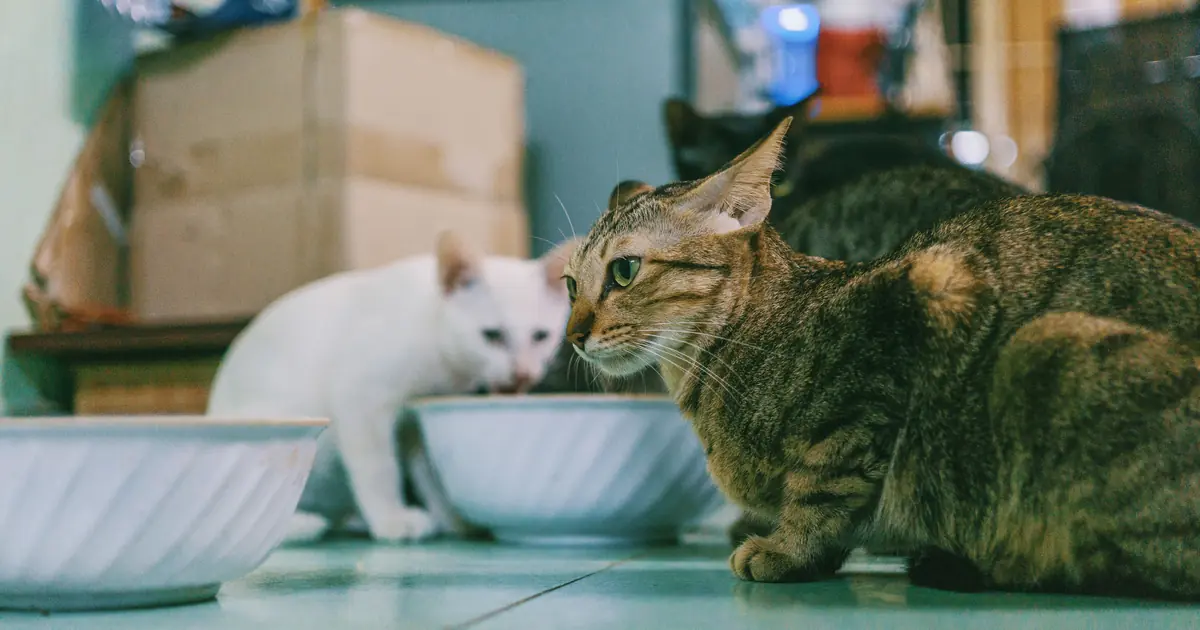
You turn around and your cat is happily crunching from the dog’s bowl. Your stomach drops a little. Is that dangerous? Do you need to call the vet? Take a breath, because the answer is mostly reassuring. Cats can eat dog food in a pinch without being poisoned, but dog food is not safe as a regular meal for any cat. Here’s exactly why, and what to do next.
- Dog food is not toxic to cats, so an accidental bite or one emergency meal will not harm a healthy cat.
- Cats are obligate carnivores and need nutrients dog food does not reliably supply, including taurine, vitamin A, and arachidonic acid.
- Taurine deficiency in cats can cause dilated cardiomyopathy (a serious heart disease) and retinal degeneration that leads to blindness.
- Cat food contains more protein than dog food; AAFCO sets a higher protein minimum for cats than for dogs.
- If a cat has been eating dog food regularly, switch back to cat food and ask your veterinarian to check for deficiency-related damage.
Can Cats Eat Dog Food, Yes or No?
Cats can eat dog food once in a while, but they should never live on it. Dog food is not poisonous to cats, so a few bites from the dog’s bowl will not cause an emergency in a healthy adult cat. The problem is nutritional, not toxic. Dog food is formulated for dogs, and it leaves out or shortchanges several nutrients cats cannot live without over time.
Think of it like a human trying to survive on plain crackers. One snack is fine. A whole diet of crackers slowly makes you sick. That’s the difference between a curious nibble and a steady diet of dog food.
Why Can’t Cats Eat Dog Food Long Term?
Cats cannot eat dog food long term because dog food does not meet a cat’s nutritional needs. Cats are obligate carnivores, meaning their bodies are built to get key nutrients only from animal tissue. Dogs are omnivores and can make some of those same nutrients on their own, so dog food does not need to include them in the amounts a cat requires.
Here are the five big gaps that make dog food a poor everyday choice for cats.
1. Taurine
Taurine is an amino acid that supports a cat’s heart, eyes, digestion, and reproduction. Cats cannot make enough taurine on their own, so they must get it from their food. Dogs can produce their own taurine, so dog food is not required to contain much of it. A cat on dog food can slowly run low. Taurine deficiency has been linked to dilated cardiomyopathy, a serious heart muscle disease, and to retinal degeneration that can end in permanent blindness.
2. High animal protein
Cats need more protein than dogs, and they need it from animal sources. Under AAFCO guidelines, adult cat food must contain a higher minimum protein level than adult dog food. Dog food is often built around a lower protein target with more carbohydrates, which does not give a cat the steady supply of animal protein its metabolism depends on.
3. Vitamin A
Cats need preformed vitamin A from animal tissue. Dogs and humans can turn beta-carotene from plants into vitamin A, but cats lack the enzyme to do that. Dog food may lean on plant sources that a cat’s body cannot convert, leaving the cat short on a vitamin it needs for vision, skin, and immune health.
4. Arachidonic acid
Arachidonic acid is a fatty acid cats need for healthy skin, coat, and reproduction. Cats cannot make it from other fats the way dogs can, so it has to come from their diet. Dog food is not required to include it, which is another reason dog food falls short for cats over time.
5. Niacin
Niacin is a B vitamin that cats can only get in its ready-made form from food. Dogs can make some niacin from the amino acid tryptophan, so dog food does not need to supply as much. A cat eating dog food long term may not get enough niacin for normal energy and nerve function.
What’s the Difference Between Cat Food and Dog Food?
The main difference is that cat food is richer in animal protein and packed with nutrients cats cannot make themselves, while dog food is balanced for an omnivore that can fill some gaps on its own. The table below shows where the two part ways.
| Nutrient or trait | Cat food | Dog food |
|---|---|---|
| Protein level | Higher minimum (AAFCO sets a higher bar for cats) | Lower minimum, often more carbohydrate |
| Taurine | Added, because cats need a dietary source | Not required in cat-level amounts |
| Vitamin A | Preformed, from animal sources | May rely on plant beta-carotene cats can’t convert |
| Arachidonic acid | Included, since cats can’t make it | Not required, dogs make their own |
| Niacin | Higher, supplied ready-made | Lower, dogs can make some themselves |
| Designed for | Obligate carnivore (meat-based diet) | Omnivore (meat plus plants) |
What Happens If a Cat Only Eats Dog Food?
A cat that eats only dog food can develop serious nutritional deficiencies over weeks to months. The most worrying is taurine deficiency, which can damage the heart and eyes. Owners might notice a dull coat, weight or muscle loss, low energy, poor growth in kittens, or vision changes. Some of these problems are reversible if caught early, but advanced heart damage can be permanent.
This article is educational and not a substitute for veterinary care. If your cat has been living on dog food, or you notice any of the warning signs below, contact your veterinarian. Recovery often depends on how long the deficiency lasted and how much damage was done before the diet was corrected.
See a vet promptly if you notice:
- Trouble breathing, sudden weakness, or collapse (possible heart trouble, treat as urgent)
- Bumping into objects or other signs of vision loss
- Ongoing vomiting or diarrhea that does not settle
- Steady weight loss or visible muscle wasting
- A kitten that is not growing well or seems unusually tired
My Cat Ate Dog Food, What Should I Do?
If your cat ate a small amount of dog food one time, you usually do not need to do anything beyond watching them. A single bowl of dog food will not cause lasting harm to a healthy adult cat. Offer fresh water and their normal cat food, and keep an eye out for short-lived tummy upset.
- Stay calm and remove the dog’s bowl so your cat can’t keep grazing.
- Make sure your cat has fresh water and access to their usual cat food.
- Watch for vomiting, diarrhea, or loss of appetite over the next day. Mild, brief upset is common and not an emergency.
- Call your veterinarian if symptoms are severe, last more than a day, or your cat seems lethargic.
- If your cat has been eating dog food regularly, switch back to cat food now and book a vet check to screen for deficiencies.
Is Dog Food More Dangerous for Kittens?
Yes, dog food is riskier for kittens than for adult cats. Kittens are growing fast and need even more protein and complete nutrition to build healthy bodies. A diet of dog food can stunt a kitten’s growth and lead to muscle weakness and deficiency problems sooner than in an adult. If a kitten has been eating dog food, switch to a kitten-specific food and check in with your veterinarian.
Can Cats Eat Dog Food in an Emergency?
Yes, a cat can eat dog food for one emergency meal if you have run out of cat food and the stores are closed. One serving of dog food is far better than letting a cat go without food, since cats should not skip meals for long. Treat it as a one-time stopgap, not a plan, and get proper cat food as soon as you can. If you only have a little human food on hand, plain cooked chicken or turkey is another safe short-term option.
FAQ: Cats and Dog Food
Q: Is dog food toxic to cats?
No, dog food is not toxic to cats. A bite or an occasional meal will not poison a healthy cat. The risk comes from feeding dog food regularly, which leaves cats short on taurine, animal protein, vitamin A, and other nutrients they need.
Q: How long can a cat survive on dog food?
A cat can physically eat dog food for a short stretch without an immediate crisis, but nutritional deficiencies can begin to develop within weeks to months. Taurine deficiency, which can harm the heart and eyes, is the main long-term danger. Dog food should never be a cat’s regular diet.
Q: Why is dog food bad for cats but cat food is fine for dogs short term?
Dog food is bad for cats because it lacks nutrients cats cannot make on their own, like taurine and arachidonic acid. Cat food, by contrast, is very rich and high in protein, which can upset a dog’s stomach but does not create the same deficiency risk. Neither pet should eat the other’s food long term.
Q: My cat prefers the dog’s food. Is that a problem?
If your cat prefers dog food, do not let them make it a habit. Dog food may smell appealing, but it does not meet a cat’s nutritional needs over time. Feed the pets in separate spaces, and pick up the dog’s bowl between meals so your cat can’t graze on it.
Q: Can cats eat wet dog food?
Cats can eat a little wet dog food occasionally without being harmed, just as with dry dog food. Wet dog food still lacks the taurine and animal protein levels cats require, so it is not a substitute for cat food. Use it only as a rare, one-time fill-in if needed.
Q: What are the signs of taurine deficiency in cats?
Signs of taurine deficiency in cats can include a dull coat, weakness, weight loss, vision problems, poor growth in kittens, and symptoms of heart disease like trouble breathing. Taurine deficiency can lead to dilated cardiomyopathy and retinal degeneration. See a veterinarian if you notice any of these signs.
Q: Can I mix a little dog food into my cat’s bowl to stretch it?
It is best not to mix dog food into your cat’s meals. Even small daily amounts dilute the complete nutrition your cat needs and can add up to deficiencies over time. If money or supply is tight, ask your vet about budget-friendly cat foods instead.
Q: What should I feed my cat if I run out of cat food?
If you run out of cat food, plain cooked chicken, turkey, or fish without seasoning is a safe short-term option, and one emergency serving of dog food is acceptable too. These are stopgaps, not a long-term diet. Buy complete cat food as soon as you can to keep your cat properly nourished.
The Bottom Line on Cats and Dog Food
So, can cats eat dog food? Yes, in a pinch, but never as a regular diet. Dog food is not toxic, and one stolen bite or a single emergency meal will not hurt a healthy cat. The real danger is long-term feeding, because dog food lacks the taurine, animal protein, vitamin A, and arachidonic acid that cats need to stay healthy. Keep dog food for the dog, feed your cat a complete cat food, and call your veterinarian if your cat has been eating dog food regularly or shows any warning signs.

Hello and welcome to The Ideal Cat!
We are some passionate cat owners from different professions. We love our cats and have a lot of experience in how to care for our pets. We are incredibly excited to share our knowledge, experience, and research with you. So you can take good care of your loving cat. We will answer most of the common questions about owning cats, taking care of them, etc. If you have any question contact with us. Thanks for visiting! Enjoy the content.
