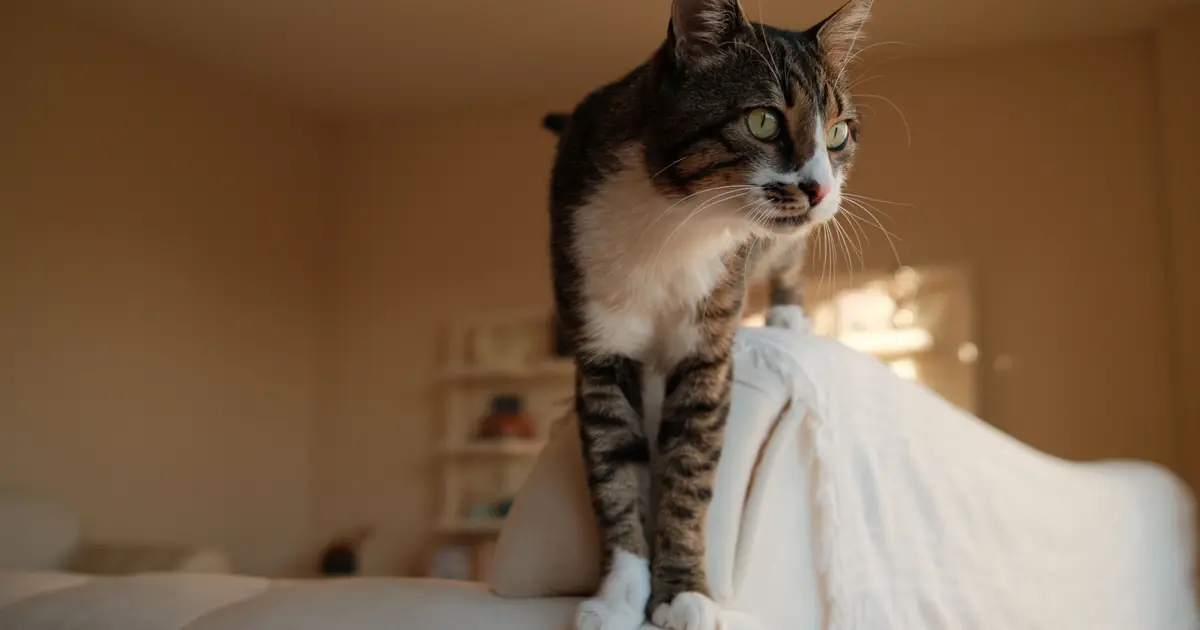
You love your cat. Your sinuses have opinions. If you’re waking up stuffy, sneezing on the couch, or rubbing itchy eyes every time your cat curls up nearby, an air purifier probably keeps popping up in your searches.
Here’s the honest version. An air purifier can genuinely take the edge off cat allergies. It’s not magic, and it won’t let you skip cleaning. But run the right one, in the right room, and a lot of allergy sufferers do notice they breathe easier. Let’s break down what actually helps and what doesn’t.
This article is educational and isn’t medical advice. If your allergies or asthma are severe, talk to an allergist about a full plan.
- Cat dander is tiny flakes of skin coated in Fel d 1, a protein from your cat’s saliva and skin glands that triggers up to 95% of cat allergies. The fur itself isn’t the real allergen.
- A true HEPA filter captures 99.97% of airborne particles as small as 0.3 microns, including the light dander that floats for hours.
- Air purifiers only clean the air. They can’t remove dander that has settled into carpets, bedding, and furniture, so surface cleaning still matters.
- Match the purifier’s CADR to your room size and aim for about 5 air changes per hour, running it in the bedroom and your cat’s main hangouts.
- An air purifier works best combined with regular vacuuming, washing bedding, grooming, and keeping the cat out of the bedroom.
What is cat dander, exactly?
Cat dander is made of tiny flakes of dead skin your cat sheds constantly, and those flakes are coated in an allergy-triggering protein called Fel d 1. Fel d 1 is the real culprit behind most cat allergies, not the fur. Your cat produces it in the saliva and in the sebaceous (oil) glands of the skin.
Here’s how it spreads around your home. Your cat grooms, licks its coat, and paints that saliva all over the fur. As the coat dries and skin flakes shed, Fel d 1 rides along on the dander and hair, then drifts through the air and settles on everything. According to the Asthma and Allergy Foundation of America, it’s these proteins in dander, saliva, and urine that set off sneezing, congestion, and itchy eyes, not the hair itself.
Fel d 1 is a nightmare for allergy sufferers for one reason: it’s small and it floats. Many dander particles are under 5 microns, and roughly a quarter ride on particles smaller than 2.5 microns. Particles that small can stay suspended in the air for hours and slip deep into your lungs. That’s exactly the kind of thing a good air purifier is built to catch.
Do air purifiers actually help with cat dander?
Yes, air purifiers help with cat dander by pulling the airborne, allergen-carrying particles out of the air before you breathe them in. The catch is that they only treat the air. A big share of dander settles onto floors, sofas, and bedding, and a purifier can’t reach any of that.
The science is encouraging but honest. The U.S. EPA notes that multiple studies of portable HEPA air cleaners found improvements in one or more allergy or asthma symptoms. The same EPA guidance is clear that filtration doesn’t replace controlling the source and ventilating with fresh air. In plain terms: a purifier is a strong teammate, not the whole team.
So think of it this way. Every time your cat jumps, stretches, or gets the zoomies, it stirs a fresh cloud of dander into the air. A purifier running nearby keeps clearing that cloud, over and over, all day. It won’t get to zero, but steady removal in the rooms you use most is a real, noticeable win for a lot of people. If you want the full playbook, our guide on how to get rid of cat allergies naturally covers the non-gadget side too.

What should I look for in an air purifier for cat dander?
Look for a true HEPA filter, an activated carbon filter for odor, and a CADR rating matched to your room size. Those three things separate a purifier that helps from one that just hums in the corner. Skip anything sold mainly on gimmicks like ozone, which can irritate lungs.
| Feature | Why it matters for cat dander | What to aim for |
|---|---|---|
| True HEPA filter | Captures the fine dander that carries Fel d 1 and floats in the air | “True” or “H13” HEPA, not “HEPA-type” or “HEPA-like” |
| Activated carbon filter | Absorbs litter box and pet odors that a HEPA filter alone won’t touch | A real carbon layer, more carbon is better |
| CADR rating | Tells you how fast it actually cleans a room of dust and dander | Room square footage times about 2/3, or higher |
| Room-size match | An undersized unit can’t keep up with a shedding cat | Rated for your room size or a bit larger |
| Air changes per hour (ACH) | More cleanings per hour means less allergen lingering | Around 5 ACH, or up to 6 to 8 for allergy sufferers |
| Quiet operation | You’ll want it running all night in the bedroom | Under about 35 dB on its sleep or low setting |
True HEPA: the part that does the real work
A true HEPA filter is the single most important feature for cat dander. HEPA stands for High-Efficiency Particulate Air, and a genuine HEPA filter captures 99.97% of airborne particles as small as 0.3 microns. That range is exactly where fine cat dander lives, which is why allergists point to HEPA specifically. Watch the wording, though: “HEPA-type” and “HEPA-like” filters don’t meet that standard and catch far less.
CADR and air changes: how to size it right
CADR, or Clean Air Delivery Rate, is an industry number from AHAM that tells you how much clean air a purifier delivers per minute. Bigger CADR means faster cleaning and a larger room covered. A simple rule: take your room’s square footage and multiply by about two-thirds to get the minimum CADR you want. That gets you close to 5 air changes per hour, the level most allergists suggest for allergy sufferers. For a bedroom you sleep in every night, erring higher never hurts.
Activated carbon: for the litter box smell
A HEPA filter grabs particles, but it does nothing for odor. That’s what an activated carbon filter is for. Carbon absorbs the gassy molecules behind litter box and pet smells, so if odor is part of your problem, don’t skip it. The American College of Allergy, Asthma and Immunology supports HEPA filtration as a helpful tool for reducing indoor allergens as part of a broader plan.
Where should I put the air purifier?
Put your main air purifier in the bedroom, then add coverage wherever your cat spends the most time. The bedroom matters most because you’re in there for 7 to 9 hours straight, breathing that air while you sleep. A purifier running quietly all night gives your lungs a long, clean break.
A few placement tips that make a real difference:
- Bedroom first. One purifier here, running 24/7, often does more for symptoms than one in a room you barely use.
- Follow the cat. Add a unit near the couch, cat tree, or sunny window where your cat naps and sheds the most.
- Keep it clear. Don’t tuck it behind furniture or against a wall in a way that blocks the intake. It needs open airflow.
- Run it continuously. Purifiers work by constantly recycling room air, so leave it on. Turning it on for an hour and off does little.
- Close the door. In the bedroom, a closed door helps the purifier stay ahead of new dander drifting in.
What an air purifier can’t do
An air purifier can’t remove the dander that has already settled onto your carpet, couch, bedding, and curtains. It only cleans the air passing through it. Since a large share of Fel d 1 ends up on surfaces, and gets kicked back into the air every time you sit, walk, or your cat jumps up, filtration alone will never solve a cat allergy.
It also can’t cure the allergy or replace medical care. If you’re miserable, an air purifier is a comfort tool, not a treatment. And no purifier makes a cat “hypoallergenic.” Every cat with skin and saliva makes Fel d 1, though some breeds produce a bit less. If that’s on your mind, our rundown of which cat breeds are hypoallergenic sets realistic expectations.
The Mayo Clinic makes the point plainly: cutting pet allergen exposure means combining several steps, and keeping pets out of the bedroom is one of the most effective. A purifier supports that plan. It doesn’t replace it.
What else should I do to reduce cat dander?
Pair your air purifier with source control, meaning steps that cut dander before it ever goes airborne. This combination is what actually moves the needle on symptoms. Here’s the routine allergists and the EPA point to:
- Vacuum often with a HEPA vacuum. Carpets and upholstery are dander reservoirs. A HEPA-filter vacuum picks it up instead of blowing it back out. Vacuum two or three times a week.
- Wash bedding weekly in hot water. Your sheets and any cat blankets soak up dander. Hot washing knocks it down.
- Groom your cat regularly. Brushing removes loose, dander-heavy fur before it scatters. Doing it outdoors or having a non-allergic family member help keeps it off you.
- Keep the cat out of the bedroom. This one step protects the room where you spend the most hours. Shut the door and make it a dander-light zone.
- Wipe down hard surfaces. Damp-dusting floors, shelves, and windowsills traps settled dander instead of stirring it up.
- Keep humidity below 50%. Lower humidity discourages dust mites, another common allergen that piles onto pet allergies.
- Wash your hands after petting. A small habit that keeps allergen off your face and eyes.
Do a few of these consistently and stack an air purifier on top, and most cat-allergic households see a real difference. Wondering if it ever gets easier on its own? Our piece on whether you can outgrow cat allergies digs into that.
Cat dander air purifier FAQ
Q: Do air purifiers really help with cat allergies?
Yes, air purifiers help reduce cat allergies by removing airborne dander that carries the Fel d 1 protein. The EPA notes that studies of portable HEPA air cleaners found improvements in some allergy and asthma symptoms. They work best combined with cleaning, grooming, and keeping cats out of the bedroom.
Q: What kind of air purifier is best for cat dander?
A purifier with a true HEPA filter plus an activated carbon filter is best for cat dander. True HEPA captures 99.97% of particles down to 0.3 microns, which covers fine dander, while carbon handles litter box and pet odors. Match the CADR rating to your room size.
Q: Where should I place an air purifier for cat allergies?
Place your main air purifier in the bedroom, since you spend 7 to 9 hours breathing that air overnight. Add a second unit where your cat naps and sheds most, like near the cat tree or couch. Keep the intake clear and run it continuously.
Q: How long does it take an air purifier to clear cat dander?
A properly sized purifier cleans a room roughly 5 times per hour, so it noticeably lowers airborne dander within an hour or two of continuous running. Because your cat keeps producing dander, leave the purifier on all the time rather than in short bursts.
Q: Can an air purifier remove cat dander completely?
No. An air purifier only cleans the air, so it can’t remove dander that has settled into carpets, furniture, and bedding. Those surfaces release allergen back into the air when disturbed. You need cleaning and grooming alongside the purifier to keep dander low.
Q: Does an air purifier help with the cat litter box smell?
Yes, if it has an activated carbon filter. HEPA filters trap particles but not odor molecules, while activated carbon absorbs the gases behind litter box and pet smells. Look for a model that lists a real carbon layer, not just HEPA.
Q: Are ionizers or ozone air purifiers safe for cats?
Skip ozone-generating purifiers. Ozone can irritate the lungs of both people and cats and isn’t recommended for allergen removal. Stick with mechanical HEPA filtration, which is safe to run around pets and is what allergists actually recommend.
Q: Should the air purifier run all day or just at night?
Run it continuously. Cats shed dander around the clock, so a purifier that runs 24/7 stays ahead of it. At minimum, keep the bedroom unit on all night on a quiet setting while you sleep.
Bottom line: an air purifier with a true HEPA filter is one of the smartest tools for living happily with a cat when you’re allergic. It quietly clears the floating dander that carries Fel d 1, especially in the bedroom, but it can’t do the job alone. Run it around the clock, keep up with cleaning and grooming, guard the bedroom, and you give your lungs, and your cat, the best of both worlds.

Hello and welcome to The Ideal Cat!
We are some passionate cat owners from different professions. We love our cats and have a lot of experience in how to care for our pets. We are incredibly excited to share our knowledge, experience, and research with you. So you can take good care of your loving cat. We will answer most of the common questions about owning cats, taking care of them, etc. If you have any question contact with us. Thanks for visiting! Enjoy the content.
)