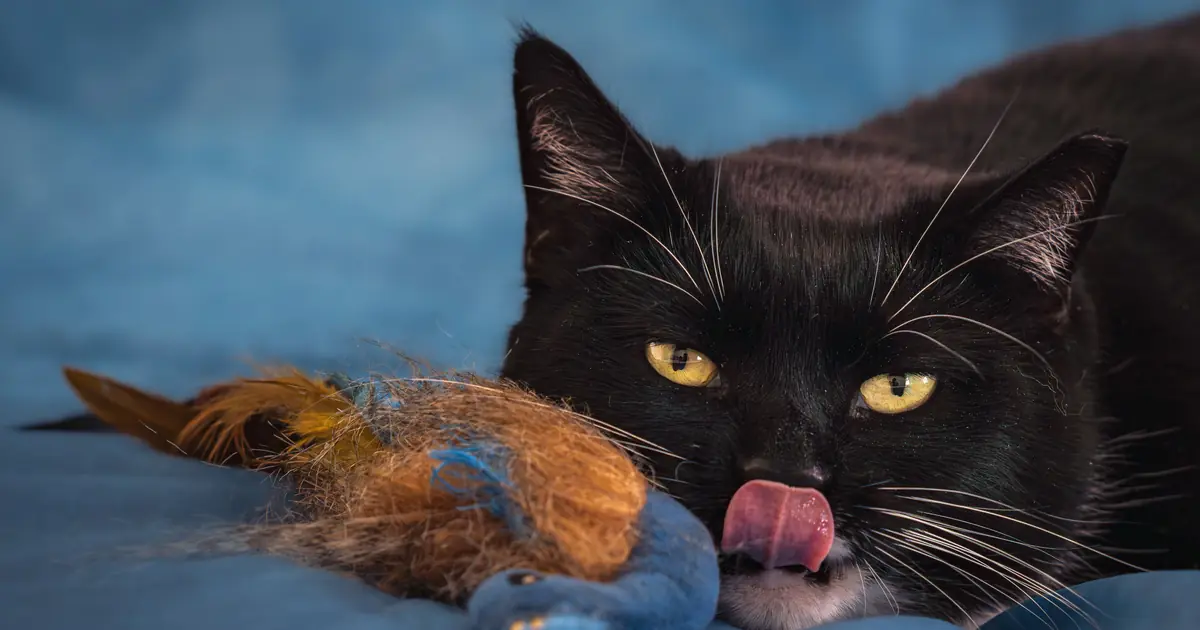
You bought the fancy feather wand. You bought the laser pointer. Your cat looked at both like they’d personally offended her, then spent twenty minutes attacking an empty chip bag instead. Sound familiar?
Here’s the thing: your cat isn’t broken, and she’s not rejecting your gift out of spite (probably). She’s responding to one of the oldest triggers in her brain: a sound that says “something small just moved, and it might be food.” Let’s get into why crinkly things hit different for cats, and how to let them enjoy that crackle without any real danger involved.
- Cats hear frequencies up to roughly 64,000 Hz, far higher than the human ceiling of about 20,000 Hz, which is why they pick up on subtle rustling sounds we barely notice.
- The high-pitched crinkle of paper, plastic, and foil resembles the sounds of scurrying rodents or birds moving through leaves and grass.
- Crinkle material reacts instantly when a cat bats or bites it, mimicking the unpredictable movement of live prey, which keeps cats engaged.
- Most toy makers stuff a layer of crinkle plastic inside cat toys on purpose, because it reliably grabs feline attention.
- Plastic bags are a genuine safety risk: cats can suffocate in them or choke on and swallow torn pieces, so supervised play only.
Why do cats like crinkly things?
Cats like crinkly things because the sound mimics prey moving through natural cover, and that flips a switch in their hunting brain. A crackle or rustle is exactly the kind of noise a mouse makes darting through dry leaves, or a bird makes hopping through brush. Your cat’s brain doesn’t know the difference between a candy wrapper and a field mouse. It just hears “movement, small, nearby” and locks on.
This isn’t a quirky personality trait some cats have and others don’t. It’s built into how cats are wired to survive. Even the most spoiled, well-fed housecat still carries the instincts of a hunter, and crinkly sounds are one of the easiest ways to activate them.
What’s the connection between crinkly sounds and a cat’s prey drive?
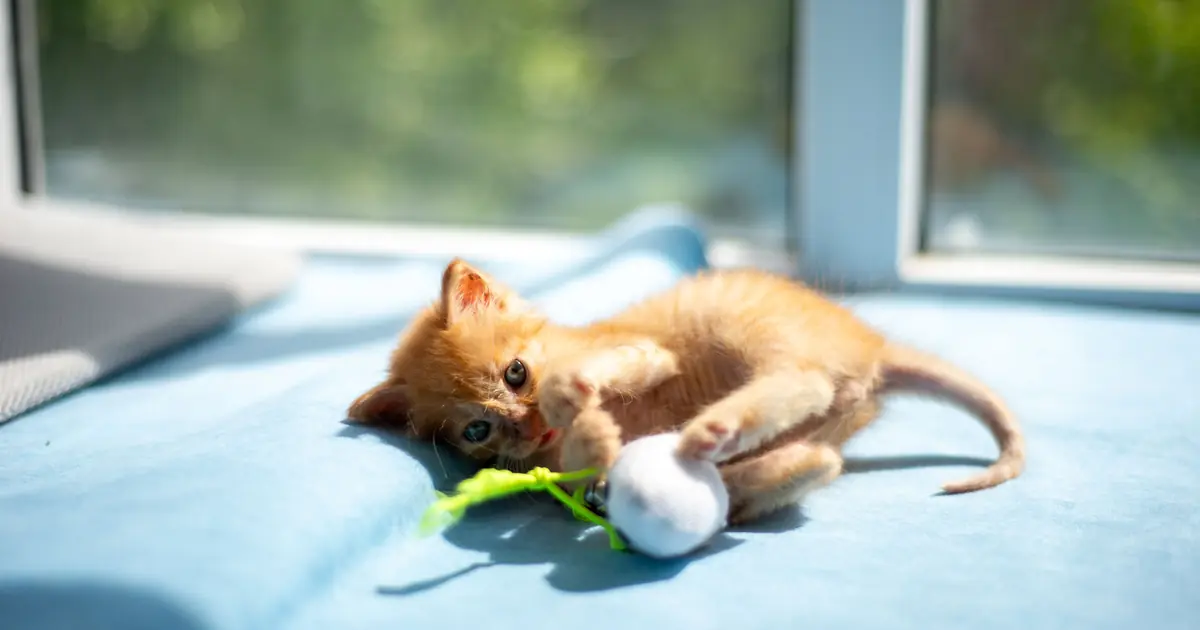
The connection comes down to pitch and frequency. Crinkling paper, foil, and thin plastic produce a lot of high-frequency noise, and cats are built to notice exactly that range. Cats can hear sounds up to about 64,000 Hz, while people top out around 20,000 Hz, according to International Cat Care. We’ve broken down exactly how far a cat can hear elsewhere, but the short version is that extended range evolved so cats could pinpoint rodents by the ultrasonic squeaks and rustling they make while moving.
So when a wrapper crinkles, it’s landing right in the sweet spot of what a cat’s ears are tuned for. Rustling leaves, scampering mice, birds shuffling through grass: it’s all in that same acoustic neighborhood. A crinkly toy is basically a cheat code for triggering a response that took thousands of years of evolution to build.
Why do cats keep coming back to bat at crinkly stuff?
Cats keep coming back because crinkle material reacts the moment they touch it, and that instant feedback feels like real prey fighting back. A dead, silent toy is boring. A toy (or a wrapper) that crackles, shifts, and makes noise every time your cat bats it feels alive. That unpredictability is the whole appeal.
Real prey doesn’t sit still, and it doesn’t move the same way twice. Crinkly material sort of fakes that. One paw swat and it crumples one way, the next swat and it folds differently, with a slightly different sound each time. Your cat’s brain reads that as “this thing is responding to me,” which keeps the game going way longer than a toy that just lies there.
Does the texture of crinkly toys matter too?
Yes, texture matters because crinkle material is light and moves easily, which makes it fun to pounce on and easy to carry off. Most crinkle toys and wrappers weigh almost nothing, so a light tap sends them skittering across the floor. That’s exactly the kind of movement that invites a chase.
The lightness also means your cat can pick a crinkly toy up in her mouth and parade around with it like she just brought down dinner (we see you). Combine that portability with the crackling sound, and you’ve got a toy that satisfies pouncing, batting, carrying, and “kill bite” instincts all at once.
Why do crinkle toys work so well compared to other toys?
Crinkle toys work well because toy makers deliberately build a layer of crinkle material into them to trigger a cat’s natural response. It’s not an accident. Manufacturers know the sound alone can turn a toy that would otherwise get ignored into one that gets played with daily.
You’ll notice a lot of the best interactive cat toys use a crinkle insert somewhere, whether it’s stuffed inside a plush mouse or lining a tunnel. Combine that crinkle sound with catnip or a bit of movement, and you’ve got a toy that appeals to sound, scent, and sight all at once. That’s a much bigger draw than a silent stuffed toy sitting untouched on the floor.
Do all cats like crinkly things?
Most cats respond to crinkly sounds, especially playful cats, kittens, and cats with a strong hunting drive. It’s a near-universal trigger because it taps into instinct rather than learned preference. Even so, not every cat reacts the same way. A senior cat with hearing changes, or a naturally low-energy cat, might barely glance at a crinkle toy.
Kittens tend to be the most obsessed, since play and hunting practice are basically their full-time job at that age. If your adult cat seems unbothered by crinkly toys, don’t panic. It doesn’t mean something’s wrong. Cats have individual preferences just like people do, and some are more motivated by feathers, string, or the thrill of chasing a laser dot instead.
Is it safe to let cats play with crinkly things?
Crinkle toys made for cats are safe with normal supervision, but everyday crinkly items like plastic grocery bags and candy wrappers are not safe to leave lying around. Thin plastic can wrap around a cat’s neck or head and cause suffocation, and torn pieces can be swallowed and cause a choking risk or a dangerous intestinal blockage. The ASPCA lists plastic bags among common household hazards for pets, largely for this reason.
Some cats also just like to chew on plastic, not only bat at it, which raises the stakes even more. If that sounds like your cat, it’s worth reading about why your cat chews on plastic so you know what’s driving it and how to redirect that habit. The safest rule is simple: never let a cat play unsupervised with plastic bags or wrappers, and store them somewhere she can’t get to on her own.
What are safer crinkly alternatives for cats?
Safer crinkly options include purpose-made crinkle toys, crinkle tunnels, crinkle balls, and paper bags with the handles cut off. These give your cat the sound and texture she loves without the choking or suffocation risk that comes with thin plastic. A paper grocery bag (handles removed, laid on its side) is one of the cheapest enrichment tools you’ll ever own, and most cats treat it like a five-star attraction.
If your cat also loves flattening herself onto sheets of paper, that’s a related instinct worth reading about in our piece on why cats like to sit on paper. And if crinkly toys are a hit, rotating in a few interactive options can keep her engaged even longer, since novelty matters almost as much as sound.
| Crinkly item | Why cats like it | Safe? |
|---|---|---|
| Cat-safe crinkle toy | High-pitched sound, light and easy to bat, often paired with catnip | Yes, with normal supervision |
| Paper bag (handles removed) | Crinkly sound, lightweight, easy to hide in and pounce out of | Yes, remove handles first |
| Plastic grocery bag | Same appealing crackle, but thin and stretchy | No, suffocation and choking risk |
| Candy or chip wrapper | Loud crinkle, small enough to carry and chase | No, choking hazard and food residue risk |
The short version: if you want to let your cat enjoy that crackle, buy a toy built for it or hand her a handle-free paper bag, and skip the plastic altogether. It’s an easy trade that gets her the same fun with none of the worry.
Frequently Asked Questions
Q: Why does my cat love plastic bags so much?
Your cat loves the sound plastic bags make when they crinkle, since it mimics rustling leaves or scurrying prey. The lightweight material also moves easily when batted, which makes it fun to chase. Despite the appeal, plastic bags should only come out for supervised play because of suffocation and choking risks.
Q: Is it OK for cats to play with crinkle toys?
Yes, crinkle toys made specifically for cats are generally safe, since they’re built from durable materials that resist tearing into small, swallowable pieces. Always check a toy for damage or loose parts before handing it back to your cat. Replace any toy once the seams start to fray.
Q: Can cats hear things humans can’t?
Yes, cats can hear frequencies up to about 64,000 Hz, while the human hearing range tops out around 20,000 Hz. That extended range lets cats pick up on the high-pitched rustling and squeaking that come from prey animals moving through grass or leaves.
Q: Why does my cat ignore expensive toys but love a wrapper?
Expensive toys often stay silent and still unless you’re actively playing with them, while a wrapper crinkles and shifts every time your cat touches it. That instant sound and movement feedback feels more like real prey, which is usually why the free wrapper wins over the pricey toy.
Q: What should I do if my cat swallows a piece of plastic?
Call your veterinarian or an emergency animal clinic right away if you know or suspect your cat swallowed plastic. Watch for vomiting, not eating, or straining, since these can signal a blockage. Don’t try to induce vomiting or remove anything yourself without veterinary guidance.
Q: Are crinkle tunnels good for cats?
Yes, crinkle tunnels are a great enrichment option because they combine the crinkly sound cats love with a hiding spot they can pounce out of. They’re especially useful for shy or indoor-only cats that need extra ways to stay active and mentally stimulated.
Q: Do kittens like crinkly toys more than adult cats?
Kittens usually respond to crinkly toys with more intensity than adult cats, since play and hunting practice make up a huge part of kitten development. Adult cats still enjoy the sound, but individual interest varies more with age, health, and personality.
Q: Why does my cat carry crinkly toys around in her mouth?
Carrying a crinkly toy around mimics how a cat would transport prey after a successful hunt. Some cats even vocalize while doing it, almost like showing off the catch. It’s a normal, instinct-driven behavior and nothing to worry about.
This article is educational and not a substitute for veterinary care. If your cat swallows plastic or any foreign object, contact your veterinarian or an emergency vet right away.

Hello and welcome to The Ideal Cat!
We are some passionate cat owners from different professions. We love our cats and have a lot of experience in how to care for our pets. We are incredibly excited to share our knowledge, experience, and research with you. So you can take good care of your loving cat. We will answer most of the common questions about owning cats, taking care of them, etc. If you have any question contact with us. Thanks for visiting! Enjoy the content.
