- A baby gate with a cat door lets cats pass freely while blocking dogs, toddlers, or other pets.
- Measure your opening width first, since gates fit specific ranges and many need an extension for wide spaces.
- A cat door around 7 by 7 inches fits most cats but may be tight for very large breeds.
- Taller gates (36 inches or more) stop dogs and cats that jump.
- Pressure-mounted gates are easy to install; hardware-mounted gates are sturdier for stairs.
Related reading: best cat beds. cat litter box enclosure. cat trees.
Our Top Picks
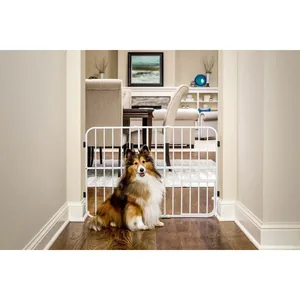
Carlson Pet Products Tuffy Expandable Gate with Pet Door
Best Overall
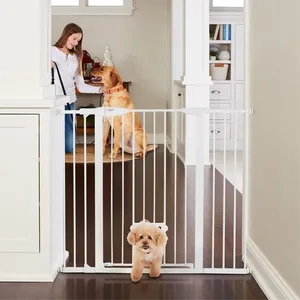
MyPet Extra Tall & Wide Walk Thru Easypass Cat & Dog Gate, White
Best Extra-Tall
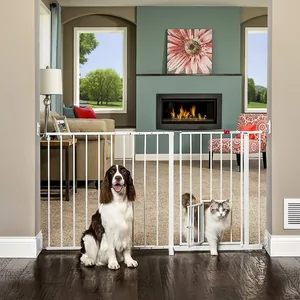
“Carlson Pet Products Maxi Walk-Thru Gate with Pet Door, 31″” tall”
Best Extra-Wide
At-a-Glance: Our Top Picks
Here’s a fast-scan comparison so you can find your best match in 30 seconds.| Gate | Height | Fits Openings | Cat Door | Best For |
|---|---|---|---|---|
| Carlson Tuffy Expandable | 28″ | 26″–42″ | 7″ x 7″ | All-round winner |
| MyPet Extra Tall Petgate | 42″ | 29.75″–39″ | 9.5″ x 8″ | Jumpers & tall dogs |
| Carlson Maxi Extra Tall Walk-Thru | 38″ | 51″–59″ | 8″ x 8″ | Extra-wide spaces |
| Carlson Design Paw Extra Tall | 37″ | 30″–42″ | 8″ x 8″ | Style-conscious homes |
| MyPet Wide Walk Through EasyPass | 30″ | 29.75″–40.5″ | 7.5″ wide | Frequent walk-through use |
| Carlson Mini Tuffy | 18″ | 26″–42″ | 7″ x 7″ | Small spaces & older cats |
| MyPet Extra Wide Cat & Dog Gate | 32″ | 38.5″–103.5″ | 8″ x 8″ | Huge openings, open-plan homes |
What Is a Baby Gate With a Cat Door (and Who Actually Needs One)?
A baby gate with a cat door is exactly what it sounds like: a standard pet or safety gate with a small cutout near the bottom that lets your cat pass through. The opening is sized so an adult cat fits, but a baby, toddler, or medium-to-large dog can’t. If you’ve been wondering whether you actually need one, here are the four most common reasons cat parents buy them:- Baby + cat households. Keep the nursery off-limits to your cat while still giving them freedom in the rest of the house.
- Dog + cat households. Block the dog from raiding the litter box or cat food without locking your cat out of the room.
- Kitten safety zones. Give a new kitten their own space to settle in without isolating them from food, water, or you.
- Cat-to-cat introductions. A see-through barrier with a controllable opening makes slow introductions way less stressful.
The 7 Best Baby Gates With Cat Doors
1. Carlson Tuffy Expandable Dog Gate with Pet Door (Best Overall)
2. MyPet Extra Tall Petgate Passage Gate with Small Pet Door, 42-in (Best for Jumpers)
3. Carlson Maxi Extra Tall Walk-Thru Dog Gate with Pet Door (Best for Wide Doorways)
4. Carlson Design Paw Extra Tall Pet Gate (Best Looking)
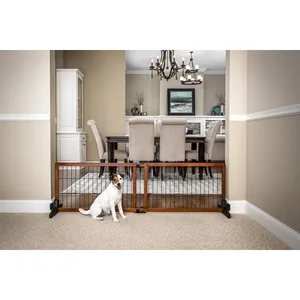
5. MyPet Wide Walk Through EasyPass Pet Gate, 30″ High (Best for Daily Walk-Through)
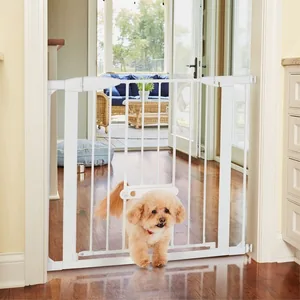
6. Carlson Mini Tuffy Expandable Dog Gate with Pet Door (Best for Senior Cats & Small Spaces)
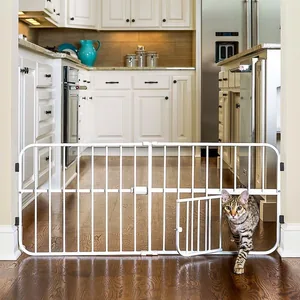
7. MyPet Extra Wide Cat & Dog Gate with Pet Door (Best for Open-Plan Homes)
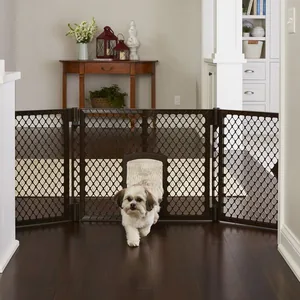
How to Pick the Right Baby Gate With Cat Door for Your Situation
Quick guide based on what you’re actually dealing with at home.You have a baby and a cat
Go for a gate that’s at least 30 inches tall with a lockable cat door (so you can close it when the baby is mobile and curious). The MyPet Wide Walk Through EasyPass or Carlson Tuffy are both solid choices. Important: never use a pressure-mounted gate at the top of stairs. Hardware-mount only for stair gates.You have a dog and want to protect the cat’s litter box or food
Match the gate height to your dog’s jump ability. Small dogs (under 25 lbs): a 28 to 30 inch gate is plenty. Medium dogs: go 36 to 38 inches. Large dogs or high-jumpers: 42 inches or taller. The MyPet Extra Tall Petgate or Carlson Maxi are built for this. Make sure the cat door is too small for your dog to squeeze through (this is the #1 complaint with budget gates).You have a new kitten
Kittens can fit through shockingly small gaps. Check the bar spacing on any gate before you buy. Anything wider than 1.5 inches between bars is risky for kittens under 6 months. Stick with steel gates that have tight vertical bars, and keep the cat door locked closed until the kitten is big enough to safely use it without getting stuck.You’re introducing two cats
You want a gate where the cat door can be locked closed, then opened when both cats are calm. A see-through bar design (versus a solid panel) helps both cats get used to each other visually first. The Carlson Tuffy or Carlson Design Paw work great for this. Plan on the slow intro taking 2 to 4 weeks.You have a wide or oddly shaped opening
Skip the standard gates and go straight to the MyPet Extra Wide Cat & Dog Gate. Its three pivoting panels are basically the only good option for openings over 50 inches, archways, or open-concept floor plans.What to Look For: The Real Buying Guide
Most buying guides online say “pick a gate with a cat door, lol.” Here’s what actually matters.Height
Cats can jump 5 to 6 times their body height. That means even a healthy housecat can clear a 4-foot gate if they decide to. But most cats won’t jump if there’s nothing on the other side to land on safely. A 30-inch gate stops most casual hoppers. A 42-inch gate handles all but the most athletic cats.Cat Door Size
You want the cat door big enough for your cat to walk through without ducking, but small enough to keep babies, toddlers, and medium dogs out. The sweet spot is 7 x 7 inches to 9 x 9 inches. Measure your cat’s chest width before buying, especially if you have a Maine Coon or larger breed.Bar Spacing
This is the safety detail nobody talks about. Bars should be no more than 2 to 2.75 inches apart for adult cats. For kittens, you want under 1.5 inches or a mesh-style barrier. Wider gaps are how cats and kittens get stuck (or escape entirely).Mount Type: Pressure vs. Hardware
Pressure-mounted gates use tension to wedge into a doorway. They’re easy to install, no drilling required, and great for renters. But they can be pushed loose by a determined dog or wiggled out of place over time. Use them in doorways and hallways only. Hardware-mounted gates screw into the wall or doorframe. They’re rock-solid, never wobble, and are the only safe choice for the top of stairs. Use these where stability matters more than easy removal.Material
Steel is the gold standard. It’s chew-proof, won’t tip easily, and looks better than plastic. Avoid lightweight plastic gates if you have a dog or a strong cat. They get knocked over, scratched up, and don’t last.Walk-Through vs. Step-Over
If you’ll be passing through 10+ times a day, get a walk-through gate with a real door. Step-over gates (like the 18-inch Mini Tuffy) are fine for low-traffic spots but get tiring fast if you’re constantly crossing.Setup Tips: Getting It Right the First Time
A great gate installed badly is a useless gate. Here are the install tricks most product manuals leave out.- Measure twice, order once. Use a tape measure on the actual opening, including any baseboards or trim. Don’t eyeball it.
- For pressure mounts, hand-tighten generously. The gate should be snug enough that pushing it firmly doesn’t shift it. If you feel any wobble, tighten more.
- Watch the bottom gap. If there’s a gap of more than 2 inches at the floor, cats (and small dogs) will slip under. Use a thin strip of wood or a pet-safe gap blocker to close it.
- Stairs need hardware mounts. Period. No pressure-mounted gate is safe at the top of stairs. The fall risk is real.
- Test the cat door before letting your cat near it. Make sure it swings smoothly and locks securely. Some doors come stuck closed from shipping and need a quick tug.
- Walls matter. Pressure mounts need flat, sturdy walls on both sides. Pressing into drywall corners or molded trim won’t hold long-term.
Will Your Cat Actually Use the Cat Door? (Training Tips)
Here’s the section nobody else writes. Just because you installed a cat door doesn’t mean your cat will magically figure it out. Some cats walk through immediately. Others stare at it like it’s a portal to another dimension and refuse for days. The good news: most cats catch on within a week. Here’s how to speed things up.- Prop the cat door open at first. Use a piece of tape or a small clip to hold the swing flap open so your cat sees a clear path through.
- Lure with treats or food. Sit on the other side of the gate with your cat’s favorite treat or a few pieces of kibble. Don’t push or force. Just wait and call them.
- Use a toy. A wand toy or a thrown crinkle ball through the cat door works wonders. The chase instinct overrides the hesitation.
- Place familiar items on the other side. A favorite bed, a sunny spot, the litter box, or food bowls all give your cat a reason to want to cross.
- Be patient with senior cats. Older cats are more change-averse. Give them 2 weeks before assuming they won’t use it.
Common Problems and How to Fix Them
“My dog squeezes through the cat door.”
Either the cat door is too big for your dog’s size, or the gate’s pet door isn’t lockable. Solutions: lock the cat door whenever the dog has access to that side, switch to a gate with a smaller pet opening (7 x 7 inches blocks most medium dogs), or add a secondary obstacle near the door that your cat can navigate but your dog can’t (like a small step or shelf).“My cat just jumps over the gate.”
This usually happens with 24 to 28 inch gates. Solutions: upgrade to a 36+ inch gate, or remove any “launch pads” near the gate (a chair, a side table, anything cat-jump-height). If your cat is jumping for attention rather than necessity, make sure the gated-off room doesn’t contain food, water, or a favorite napping spot.“The gate keeps falling over or coming loose.”
This is almost always a pressure-mount issue. Re-tighten the tension screws every couple of weeks. If your wall is uneven or the gate sits at an angle, you may need wall cup mounts (sold separately for most Carlson and MyPet gates) to anchor it.“My kitten gets stuck in the bars.”
Stop using the gate immediately and switch to one with bar spacing under 1.5 inches or a mesh-style design. The Frisco Cat Safety Gate is mesh-based and works better for tiny kittens.“My cat refuses to use the cat door even after a week.”
Try moving the gate to a less stressful spot first, let your cat practice with it open, then reintroduce the closed configuration. Some cats need to “discover” the cat door on their own terms. Avoid making mealtimes or potty access dependent on the cat door until they’ve used it voluntarily a few times.For safe pet and child separation, the ASPCA has home pet-proofing guidance, and International Cat Care covers multi-pet homes.
Frequently Asked Questions
Q: What size cat door is best for an average cat?
A 7 x 7 inch to 8 x 8 inch cat door fits most adult cats comfortably. For larger breeds like Maine Coons or Ragdolls, look for a 9 x 9 inch door. Measure your cat’s chest width at its widest point and add at least 2 inches for clearance.Q: Will a baby be able to fit through the cat door?
A cat door that’s 7 x 7 inches or smaller is too narrow for a baby’s shoulders or torso to pass through, but the head can sometimes fit, which is a strangulation risk. Always lock the cat door closed when your baby is mobile and unsupervised in the area.Q: How tall does the gate need to be to stop my cat from jumping over?
Most housecats can clear 3 to 4 feet from a standing start. A 30-inch gate stops casual hoppers, but determined jumpers need 36 to 42 inches. Remove nearby chairs, tables, or counters that act as launch pads. Some cat parents stack two gates for extreme jumpers.Q: Can I use a baby gate with cat door at the top of stairs?
Only if it’s a hardware-mounted gate. Pressure-mounted gates can pop loose under impact and cause falls. The Carlson Maxi Extra Tall is a hardware-mounted option that works for stairs.Q: How do I train my cat to use the cat door?
Prop the swing door open at first so your cat sees a clear path. Lure them through with treats, a wand toy, or familiar items placed on the other side. Most cats catch on within a week. Never force or carry them through, as it creates negative associations.Q: Are baby gates with cat doors safe for kittens?
Standard baby gates can be risky for kittens under 6 months due to bar spacing. Look for gates with bars spaced under 1.5 inches apart or mesh-style barriers. Keep the cat door locked until the kitten is large enough to use it safely without getting stuck.Q: What’s the difference between pressure-mounted and hardware-mounted gates?
Pressure-mounted gates use tension to wedge into doorways with no drilling required, making them ideal for renters. Hardware-mounted gates screw into walls for maximum stability and are the only safe option for top-of-stair use.Q: How much does a good baby gate with cat door cost?
Quality gates range from $40 to $120 depending on size, materials, and features. Steel gates from trusted brands like Carlson and MyPet sit in the $50 to $90 range and last for years. Avoid plastic gates under $30, as they typically don’t hold up.Final Thoughts
A baby gate with cat door is one of those simple upgrades that quietly changes everything about a multi-pet or pet-and-baby home. No more dragging gates aside every time your cat wants the litter box. No more dog snacking on cat food. No more worry about the new kitten meeting the toddler before either of them is ready. If you only remember one thing from this guide, make it this: match the gate height to your tallest jumper, match the cat door size to your cat’s chest width, and never use a pressure-mounted gate at the top of stairs. Get those three things right and any of the picks above will serve you well for years. Our top all-round recommendation stays the Carlson Tuffy Expandable Gate with Pet Door for most homes. If you’ve got a real jumper or a big dog, size up to the MyPet Extra Tall Petgate. And for those tricky open-plan layouts, the MyPet Extra Wide Cat & Dog Gate is in a league of its own. Your cat gets freedom. You get peace of mind. Everybody wins.
Hello and welcome to The Ideal Cat!
We are some passionate cat owners from different professions. We love our cats and have a lot of experience in how to care for our pets. We are incredibly excited to share our knowledge, experience, and research with you. So you can take good care of your loving cat. We will answer most of the common questions about owning cats, taking care of them, etc. If you have any question contact with us. Thanks for visiting! Enjoy the content.
)