Picture this: guests are over, the wine is poured, and there it sits by the TV. The litter box. In full view, with a scoop parked next to it like a trophy. We have all been there, and it is a little mortifying.
A good litter box enclosure fixes that. It tucks the box inside a piece of furniture that looks like a cabinet, a bench, or even a planter, so your living room stops announcing that a cat lives here. The trick is hiding the box without making your cat hate the new setup.
Below are five furniture-style enclosures I would actually put in a home, ranked by who they suit best. I will be honest about interior room, airflow, and how easy each one is to scoop.
- A litter box enclosure hides the litter box inside furniture like a cabinet, bench, or planter, so the box stays out of sight in your living space.
- The interior should fit your cat’s box plus roughly 6 inches of headroom and turning space, and it needs ventilation holes or a vent so odor and moisture escape instead of building up.
- The entry hole should be at least 6 to 8 inches wide so an adult cat, or a larger breed like a Maine Coon, can step in without squeezing.
- Enclosures with a front door, a lift-top lid, or a removable panel are far easier to scoop, which is what keeps you actually cleaning the box daily.
- Some cats dislike enclosed spaces, so always give a nervous or senior cat an open box option too, and watch for sudden box avoidance since it can signal a health problem.
Our Top Picks
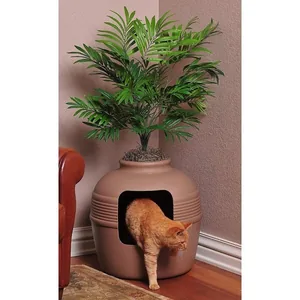
Hidden Cat Litter Planter, Good Pet Stuff
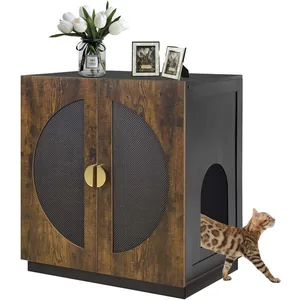
Unipaws High Type Cat Litter Box Enclosure, Rustic
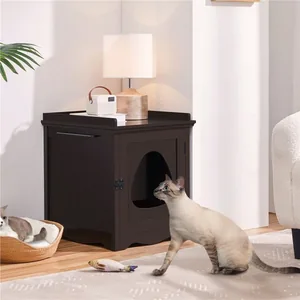
Yaheetech Indoor Cat Litter Box Enclosure, Medium, Espresso
Cat litter box enclosure compared at a glance
| Enclosure | Best for | Type | Price |
|---|---|---|---|
| Hidden Cat Litter Planter, Good Pet Stuff | Best hidden planter | Planter | $57.95 |
| Unipaws High Type Cat Litter Box Enclosure, Rustic | Best tall rustic | Tall furniture | $159.99 |
| Yaheetech Indoor Cat Litter Box Enclosure, Medium, Espresso | Best budget furniture | Cabinet | $55.99 |
| Unipaws Furniture Enclosure Decorative Storage Bench Cat Litter Box, Walnut | Best storage bench | Bench | $129.99 |
| Bencmate Adjustable Shelves Cabinet Cat Litter Box Enclosure, Grey, Grey | Best cabinet with shelves | Cabinet | $162.99 |
The 5 best cat litter box enclosure picks, reviewed
Hidden Cat Litter Planter, Good Pet Stuff: best hidden planter
The Good Pet Stuff Hidden Cat Litter Planter is the sneakiest pick here. It looks like a tall decorative plant pot with faux greenery on top, and the litter box lives inside the base with a side entry your cat walks through. Nobody clocks it as a litter box, which is the whole point.
It suits small apartments, small to average cats, and rooms where a cabinet would feel bulky. It is not for big cats or multi-cat homes, since the interior is snug and fits a smaller pan. Cleaning means lifting the top planter section off, which is easy enough, though the airflow relies on the side hole, so scoop daily to keep odor in check.
Unipaws High Type Cat Litter Box Enclosure, Rustic: best tall rustic
The Unipaws High Type Litter Box Enclosure in rustic finish is the one for cat parents who want height, not width. It stands tall like a slim side cabinet, so it fits against a wall in a hallway or bedroom without eating floor space, and the top surface holds a lamp or a plant.
This one works for average and larger cats because the vertical room inside is generous, and the entry sits at a comfortable step-in height. It is best for single-cat homes or as one of two boxes in a multi-cat setup. The full-length front door swings open for easy scooping, and the rustic wood wipes clean, though heavier cats will appreciate that it feels sturdy rather than tippy.
Yaheetech Indoor Cat Litter Box Enclosure, Medium, Espresso: best budget furniture
The Yaheetech Indoor Litter Box Enclosure in espresso is the value pick, and it punches above its price. It is a simple boxy cabinet with a side entry and a top that lifts, giving you a hidden box for well under the cost of the fancier cabinets here.
It fits average cats and works nicely in a bathroom, laundry nook, or corner where looks matter less than function. It is not the roomiest inside, so skip it for very large cats or if you use an oversized pan. The lift-up lid makes scooping quick, and the laminate surface wipes down in seconds, which is exactly what you want from a budget enclosure that still needs daily cleaning.
Unipaws Furniture Enclosure Decorative Storage Bench Cat Litter Box, Walnut: best storage bench
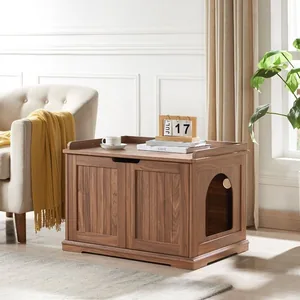
The Unipaws Decorative Storage Bench in walnut is my overall favorite because it earns its footprint. It genuinely looks like an entryway bench you would sit on to pull your shoes off, and the litter box hides inside behind a side entry, so it pulls double duty as furniture and cat spot.
It fits average to larger cats and suits entryways, bedrooms, and living rooms where you want the enclosure to blend in as real furniture. The interior gives a mid-size cat room to turn around, and the hinged top lifts for full-access scooping. It is a touch heavier to move for deep cleans, but that weight is also what keeps it stable when your cat leaps out.
Bencmate Adjustable Shelves Cabinet Cat Litter Box Enclosure, Grey, Grey: best cabinet with shelves
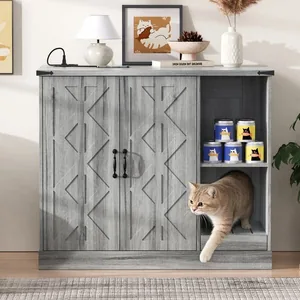
The Bencmate Adjustable Shelves Cabinet in grey is the most flexible enclosure on this list. It is a proper cabinet with a divided interior: one side hides the litter box, and the adjustable shelves on the other side store scoops, litter, bags, and wipes, so your cleaning kit lives right where you use it.
It works for average and large cats and is great for organized cat parents who hate clutter. The box compartment is roomy, and the front doors open wide for scooping and swapping litter. It is one of the larger pieces here, so measure your space first, but for a tidy all-in-one station it is hard to beat.
How to choose the best cat litter box enclosure
How to choose a litter box enclosure that your cat will actually use
The best enclosure hides the box without making your cat feel trapped. Here is what to check before you buy.
Interior dimensions vs cat size and box size
Measure your litter box first, then your cat. The interior needs to fit the box plus room for your cat to step in, turn around, and dig, ideally about 6 inches of clearance overhead. A cramped enclosure is the number one reason cats reject furniture boxes. Larger breeds like Maine Coons and Ragdolls need a taller, wider interior than the average cat.
Entry width and height
Aim for an entry hole at least 6 to 8 inches wide. Senior cats and cats with stiff joints do better with a lower, wider opening they can walk into rather than climb through. If your cat has arthritis, keep the step-in low.
Ventilation and odor
Airflow is what separates a fresh enclosure from a stink box. Look for vent holes, a gap under the door, or a mesh panel. An enclosed space traps moisture and ammonia, so a well-ventilated design plus daily scooping keeps things breathable. Pairing the enclosure with a strong odor-control litter helps a lot too. The ASPCA notes that many cats are picky about box cleanliness and setup, so airflow and scooping matter more than you might think.
Ease of scooping access
You will only keep a box clean if cleaning is easy. Front doors, lift-top lids, and removable panels beat a tiny side hole you have to reach through. Test in your head: could you scoop this in 30 seconds every morning? If not, you will skip days, and a dirty box is the fastest way to make a cat quit it.
Material and wipe-clean surface
Sealed or laminated wood wipes down when litter dust and the odd accident happen. Raw, unsealed wood soaks up moisture and odor over time, so favor a finished surface inside and out.
Stability and decor fit
Cats jump in and out with force, so the piece should not wobble or tip. Heavier furniture-style enclosures feel more secure. Then pick a finish, walnut, espresso, grey, or rustic, that blends with your room so it reads as furniture, not a cat product.
Multi-cat homes
The rule of thumb is one box per cat plus one extra, and enclosures do not change that math. Two cats generally need at least two or three boxes, and International Cat Care recommends spreading boxes across locations so no cat gets ambushed. You can hide some in enclosures and keep one open.
One gentle note: if your cat suddenly avoids an enclosed box it used happily before, give it an open box option right away and check with your vet. Litter box avoidance can point to a urinary or medical issue, not just a furniture complaint.
Do cats actually like enclosed litter boxes?
Some cats are perfectly happy in an enclosed litter box, and some genuinely dislike them. It comes down to the individual cat, so the honest answer is: it depends, and you should give your cat a choice.
Cats that feel safe in cozy, den-like spots often love an enclosure, since it gives privacy and a sense of security. But other cats want a clear line of sight to spot threats, and a covered or boxed-in setup can make them feel cornered, especially in multi-cat homes where one cat might guard the exit.
- Cats that tend to like enclosures: confident, private diggers who value a quiet, tucked-away spot.
- Cats that often dislike them: nervous cats, seniors with mobility issues, large breeds that feel cramped, and cats in tense multi-cat households.
- The safe move: offer both an enclosed box and an open box, then let your cat vote with its paws over a week or two.
If your cat is already using an enclosed box without complaint, great, keep it clean and roomy. If it hesitates, sniffs, and walks away, do not force it. Trust the cat.
Common mistakes to avoid
- Buying an interior that is too small: if your cat cannot turn around and dig comfortably, it will find your rug instead. Measure box plus cat plus headroom.
- Ignoring ventilation: a sealed-up enclosure traps ammonia and moisture, so odor gets worse, not better. Insist on vent holes or a gap.
- Picking a hard-to-clean design: a tiny access hole means you will skip scooping, and a dirty box is the top reason cats stop using one.
- Forcing a covered or enclosed box on a cat that hates it: some cats refuse hoods and enclosures, and pushing it leads to accidents. Always offer an open alternative.
- Ignoring your cat’s size: what fits an average cat can cramp a Maine Coon or a chunky senior. Match the enclosure to your actual cat, not a generic one.
Related guides
Related guides:
- Fill your new enclosure with the right litter using our guide to the best cat litter.
- Keep an enclosed box fresh with the best cat litter for odor control.
- Catch stray litter at the exit with a good litter mat.
- Prefer a hands-off option? Compare the best self-cleaning litter boxes.
- Not sure how many boxes you need? See how many litter boxes per cat is right.
- If your cat is skipping the box, read why your cat is not using the litter box.
Frequently asked questions
Q: Do cats like enclosed litter boxes?
Some cats like enclosed litter boxes and some do not, since it depends on the individual cat’s personality. Confident, privacy-loving cats often enjoy the den-like feel, while nervous cats, seniors, and large breeds may feel cramped or trapped. The safest approach is to offer both an enclosed and an open box and let your cat choose.
Q: Are litter box enclosures a good idea?
Litter box enclosures are a good idea when they hide the box without shrinking your cat’s comfort. A roomy, well-ventilated enclosure keeps the box out of sight, contains scattered litter, and blends into your decor. The catch is that a cramped or poorly ventilated enclosure can make cats avoid the box, so interior size and airflow matter most.
Q: How big should a litter box enclosure be?
The interior should fit your litter box plus room for your cat to step in, turn around, and dig, ideally with about 6 inches of headroom above the litter. The entry hole should be at least 6 to 8 inches wide. Larger breeds like Maine Coons and Ragdolls need a bigger interior than an average-size cat.
Q: Do litter box enclosures trap odor?
A well-ventilated enclosure with vent holes or a door gap does not trap odor badly, but a sealed-up one can make smell worse by holding moisture and ammonia inside. Airflow plus daily scooping is what keeps an enclosure fresh. Pairing it with a strong odor-control litter helps considerably.
Q: Can you hide a litter box in furniture?
Yes, you can hide a litter box inside furniture like a cabinet, a storage bench, an end table, or even a decorative planter. These enclosures have a side entry or door for the cat and a lid or front panel for scooping. The best ones look like real furniture so guests never realize a litter box is inside.
Q: What is the best litter box furniture?
The best litter box furniture depends on your space, but a storage bench like the Unipaws Decorative Storage Bench is a strong all-rounder because it hides the box, doubles as seating, and gives a mid-size cat real room inside. For organized homes, a cabinet with adjustable shelves stores litter and scoops in the same piece.
Q: Will my cat still use the litter box inside an enclosure?
Most cats adjust to an enclosure quickly if it is roomy, well-ventilated, and kept clean. Introduce it gradually and keep the litter and location familiar at first. If your cat suddenly avoids an enclosed box it used before, offer an open box and check with your vet, since box avoidance can signal a urinary or medical issue.
Q: How do you keep an enclosed litter box from smelling?
Scoop the box at least once a day, since an enclosed space concentrates odor faster than an open one. Choose an enclosure with vent holes or a door gap for airflow, use a high-quality odor-control clumping litter, and do a full litter change and wipe-down every week or two. Baking soda under the litter can help absorb smells.
The bottom line
You do not have to choose between a tidy living room and a happy cat. The right litter box enclosure hides the box, tames odor, and still gives your cat the room and airflow it needs. My overall pick is the Unipaws Storage Bench for its blend of real-furniture looks and roomy interior, while the Bencmate cabinet wins for storage and the Good Pet Stuff planter wins for stealth. Measure your cat, prioritize a wide entry and good ventilation, and any of these will turn that awkward corner into a clean, guest-ready spot your cat is glad to use.

Hello and welcome to The Ideal Cat!
We are some passionate cat owners from different professions. We love our cats and have a lot of experience in how to care for our pets. We are incredibly excited to share our knowledge, experience, and research with you. So you can take good care of your loving cat. We will answer most of the common questions about owning cats, taking care of them, etc. If you have any question contact with us. Thanks for visiting! Enjoy the content.
