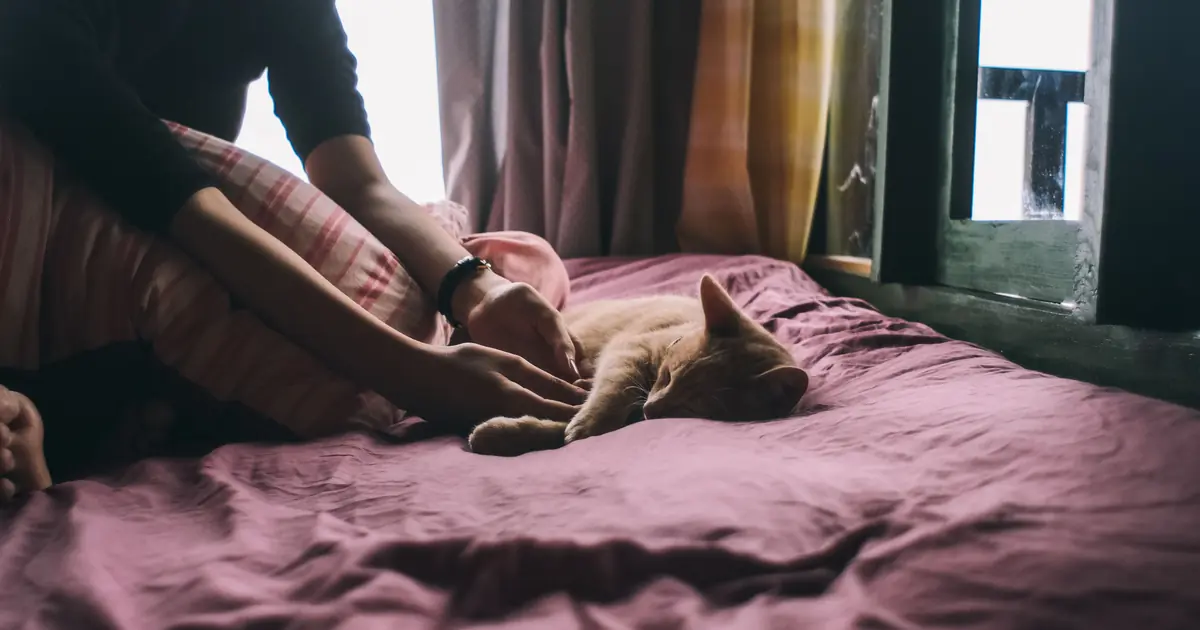
If you’re sick and coughing, it’s natural to worry about your cat curled up beside you. The good news is that passing pneumonia to your cat is quite unlikely, though not impossible.
Here’s the honest science on humans, cats, and pneumonia.
- Cats catching pneumonia from humans is very rare, but not completely impossible.
- Most human colds, flu, and pneumonia don’t spread to cats due to species differences.
- A few germs (certain bacteria, rarely some viruses) can pass between people and pets.
- Most feline pneumonia comes from cat-specific viruses, bacteria, or inhaled material.
- Watch for labored breathing, coughing, lethargy, or fever, and see a vet promptly.
Can cats catch pneumonia from humans?
Cats catching pneumonia directly from humans is very rare, though not entirely impossible. Most respiratory illnesses that cause human pneumonia, along with the common cold and typical flu, are species-specific and don’t transfer to cats. Even so, a small number of germs can pass between people and animals (a concept called reverse zoonosis or “anthroponosis”), so on rare occasions a person’s infection could contribute to illness in a pet. Overall, though, your cat is far more likely to develop pneumonia from cat-specific causes than to catch it from you.
Why is transmission from humans so rare?
Transmission is rare mainly because of species differences, most human respiratory pathogens are adapted to infect people, not cats. The viruses behind human colds and most flu don’t readily take hold in a cat’s body, so cuddling your cat while you have a cold generally won’t make it sick. The exceptions are a handful of germs with broader host ranges. This is similar to how illness rarely crosses between pets and people in general, explored in can cats and dogs get each other sick and specific cases like pink eye.
What actually causes pneumonia in cats?
Most feline pneumonia comes from cat-specific causes, not from humans. The usual culprits:
- Feline respiratory viruses (like feline herpesvirus and calicivirus).
- Bacterial infections, often following a viral illness.
- Aspiration pneumonia, from inhaling food, liquid, or vomit.
- Fungal or parasitic infections in some cases.
These are far more common sources of pneumonia in cats than anything a person carries, which is why a coughing, unwell cat needs a vet to find the true cause.
What are the symptoms of pneumonia in cats?
Pneumonia in cats is serious, so know the warning signs and act fast. Watch for these.
| Symptom | What to watch for |
|---|---|
| Breathing trouble | Fast, labored, or open-mouth breathing |
| Coughing | Persistent cough or wheezing |
| Lethargy | Weakness, hiding, low energy |
| Appetite loss | Not eating or drinking |
| Fever and discharge | Warm, unwell, nasal or eye discharge |
Labored or open-mouth breathing in a cat is always an emergency, don’t wait.
How do you protect your cat (and when to see a vet)?
Protect your cat with basic hygiene and prompt vet care, even though catching pneumonia from you is unlikely. If you’re ill, wash your hands, avoid coughing or sneezing directly on your cat, and don’t share food or utensils, sensible precautions that also cover the rare crossover germs. More importantly, keep your cat’s vaccines current (which protect against common feline respiratory viruses) and see a vet quickly if your cat shows any breathing difficulty, coughing, lethargy, or appetite loss. This article is educational and not a substitute for veterinary care; feline pneumonia can progress fast and is treatable when caught early, and breathing distress is an emergency. For related illness signs, see do cats purr when sick. Trusted guidance comes from the Cornell Feline Health Center and VCA Hospitals.
Frequently Asked Questions
Q: Can my cat catch pneumonia from me?
It’s very rare. Most human respiratory illnesses, including colds, flu, and typical pneumonia, are species-specific and don’t spread to cats. A few germs can rarely cross between people and pets, but your cat is far likelier to get pneumonia from cat-specific causes.
Q: Can cats catch a cold or flu from humans?
Generally no. The viruses behind human colds and most flu are adapted to people and don’t readily infect cats. Cuddling your cat while you have a cold usually won’t make it sick. Cat colds come from feline-specific viruses instead.
Q: What causes pneumonia in cats?
Mostly cat-specific causes: feline respiratory viruses (herpesvirus, calicivirus), bacterial infections, aspiration of food or liquid, and sometimes fungal or parasitic infections, not human germs. A vet is needed to identify and treat the cause.
Q: What are signs of pneumonia in cats?
Fast, labored, or open-mouth breathing, coughing or wheezing, lethargy, appetite loss, fever, and nasal or eye discharge. Breathing difficulty is an emergency. See a vet promptly, feline pneumonia is serious but treatable when caught early.
Q: Should I stay away from my cat when I’m sick?
You don’t need to isolate, since transmission is very unlikely, but sensible hygiene helps: wash your hands, avoid coughing or sneezing on your cat, and don’t share food or utensils. These simple steps cover the rare crossover germs.
Q: Is pneumonia in cats dangerous?
Yes, feline pneumonia is serious and can progress quickly, but it’s treatable when caught early. Any breathing difficulty is an emergency. If your cat shows labored breathing, coughing, lethargy, or won’t eat, get veterinary care right away.

Hello and welcome to The Ideal Cat!
We are some passionate cat owners from different professions. We love our cats and have a lot of experience in how to care for our pets. We are incredibly excited to share our knowledge, experience, and research with you. So you can take good care of your loving cat. We will answer most of the common questions about owning cats, taking care of them, etc. If you have any question contact with us. Thanks for visiting! Enjoy the content.
