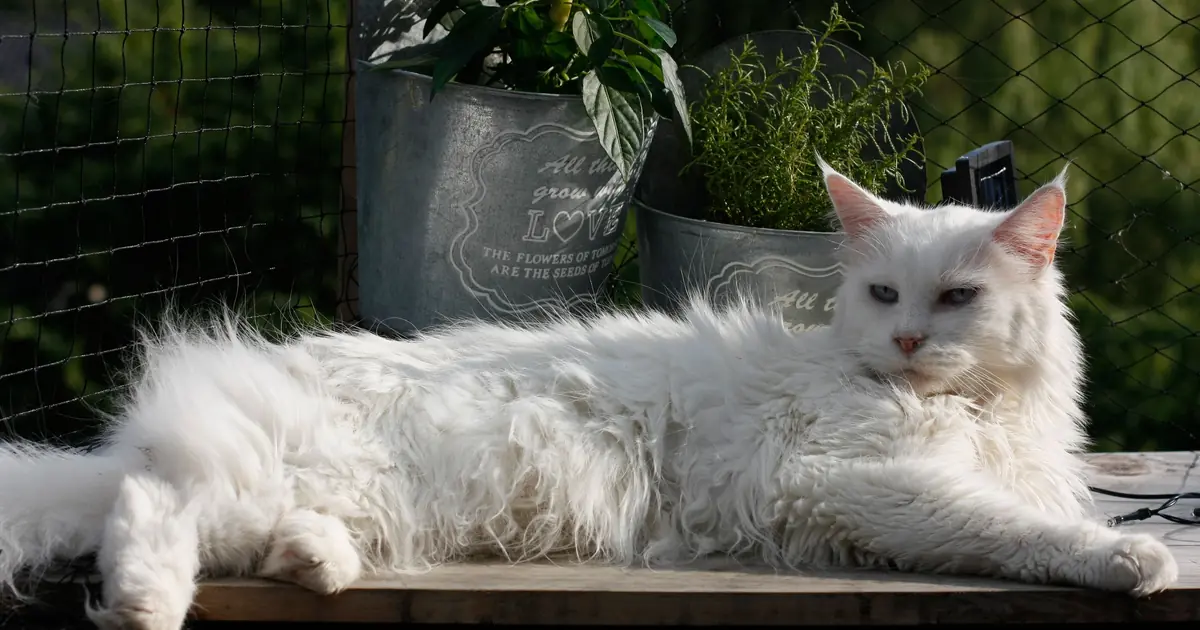
Maine Coons come in a dazzling range of colors, from browns and reds to silvers and blacks. But a pure snowy-white Maine Coon? That’s a genuine rarity, and it comes with a health note worth knowing.
Here’s why white Maine Coons are uncommon and what to keep in mind.
- Solid white Maine Coons are rare, most Maine Coons are tabby, brown, red, silver, or black.
- White is a masking gene that covers the cat’s underlying color, not a color itself.
- The dominant white gene is uncommon in the breed, making all-white coats scarce.
- White cats, including Maine Coons, have a higher risk of deafness, especially blue-eyed ones.
- A white Maine Coon is still a full Maine Coon; color doesn’t change the breed’s personality.
Are white Maine Coons rare?
Yes, solid white Maine Coons are considered rare. The breed is famous for its huge variety of coat colors and patterns, but true all-white individuals are uncommon. That’s because white isn’t a standard pigment color, it’s produced by a dominant “masking” gene that hides whatever color the cat genetically is underneath. Since that gene is relatively uncommon in Maine Coon lines, pure white coats show up far less often than tabbies, browns, reds, silvers, or blacks. So a snowy-white Maine Coon really is a special sight.
Why is white so uncommon in Maine Coons?
White is uncommon because it results from a specific dominant white gene that masks the cat’s true color rather than being a pigment of its own. A “white” Maine Coon genetically has an underlying color (say, red or tabby) that the white gene simply covers up completely. Because this masking gene isn’t widespread in the breed’s gene pool, solid white Maine Coons are produced relatively rarely. Most Maine Coons instead display their actual pigment in the breed’s many rich colors and patterns, part of what makes the breed so varied, as our Maine Coon cat guide explains.
Do white Maine Coons have health concerns?
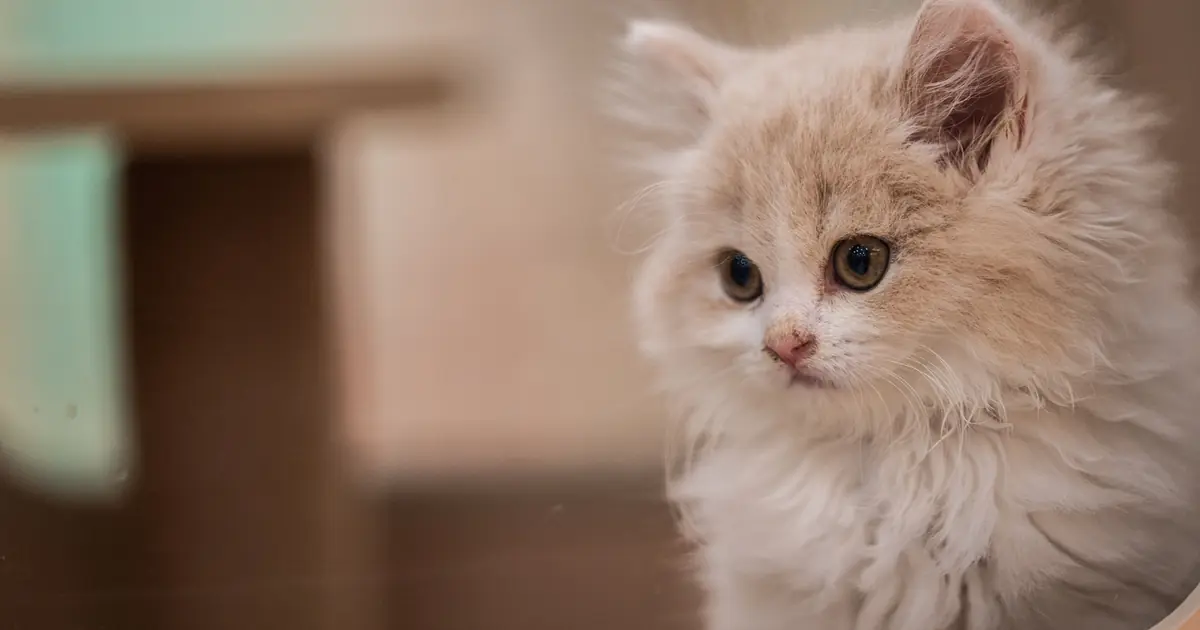
Yes, one key concern: white cats, including white Maine Coons, have a higher risk of congenital deafness linked to the white gene. This risk is greatest in white cats with blue eyes, and in odd-eyed cats, deafness can affect the ear on the blue-eyed side. Not every white Maine Coon is deaf, many hear perfectly, but the association is real, so hearing should be checked. Beyond this, white Maine Coons share the same breed health considerations as any Maine Coon and can be more prone to sunburn on exposed skin, similar to concerns for white cats in general.
White vs other Maine Coon colors
Here’s how white fits among Maine Coon coats.
| Color/pattern | Rarity |
|---|---|
| Brown tabby | Very common, the classic look |
| Red, silver, black, tortie | Common to fairly common |
| Solid black | Less common, striking |
| Solid white | Rare, from a masking gene |
Other standout colors, like the dramatic black Maine Coon, are also prized for their looks.
Is a white Maine Coon still a “real” Maine Coon?
Absolutely, coat color has no bearing on whether a cat is a true Maine Coon or on its wonderful personality. A white Maine Coon has the same large, muscular build, tufted ears, bushy tail, and friendly, gentle “gentle giant” temperament as any other Maine Coon. Color is purely cosmetic. The main practical difference is the deafness risk to be aware of and, for very white cats, sun protection. This article is educational and not a substitute for veterinary advice; if you have a white Maine Coon, ask your vet about a hearing check and skin care. For breed scale and lifespan, see the largest Maine Coon on record and Maine Coon life expectancy. Breed color standards are detailed by The Cat Fanciers’ Association, and the Cornell Feline Health Center explains the white-gene deafness link.
Frequently Asked Questions
Q: Are white Maine Coons rare?
Yes, solid white Maine Coons are rare. White comes from an uncommon masking gene that hides the cat’s true color, rather than being a standard pigment. Most Maine Coons are tabby, brown, red, silver, or black, so pure white is scarce.
Q: Why are white Maine Coons so uncommon?
Because white is produced by a dominant masking gene that covers the cat’s underlying color, and that gene isn’t widespread in Maine Coon lines. So the breed’s usual rich colors show up far more often than an all-white coat.
Q: Are white Maine Coons deaf?
Not always, but they have a higher risk of congenital deafness linked to the white gene, especially blue-eyed white cats. Odd-eyed cats may be deaf on the blue-eyed side. Many hear fine, but a hearing check is wise.
Q: Is a white Maine Coon a purebred Maine Coon?
Yes. Coat color doesn’t affect breed status. A white Maine Coon has the same large build, tufted ears, bushy tail, and gentle temperament as any Maine Coon. The white is just a masking gene over its underlying color.
Q: Do white Maine Coons need special care?
Mainly two things: a hearing check due to the deafness risk, and sun protection, since very white cats can sunburn on exposed skin like ears and nose. Otherwise they need the same care as any Maine Coon.
Q: Are white Maine Coons more expensive?
Because they’re rare, white Maine Coons from reputable breeders can command higher prices. Rarity aside, always prioritize a responsible breeder who health-tests, including for hearing, over paying a premium simply for an unusual coat color.

Hello and welcome to The Ideal Cat!
We are some passionate cat owners from different professions. We love our cats and have a lot of experience in how to care for our pets. We are incredibly excited to share our knowledge, experience, and research with you. So you can take good care of your loving cat. We will answer most of the common questions about owning cats, taking care of them, etc. If you have any question contact with us. Thanks for visiting! Enjoy the content.
