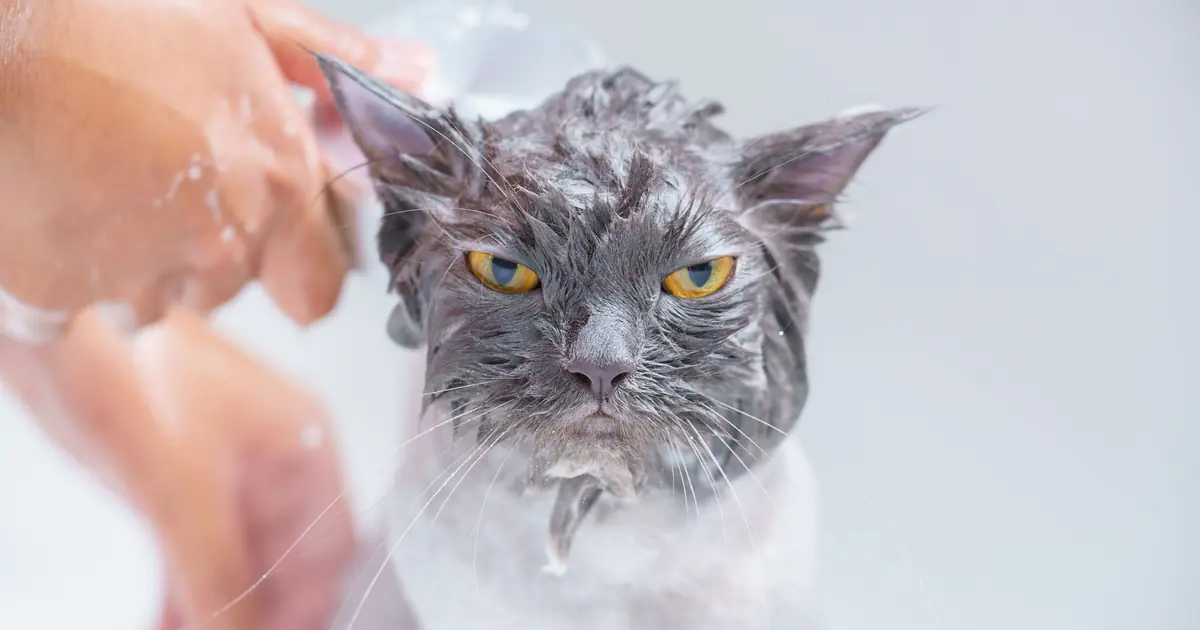
Your cat’s coat is looking a little dry or matted and you eye your bottle of conditioner, would a dab hurt? Better to pause. What’s fine for your hair isn’t made for your cat.
Here’s why human conditioner is a no, and what to use instead.
- Don’t use human conditioner on cats, it’s formulated for human skin pH, not feline.
- Fragrances and certain ingredients can irritate a cat’s skin or be toxic when licked off.
- Cats groom constantly, so anything on their coat gets ingested, safety matters.
- Use a cat-specific conditioner or leave-in product if your cat truly needs one.
- Most cats self-groom well and rarely need conditioning; ask your vet for skin or coat issues.
Can you use human conditioner on cats?
No, you should not use human conditioner on cats. Human hair and skin products are formulated for our skin’s pH, which is different from a cat’s, so they can disrupt a cat’s skin balance and cause dryness or irritation. Many also contain fragrances, essential oils, or other additives that are unsafe for cats, especially since cats groom constantly and will lick the product off. If your cat needs conditioning, choose a product made specifically for cats, or consult your vet.
Why is human conditioner bad for cats?
Human conditioner is risky for cats for a few clear reasons. The main concerns:
- Wrong pH: human products suit human skin, and can disrupt a cat’s skin barrier.
- Fragrances and additives: can irritate skin or trigger reactions.
- Toxic ingredients: some contain oils or chemicals unsafe for cats.
- Ingestion: cats lick their coats, so they swallow whatever you apply.
- Residue: leftover product can leave the coat greasy or cause tummy upset.
Because cats ingest grooming products, safety is the top priority, the same reason to be careful with other human items, as we cover in are baby wipes safe for cats.
What can you use instead?
Use products made specifically for cats, and only when actually needed. Cat-formulated conditioners, detanglers, and leave-in sprays are pH-balanced and free of ingredients toxic to cats, and a quality cat shampoo paired with a cat conditioner is the safe route for a bath. For dry coats, waterless or foam options exist too, like a waterless cat shampoo. Always follow label directions, rinse thoroughly if it’s a rinse-out product, and check with your vet before using anything medicated. Never substitute human products as a shortcut.
Human vs cat conditioner
Here’s why the distinction matters.
| Factor | Human conditioner | Cat conditioner |
|---|---|---|
| pH balance | For human skin | Formulated for feline skin |
| Fragrance/additives | Often strong, may irritate | Cat-safe, usually gentle |
| Safe if licked | No, cats ingest it grooming | Yes, designed for cats |
| Recommended | No | Yes, when needed |
Does your cat even need conditioner?
Most cats don’t need conditioner at all, since they’re expert self-groomers that keep their coats clean and oil-conditioned naturally. Regular brushing usually does more good than any product, removing loose hair and spreading natural oils. Conditioning may help long-haired cats prone to tangles, or cats recovering from a skin issue, but that’s best guided by your vet. If your cat’s coat is dry, greasy, flaky, or matted, that can signal a health or grooming problem worth investigating, covered in why cats get matted fur. This article is educational and not a substitute for veterinary advice; for skin or coat concerns, or if your cat ingests a human product, contact your vet. Trusted grooming guidance comes from the ASPCA and International Cat Care; general home grooming is covered in how to groom a cat at home.
Frequently Asked Questions
Q: Is it safe to use human conditioner on a cat?
No. Human conditioner is formulated for human skin pH and often has fragrances or ingredients that can irritate a cat’s skin or be toxic when licked off. Use a cat-specific conditioner instead, or ask your vet.
Q: What happens if I put human conditioner on my cat?
It can cause skin irritation, dryness, a greasy coat, or stomach upset when your cat grooms and swallows it, and some ingredients may be toxic. If you’ve applied it, rinse thoroughly with water and contact your vet if your cat seems unwell.
Q: Can I use baby or “gentle” conditioner on cats?
No. Even mild or baby human products are still made for human skin, not cats, and can contain unsafe fragrances or additives. Cats ingest anything on their coat, so stick to products specifically formulated and labeled for cats.
Q: What conditioner is safe for cats?
Only cat-specific conditioners, detanglers, or leave-in sprays that are pH-balanced and free of cat-toxic ingredients. Pair a cat shampoo with a cat conditioner for baths, and follow label directions. Ask your vet before using anything medicated.
Q: Do cats need conditioner at all?
Usually not. Cats are excellent self-groomers and keep their coats clean and conditioned naturally. Regular brushing is more helpful than any product. Long-haired or skin-issue cats may benefit from cat conditioner, ideally with vet guidance.
Q: My cat’s coat is dry, what should I do?
Brush regularly, ensure a complete diet with omega-3s, and keep your cat hydrated. A persistently dry, flaky, or greasy coat can signal a health issue, so see your vet rather than reaching for human conditioner as a fix.

Hello and welcome to The Ideal Cat!
We are some passionate cat owners from different professions. We love our cats and have a lot of experience in how to care for our pets. We are incredibly excited to share our knowledge, experience, and research with you. So you can take good care of your loving cat. We will answer most of the common questions about owning cats, taking care of them, etc. If you have any question contact with us. Thanks for visiting! Enjoy the content.
