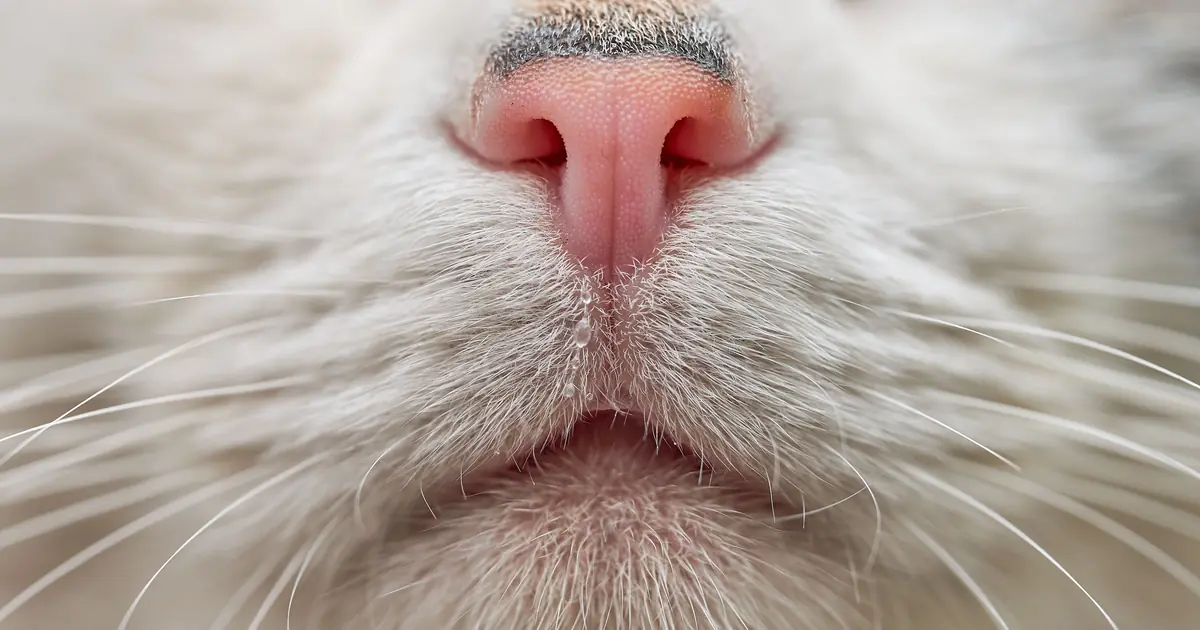
If you’ve ever scratched your cat’s chin and felt little bumps, or spotted what looks like specks of dirt that won’t brush off, you’ve probably found feline acne. It’s incredibly common, it’s usually mild, and the good news is that you can often clear it up at home. Let’s walk through how to get rid of cat acne the safe way, step by step.
Feline acne is a skin condition where the hair follicles on a cat’s chin get clogged with too much keratin and oil, creating blackheads and pimple-like bumps. Below, we cover what causes it, the home routine that fixes most cases, and the red flags that mean it’s time to call your vet.
- Cat acne almost always appears on the chin and lower lip as blackheads, red bumps, or scabs.
- Plastic bowls are a leading trigger because their scratched surfaces trap bacteria, so switching to stainless steel or ceramic and cleaning it daily is the top fix.
- Squeezing or popping cat acne is the worst thing you can do, since it causes pain and spreads infection.
- Most mild cat acne clears with better hygiene, but swollen, painful, or oozing chins need a vet.
- Feline acne is not contagious to other cats, dogs, or people.
What Does Cat Acne Look Like?
Cat acne looks like tiny black specks (blackheads), small red bumps, or crusty scabs clustered on the chin and the edge of the lower lip. In mild cases it can look like your cat just rubbed in some dirt that won’t wipe away. The black specks are comedones, which are plugged hair follicles, and they’re the classic first sign.
As feline acne gets worse, the chin can turn red, swollen, and tender. You might notice your cat rubbing their chin on furniture, losing a little fur in the area, or flinching when you touch it. Pus-filled bumps, bleeding, or a puffy chin point to a deeper infection that needs a vet.
What Causes Cat Acne in the First Place?
Cat acne happens when hair follicles on the chin overproduce keratin and oil and become clogged, which then traps bacteria and causes inflammation. Vets don’t always pin down one single cause, but several everyday triggers come up again and again.
- Plastic food and water bowls: Plastic scratches easily, and those tiny grooves hold onto bacteria even after washing. The chin presses into the bowl at every meal, so bacteria get pushed right against the skin.
- Poor chin hygiene: Food, oil, and saliva build up on the chin, especially in cats who aren’t thorough self-groomers.
- Overactive oil glands: Some cats simply produce more sebum, which clogs follicles faster.
- Stress: Stress can throw off the skin’s normal balance and make breakouts more likely.
- Underlying issues: Allergies, fungal or bacterial infections, and other skin conditions can look like or worsen acne.
Texas A&M and other veterinary sources note that plastic dishes harbor microbes, which is why switching to a non-plastic bowl cleaned daily is usually the first thing they recommend.
How to Get Rid of Cat Acne at Home (Step by Step)
You get rid of mild cat acne at home by removing the trigger, cleaning the chin gently once a day, and keeping the area dry. Here’s the routine that resolves most mild cases within a few weeks. Always check with your vet before starting any cleanser, especially for a first breakout.
- Switch the bowls. Replace plastic food and water bowls with stainless steel, ceramic, or glass. These materials don’t scratch and trap bacteria the way plastic does.
- Wash bowls every day. Clean both bowls daily in hot, soapy water. A clean bowl is half the battle, since the chin touches it at every meal.
- Wipe the chin after meals. Use a clean, damp cloth to wipe away food and oil from the chin right after your cat eats.
- Do a gentle daily cleanse. Once a day, hold a warm, damp cloth on the chin for a few minutes to soften the area, then gently clean it. Your vet may recommend a cat-safe product like a chlorhexidine wash or benzoyl peroxide wipes made for cats.
- Keep the area dry. Pat the chin dry after cleaning. Trapped moisture feeds bacteria.
- Trim long chin fur if needed. Carefully clipping the fur around the chin can reduce trapped bacteria and oil. Go slowly, or ask your vet or groomer to do it.
- Watch and wait. Give the routine a couple of weeks. Mild cases often improve steadily. If it’s getting worse or not budging, book a vet visit.
One firm rule runs through all of this: never squeeze, pick, or pop cat acne. Texas A&M’s veterinary experts write that “popping zits is the absolute worst thing you can do,” because it causes pain and pushes infection deeper into the skin.
Frisco Non-Skid Stainless Steel Dish Cat Bowl
This shallow stainless steel dish removes the most common acne trigger from your cat’s daily routine, since it won’t scratch and trap bacteria the way plastic does. The wide, saucer shape keeps the chin and whiskers cleaner at mealtime, and it rinses or wipes clean in seconds for daily washing. It’s a smart pick for any cat dealing with chin breakouts.
What Should You Clean a Cat’s Chin Acne With?
Clean a cat’s chin acne with a warm, damp cloth first, and for stubborn cases a vet-approved cat-safe cleanser like 2% chlorhexidine wash or benzoyl peroxide wipes formulated for cats. The warm cloth softens plugged follicles, and a cat-safe antiseptic helps clear bacteria without burning the skin.
Be careful with strength and ingredients. Benzoyl peroxide can help cat acne, but human-strength versions are too harsh for feline skin, so only use products made for cats. Some vets prefer to avoid alcohol and peroxide-based products altogether because they can irritate the chin. When in doubt, ask your vet which cleanser fits your cat.
Products and ingredients to avoid
Avoid human acne treatments on your cat. Many human face washes and creams contain high-strength salicylic acid or benzoyl peroxide that can be toxic or severely irritating to cats, who also groom and swallow whatever you put on them. Skip essential oils and harsh scrubs too. Stick to products your vet approves for feline use.
Mild vs. Severe Cat Acne: What Can You Treat at Home?
Mild cat acne (a few blackheads, no redness or pain) is usually safe to manage at home with better hygiene. Severe cat acne (swelling, pus, bleeding, or pain) needs a veterinarian, because it often involves a deeper infection that requires prescription treatment. The table below helps you tell them apart.
| Mild cat acne (home care first) | Severe cat acne (see a vet) |
|---|---|
| A few blackheads on the chin | Red, swollen, or puffy chin |
| No redness or pain | Painful when touched |
| Cat acts normal and comfortable | Pus-filled bumps, oozing, or bleeding |
| Improves within a couple of weeks of better hygiene | Hair loss, scabbing, or spreading lesions |
| First-time, small flare-up | Recurring or chronic breakouts that won’t clear |
This article is educational and isn’t a substitute for veterinary care. If you’re unsure which category your cat falls into, a quick call to your vet is always the safe move.
When Should You See a Vet for Cat Acne?
See a vet for cat acne when the chin is swollen, painful, oozing pus, bleeding, or losing fur, or when home care hasn’t helped after a couple of weeks. These signs point to a secondary infection or another skin condition that needs prescription treatment.
Your vet may take a skin scraping to rule out look-alikes such as mange, ringworm, allergies, or skin tumors. For infected cases, treatment can include oral or injectable antibiotics, sometimes for several weeks, plus a medicated cleansing routine. Catching an infection early keeps it from becoming a painful, drawn-out problem.
Get veterinary care promptly if you notice:
- A visibly swollen or painful chin
- Pus, oozing, or bleeding
- Your cat pawing at the chin or refusing to eat
- Acne that keeps coming back or spreading
How Long Does Cat Acne Take to Clear Up?
Mild cat acne often improves within a couple of weeks once you remove the trigger and clean the chin daily. More stubborn or infected cases can take longer, and vets may treat secondary infections with antibiotics for four to six weeks. Some cats have a single flare-up, while others deal with acne on and off for life.
Consistency matters more than speed. Even after the chin clears, keeping up the clean-bowl-and-wipe routine is what stops feline acne from coming back. Think of it as ongoing maintenance, like brushing, rather than a one-time fix.
Can You Prevent Cat Acne From Coming Back?
Yes, you can lower the odds of cat acne returning by sticking with non-plastic bowls, washing them daily, and wiping the chin after meals. Most repeat breakouts trace back to a bacteria-trapping bowl or a chin that doesn’t get cleaned, so steady hygiene is the best prevention.
- Use stainless steel, ceramic, or glass bowls and replace ceramic ones if they chip.
- Wash food and water bowls every day in hot, soapy water.
- Give the chin a quick wipe after messy meals.
- Keep an eye on the chin so you catch new blackheads early.
- Manage stress with steady routines, play, and safe hiding spots.
How to Get Rid of Cat Acne: A Quick Word of Reassurance
Cat acne can look alarming the first time you spot those black specks, but for most cats it’s a minor, manageable nuisance rather than a serious illness. Knowing how to get rid of cat acne mostly comes down to three calm habits: ditch the plastic bowls, clean the chin gently, and never squeeze. Bring in your vet whenever the chin looks angry or won’t clear, and your cat’s chin should be back to smooth and kissable before long.
Frequently Asked Questions About Cat Acne
Q: Is cat acne contagious to other cats or humans?
No, cat acne is not contagious to other cats, dogs, or people. Feline acne is a follicle and oil-gland issue, not an infection that spreads by contact. If several cats in one home break out at once, it usually means they share a common trigger like a dirty plastic bowl, not that they caught it from each other.
Q: Does cat acne go away on its own?
Cat acne usually doesn’t fully resolve on its own without a change in hygiene. Most mild cases clear once you switch to a clean stainless steel or ceramic bowl and wipe the chin daily. If acne is left alone, it can worsen into a painful infection, so it’s worth acting early and checking with your vet if it lingers.
Q: Should I pop or squeeze my cat’s acne?
No, never pop or squeeze your cat’s acne. Veterinarians warn that squeezing the bumps causes real pain and pushes bacteria deeper into the skin, which can trigger a worse infection. Instead, soften the area with a warm cloth and clean it gently, and let a vet handle anything swollen or infected.
Q: Are stainless steel or ceramic bowls better for cat acne?
Both stainless steel and ceramic bowls are good choices for preventing cat acne, since neither scratches and traps bacteria the way plastic does. Stainless steel is durable and dishwasher-friendly, while ceramic is heavy and stable. Whichever you pick, wash it every day and replace any ceramic bowl that chips or cracks.
Q: Can I use human acne products like benzoyl peroxide on my cat?
No, don’t use human acne products on your cat. Human-strength benzoyl peroxide and salicylic acid can be toxic or severely irritating to feline skin, and cats groom and swallow whatever you apply. Only use benzoyl peroxide wipes or chlorhexidine washes formulated for cats, and ideally after your vet gives the go-ahead.
Q: Why does my cat keep getting acne on the chin?
Cats keep getting chin acne when a trigger sticks around, most often a bacteria-trapping bowl or a chin that isn’t cleaned regularly. Recurring acne can also reflect overactive oil glands, stress, or an underlying skin issue. If breakouts return despite good hygiene, ask your vet to check for allergies or infection.
Q: Can stress cause cat acne?
Stress can contribute to cat acne by disrupting the skin’s normal balance and grooming habits. It’s rarely the only cause, but a stressed cat may be more prone to breakouts. Steady routines, enrichment, and safe spaces can help, alongside the core fixes of clean non-plastic bowls and gentle chin care.
Q: Is cat acne painful for my cat?
Mild cat acne with just a few blackheads usually isn’t painful, and many cats don’t seem bothered by it. But once the chin becomes red, swollen, or infected, it can hurt, and your cat may rub the area or flinch when touched. Painful or infected acne should be seen by a vet.
This article is for educational purposes and isn’t a substitute for professional veterinary advice. If your cat’s chin is swollen, painful, or infected, please consult a licensed veterinarian. Learning how to get rid of cat acne starts at home, but your vet is your best partner for stubborn or severe cases.

Hello and welcome to The Ideal Cat!
We are some passionate cat owners from different professions. We love our cats and have a lot of experience in how to care for our pets. We are incredibly excited to share our knowledge, experience, and research with you. So you can take good care of your loving cat. We will answer most of the common questions about owning cats, taking care of them, etc. If you have any question contact with us. Thanks for visiting! Enjoy the content.
