
You love your Bengal’s wild-child energy, and now you’re eyeing a dog (or you already have one). It’s a fair worry: will your confident, athletic cat and a dog actually get along, or is it a recipe for chaos?
The good news is that Bengals are one of the more dog-compatible cat breeds. Here’s why, and how to give the introduction the best odds.
- Bengals are confident, playful, and energetic, traits that often mesh well with dogs.
- Early socialization to dogs, and a dog with a low prey drive, hugely improve the odds.
- A slow, scent-first introduction over days to weeks works far better than a face-to-face meeting.
- Bengals are assertive and rarely retreat, so pair them with calm, cat-friendly dogs, not high-prey breeds.
- Always give the cat vertical escape routes and separate resources during the transition.
Are Bengal cats good with dogs?
Bengal cats are usually good with dogs, more so than many other breeds. Bengals are active, social, and unafraid, so they tend to engage with a dog rather than hide from it. That confidence means a Bengal often holds its own and can become genuine playmates with a compatible dog. The catch: because Bengals don’t easily back down, the dog’s temperament matters as much as the cat’s.
Why does the Bengal temperament work well with dogs?
The Bengal’s personality overlaps with what makes dogs fun. Bengals are athletic, curious, and love interactive play, fetch, water games, climbing, chasing. A playful dog and a playful Bengal often “speak the same language” of movement and games. Bengals also adapt well to busy households and aren’t easily intimidated, which prevents the constant fear-and-flee dynamic you can get with a timid cat. You can read more about the breed’s drive in our Bengal cat guide, and it’s part of why Bengals command such high prices.
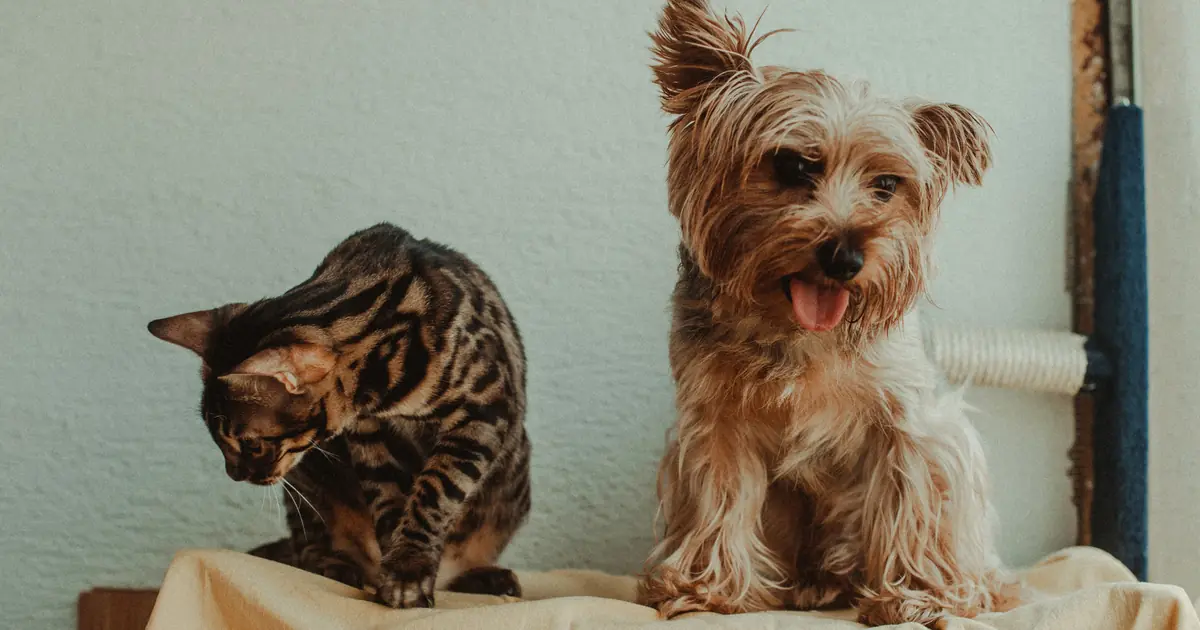
Which dogs are the best match for a Bengal?
The dog’s prey drive and energy are the deciding factors. A Bengal needs a dog that sees it as family, not prey. This table sums up the pairing.
| Best match | Riskier match |
|---|---|
| Cat-friendly, socialized breeds (many Labs, Goldens, Poodles) | High prey-drive or sighthound types |
| Calm, confident adult dogs | Very excitable or reactive dogs |
| Dogs raised around cats | Dogs with a history of chasing cats |
| Playful but gentle energy | Rough, wrestling-style play |
How do you introduce a Bengal cat and a dog?
Go slow, and let scent do the early work. Rushing a face-to-face meeting is the most common mistake. The ASPCA’s introduction guidance backs this gradual approach. A reliable, low-stress process:
- Separate first: keep them in different rooms and swap bedding or toys so each learns the other’s scent.
- Feed on opposite sides of a closed door: pairs the other animal’s smell with something positive.
- Controlled visual intro: use a baby gate or crack the door so they see each other calmly.
- Leashed meetings: keep the dog leashed and let the Bengal approach on its own terms, with high perches available.
- Reward calm: treats and praise for relaxed behavior on both sides; end on a good note.
This can take days to weeks. Patience now prevents a lasting rivalry.
What should you watch out for?
Watch the Bengal’s energy and the dog’s prey response. Because Bengals are so active, they may provoke a chase from a dog that would otherwise ignore a calmer cat. Give your Bengal cat trees and shelves for vertical escape, keep separate food bowls and litter access, and never leave a new pair unsupervised until you’re confident. All that energy needs an outlet too, Bengals that are under-stimulated get into more trouble, and their love of activity is the same reason many enjoy water play.
When should you get help?
Get professional help if you see real aggression, persistent fear, or stress signs that don’t ease over a few weeks. Ongoing hissing, hiding, not eating, or litter box avoidance means the introduction is going badly and needs a reset, sometimes with a certified behaviorist. This article is educational and not a substitute for personalized advice. International Cat Care’s behavior guidance is a helpful, welfare-focused resource for multi-pet homes.
Frequently Asked Questions
Q: Do Bengal cats get along with dogs better than other cats?
Often, yes. Their confident, playful, energetic nature tends to mesh with dogs rather than clash. Bengals are less likely to live in fear of a dog, which helps the two build a real relationship, given a good introduction.
Q: Will a Bengal cat hurt my dog?
It’s uncommon, but Bengals are assertive and won’t back down easily, so a swat is possible if a dog pesters them. Give the cat escape routes and supervise early meetings to keep both safe.
Q: What dogs should Bengals avoid?
High prey-drive breeds, sighthounds, and dogs with a history of chasing or fixating on cats are riskier matches. A Bengal’s quick movements can trigger a chase in those dogs.
Q: How long does it take a Bengal and dog to get along?
Anywhere from a few days to several weeks, sometimes longer. Go at the animals’ pace, use scent swapping and gradual, rewarded introductions, and don’t rush face-to-face contact.
Q: Is it easier to introduce a Bengal kitten or an adult to a dog?
Kittens often adapt faster because they’re still socializing, but a well-socialized adult can do great too. In all cases, the dog’s temperament and a careful introduction matter most.
Q: Do Bengals need another pet for company?
Bengals are social and thrive with companionship and stimulation, so a compatible dog or cat can be a great match. What they truly need is enough activity and enrichment, whether that comes from a playmate or from you.

Hello and welcome to The Ideal Cat!
We are some passionate cat owners from different professions. We love our cats and have a lot of experience in how to care for our pets. We are incredibly excited to share our knowledge, experience, and research with you. So you can take good care of your loving cat. We will answer most of the common questions about owning cats, taking care of them, etc. If you have any question contact with us. Thanks for visiting! Enjoy the content.
