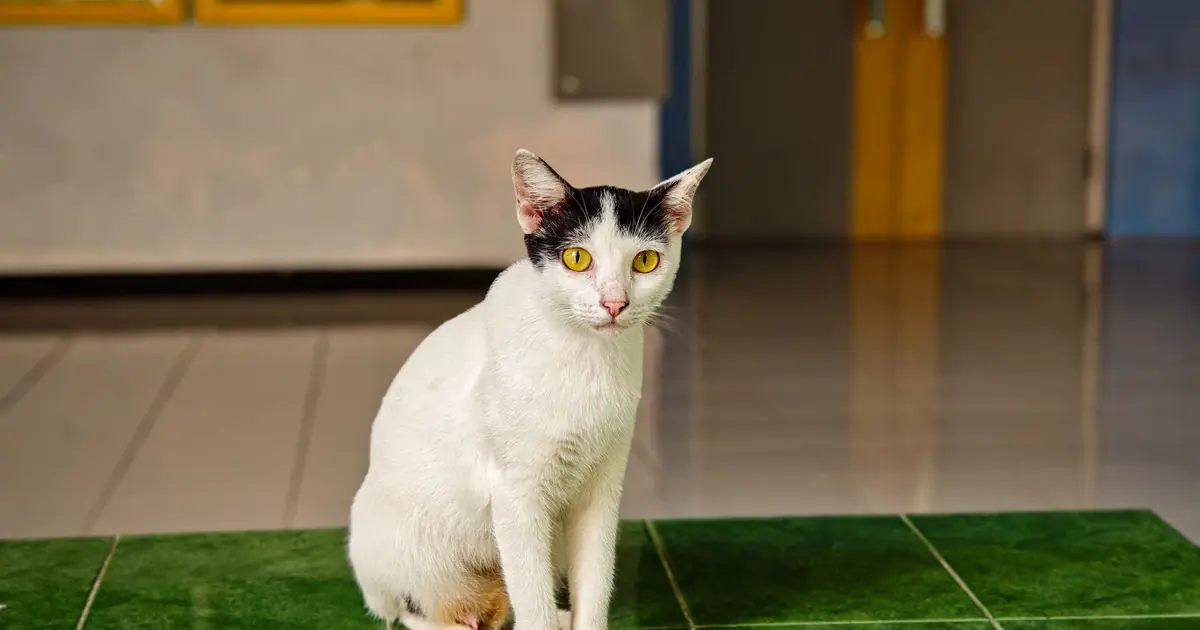
Picture this: a snowy-white cat pads across your porch, pauses, and looks right at you. Do you smile, or do you brace for bad news? For most people around the world, that moment is a good sign, not a bad one.
White cats have been wrapped up in folklore for centuries, from Japanese temples to European fishing villages. None of it is science. But it’s a fun, cozy piece of cat culture, and it says a lot about how humans have felt about white cats through history. Let’s get into what the myths actually say, where they came from, and what’s really going on with your white cat’s health and genetics.
- White cats are considered good luck in most global traditions, symbolizing purity, peace, and prosperity.
- Japan’s maneki-neko, the raised-paw “beckoning cat” figurine, is traditionally white and represents good fortune for a home or business.
- Luck beliefs about cat color are folklore, not fact, and they vary widely by culture and even by region within the same country.
- Blue-eyed white cats have a notably higher rate of congenital deafness, linked to the same gene that produces the white coat.
- Black cats and white cats often sit on opposite ends of the same folklore, with black cats carrying more mixed or negative superstitions in Western history.
Are white cats good luck?
Yes, in the vast majority of folk traditions, a white cat is considered a lucky sign. Cultures across Asia, Europe, and beyond have linked white cats to purity, peace, and prosperity for hundreds of years. In Japan, the United Kingdom, and parts of Europe, seeing a white cat or having one choose your home is treated as a good omen.
It’s worth saying plainly: this is folklore, not fact. There’s no evidence that a cat’s coat color has any bearing on the luck of the person nearby. But folklore sticks around because it’s comforting and fun, and white cats have earned an especially warm reputation across a wide range of cultures.
What do white cats symbolize?
White cats most often symbolize purity, peace, new beginnings, and positive energy. The color white itself carries that meaning in a lot of cultures, long before you attach a cat to it, think of white doves, white weddings, or white flags of truce.
Add a cat, an animal already tied to mystery and intuition in folklore, and you get a symbol that’s read as gentle, protective, and forward-looking. Some traditions also connect white cats to clarity and calm, the opposite of the chaos or misfortune assigned to darker-colored animals in certain Western superstitions.
What lucky white-cat beliefs exist around the world?
White cats show up as good-luck symbols in several distinct traditions, each with its own flavor. Here’s how a few of them break down.
- Japan: The maneki-neko, or “beckoning cat,” is traditionally shown in white and is displayed in homes and shops to invite good fortune and customers.
- United Kingdom: In parts of England, a white cat crossing your path is considered luckier than a black one, the reverse of the more famous black-cat superstition.
- Sailors and fishing communities: European and English sailing folklore held that a white cat on board (or one that came to find you before a voyage) brought a safe trip and good weather.
- Weddings: In some European traditions, a white cat appearing near a wedding was seen as a sign of a happy, harmonious marriage.
| Culture or Tradition | What a White Cat Means |
|---|---|
| Japan | Good fortune and prosperity (maneki-neko) |
| England | Good luck when crossing your path |
| European sailors | A safe voyage and fair weather |
| European wedding folklore | A happy, harmonious marriage |
| General Western symbolism | Purity, peace, and new beginnings |
Are white cats ever considered bad luck?
Rarely, but a few pockets of superstition treat white cats less kindly. In parts of the American South, older folklore held that a white cat at night, or one seen at a funeral, could be an omen of death rather than luck. Some German folk traditions also warned against a white cat crossing your path after dark specifically, even while treating a daytime crossing as fine.
These are exceptions, though. Line up the world’s traditions side by side, and white cats land overwhelmingly on the lucky, positive end of the spectrum. If you own one, you’re statistically in good folkloric company.
What is the maneki-neko, exactly?

The maneki-neko is a Japanese figurine of a cat with one paw raised, traditionally placed near the entrance of a home or business to invite good fortune. “Maneki-neko” translates roughly to “beckoning cat,” and the raised paw mimics the Japanese beckoning gesture, palm down, fingers waving inward.
These figurines aren’t just white, and the color changes the meaning:
- White: overall good luck and happiness
- Gold: wealth and prosperity
- Black: protection from evil spirits
- Pink or red: love and relationships
- Green: health and safety, particularly for students
The classic, most common version you’ll spot in shop windows and restaurants is white with a red collar, right paw raised, said to bring good fortune to the business. You can read more on the tradition’s history from Japan National Tourism Organization’s guide to the maneki-neko.
What’s the real story behind white cats, beyond the folklore?
Genetically, a fully white coat comes from a dominant gene that masks all other coat colors, it doesn’t remove the color, it just hides it from showing on the fur. That’s different from albinism, which is a separate and much rarer condition in cats.
Here’s the part every white-cat owner should actually know: blue-eyed white cats have a significantly higher chance of being born deaf compared to white cats with other eye colors. The same gene responsible for the white coat can also affect the inner ear, and the risk climbs further in cats with two blue eyes rather than one. This isn’t folklore, it’s a documented genetic link, and the Cornell Feline Health Center’s page on deafness in white cats covers it well.
If you’ve got a white cat, especially a blue-eyed one, a vet check that includes a basic hearing assessment is a smart move. Deaf cats can live full, happy lives, they just need a few adjustments, like relying more on vibration and sight cues than sound. Curious how rare solid white cats actually are? They’re one of the less common coat colors you’ll see in the general cat population.
Do black cats and white cats differ in luck folklore?
Yes, quite a bit. Black cats carry a much more mixed reputation, especially in Western folklore, where they’ve been tied to witchcraft, bad omens, and Friday the 13th superstitions. White cats mostly avoided that darker history and instead picked up associations with purity and good fortune.
Context still matters. In parts of the UK and Japan, black cats are actually considered lucky too, while a few regions flip the white-cat story into a bad omen instead. If you want the fuller picture on the other side of this coin, what a black cat symbolizes breaks down that folklore in detail, and black and white cat breeds is a fun read if you’re into tuxedo cats and other two-tone coats.
And if superstition is your thing generally, you might also enjoy digging into whether cats can see ghosts, another cat myth that refuses to die.
Does coat color actually affect a cat’s luck or personality?
No. There’s no scientific evidence that a cat’s coat color influences luck, and coat color has very little to do with personality either, despite what plenty of cat forums will tell you. A white cat is just as likely to be aloof, cuddly, chatty, or shy as a cat of any other color.
What actually matters for your cat’s wellbeing is real care: regular vet visits, good nutrition, a safe indoor environment, and for white cats specifically, sun protection on exposed skin (their ears and nose can be prone to sunburn) and that hearing check we mentioned earlier. Folklore is fun. Vet care is what actually keeps your cat thriving.
Frequently Asked Questions
Q: Are white cats good luck or bad luck?
Most traditions consider white cats good luck, symbolizing purity, peace, and prosperity. A few regional superstitions, like some older American and German folklore, treat a white cat at night or at a funeral as a bad omen, but these are exceptions rather than the rule.
Q: Why is the maneki-neko white?
The classic maneki-neko, or Japanese beckoning cat, is traditionally white because the color represents overall good luck and happiness. Other colors were added later, gold for wealth, black for protection, and pink for love, but white remains the most recognized version.
Q: Do blue-eyed white cats really go deaf more often?
Yes, blue-eyed white cats have a well-documented, higher rate of congenital deafness compared to white cats with other eye colors, and the risk increases further in cats with two blue eyes rather than one. This is a genetic link, confirmed by feline health researchers, not a myth.
Q: What does it mean if a white cat crosses your path?
In most Western and Japanese folklore, a white cat crossing your path is considered a sign of good luck heading your way. In parts of England specifically, it’s viewed as luckier than a black cat crossing in the same spot.
Q: Is white the rarest cat color?
White isn’t the single rarest cat coat color, but it’s less common than tabby, black, or orange patterns in the general cat population. Solid white coats come from a dominant masking gene rather than a lack of pigment, which is different from albinism.
Q: Are all white cats deaf?
No, not all white cats are deaf. Deafness risk rises specifically with blue eye color, and cats with one blue eye and one non-blue eye, or two non-blue eyes, have a much lower chance of hearing loss than cats with two blue eyes.
Q: Why are black cats considered unlucky but white cats lucky?
The split largely comes down to Western history, where black cats got tangled up with witchcraft folklore and fear-based superstition during the medieval period. White cats mostly avoided that association and instead picked up symbolism tied to purity, peace, and clean beginnings.
Q: Does a white cat’s coat color affect its personality?
No, there’s no evidence that coat color determines a cat’s personality or temperament. A white cat can be just as playful, independent, or affectionate as a cat of any other color, personality comes down to genetics, early socialization, and individual experience, not fur color.

Hello and welcome to The Ideal Cat!
We are some passionate cat owners from different professions. We love our cats and have a lot of experience in how to care for our pets. We are incredibly excited to share our knowledge, experience, and research with you. So you can take good care of your loving cat. We will answer most of the common questions about owning cats, taking care of them, etc. If you have any question contact with us. Thanks for visiting! Enjoy the content.
