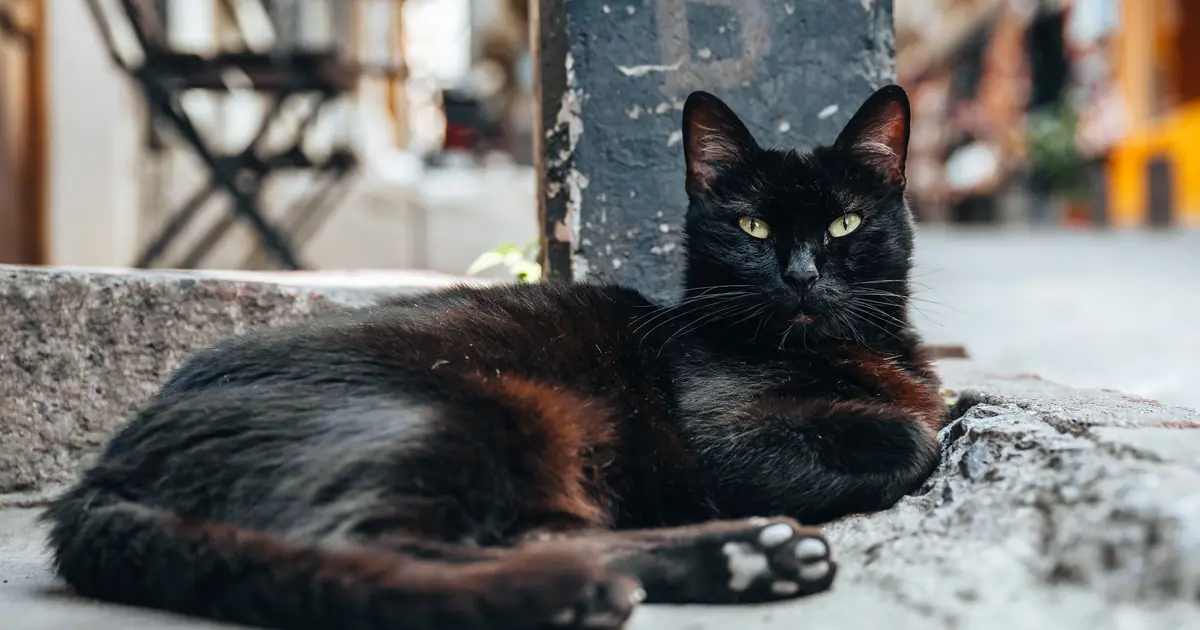
Picture this: a sleek black cat pads across your path on a foggy evening, and some old instinct in your brain whispers “uh oh.” Where did that feeling even come from? Humans have been arguing about black cats for centuries, and depending on where your ancestors lived, that same cat could mean disaster or a windfall.
Here’s the thing: none of it has anything to do with the cat. A black coat is just melanin, the same pigment that gives you dark hair or a suntan. Every ounce of meaning we’ve piled onto black cats came from folklore, fear, and a few clever marketing myths along the way. Let’s dig into where the good luck and bad luck stories actually started, and why your black cat is really just a cat who wants dinner on time.
- Black cats symbolize bad luck in most of Europe and North America, largely because of medieval associations with witchcraft.
- Black cats symbolize good luck in Japan, Scotland, Ireland, and among sailors, who once believed they brought safe voyages.
- Ancient Egyptians revered all cats, including black ones, connecting them to the goddess Bastet and treating harming one as a serious offense.
- Black coat color comes from a pigment called melanin and has no link at all to a cat’s personality or temperament.
- Shelters report that black cats can take longer to get adopted, a pattern some shelter workers call “black cat syndrome,” though newer data suggests the gap is smaller than people assume.
What does a black cat symbolize overall?
A black cat symbolizes whatever the local folklore decided centuries ago, and that meaning splits sharply by region. In the United States, the United Kingdom, and much of Western Europe, black cats got tangled up with witch trials and superstition, so they came to represent bad luck, dark magic, and misfortune. Flip the map to Japan, Scotland, Ireland, or ancient Egypt, and the exact same black cat represents good fortune, protection, and prosperity.
That’s a wild contradiction for one animal to carry. It tells you something important though: none of this symbolism describes the cat. It describes the culture doing the symbolizing. A black cat in Osaka and a black cat in Ohio are genetically identical. Only the stories wrapped around them differ.
Why are black cats considered bad luck?
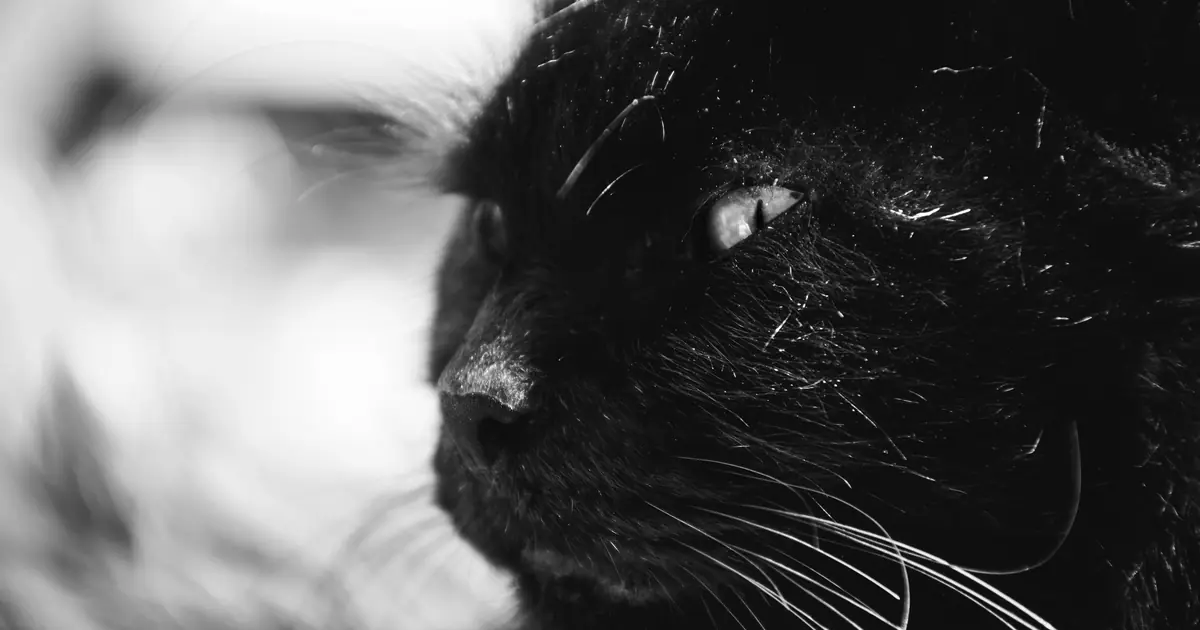
Black cats picked up their bad luck reputation in medieval Europe, when people started associating them with witches and the devil. During the witch hunts of the 1400s through 1600s, black cats were often accused of being a witch’s “familiar,” a demonic helper in animal form. Some accounts even claimed witches could shapeshift into black cats at night.
That fear turned deadly. Cats, black ones especially, were killed by the thousands across parts of Europe during this period, sometimes in public bonfires tied to religious festivals. The superstition that a black cat crossing your path brings misfortune grew directly out of this witch-hunt era, and it crossed the Atlantic with European settlers, which is a big reason it’s still common in the United States today. Pilgrims arriving in North America brought the belief with them, and it settled into American folklore alongside broken mirrors and walking under ladders.
Ironically, this superstition may have made things worse for humans too. Historians note that killing off cats likely let rat populations grow unchecked in parts of Europe, right around the time the Black Death was spreading through rodent-borne fleas.
Which cultures believe black cats bring good luck?
Several cultures see a black cat as a sign of good fortune rather than doom, and the list is longer than most people expect. In Japan, a black cat is considered lucky, especially for single women, since folklore holds that one will attract good suitors. The famous maneki-neko, or “beckoning cat” figurine, traditionally comes in a black version believed to ward off evil spirits and bring protection to the home.
In Scotland and parts of Ireland, a strange black cat arriving on your doorstep is said to bring prosperity, not misfortune. British sailors’ wives once kept black cats at home too, believing it would keep their husbands safe at sea, and sailors themselves considered a black ship’s cat a good luck charm for the whole crew. Even within England, one regional superstition flips the usual story completely: a black cat crossing your path is considered lucky, the opposite of the American version.
| Culture or Region | What a Black Cat Symbolizes There |
|---|---|
| United States and much of Western Europe | Bad luck, witchcraft, misfortune |
| Ancient Egypt | Protection, sacredness, connection to the goddess Bastet |
| Japan | Good luck, especially in romance and warding off evil |
| Scotland and Ireland | Prosperity and good fortune arriving at the home |
| England (regional folklore) | Good luck, the reverse of American superstition |
| Sailors and maritime folklore | Safe voyages and protection at sea |
What role did black cats play in ancient Egypt?
Ancient Egyptians saw all cats, black ones included, as sacred animals connected to Bastet, a goddess of home, fertility, and protection often depicted with a cat’s head. Cats in Egypt were so valued that killing one, even by accident, could carry serious punishment, and families sometimes mummified their cats for the afterlife alongside elaborate burial rites. There’s no historical evidence Egyptians singled out black cats specifically over other coat colors. The reverence applied to cats as a species. But that broad respect is a big part of why black cats never picked up a bad reputation in that culture the way they did in medieval Europe.
What do black cats symbolize in mythology and folklore?
Across world mythology, a black cat usually symbolizes mystery, magic, or a threshold between the ordinary world and something supernatural. Norse mythology gave the goddess Freyja a chariot pulled by cats, and folk tradition later associated black ones with her magic. Celtic folklore includes the Cat Sith, a fairy creature said to look like a large black cat with a white spot on its chest, believed to steal a person’s soul if a cat crossed a corpse before burial.
In American folklore, black cats got wrapped into Halloween traditions alongside witches and jack-o’-lanterns, largely because of that same witch-hunt history. Pop culture ran with it from there. Salem from Sailor Moon, the black cat familiar trope in countless witch movies, and Halloween decor covered in cat silhouettes all trace back to those same medieval fears, just softened into something fun and spooky rather than actually threatening.
What do black cats symbolize today?
Today, a black cat mostly symbolizes mystery, independence, and Halloween season, rather than a genuine omen of anything. Most people, especially younger cat parents, treat the old superstitions as fun folklore rather than real belief. Black cats show up constantly in pop culture as the sleek, aloof, slightly magical sidekick, which has turned the old fear into something closer to cool.
Genetically, black cats are also just interesting in their own right. The solid black coat comes from a dominant version of a pigment gene, and it shows up across dozens of breeds, from the sturdy black Maine Coon to shorthairs and everything between. Some black cats develop small bald patches around the eyes or ears as they age, which is a normal part of coat changes and worth understanding if you notice it, not a symbol of anything mysterious.
Do black cats really get adopted less at shelters?
Some shelters do report that black cats stay longer before adoption, a pattern often nicknamed “black cat syndrome.” The reasons vary: some adopters still carry superstitious hesitation, others say black cats photograph less distinctly than a calico or a cat with a bold orange coat, making them less eye-catching in online listings. The ASPCA has pushed back on the harshest version of this story, though, noting that once you account for how long any cat has been available, black cats often get adopted at rates close to other colors.
So the data is genuinely mixed, not a clean case of “black cats never get chosen.” What is consistent is that shelters run black cat adoption promotions, especially in October, both to counter lingering superstition and because black cats are simply common, so more of them pass through shelter doors overall.
Should you judge a cat by its color?
No, and this is worth saying plainly: coat color tells you nothing reliable about a cat’s personality. A black cat isn’t more mysterious, more aloof, or more magical than a tabby, an amber-eyed shorthair, or a rare brown-coated cat. Temperament comes from genetics, early socialization, and how a cat is raised, not from pigment. Whatever charming or grumpy personality your black cat has, it earned that on its own, no folklore required.
If you’re choosing a cat, or already sharing your home with a black one, the best move is to ignore the old stories entirely and just get to know the actual animal in front of you. That’s advice any reputable animal welfare organization, including the Humane Society, will back up without hesitation.
Frequently Asked Questions About Black Cat Symbolism
Q: Are black cats good luck or bad luck?
It depends entirely on where you are. In the United States and most of Western Europe, a black cat crossing your path is considered bad luck. In Japan, Scotland, Ireland, and among sailors, the same black cat is considered a sign of good fortune.
Q: Why do people think black cats are witches?
The idea comes from medieval Europe, where black cats were often accused of being a witch’s familiar during the witch hunts of the 1400s through 1600s. That fear led to widespread killing of cats and cemented the black-cat-and-witchcraft association that still shows up in Halloween imagery today.
Q: What does it mean if a black cat crosses your path?
In American superstition, it supposedly warns of bad luck ahead. In parts of England, the exact same event is considered a sign of good luck instead. Neither belief has any factual basis, it’s regional folklore, not an actual prediction.
Q: What did ancient Egyptians believe about black cats?
Ancient Egyptians considered all cats sacred, connecting them to the goddess Bastet, who represented protection, home, and fertility. Harming a cat, including a black one, could carry serious punishment, and cats were sometimes mummified for the afterlife.
Q: Do black cats have a different personality than other cats?
No. Coat color comes from pigment genetics and has no proven link to temperament. A black cat’s personality depends on genetics, socialization, and upbringing, exactly like any other cat, regardless of color.
Q: Why are black cats associated with Halloween?
Black cats got pulled into Halloween imagery because of their long association with witches and dark magic from medieval European folklore. American Halloween traditions, which blend old European superstitions with harvest festivals, kept that pairing alive in decorations and pop culture.
Q: Is it true black cats get adopted less often?
Some shelters report longer stays for black cats, a pattern sometimes called “black cat syndrome.” The ASPCA notes the picture is more nuanced than it sounds, and once length of availability is factored in, adoption rates for black cats are often closer to other colors than people assume.
Q: What is a black cat called in folklore?
Names vary by culture. In Celtic folklore, a fairy creature resembling a large black cat is called the Cat Sith. In Japan, black cat figurines are part of the maneki-neko, or “beckoning cat,” tradition believed to bring protection and good fortune.

Hello and welcome to The Ideal Cat!
We are some passionate cat owners from different professions. We love our cats and have a lot of experience in how to care for our pets. We are incredibly excited to share our knowledge, experience, and research with you. So you can take good care of your loving cat. We will answer most of the common questions about owning cats, taking care of them, etc. If you have any question contact with us. Thanks for visiting! Enjoy the content.
