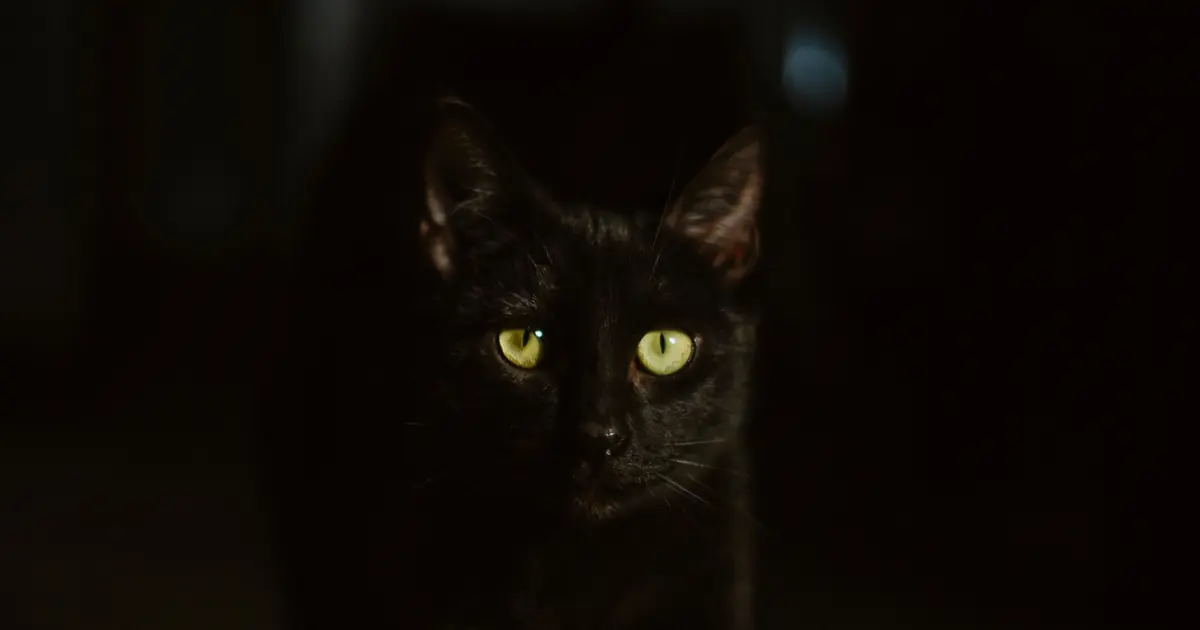
You’re petting your sleek black cat in a sunbeam when you spot it: a thin, almost bald patch right in front of the ears. Your stomach drops. Is she sick? Losing her fur? Here’s the good news up front. If you’re wondering why do black cats have bald spots, the little sparse area by the temples is almost always normal, and it looks scarier on black cats than it actually is.
That thin strip has a name: preauricular alopecia. Every cat has it. On a black cat, the pinkish skin peeks through the dark coat and practically glows, so you notice it while owners of orange or gray cats never do. But not every bald patch is harmless, and knowing the difference is the whole game.
- The thin fur between a cat’s eyes and ears is preauricular alopecia, a normal trait found on every cat.
- Black cats seem to have more bald spots because their pale skin contrasts sharply with their dark coat, making normal thinning easy to see.
- Preauricular alopecia usually appears between 14 and 20 months of age and comes with no redness, itching, or scabbing.
- True bald patches elsewhere on the body are not normal, and fleas plus flea-allergy dermatitis are the number one cause.
- A bald spot that spreads, itches, reddens, or scabs needs a vet visit, not a wait-and-see.
Why do black cats have bald spots in front of their ears?
Black cats have thin, almost bald spots in front of their ears because of preauricular alopecia, a normal, natural thinning of the fur in the area between the eyes and ears. Every cat has this sparse patch. It is not a disease, an infection, or a sign that anything is wrong. Your black cat is built exactly the way she should be.
This spot sits right on the temple, between the outer corner of the eye and the base of the ear. Run your finger over it and you’ll feel skin with just a light dusting of hair. Most cats start showing it between 14 and 20 months of age, and the coat there tends to stay lighter for life. It does not spread, and it does not turn into full baldness.
Here’s the reassuring part: healthy preauricular alopecia looks calm. No redness, no flaking, no scabs, and your cat isn’t scratching at it. If that describes what you’re seeing, you can exhale.
Why do black cats seem to show bald spots more than other cats?
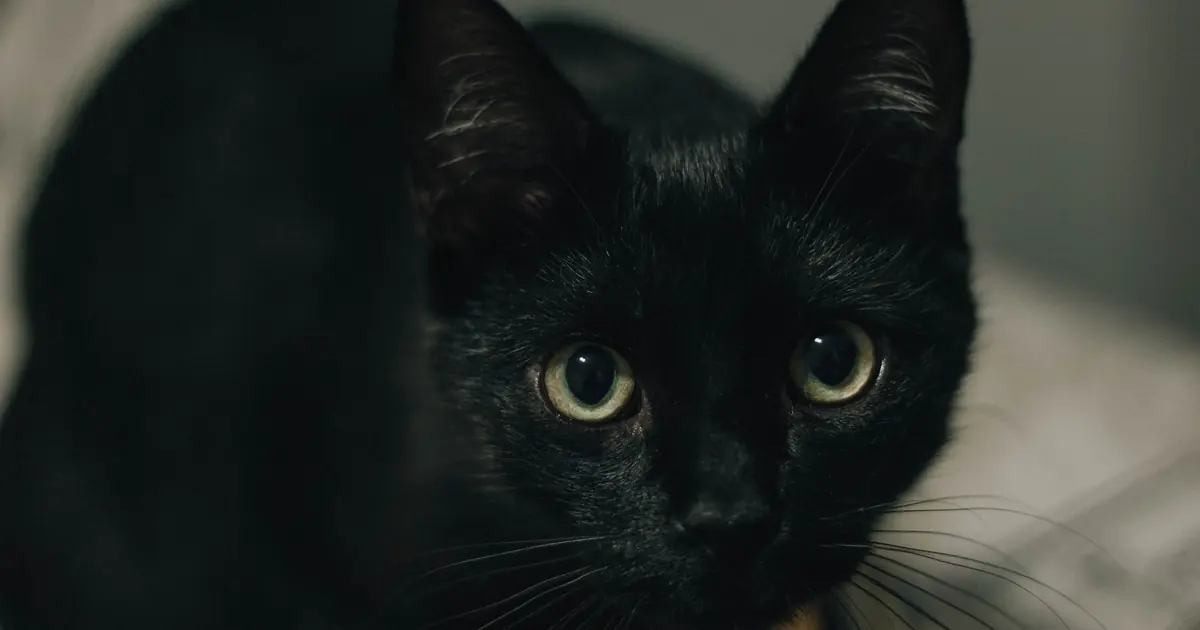
Black cats seem to show bald spots more than other cats because of contrast, not because they actually lose more fur. The pale, pinkish skin under a black coat stands out dramatically against the dark hair, so the normal thinning by the ears jumps out at you. On a cream or tabby cat, that same thin patch blends right in and nobody ever notices.
Coat length plays a role too. Shorthaired cats show preauricular alopecia more than fluffy longhaired cats, because there’s less surrounding fur to hide it. A short-coated black cat is basically the perfect setup for spotting a “bald” temple that’s been there all along.
So if you’ve owned lighter cats for years and suddenly panicked over your first black cat, you’re not imagining things. You’re just finally seeing what was always there. It’s the same reason a scratch shows up more on a dark car than a white one.
When is a bald spot on a black cat actually a problem?
A bald spot on a black cat is a problem when it appears somewhere other than the temples, or when it comes with redness, itching, scabs, or spreading. Normal preauricular alopecia stays put by the ears and never bothers your cat. Anything that grows, weeps, flakes, or makes her scratch is worth a closer look.
Location is your first clue. Thinning by the ears? Probably fine. A bald patch on the belly, back, legs, tail, or flanks? That’s not preauricular alopecia, and it usually points to fleas, allergies, or another skin issue. Think of it as knowing what a normal temple looks like so anything else stands out. If you want the bigger picture on shedding and thinning coats, our guide on why cats go bald walks through the full range of causes.
Watch for these red flags on any bald area:
- The patch is spreading or getting bigger week to week.
- The skin looks red, inflamed, crusty, or scabby.
- Your cat licks, chews, or scratches the spot a lot.
- You see black flecks (flea dirt), tiny scabs, or flaky skin.
- The bald area is round with a scaly edge.
Normal thinning vs. abnormal bald patches at a glance
| Feature | Normal (preauricular alopecia) | Abnormal bald patch |
|---|---|---|
| Location | Between eyes and ears (temples) | Belly, back, legs, tail, flanks, or anywhere else |
| Skin look | Calm, healthy, no redness | Red, scabby, flaky, or inflamed |
| Itching | None | Scratching, licking, or chewing |
| Spreading | Stable, stays the same | Grows or spreads over time |
| Likely cause | Normal coat trait | Fleas, ringworm, allergies, mites, or stress |
What causes real bald patches on cats?
Real bald patches on cats are caused by fleas and flea-allergy dermatitis, ringworm, other allergies, over-grooming from stress, and skin mites. Unlike the normal thinning by the ears, these cause hair loss on the body and usually come with itching, redness, or scabbing. Fleas top the list by a wide margin.
Fleas and flea-allergy dermatitis. Fleas are the single most common cause of bald patches on cats. Some cats are allergic to flea saliva, a condition called flea-allergy dermatitis, and even one or two bites can trigger intense itching and hair loss over the lower back, belly, and hind legs. Good flea control fixes most of these cases. Our roundup of the best cat flea treatments can help you pick one that works.
Ringworm. Ringworm isn’t a worm at all. It’s a contagious fungal infection that feeds on the keratin in fur and skin, leaving round, scaly bald patches. It spreads to other pets and to people, so it’s worth catching early with a vet.
Allergies. Food and environmental allergies can make a cat itchy enough to scratch or lick fur away. The bald spots that follow are self-inflicted, driven by the itch. Sometimes flaky skin comes along for the ride, which we cover in our guide to cat dandruff.
Over-grooming from stress. A stressed, bored, or anxious cat may lick one area raw, a habit called psychogenic alopecia. The belly and inner legs are common targets, and the skin underneath often looks normal because it’s the licking, not a disease, causing the baldness.
Mites. Tiny mites like Notoedres, Cheyletiella (walking dandruff), and Demodex can cause hair loss, crusting, and itching, often around the head, neck, and back. A vet can spot these with a simple skin test.
How can you tell the difference at home?
You can tell the difference at home by checking three things: location, skin condition, and behavior. Normal preauricular alopecia sits by the ears, has healthy skin, and never itches. Anything red, scabby, spreading, or itchy, or any bald patch on the body, points to a problem worth a vet’s eyes.
Start with a calm, hands-on check. Part the fur around the bald area in good light. Is the skin smooth and healthy, or angry and flaky? Then watch your cat for a day. A cat who ignores the spot is telling you it doesn’t bother her. A cat grooming one patch obsessively is telling you something itches. Regular brushing helps you catch changes early, and a good cat brush makes those check-ins part of your routine. For a plain-language rundown of feline skin conditions, PetMD’s condition library is a solid starting point.
When should you see a vet about a black cat’s bald spot?
You should see a vet about a black cat’s bald spot when it’s anywhere other than the temples, when it spreads, or when the skin is red, scabby, or itchy. Normal thinning by the ears needs no treatment. New or changing bald patches need a professional look, because fleas, ringworm, and allergies all get worse without care.
This article is educational and not a substitute for veterinary advice. Cat skin problems can look identical to the naked eye, and only a vet can run the skin scrapes, fungal cultures, or flea checks that pin down the real cause. If in doubt, book the visit. Trusted starting points for background reading include the Cornell Feline Health Center and VCA Hospitals.
Call your vet promptly if you notice sudden or spreading hair loss, raw or bleeding skin, constant scratching, visible fleas or flea dirt, or a round scaly patch that could be ringworm. Fast action keeps a small skin issue from becoming a big, uncomfortable one.
The bottom line on black cats and bald spots
For most black cats, bald spots are simply preauricular alopecia, the normal thin fur between the eyes and ears that looks more dramatic against a dark coat. It’s harmless, it doesn’t spread, and it needs zero treatment. So if that’s what you’re seeing, relax and enjoy your gorgeous panther. But trust your gut on anything new. A bald patch that spreads, itches, or shows up on the body deserves a vet check, because catching fleas, ringworm, or allergies early makes them far easier to fix.
Frequently asked questions
Q: Is it normal for black cats to have thin fur in front of their ears?
Yes, thin fur in front of a cat’s ears is completely normal. It’s called preauricular alopecia and every cat has it. It looks more obvious on black cats because the pale skin contrasts with the dark coat, but it’s not a disease and needs no treatment.
Q: At what age do cats develop bald spots by their ears?
Most cats start showing preauricular alopecia between 14 and 20 months of age. The thinning develops gradually and then stabilizes, leaving the temple area permanently lighter than the rest of the coat. It should never progress into full baldness or spread beyond the temples.
Q: How do I know if my cat’s bald spot is serious?
Check the location, skin, and behavior. A bald spot by the ears with calm skin and no itching is normal. A patch on the body that’s red, scabby, spreading, or itchy is a warning sign and should be seen by a vet, since it often means fleas, ringworm, or allergies.
Q: Can fleas cause bald spots on black cats?
Yes, fleas are the most common cause of true bald spots on cats. Cats with flea-allergy dermatitis react to flea saliva and can lose fur over the back, belly, and hind legs from intense itching. Consistent flea control usually resolves the hair loss over time.
Q: Does ringworm cause bald patches in cats?
Yes, ringworm is a contagious fungal infection that causes round, scaly bald patches by feeding on keratin in the fur and skin. It can spread to other pets and to humans, so a vet diagnosis and treatment are important if you suspect it.
Q: Will the bald spot by my cat’s ears grow back?
The thin fur from preauricular alopecia is generally permanent, meaning the temples stay less dense than the rest of the coat. This is normal and nothing to worry about. If a bald spot caused by fleas, ringworm, or allergies is treated, that fur typically regrows once the underlying problem clears.
Q: Why is my cat licking a bald patch on her belly?
A cat licking a bald patch on her belly is often over-grooming, which can be triggered by fleas, allergies, pain, or stress. This is not normal preauricular alopecia. Because the causes range from itchy skin to anxiety, a vet visit helps identify what’s driving the behavior.
Q: Do black cats lose more fur than other cats?
No, black cats don’t lose more fur than other cats. Their normal thinning just looks more obvious because pale skin contrasts sharply with a dark coat. Shorthaired black cats show it most, since there’s less surrounding fur to hide the naturally sparse areas.

Hello and welcome to The Ideal Cat!
We are some passionate cat owners from different professions. We love our cats and have a lot of experience in how to care for our pets. We are incredibly excited to share our knowledge, experience, and research with you. So you can take good care of your loving cat. We will answer most of the common questions about owning cats, taking care of them, etc. If you have any question contact with us. Thanks for visiting! Enjoy the content.
