You’ve watched your cat visit the litter box three times in ten minutes, squat, and produce almost nothing. Maybe you’ve found a small puddle on the bathroom rug. Your stomach drops a little. Something feels off, and you’re right to pay attention.
The good news is that urinary cat food can help support your cat’s bladder health, keep urine pH in a healthy range, and lower the mineral load that feeds struvite crystals. Diet is one of the biggest levers you have for prevention.
But read this first: if your cat is straining and cannot pass urine, that is an emergency. Go to a vet or ER right now. A blocked cat, most often a male, can die within 24 to 48 hours. Food never treats a blockage.
- A cat that strains, cries in the litter box, or cannot pass urine is a medical emergency, so see a vet or ER immediately because a full blockage can be fatal within 24 to 48 hours.
- More water is the single biggest dietary lever for urinary health, so wet food, added water, and a fountain help dilute urine and flush minerals.
- OTC urinary cat foods are for prevention and maintenance in healthy cats, not treatment, and they do not cure blockages, infections, or active urinary disease.
- OTC urinary formulas work by controlling magnesium and phosphorus and supporting a healthy urine pH to reduce the risk of struvite crystals forming.
- Diagnosed conditions like FLUTD, crystals, or stones need a vet-prescribed therapeutic diet such as Royal Canin Urinary SO, Hill’s c/d, or Purina UR, not an over-the-counter bag.
Our Top Picks
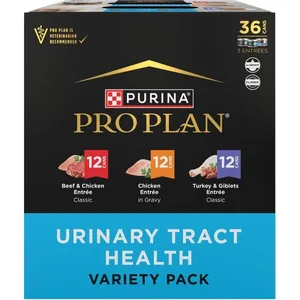
Purina Pro Plan Urinary Tract Health Variety Pack Canned Cat Food, 3-oz can, case of 36
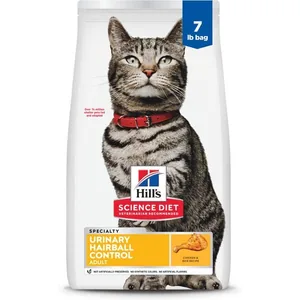
Hill’s Science Diet Adult Urinary Hairball Control Dry Cat Food, 7-lb
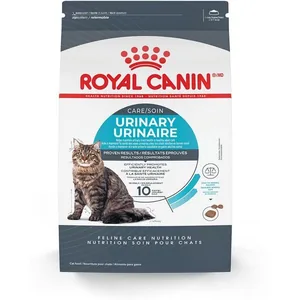
Royal Canin Feline Care Nutrition Urinary Care Adult Dry Cat Food, 3-lb bag
Urinary cat food compared at a glance
| Food | Best for | Type | Price |
|---|---|---|---|
| Purina Pro Plan Urinary Tract Health Variety Pack Canned Cat Food, 3-oz can, case of 36 | Best overall | Wet, variety pack | $70.56 |
| Hill’s Science Diet Adult Urinary Hairball Control Dry Cat Food, 7-lb | Best for hairballs and urinary | Dry | $39.99 |
| Royal Canin Feline Care Nutrition Urinary Care Adult Dry Cat Food, 3-lb bag | Best vet-brand | Dry | $28.99 |
| Iams ProActive Health Urinary Tract Health with Chicken Adult Dry Cat Food, 32-lb bundle | Best budget | Dry, bulk | $67.30 |
| Purina ONE +Plus Urinary Tract Health Formula High Protein Adult Dry Cat Food, 3.5-lb bag | Best value | Dry | $10.29 |
| Purina Pro Plan Focus Adult Urinary Tract Health Dry Cat Food, 7-lb | Best high-protein urinary | Dry | $28.08 |
| Purina Pro Plan Urinary Tract Health Adult Chicken Entree in Gravy Canned Cat Food, 3-oz can, case of 4 | Best wet for urinary | Wet in gravy | $10.49 |
The 7 best urinary cat food picks, reviewed
Purina Pro Plan Urinary Tract Health Variety Pack Canned Cat Food, 3-oz can, case of 36: best overall
The Purina Pro Plan Urinary Tract Health Variety Pack lands at the top for one simple reason: it’s wet food, and moisture is the heart of urinary care. Each 3-ounce can is loaded with water, which helps dilute your cat’s urine and keep things flowing. The formula controls mineral levels to support a healthy urine pH and reduce the environment struvite crystals love.
This is a great fit for a cat prone to urinary flare-ups who needs more water in the diet, or a fussy eater who likes variety. It’s not a treatment for a sick or blocked cat, and it won’t replace a prescription diet if your vet has diagnosed a specific condition.
Hill’s Science Diet Adult Urinary Hairball Control Dry Cat Food, 7-lb: best for hairballs and urinary
Hill’s Science Diet Adult Urinary Hairball Control is a smart pick if your cat coughs up hairballs and needs urinary support at the same time. It’s built to help control mineral levels for bladder health while adding fiber to help move hair through the gut. One bag, two jobs.
This works well for adult indoor cats who shed a lot and have a history of mild urinary sensitivity. Because it’s dry, pair it with plenty of fresh water or a fountain, since kibble alone doesn’t add moisture. Skip it for cats with a diagnosed urinary condition that needs a therapeutic diet.
Royal Canin Feline Care Nutrition Urinary Care Adult Dry Cat Food, 3-lb bag: best vet-brand
Royal Canin Feline Care Nutrition Urinary Care brings the trusted Royal Canin name to the over-the-counter shelf. It’s designed to support a healthy urinary tract by creating a urine environment that’s less friendly to crystals, with controlled mineral content. Cats tend to find the kibble palatable, which helps at mealtime.
This is a solid everyday choice for an adult cat you want to keep on a maintenance urinary formula. Just don’t confuse it with Royal Canin Urinary SO, the prescription version for diagnosed disease. This OTC bag is for healthy prevention, not treatment.
Iams ProActive Health Urinary Tract Health with Chicken Adult Dry Cat Food, 32-lb bundle: best budget
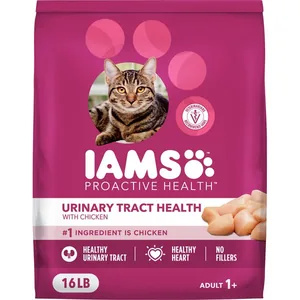
Iams ProActive Health Urinary Tract Health with Chicken gives you urinary support in a large bundle that stretches your dollar in a multi-cat home. It’s formulated to help reduce urinary pH and control the minerals that contribute to crystal formation, with chicken as the first ingredient.
This suits budget-minded families feeding several healthy cats who need routine urinary maintenance. As with any dry food, boost water intake with wet meals or a fountain. It’s prevention support, not a fix for a cat showing urinary distress, which always needs a vet.
Purina ONE +Plus Urinary Tract Health Formula High Protein Adult Dry Cat Food, 3.5-lb bag: best value
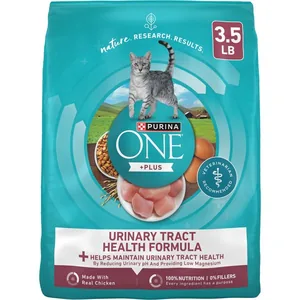
Purina ONE +Plus Urinary Tract Health Formula is high-protein, real-chicken-first, and gentle on the wallet. It’s made to help maintain urinary tract health by reducing urinary pH and keeping mineral levels in check, all at a price that makes ongoing feeding easy.
Reach for this if you want a dependable daily food for a healthy adult cat without a big spend. It’s a maintenance formula, so add moisture through wet food or a water fountain. Not a substitute for veterinary care if your cat is struggling to urinate.
Purina Pro Plan Focus Adult Urinary Tract Health Dry Cat Food, 7-lb: best high-protein urinary
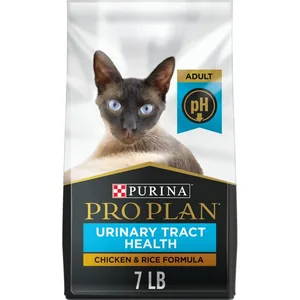
Purina Pro Plan Focus Adult Urinary Tract Health leans into higher protein while supporting a healthy urinary environment. It’s designed to reduce urinary pH and control minerals like magnesium to help lower struvite crystal risk, which appeals to cat parents who want a meat-forward recipe.
This fits active, healthy adult cats who do well on higher protein and need urinary maintenance. Like all kibble, it needs water alongside it, so keep bowls full or run a fountain. It supports prevention, and it does not treat an active urinary problem.
Purina Pro Plan Urinary Tract Health Adult Chicken Entree in Gravy Canned Cat Food, 3-oz can, case of 4: best wet for urinary
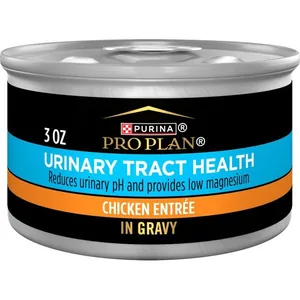
Purina Pro Plan Urinary Tract Health Chicken Entree in Gravy is our pick when you want the moisture of wet food in a saucy, tempting texture. The gravy adds even more water to the meal, which helps dilute urine, while the formula supports a healthy pH and controlled mineral levels.
This is ideal for a cat who needs more hydration but turns up their nose at plain pate, or as a topper to sneak water into a dry-food diet. It’s maintenance support for healthy cats, not medicine, and never a stand-in for the vet when your cat can’t pee.
How to choose the best urinary cat food
Picking a urinary food isn’t about finding a miracle bag. It’s about supporting your cat’s bladder day to day and knowing when the situation is bigger than food. Here’s what actually matters.
Look for controlled minerals and pH support
Struvite crystals form when urine has too much magnesium and phosphorus and sits at the wrong pH. Good OTC urinary foods control those minerals and help keep urine slightly acidic, which makes it harder for struvite to build up. That’s the whole idea behind the formulas above.
Moisture is king
If you take one thing from this guide, make it this: water is your best friend. Diluted urine flushes minerals through before they can clump. Wet food is naturally full of moisture, so lean toward canned when you can, add a splash of water to meals, and set up a cat water fountain to tempt more drinking. The Cornell Feline Health Center notes that increasing water intake and feeding wet food are key parts of managing lower urinary tract issues.
OTC versus prescription therapeutic diets
Over-the-counter urinary foods are for prevention and maintenance in healthy cats. If your vet diagnoses FLUTD, crystals, or bladder stones, they’ll prescribe a therapeutic diet like Royal Canin Urinary SO, Hill’s Prescription Diet c/d, or Purina Pro Plan Veterinary UR. Those require a vet because they’re formulated to actively dissolve certain crystals and manage disease, and the wrong one can do harm. Groups like the American Animal Hospital Association stress that urinary disease needs a proper diagnosis first.
Transition slowly
Switch foods over 7 to 10 days, mixing more of the new food in each day. A sudden change can upset your cat’s stomach and make a picky cat refuse the bowl entirely.
Know the emergency red flags
Food is for prevention, never rescue. Get to a vet or emergency clinic right away if your cat is straining with little or no urine, crying in the box, going in and out repeatedly, over-grooming the belly or genitals, vomiting, hiding, or acting lethargic. A blocked cat is a true emergency, and the ASPCA lists urinary issues among the conditions that need prompt veterinary attention. When in doubt, call your vet.
Does urinary cat food actually work?
Urinary cat food works for what it’s designed to do: help prevent struvite crystals from coming back and support healthy pH and hydration in cats that are already well. It’s a prevention and maintenance tool, and a genuinely useful one.
What it does not do is treat an active problem. Urinary food can’t clear a blockage, cure a bladder infection, or reverse disease that’s already underway. And the cause matters. A vet diagnoses whether your cat has struvite crystals, calcium oxalate stones, inflammation, or something else, because those need different diets. A food that dissolves struvite can actually raise the risk of oxalate stones in the wrong cat.
- Great at: reducing struvite recurrence, supporting healthy urine pH, boosting hydration through wet formulas.
- Not a fix for: blockages, infections, oxalate stones, or any diagnosed condition that needs veterinary treatment.
Common mistakes to avoid
- Waiting to see a vet when your cat can’t pee. This is the big one. A cat straining with no urine is an emergency that can turn fatal within a day or two, so never wait it out at home.
- Using OTC food to treat an active problem. Urinary food is prevention, not medicine. If your cat is showing symptoms right now, they need a vet, not a new bag of kibble.
- Ignoring water intake. Even the best urinary formula can’t help much if your cat is chronically dehydrated. Wet food, added water, and a fountain do heavy lifting here.
- Guessing the crystal type without a vet. Struvite and calcium oxalate need opposite dietary approaches. Only a urinalysis tells you which one you’re dealing with.
- Switching foods abruptly. A sudden change can cause stomach upset and food refusal. Transition over 7 to 10 days instead.
Related guides
- How much water should a cat drink a day
- Best cat water fountain
- Best wet cat food
- Best dry cat food
- Best senior cat food
Frequently asked questions
Q: Does urinary cat food actually work?
Yes, for prevention. Urinary cat food helps reduce the recurrence of struvite crystals and supports healthy urine pH and hydration in healthy cats. It does not treat blockages, infections, or diagnosed urinary disease, which need a vet and often a prescription diet.
Q: What are the signs of a urinary problem, and when is it an emergency?
Watch for straining, frequent small trips to the box, crying while urinating, blood in the urine, and excessive licking of the genitals. It becomes a life-threatening emergency when a cat cannot pass any urine, especially a male cat, since a full blockage can be fatal within 24 to 48 hours. Go to a vet or ER immediately.
Q: Is wet or dry food better for urinary health?
Wet food is generally better for urinary health because its high moisture content helps dilute urine and flush minerals. If you feed dry urinary food, add wet meals, water, or a fountain to boost hydration. Increasing water intake is the single most helpful dietary step for most cats.
Q: Do I need a prescription for urinary cat food?
No prescription is needed for over-the-counter urinary maintenance foods, which are made for prevention in healthy cats. You do need a vet prescription for therapeutic diets like Royal Canin Urinary SO, Hill’s c/d, or Purina UR, which are used to treat diagnosed conditions and dissolve certain crystals.
Q: Can urinary food dissolve crystals or stones?
Some vet-prescribed therapeutic diets can help dissolve struvite crystals under veterinary guidance, but calcium oxalate stones cannot be dissolved by diet and often need surgery. Over-the-counter urinary foods are not designed to dissolve anything; they support prevention. Always let a vet diagnose the crystal type first, since the treatments differ.
Q: How much water should a cat drink a day?
Cats need roughly 3.5 to 4.5 ounces of water per 5 pounds of body weight each day, from food and drinking combined. Cats on wet food get much of this from their meals, while cats on dry food need to drink more. A fountain and multiple water bowls can encourage better intake.
Q: Can urinary food help with FLUTD?
Urinary food can support cats prone to feline lower urinary tract disease by promoting hydration and healthy pH, which may reduce flare-ups. It is not a cure, and diagnosed FLUTD often needs a vet-directed plan, sometimes a prescription diet plus stress reduction. Always work with your vet on a FLUTD case.
Q: How long should a cat stay on urinary food?
Many cats prone to urinary issues stay on a urinary or high-moisture diet long term as maintenance, but this should be guided by your vet. Some prescription diets are meant for short-term use to dissolve crystals, then a cat transitions to a maintenance formula. Your vet will set the right timeline for your cat.
The bottom line
If you want one simple takeaway, it’s this: choose moisture-rich urinary cat food and keep water everywhere. Our top pick, the Purina Pro Plan Urinary Tract Health canned variety pack, leads because wet food does the most for your cat’s bladder. Any of these seven OTC urinary cat foods can support a healthy cat’s pH, minerals, and hydration for everyday prevention. But food is not medicine, so if your cat is straining, crying, or cannot pass urine, treat it as an emergency and get to a vet immediately, and let a veterinarian diagnose the cause before you settle on a long-term diet.

Hello and welcome to The Ideal Cat!
We are some passionate cat owners from different professions. We love our cats and have a lot of experience in how to care for our pets. We are incredibly excited to share our knowledge, experience, and research with you. So you can take good care of your loving cat. We will answer most of the common questions about owning cats, taking care of them, etc. If you have any question contact with us. Thanks for visiting! Enjoy the content.
