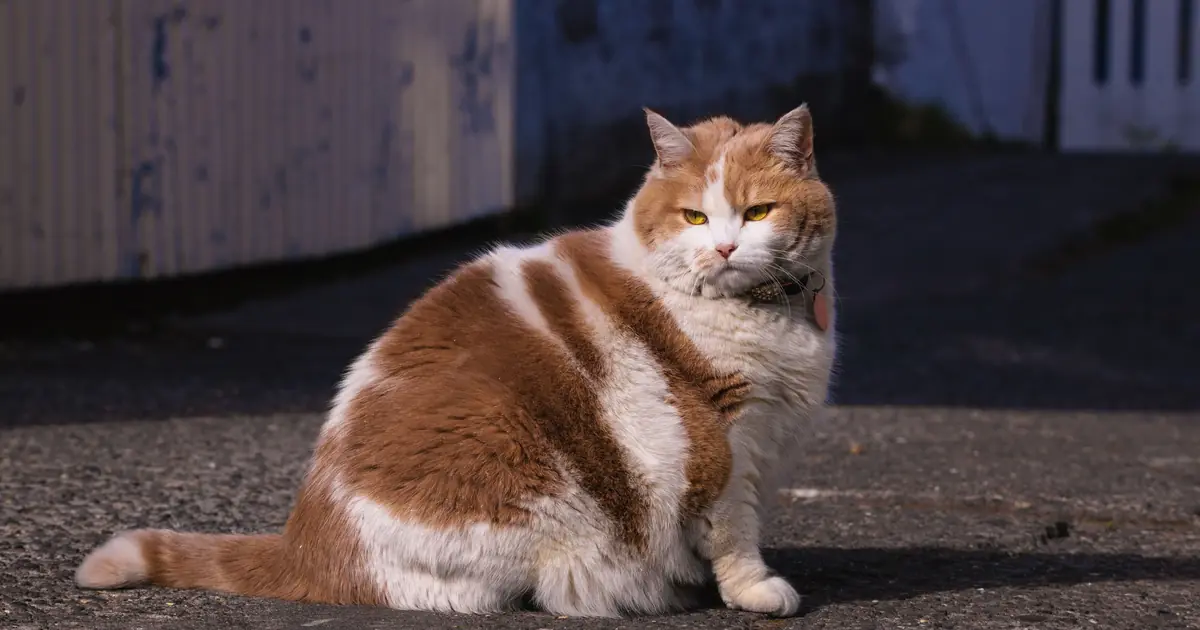
Your cat used to leap onto the counter in one smooth move. Now there’s a little grunt, a scramble, and a landing that shakes the whole shelf. Sound familiar?
If you’re eyeing a rounder belly and a missing waistline, you’re in good company. More than half of cats in the US carry extra weight, and most of their owners don’t even realize it. The good news: the right food, fed the right way, can turn things around. The catch: cats have to lose weight slowly and carefully, because a rushed diet can make them dangerously sick. Let’s walk through exactly how to do it safely.
This article is educational and isn’t a substitute for veterinary care. Always plan feline weight loss with your veterinarian.
- An estimated 61% of US cats are overweight or obese, yet fewer than half of owners recognize it, according to the Association for Pet Obesity Prevention.
- Cats should lose only about 0.5 to 2% of their body weight per week, roughly half a pound to one pound per month for most cats.
- Losing weight too fast can trigger hepatic lipidosis (fatty liver), a life-threatening condition that can start after just 2 to 3 days of a cat barely eating.
- Weight-loss foods work by being higher in protein and lower in calories, keeping a cat full while cutting calories; wet food adds hydration and satiety.
- A cat that stops eating on a diet is a medical emergency, not stubbornness, and needs a same-day vet call.
Is my cat actually overweight?
Your cat is likely overweight if you can’t easily feel their ribs, they’ve lost the tucked-in waistline, and there’s a swinging belly pouch. Vets measure this with a body condition score (BCS), a 1 to 9 scale where 5 is ideal. A score of 6 or 7 means overweight, and 8 or 9 means obese. Roughly every point above 5 equals about 10% over ideal weight.
You can do a rough version at home with the WSAVA “look, feel, look” method. Run your hands along the rib cage: at a healthy weight, you’ll feel the ribs like the back of your hand, with just a thin layer over them. Look from above for a waist that dips in behind the ribs. Look from the side for a belly that tucks up, not one that hangs down.
| Body Condition Score | What you’ll notice | What it means |
|---|---|---|
| 4 to 5 (ideal) | Ribs easily felt, visible waist from above, slight belly tuck | Healthy weight, keep it up |
| 6 to 7 (overweight) | Ribs hard to feel, waist fading, rounding belly | Time for a vet-guided plan |
| 8 to 9 (obese) | Can’t feel ribs, no waist, obvious belly pouch and back fat | Higher health risk, vet plan needed now |
Here’s the honest part. That little belly pouch that swings when your cat walks (the “primordial pouch”) is normal and isn’t the same as fat. The ribs are the real test. If you have to press to find them, your cat is carrying too much. For a precise read, ask your vet to score your cat at the next visit. You can learn more from the Association for Pet Obesity Prevention.
Why does the right food matter so much for weight loss?
The right food helps a cat lose fat while staying full and keeping muscle, which plain “less of the same kibble” often can’t do. Cats are obligate carnivores. They’re built to run on protein and fat, not carbs. A good weight-loss diet leans into that: more protein to preserve muscle and satisfy hunger, fewer calories per bite, and often more moisture.
Just cutting your cat’s normal portion in half is risky. Slash the amount too far and you also slash the protein and nutrients your cat needs, leaving them hungry, cranky, and losing muscle instead of fat. That’s why the food itself matters, not just the portion size. If you’re still choosing a base diet, our guide on how to choose cat food covers reading labels the right way.
High protein, lower calorie: the core formula
Weight-loss cat foods are formulated to be higher in protein and lower in calories than regular food. The extra protein keeps a hungry belly fuller for longer and protects lean muscle during the diet. One important note from vets: over-the-counter foods that say “weight management” on the bag are still adult maintenance diets. They help, but they aren’t magic, and they still need to be portioned. For stubborn cases, your vet may prescribe a therapeutic metabolic diet built specifically for calorie-restricted feeding.
Why wet food helps overweight cats
Wet food helps with weight loss because it’s mostly water, so it fills the stomach for fewer calories and adds hydration cats often miss. A cat eating canned food feels fuller on less. It also nudges up water intake, which supports the kidneys and bladder. Many owners see the best results mixing meal-fed wet food with a measured amount of dry. Our roundup of the best wet cat food can point you toward solid options, and if your cat lives entirely indoors, indoor cat food is often lower in calories to match a couch-potato lifestyle.
Why is losing weight slowly so important? (The fatty liver warning)
Cats must lose weight slowly because rapid weight loss or sudden not-eating can trigger hepatic lipidosis, also called fatty liver disease. It’s one of the most serious risks of a crash diet, and it can be fatal. This is the single most important thing on this page, so it gets its own section.
Here’s what happens. When a cat stops eating or drops weight too fast, the body floods the liver with fat for energy. Unlike dogs and people, cats can’t process that fat surge well. It clogs the liver and can shut it down. According to the Merck Veterinary Manual, overweight cats are at the highest risk, and the problem can begin after just a few days of poor appetite. Treatment usually means hospitalization and feeding-tube support, and even then it’s a hard road.
Call your vet the same day if your dieting cat:
- Refuses food for more than about a day, or is eating far less than usual
- Turns yellow in the gums, skin, or the whites of the eyes (jaundice)
- Becomes lethargic, hides, or seems weak
- Starts vomiting, drooling, or drops weight suddenly
Bottom line: never starve a cat thin. A cat skipping meals isn’t being dramatic, it’s a red flag. Safe weight loss is steady and slow, which is exactly why the next part matters.
How much should I feed a cat to lose weight?
Feed the exact number of calories your vet calculates for gradual loss, usually aiming for your cat to shed about 0.5 to 2% of body weight per week. For most cats that’s roughly half a pound to one pound a month, not more. There’s no one-size number, because it depends on your cat’s target weight, age, and health.
As a starting point, many vets base the diet on the calories needed to reach the cat’s ideal weight, then adjust from there. The first number is almost always just a starting estimate, and it gets fine-tuned at weigh-ins. You can get a ballpark with our cat calorie calculator, then confirm the real target with your vet. For everyday portioning help, our guide on how much to feed your cat breaks it down further.
Measure meals, don’t free-feed
Free-feeding dry food is one of the biggest causes of cat obesity, because a full bowl all day means endless grazing and easy overeating. Switch to measured meals, two or three a day. And skip the measuring cup if you can. A cheap kitchen gram scale is far more accurate, and vets often prescribe food in grams per day for exactly that reason. A “half cup” eyeballed can be 30% off, which is enough to stall a whole diet.
| Habit | Why it backfires | Do this instead |
|---|---|---|
| Bowl always full (free-feeding) | All-day grazing adds up fast | Feed 2 to 3 measured meals |
| Scooping by eye or by cup | Easy to over-serve by 20 to 30% | Weigh food on a gram scale |
| Treats on top of meals | Treats can blow the calorie budget | Cap treats at 10% of daily calories |
| Cutting portions drastically | Risks muscle loss and fatty liver | Slow, vet-set calorie target |
Multi-cat homes and the treat problem
In a multi-cat house, the dieting cat will happily raid the other bowls. Feed cats separately, or use a microchip feeder that only opens for the right cat. And treats count. Keep them to about 10% of daily calories, and steal from the food budget to pay for them. A few kibble pieces saved from dinner make a fine treat.
Beyond food: exercise and monitoring
Food does most of the heavy lifting for weight loss, but movement and check-ins seal the deal. Cats won’t jog on a treadmill, so the trick is short, frequent play that taps their hunting instinct.
- Play in short bursts. Two or three 5 to 10 minute sessions a day with a wand toy or laser beats one long one.
- Make them work for food. Puzzle feeders and food-dispensing balls slow eating and add activity.
- Move the bowl. Feeding upstairs or on a cat tree adds a few daily “workouts.”
- Weigh in regularly. Check weight every 2 to 4 weeks. A baby scale or the “weigh yourself, then hold the cat” trick both work.
- Recheck with the vet. Most vets like a weigh-in every month or two to tweak the plan.
Track progress in a simple note on your phone. Slow and boring is exactly what you want here. If the scale isn’t moving after a few weeks, don’t cut food harder on your own, call your vet to adjust the numbers. And remember, sudden weight changes can signal illness too. Unexplained weight loss in an older cat, for example, can point to conditions like feline hyperthyroidism, which is why a vet check comes first.
When should I talk to a vet before starting?
Talk to your vet before starting any weight-loss plan, always, because a proper diet begins with ruling out hidden health issues. This isn’t a formality. Your vet confirms your cat is actually overweight (not sick), sets the safe calorie target, and screens for problems that a diet could worsen.
A vet visit is non-negotiable if your cat is diabetic, on medication, older, or has any ongoing condition. It’s also the moment to catch the difference between “chubby” and “something’s wrong.” The Cornell Feline Health Center and AAHA’s weight management guidelines both stress that feline weight loss should be vet-supervised from day one. Your cat’s health is worth the phone call.
Cat weight loss FAQ
Q: What is the best cat food for weight loss?
The best weight-loss food is high in protein and lower in calories, fed in vet-measured portions. Wet food helps because it fills the stomach with fewer calories. For obese cats, a vet may prescribe a therapeutic metabolic diet made for calorie-restricted feeding.
Q: How fast can a cat safely lose weight?
Cats should lose about 0.5 to 2% of their body weight per week, which is roughly half a pound to one pound per month for most cats. Faster than that risks hepatic lipidosis, a life-threatening fatty liver condition. Slow and steady is the only safe way.
Q: Can cats lose weight on dry food alone?
Yes, but it’s harder. Dry food is calorie-dense and easy to over-serve, and free-feeding kibble is a top cause of cat obesity. If you use dry food, weigh measured meals and skip the always-full bowl. Adding or switching to wet food usually makes weight loss easier.
Q: Why did my cat stop eating on a diet, and is it serious?
Yes, it’s serious. A cat that stops eating for even a day or two can develop hepatic lipidosis (fatty liver), especially if overweight, and it can be fatal. Never force a cat to keep dieting if it won’t eat. Call your vet the same day.
Q: How do I get my cat to lose weight without starving it?
Feed a high-protein, lower-calorie food in measured meals set by your vet, not by drastically cutting portions. Slow loss of about 0.5 to 2% body weight per week keeps muscle and protects the liver. Add short play sessions and puzzle feeders to boost activity safely.
Q: How long does it take for a cat to lose weight?
It’s a slow process. At a safe rate of about half a pound to one pound per month, a cat needing to lose 2 to 3 pounds may take 4 to 8 months or longer. Patience matters here, because rushing it is dangerous.
Q: Are weight-management cat foods on the shelf enough?
Sometimes. Over-the-counter “weight management” foods are still adult maintenance diets, so they help but must be portioned. Mildly overweight cats often do fine on them with measured meals. Obese cats or those with health issues usually need a vet-prescribed therapeutic diet.
Q: How many calories should my overweight cat eat to lose weight?
There’s no single number, because it depends on your cat’s target weight and health. Vets typically base it on the calories needed to reach ideal weight, then adjust at weigh-ins. Use a cat calorie calculator for a ballpark, then confirm the real target with your veterinarian.
Helping a chubby cat slim down isn’t about willpower or tough love. It’s about the right food, honest portions, a little play, and a vet in your corner. Go slow, watch that your cat keeps eating, and celebrate the small wins. That first easy leap back onto the counter will tell you it’s working.

Hello and welcome to The Ideal Cat!
We are some passionate cat owners from different professions. We love our cats and have a lot of experience in how to care for our pets. We are incredibly excited to share our knowledge, experience, and research with you. So you can take good care of your loving cat. We will answer most of the common questions about owning cats, taking care of them, etc. If you have any question contact with us. Thanks for visiting! Enjoy the content.
)