

You love your cat. You do not love a paw in your face at 4am, or fur all over the duvet, or the sneezing if you’re allergic. Wanting the bed to yourself is completely fair.
Here’s how to keep your cat off the bed kindly, and actually make it stick.
How do you keep a cat off the bed?
You keep a cat off the bed by removing the appeal and offering a better alternative, consistently. Cats climb into beds because they’re warm, soft, and smell like you, so the fix is to give them an equally cozy spot of their own and to be firm and repetitive about the bed being off-limits. The most reliable method is simply closing the bedroom door, paired with a comfy bed elsewhere. Consistency, not punishment, is what works.
Why does my cat want to sleep on the bed?
Cats love the bed because it’s warm, comfortable, elevated, and saturated with your scent. To a cat, that combination is the ideal sleeping spot: safe, cozy, and close to the person it’s bonded with. Understanding this matters, because the goal isn’t to make your cat feel rejected, it’s to redirect that same desire to a spot that’s just as appealing. It’s the same instinct behind where cats choose to sleep on your bed.
What’s the most reliable way to keep a cat out?
Closing the bedroom door is the single most reliable method. It removes the option entirely, no willpower or training required. The catch is that a cat shut out with nothing better will scratch and meow, so pair the closed door with a warm, inviting bed elsewhere and a good pre-bed play-and-feed routine to settle it. Expect a few noisy nights as your cat adjusts; staying consistent through them is the key.
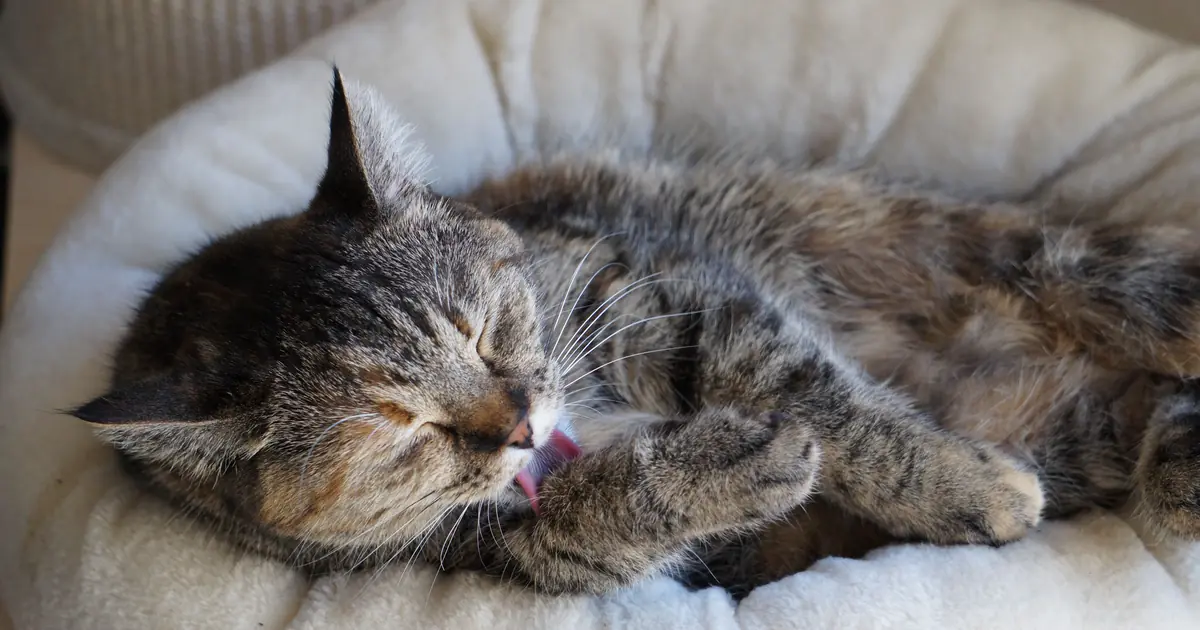
How do I give my cat a better sleeping spot?
Redirect your cat by making its own space more tempting than your bed. Try these:
- Offer a soft, warm bed or a heated cat bed, since cats seek warmth.
- Place it in a spot your cat already likes, a sunny window, a quiet corner, or near where you sleep.
- Add a cat tree or perch for cats that love height.
- Put an item with your scent (a worn t-shirt) in the bed to make it comforting.
- Reward your cat with treats and praise when it settles in its own spot.
What works and what backfires?
Some tactics help; others just scare your cat. Here’s the difference.
| Works | Backfires |
|---|---|
| Closing the bedroom door | Yelling or scolding |
| Offering a cozy, warm alternative bed | Spraying the cat with water |
| Calmly, consistently moving the cat off | Punishing after the fact |
| Rewarding use of its own spot | Being inconsistent (allowing it sometimes) |
| Pre-bed play and feeding routine | Physical punishment (never do this) |
Why shouldn’t you punish your cat for getting on the bed?
Punishing a cat for getting on the bed causes fear and damages your bond without teaching the lesson you intend. Cats don’t connect punishment with the behavior the way people assume, they just learn to fear you or the situation. Yelling, water sprays, and rough handling create stress and can worsen behavior. Positive redirection and consistency are far more effective and kinder. This article is educational; for humane behavior guidance, the ASPCA advises against punishing fearful cats, and its guide to meowing explains why feeding at set times beats giving in to early-morning demands. If nighttime activity is the real issue, see why cats get clingy at night.
More questions about cats and beds
Q: Is it bad to let my cat sleep on my bed?
Not necessarily, many people happily share the bed. It’s a personal choice. Reasons to keep a cat off include allergies, disrupted sleep, or hygiene. If it works for you both, there’s no harm in letting your cat stay.
Q: Should I use a spray bottle to keep my cat off the bed?
No. Spray bottles cause fear and stress and damage your bond, and cats often just learn to avoid you, not the bed. Use positive methods instead: a closed door, a better alternative bed, and consistent, calm redirection.
Q: How long does it take to keep a cat off the bed?
Usually a few days to a couple of weeks of consistency. Expect some protest meowing and scratching at first, especially with a closed door. Staying firm and providing a cozy alternative helps your cat adjust and accept the new routine.

Hello and welcome to The Ideal Cat!
We are some passionate cat owners from different professions. We love our cats and have a lot of experience in how to care for our pets. We are incredibly excited to share our knowledge, experience, and research with you. So you can take good care of your loving cat. We will answer most of the common questions about owning cats, taking care of them, etc. If you have any question contact with us. Thanks for visiting! Enjoy the content.




)