
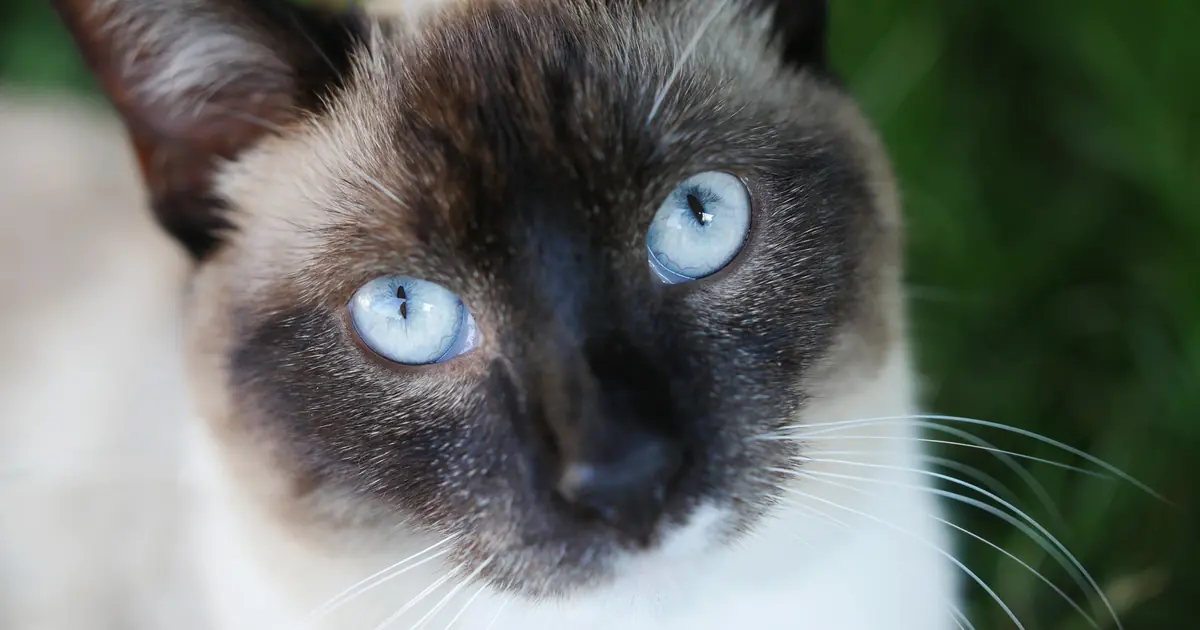
Siamese are famous for those piercing blue eyes, so it’s natural to worry about their eye health. The good news: most Siamese keep their sight, though the breed does carry a few eye risks worth knowing.
Here’s the honest picture of Siamese cats and blindness.
- Siamese aren’t fated to go blind, but they’re prone to certain inherited eye conditions.
- Progressive retinal atrophy (PRA) can cause gradual, painless vision loss in some lines.
- Siamese also have crossed eyes and nystagmus tendencies, usually harmless to daily vision.
- Many Siamese see well for life; responsible breeding lowers inherited eye risks.
- Regular vet eye exams catch problems early, and cats adapt remarkably well to vision loss.
Do Siamese cats go blind?
Siamese cats do not automatically go blind, but the breed has a higher-than-average risk of a few inherited eye conditions that can affect vision. The most significant is progressive retinal atrophy (PRA), a genetic disease that slowly degrades the retina and can lead to blindness over time in affected cats. Even so, plenty of Siamese have perfectly good sight their whole lives. Blindness isn’t a guarantee, it’s a breed-associated risk that responsible breeding and regular vet checks help manage.
What eye conditions are Siamese prone to?
Siamese are linked to several eye traits and conditions, most mild, some more serious. The main ones:
- Progressive retinal atrophy (PRA): inherited, gradual retinal degeneration that can cause blindness.
- Crossed eyes (strabismus): a classic Siamese trait, usually cosmetic and not vision-threatening.
- Nystagmus: involuntary eye movement, often harmless in the breed.
- General eye issues: like any cat, infections, injuries, or glaucoma can occur.
The crossed-eye tendency is part of their pigment genetics, explained in why Siamese cats have crossed eyes, and it doesn’t usually mean poor vision.
What is progressive retinal atrophy?
Progressive retinal atrophy (PRA) is an inherited disease that gradually destroys the retina, leading to declining vision and eventually blindness in affected cats. It’s painless and slow, so owners may first notice a cat becoming hesitant in dim light, bumping into things, or having unusually reflective or dilated eyes. There’s no cure, but because it progresses slowly and cats rely heavily on smell, hearing, and whiskers, affected cats often cope very well. Responsible breeders screen breeding cats to reduce PRA in Siamese lines.
Signs of vision problems vs normal Siamese eyes
Here’s how to tell a harmless quirk from a possible problem.
| Usually normal | See a vet |
|---|---|
| Crossed eyes present since kittenhood | Bumping into objects or new clumsiness |
| Slight eye wobble (nystagmus) | Hesitance in dim light or wide, dilated pupils |
| Bright blue eyes, clear and comfortable | Cloudiness, redness, squinting, or discharge |
| Navigating confidently | Sudden vision loss or a change in the eyes |
How do you protect a Siamese cat’s eyes?
Protect your Siamese’s vision with regular vet eye exams and prompt attention to any changes. Routine check-ups can catch conditions like PRA, glaucoma, or infections early, when management is most effective. Keep your cat indoors or supervised to avoid eye injuries, and watch for warning signs like cloudiness, redness, squinting, or clumsiness. If you’re getting a Siamese kitten, choose a responsible breeder who screens for inherited eye disease. This article is educational and not a substitute for veterinary care; any sudden vision change or eye abnormality warrants a prompt vet visit. If blindness does develop, cats adapt well, keep furniture consistent and rely on scent and sound cues. For more on the breed, see our Siamese cat breed guide and Siamese eye color facts. Trusted eye-health guidance comes from the Cornell Feline Health Center and VCA.
Frequently Asked Questions
Q: Do all Siamese cats go blind?
No. Siamese aren’t fated to go blind, though the breed is prone to inherited eye conditions like progressive retinal atrophy (PRA) that can cause gradual vision loss in some cats. Many Siamese see well their whole lives.
Q: What causes blindness in Siamese cats?
The main inherited cause is progressive retinal atrophy (PRA), which slowly degrades the retina. Other causes, like injuries, glaucoma, or infections, can affect any cat. Crossed eyes and mild nystagmus, common in Siamese, usually don’t harm vision.
Q: Are Siamese cats’ crossed eyes a sign of blindness?
No. Crossed eyes (strabismus) are a classic Siamese trait tied to their pigment genetics and are usually cosmetic, not vision-threatening. Most cross-eyed Siamese see fine. Blindness relates to conditions like PRA, not the crossed appearance.
Q: How can I tell if my Siamese is losing its sight?
Watch for bumping into objects, hesitance in dim light, unusually wide or reflective pupils, or new clumsiness. Cloudiness, redness, or squinting also warrant a check. See your vet promptly if you notice any of these signs.
Q: Can a blind Siamese cat live a happy life?
Yes. Cats rely heavily on smell, hearing, and whiskers, so blind cats often adapt remarkably well. Keep furniture and belongings consistent, avoid hazards, and use scent and sound cues. Many blind Siamese live full, happy lives.
Q: Can PRA in Siamese cats be treated?
There’s no cure for PRA, but it progresses slowly and painlessly, and cats cope well. Early diagnosis helps you prepare and rule out other issues. Responsible breeders screen breeding cats to reduce PRA in Siamese lines.

Hello and welcome to The Ideal Cat!
We are some passionate cat owners from different professions. We love our cats and have a lot of experience in how to care for our pets. We are incredibly excited to share our knowledge, experience, and research with you. So you can take good care of your loving cat. We will answer most of the common questions about owning cats, taking care of them, etc. If you have any question contact with us. Thanks for visiting! Enjoy the content.
