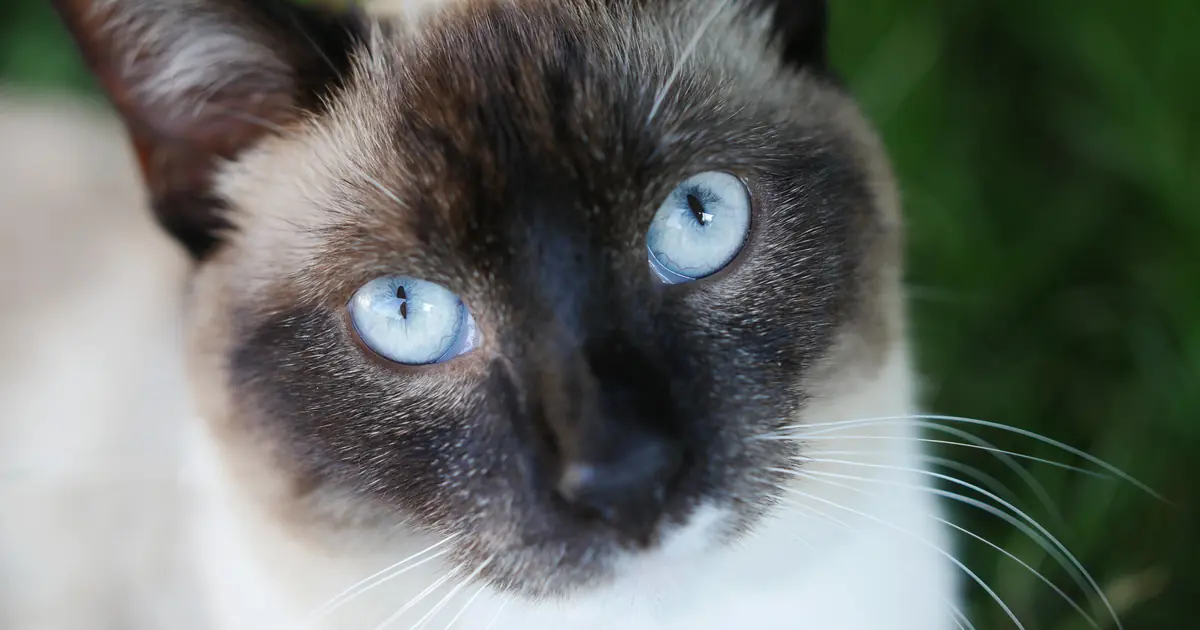
You’ve met a sleek, Siamese-looking cat with striking green eyes and wondered, is that still a Siamese? The eye color actually tells you a lot about the breed.
Here’s why Siamese eyes are blue, and what green eyes usually mean.
- Purebred Siamese cats always have blue eyes, it’s linked to their color-point genetics.
- A “Siamese” with green eyes is usually a mix, a cross, or a related breed.
- The Oriental Shorthair, closely related to the Siamese, commonly has green eyes.
- The same gene that creates the Siamese’s points also forces blue eye color.
- Eye color is a useful clue to whether a cat is a true Siamese or a look-alike.
Can Siamese cats have green eyes?
No, a true, purebred Siamese cat cannot have green eyes, Siamese always have blue eyes. The blue eye color is genetically tied to the color-point pattern that defines the breed, so it’s a non-negotiable Siamese trait. If you see a Siamese-looking cat with green eyes, it’s almost certainly a mixed-breed cat, a Siamese cross, or a related breed rather than a pedigreed Siamese. In short, blue eyes are a hallmark of the real Siamese; green eyes point elsewhere.
Why do Siamese cats always have blue eyes?
Siamese have blue eyes because of the same temperature-sensitive gene that creates their color points. This gene, a form of albinism, limits pigment in the body and also affects the eyes, preventing the deposition of other pigments and leaving the eyes blue. So the blue is directly connected to what makes a Siamese a Siamese. It’s the same genetics behind why the coat darkens at the cooler points and why kittens are born pale, explained in why Siamese cats have crossed eyes and the broader breed in our types of Siamese cats guide.
What if a Siamese-looking cat has green eyes?
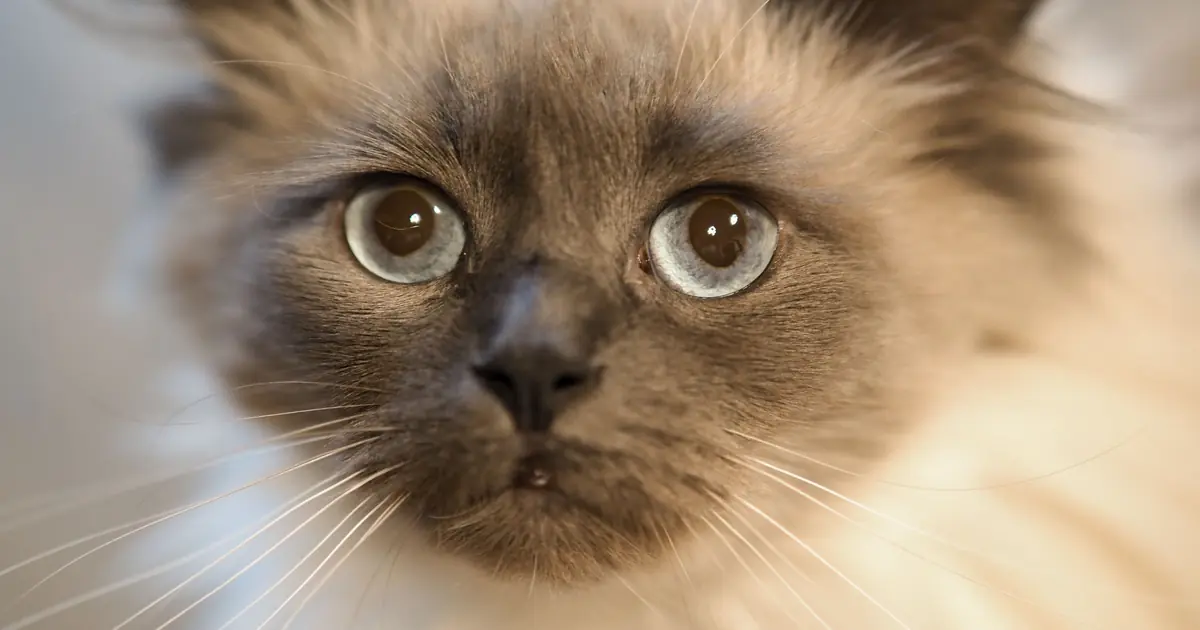
A Siamese-looking cat with green eyes is most likely not a purebred Siamese. The usual explanations are that it’s a Siamese mix or cross (inheriting some Siamese looks but not the blue-eye genetics), a domestic cat that resembles a Siamese, or a related breed that permits green eyes. Coat pattern can look Siamese-ish while eye color gives away mixed ancestry. If breed matters to you, blue eyes plus classic points indicate a true Siamese, while green eyes suggest a look-alike, something we also touch on in how to tell if your cat is part Siamese.
Which related breeds can have green eyes?
The Oriental Shorthair is the key relative that commonly has green eyes. Orientals share the Siamese’s sleek body and were developed from Siamese lines, but they come in many colors and patterns (not just points) and typically have green eyes rather than blue. Balinese (long-haired Siamese) keep the blue eyes, while the Oriental branch opened up other eye colors. So a lithe, Siamese-shaped cat with green eyes may well be an Oriental Shorthair or a cat with Oriental or mixed heritage.
Siamese vs green-eyed look-alikes
Here’s a quick comparison.
| Cat | Eye color | Notes |
|---|---|---|
| Purebred Siamese | Always blue | Blue tied to the color-point gene |
| Oriental Shorthair | Usually green | Siamese relative, many colors |
| Siamese mix / cross | Blue, green, or other | Inherits varied genetics |
| Siamese-look domestic cat | Varies | Resembles Siamese, not pedigreed |
Does eye color affect a Siamese cat’s health?
Eye color itself doesn’t harm a Siamese, but the breed does have some eye quirks worth knowing. Siamese are prone to a slight crossed-eyed appearance and, historically, some vision differences linked to their pigment genetics, though most see perfectly well. Regardless of breed or eye color, watch for signs of eye trouble like redness, cloudiness, squinting, discharge, or a sudden change in the eyes, which always warrant a vet check. This article is educational and not a substitute for veterinary care. For more on the breed, see our Siamese cat breed guide and, on sex myths, can Siamese cats be male. Breed standards are detailed by The Cat Fanciers’ Association and International Cat Care.
Frequently Asked Questions
Q: Can a purebred Siamese have green eyes?
No. True Siamese always have blue eyes, tied to their color-point genetics. A Siamese-looking cat with green eyes is almost certainly a mix, a cross, or a related breed like the Oriental Shorthair, not a pedigreed Siamese.
Q: Why are Siamese cats’ eyes always blue?
The same temperature-sensitive gene that creates their color points, a form of albinism, also affects the eyes, leaving them blue. So blue eyes are directly linked to what makes a cat Siamese and can’t be green in a true Siamese.
Q: What breed is a Siamese-looking cat with green eyes?
Often an Oriental Shorthair, a Siamese relative with a similar body but many colors and usually green eyes. It could also be a Siamese mix or a domestic look-alike. Blue eyes indicate a true Siamese; green suggests different heritage.
Q: Do all Siamese cats have blue eyes?
Yes, purebred Siamese all have blue eyes by breed standard and genetics. Long-haired Siamese (Balinese) also have blue eyes. If a “Siamese” has any other eye color, it’s not a pedigreed Siamese but a mix or related breed.
Q: Can Siamese kittens have green eyes?
No. Siamese kittens are born with blue eyes and keep them; they don’t change to green. All kittens start with bluish eyes that may shift in other breeds, but in Siamese the blue is permanent due to their genetics.
Q: Are green-eyed Siamese mixes still good pets?
Absolutely. A green-eyed Siamese mix or Oriental can be just as affectionate, smart, and wonderful as a purebred Siamese. Eye color affects breed classification, not personality or how loving a cat is. Adopt the cat, not the eye color.

Hello and welcome to The Ideal Cat!
We are some passionate cat owners from different professions. We love our cats and have a lot of experience in how to care for our pets. We are incredibly excited to share our knowledge, experience, and research with you. So you can take good care of your loving cat. We will answer most of the common questions about owning cats, taking care of them, etc. If you have any question contact with us. Thanks for visiting! Enjoy the content.
