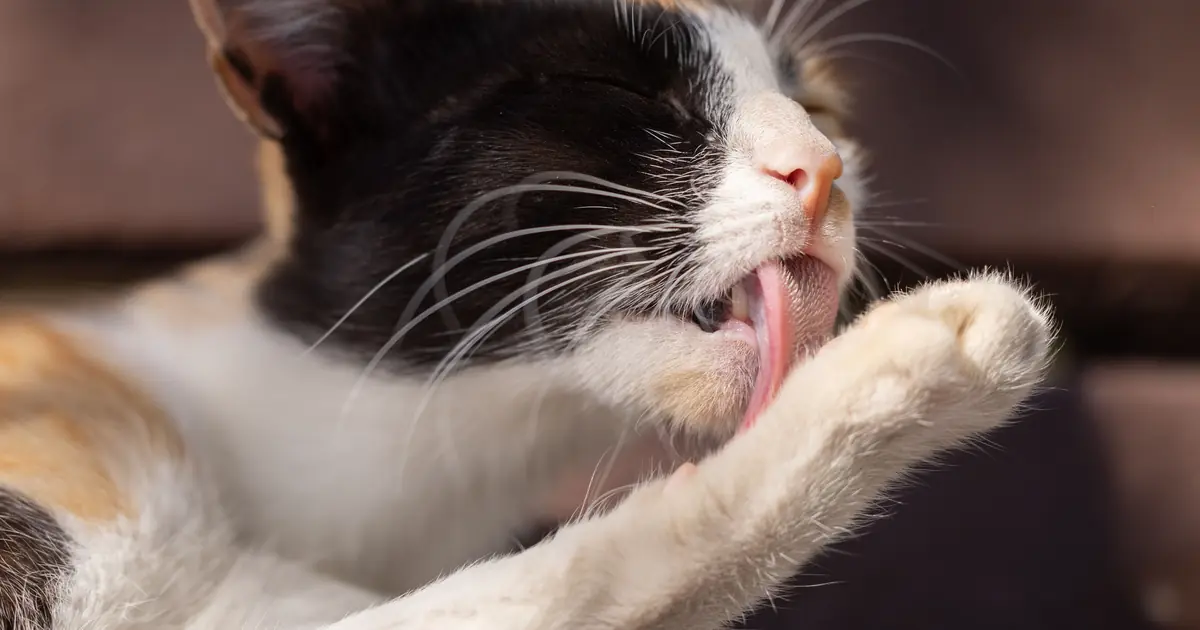
Cats are famously tidy, so it’s fair to wonder how they handle the, well, less glamorous part of bathroom time. The answer is their remarkable tongue.
Here’s how cats keep clean back there, and when your cat might need a little help.
- Cats clean up after pooping by licking with their barbed tongue, which sweeps away debris.
- Most healthy, normal-weight cats keep themselves clean without any help.
- Long-haired, overweight, senior, or arthritic cats may struggle to reach and clean the area.
- Stuck feces (dingleberries), a dirty bottom, or diarrhea can call for gentle assistance.
- See a vet if your cat can’t stay clean, as it can signal pain, illness, or mobility problems.
How do cats clean themselves after pooping?
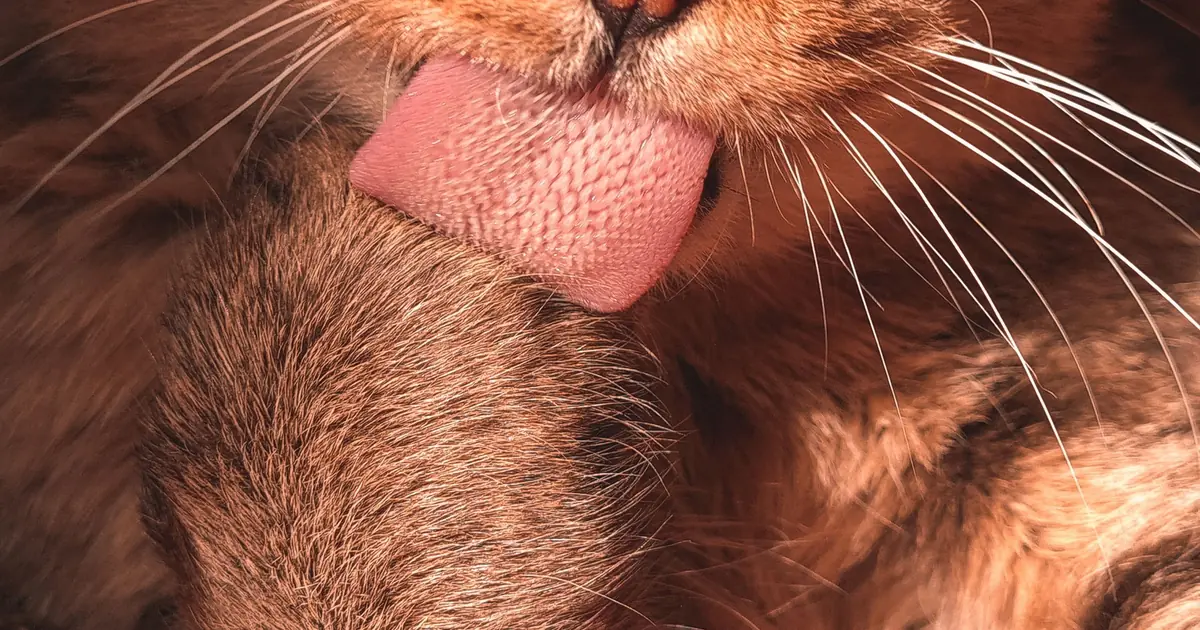
Cats clean themselves after pooping by licking the anal area with their tongue. A cat’s tongue is covered in tiny backward-facing barbs (papillae) that work like a built-in comb, sweeping away any residue and keeping the fur tidy. For most healthy cats, a quick post-litter-box grooming session is all it takes. This self-cleaning is part of the same fastidious grooming instinct that keeps a cat’s whole coat clean, and it’s usually very effective.
Do cats normally need help staying clean?
No, most cats don’t need any help, they’re built to clean themselves. A healthy cat of normal weight with a normal, firm stool will groom the area on its own and stay tidy. You generally shouldn’t need to wipe a cat after it poops. If you find yourself frequently cleaning your cat’s rear, that’s a sign something may be interfering with normal grooming or stool quality, and it’s worth looking into rather than just wiping.
Which cats struggle to clean themselves?
Some cats can’t clean up as easily and may need help. The common groups are:
- Long-haired cats: feces can cling to fur around the bottom (dingleberries).
- Overweight or obese cats: extra body mass makes reaching the area hard.
- Senior or arthritic cats: stiffness and pain limit twisting to groom.
- Cats with diarrhea or soft stool: messier stool is harder to clean.
- Cats with dental pain or illness: grooming becomes uncomfortable or neglected.
Reduced grooming overall can signal a problem, the opposite of over-grooming, and it deserves attention.
How can you safely help a cat clean up?
If your cat needs help, gently clean the area with a cat-safe method. Use a fragrance-free, cat-safe wipe or a warm, damp cloth to wipe away residue, being gentle and calm. Trimming the fur around a long-haired cat’s bottom (a “sanitary trim”) helps prevent stuck feces. For weight-related trouble, work with your vet on a healthy weight plan. Always check that products are safe, as we cover in are baby wipes safe for cats, and see how to groom a cat at home for gentle handling tips.
Self-cleaning vs needing help
Here’s how to tell a normal cat from one that needs support.
| Cleans fine alone | May need help or a vet |
|---|---|
| Healthy, normal-weight cat | Overweight or arthritic cat |
| Short or well-groomed coat | Long coat with stuck feces |
| Firm, normal stool | Diarrhea or soft, messy stool |
| Grooms itself readily | Stopped grooming or can’t reach |
When should you see a vet?
See a vet if your cat repeatedly can’t stay clean, has ongoing diarrhea, stuck feces, or has suddenly stopped grooming. These can point to obesity, arthritis, dental disease, digestive problems, or other illness that needs treatment, not just cleanup. A cat that neglects grooming is often telling you it feels unwell or is in pain. This article is educational and not a substitute for veterinary care. If you also notice grooming changes elsewhere, compare with why a cat might groom after eating. Trusted guidance on grooming and feline health comes from the ASPCA and VCA Hospitals.
Frequently Asked Questions
Q: Do cats clean themselves after they poop?
Yes. Cats lick the area with their barbed tongue, which sweeps away debris like a comb. Most healthy, normal-weight cats stay clean this way without any help. Frequent mess suggests a grooming or stool problem worth checking.
Q: Should I wipe my cat after it poops?
Usually no, healthy cats clean themselves. Only help if your cat can’t, such as long-haired, overweight, or senior cats, using a cat-safe wipe or warm damp cloth. Regularly needing to wipe your cat warrants a vet check.
Q: Why does my cat have poop stuck to its bottom?
Stuck feces (dingleberries) are common in long-haired cats, and in overweight or arthritic cats that can’t reach to groom. Diarrhea makes it worse. A sanitary fur trim and a vet check for the underlying cause both help.
Q: How do I clean my cat’s bottom safely?
Use a fragrance-free, cat-safe wipe or a warm, damp cloth, and be gentle and calm. For long-haired cats, trim the fur around the area to prevent buildup. Avoid human wipes with additives unless confirmed cat-safe.
Q: Is it bad if my cat stops cleaning itself?
Yes, reduced grooming often signals a problem, obesity, arthritis, dental pain, or illness. Cats are fastidious by nature, so a cat that stops keeping clean, including after pooping, should be examined by a vet.
Q: Can overweight cats not clean themselves?
Often, yes. Extra body mass makes it hard to twist and reach the rear, so overweight cats may not clean up well and get soiled fur. A vet-guided weight-loss plan, plus gentle help and trims, keeps them cleaner and healthier.

Hello and welcome to The Ideal Cat!
We are some passionate cat owners from different professions. We love our cats and have a lot of experience in how to care for our pets. We are incredibly excited to share our knowledge, experience, and research with you. So you can take good care of your loving cat. We will answer most of the common questions about owning cats, taking care of them, etc. If you have any question contact with us. Thanks for visiting! Enjoy the content.
