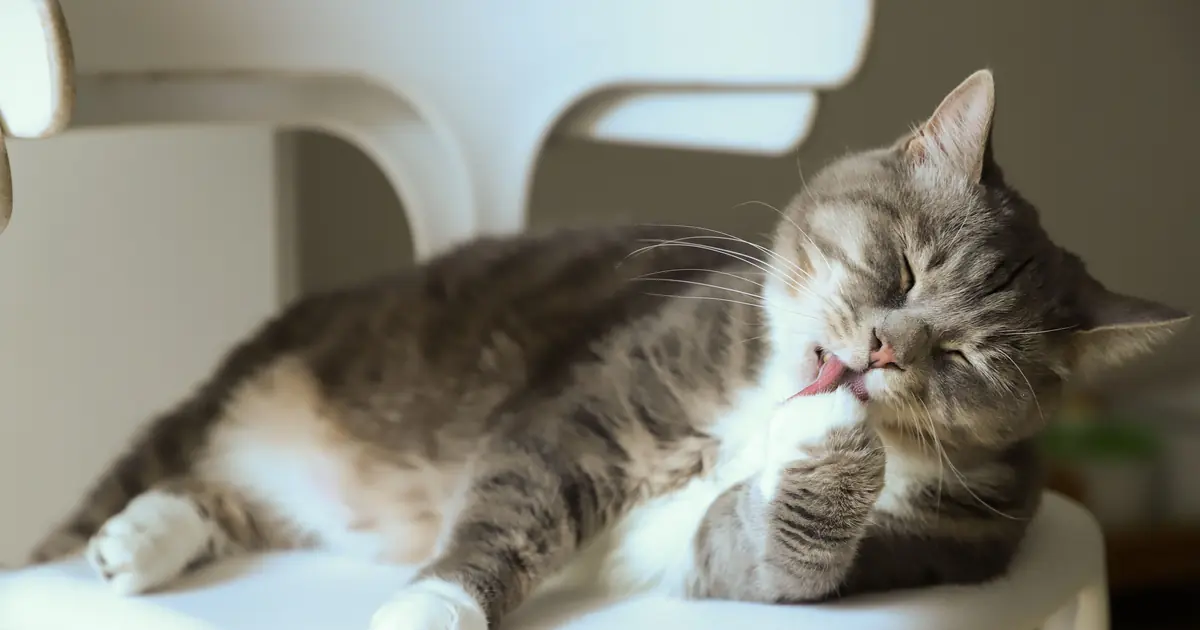
Dinner’s done, and like clockwork your cat sits back and launches into a full face-and-paw wash. Every meal, same routine. It’s oddly satisfying to watch, and there’s a real reason behind it.
That post-meal grooming is instinct, hygiene, and comfort rolled into one. Here’s the breakdown.
- The main driver is instinct: removing food scent that could attract predators or warn prey.
- It’s also hygiene, cleaning food residue off the face, whiskers, and paws.
- Grooming after eating is a calming, routine wind-down tied to feeling safe and content.
- Cats use a licked paw as a “washcloth” to reach the face they can’t lick directly.
- The habit is normal; only excessive or obsessive grooming after meals suggests a problem.
Why do cats clean themselves after eating?
Cats clean themselves after eating largely out of instinct to erase the smell of food. In the wild, a cat covered in food odor is both easier for predators to detect and more likely to tip off future prey. So a post-meal wash is a survival habit hardwired into even the most pampered house cat, alongside the simple goal of staying clean.
Is it an instinct from the wild?
Yes, scent management is the core instinct. Wild and domestic cats alike are meticulous about controlling their odor. Removing the strong smell of a recent meal helps a hunter stay stealthy and safe. Your cat isn’t consciously “hiding from lions” in your kitchen, but the ancient wiring that says “clean off the food smell” still fires after every bowl.
Is post-meal grooming just about hygiene?
Hygiene is a big part of it too. Eating leaves residue on the mouth, whiskers, chin, and paws, and cats are famously tidy. A quick wash removes crumbs, moisture, and stickiness, keeping the coat and face clean. Cats are so efficient at this that grooming is a huge part of their day, which is also why their systems handle swallowed fur and germs well, as we explain in how cats don’t get sick from licking themselves.
Why does my cat wash its face with its paw?
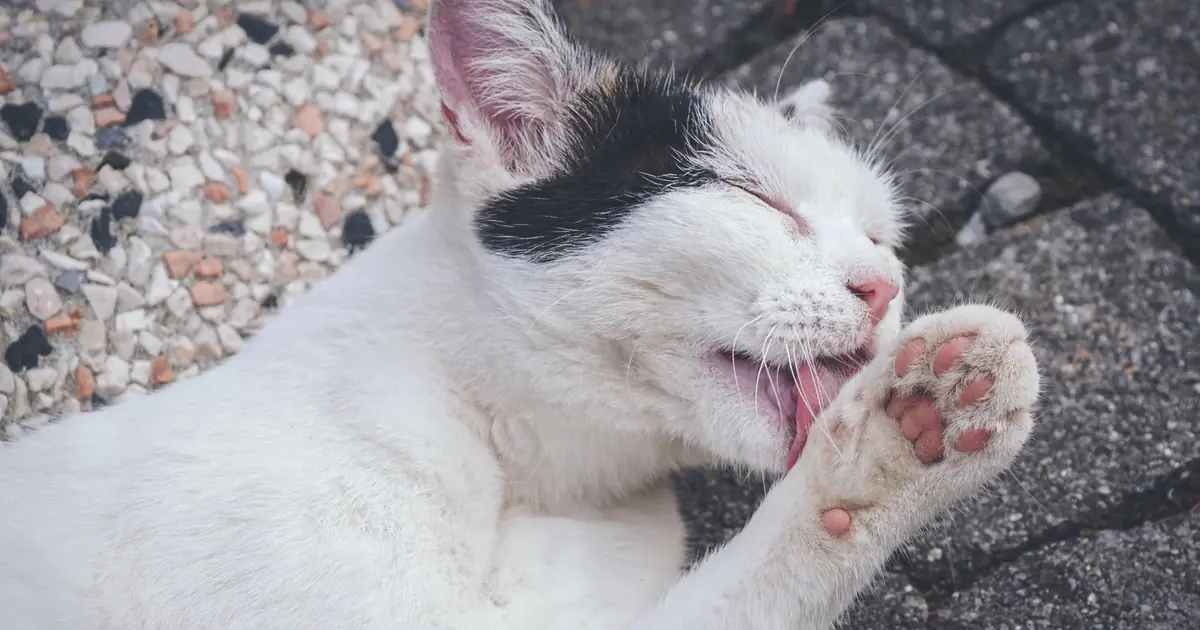
Because a cat can’t lick its own face directly, so it improvises. Your cat licks a paw, then uses it like a damp washcloth to wipe the face, cheeks, whiskers, and behind the ears, reaching all the spots the tongue can’t. It’s the same clever paw-grooming we cover in why cats lick their paws.
Is grooming after eating a sign of contentment?
Often, yes. A relaxed post-meal wash is part of a satisfied wind-down, a cat that feels safe and full settles into grooming much like we might relax after a good meal. Here’s what the timing usually signals.
| Post-meal behavior | Usual meaning |
|---|---|
| Calm face-and-paw wash | Instinct plus contentment; normal |
| Cleaning then napping | Relaxed, satisfied wind-down |
| Brief tidy-up and moving on | Simple hygiene |
| Frequent, intense over-grooming | Possible stress, allergy, or skin issue, see a vet |
When is grooming after eating a concern?
Normal post-meal grooming needs no worry, but excessive grooming does. If your cat grooms so much it creates bald patches, irritated skin, or seems compulsive rather than routine, that can point to stress, allergies, parasites, or pain, covered in why cats over-groom. Also watch for grooming paired with appetite changes or vomiting. This article is educational and not a substitute for veterinary advice. International Cat Care’s grooming and behavior resources and Cornell’s Feline Health Center are reliable references.
Frequently Asked Questions
Q: Why does my cat groom right after eating?
Mostly instinct, cats clean off food scent that could attract predators or alert prey in the wild, plus basic hygiene to remove residue. It’s also a calming, content post-meal ritual and completely normal.
Q: Is it normal for cats to wash their face after every meal?
Yes, very. A face-and-paw wash after eating is a normal, healthy routine driven by instinct and cleanliness. Cats use a licked paw as a washcloth to reach the face after a meal.
Q: Do cats clean themselves after eating to hide their scent?
Largely, yes. Removing food odor is a survival instinct, helping a hunter stay undetected by both predators and prey. Even indoor cats keep this hardwired habit.
Q: Why does my cat lick its paw and rub its face after eating?
Cats can’t lick their own faces, so they wet a paw and use it like a washcloth to wipe the mouth, cheeks, whiskers, and ears clean of food residue. It’s normal grooming.
Q: When should I worry about my cat’s grooming after eating?
Worry only if grooming becomes excessive or compulsive, causing bald spots or irritated skin, or if it comes with appetite changes or vomiting. That can signal stress, allergies, parasites, or pain and warrants a vet visit.
Q: Do all cats groom after eating?
Most do, to some degree, since it’s instinctive. The intensity varies by cat, some do a quick tidy-up, others a thorough wash. Either is normal as long as it’s not obsessive.

Hello and welcome to The Ideal Cat!
We are some passionate cat owners from different professions. We love our cats and have a lot of experience in how to care for our pets. We are incredibly excited to share our knowledge, experience, and research with you. So you can take good care of your loving cat. We will answer most of the common questions about owning cats, taking care of them, etc. If you have any question contact with us. Thanks for visiting! Enjoy the content.
