
Whether you’re caring for a nursing mother cat or a litter of kittens, knowing the nursing timeline helps you support healthy growth and a smooth weaning. Here’s how long cats nurse and what to expect.
- Kittens nurse for roughly 6 to 8 weeks, with full weaning by about 8 to 10 weeks.
- Weaning starts around 4 weeks, when kittens begin sampling solid food.
- Newborns nurse very frequently, then gradually less as they eat more solids.
- Kittens should stay with their mother until at least 8 weeks, ideally 12, for health and socialization.
- Orphaned kittens need kitten milk replacer (never cow’s milk) on a vet-guided schedule.
How long do cats nurse for?
Kittens typically nurse for about 6 to 8 weeks, and are usually fully weaned off their mother’s milk by around 8 to 10 weeks of age. Nursing is most intense in the first few weeks, when newborns feed frequently around the clock, then tapers off as weaning begins and kittens start eating solid food. By the time they’re eating solids well and getting proper nutrition from food, they no longer rely on nursing. The exact timing varies by litter, but 6 to 8 weeks of nursing with weaning completing by 8 to 10 weeks is the norm.
When do kittens start weaning?
Weaning usually begins around 4 weeks of age, when kittens start showing interest in solid food and their mother begins nursing them a little less. At this stage you can introduce a gruel of wet kitten food (or moistened kibble) alongside continued nursing. Over the following weeks, kittens eat more solids and nurse less, until they’re fully on kitten food by about 8 to 10 weeks. Weaning is a gradual transition, not an abrupt switch, and letting it happen naturally is best. For choosing that first food, see healthy kitten food.
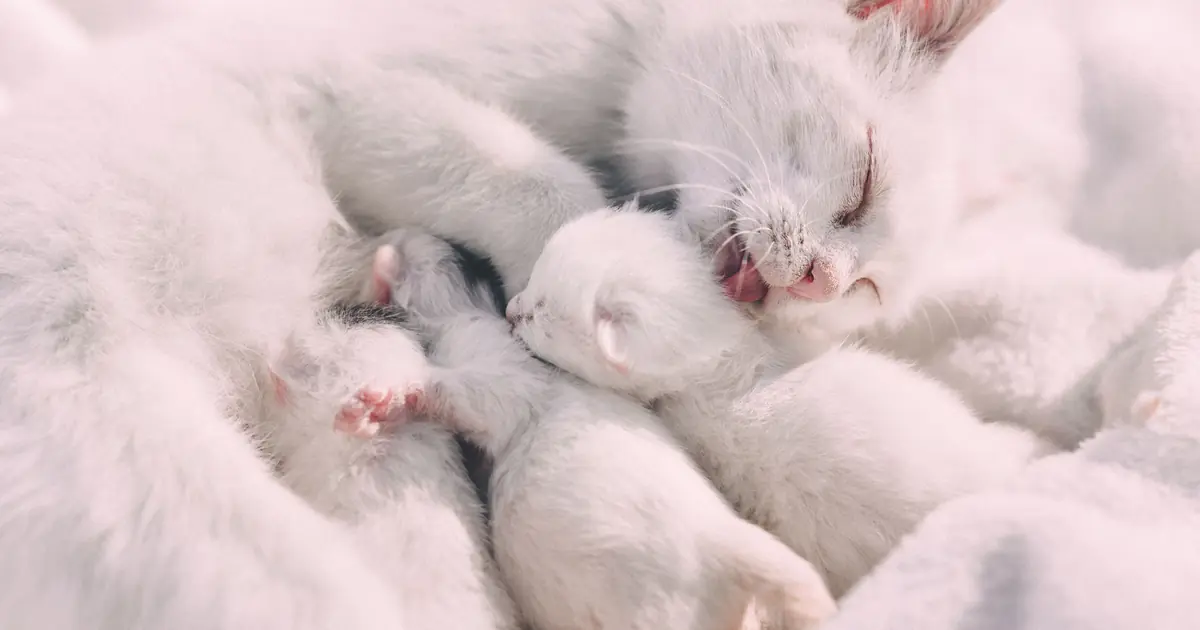
Kitten nursing and weaning timeline
Here’s roughly what to expect week by week.
| Age | Feeding stage |
|---|---|
| 0 to 4 weeks | Nursing only, frequently, from mom (or milk replacer) |
| 4 to 6 weeks | Weaning begins; solids introduced alongside nursing |
| 6 to 8 weeks | Eating more solids, nursing less |
| 8 to 10 weeks | Fully weaned onto kitten food |
When should kittens leave their mother?
Kittens should stay with their mother until at least 8 weeks old, and ideally 12 weeks, even after weaning. Beyond nutrition, the extra weeks with mom and littermates are vital for socialization, learning bite inhibition, litter-box habits, and feline manners. Leaving too early is linked to behavior and health problems. So while nursing may finish around 8 weeks, don’t rush a kitten to a new home right at weaning, more time with the family makes for a healthier, better-adjusted cat, as we cover in when kittens can leave their mother.
What about orphaned kittens?
Orphaned or hand-raised kittens need a kitten milk replacer (KMR), never cow’s milk, on a careful, frequent schedule until they can wean. Newborns require feeding every few hours around the clock, decreasing in frequency as they grow, followed by the same gradual weaning onto solids around 4 weeks. Bottle-feeding technique and hygiene matter a lot, and orphaned kittens also need help staying warm and eliminating. This is detailed, high-stakes care, so work closely with a vet or experienced rescuer. This article is educational and not a substitute for veterinary care; consult your vet for a feeding plan and if a kitten isn’t gaining weight or seems unwell. Note that cow’s milk upsets most cats, explained in can kittens drink human breast milk. Trusted kitten-rearing guidance comes from the ASPCA and International Cat Care’s kitten guide.
Frequently Asked Questions
Q: How long do kittens nurse?
About 6 to 8 weeks, with full weaning off mother’s milk by roughly 8 to 10 weeks. Nursing is most frequent in the first weeks, then tapers as kittens start eating solid food around 4 weeks of age.
Q: When do kittens start eating solid food?
Around 4 weeks, when they show interest in food and mom nurses a bit less. Offer a gruel of wet kitten food alongside nursing, and increase solids over the next weeks until kittens are fully weaned by 8 to 10 weeks.
Q: At what age are kittens fully weaned?
Most kittens are fully weaned onto kitten food by about 8 to 10 weeks of age. Weaning is gradual, starting around 4 weeks, so by 8 to 10 weeks they no longer depend on nursing for nutrition.
Q: When can kittens leave their mother?
Not before 8 weeks, and ideally 12. Even after weaning, kittens need extra time with mom and littermates for socialization, bite inhibition, and litter habits. Leaving too early is linked to behavior and health problems.
Q: What do I feed an orphaned kitten?
Kitten milk replacer (KMR), never cow’s milk, on a frequent schedule (every few hours for newborns). Wean onto solids around 4 weeks. Orphaned kittens also need warmth and help eliminating. Work with a vet, as this care is high-stakes.
Q: Can I give a nursing kitten cow’s milk?
No. Cow’s milk upsets most kittens’ stomachs and lacks proper nutrition. Nursing kittens should get their mother’s milk or, if orphaned, a kitten milk replacer. Never substitute cow’s milk; ask your vet for the right product and schedule.

Hello and welcome to The Ideal Cat!
We are some passionate cat owners from different professions. We love our cats and have a lot of experience in how to care for our pets. We are incredibly excited to share our knowledge, experience, and research with you. So you can take good care of your loving cat. We will answer most of the common questions about owning cats, taking care of them, etc. If you have any question contact with us. Thanks for visiting! Enjoy the content.
