- Shallow, wide bowls prevent whisker fatigue, the discomfort cats feel when their whiskers brush the bowl’s sides.
- Stainless steel and ceramic are the safest, easiest-to-clean bowl materials; plastic can harbor bacteria and trigger feline chin acne.
- Elevated bowls raise food a few inches to ease strain for senior and arthritic cats.
- Tilted bowls angle food toward your cat, which can cut mess and reduce vomiting from eating too fast.
- Wash cat food bowls daily to stop bacterial buildup and biofilm.
Related reading: best cat water fountain. automatic cat feeder. cat throwing up after eating.
Our Top Picks
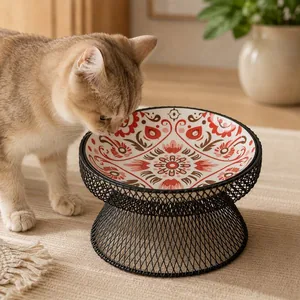
NonoPets Bohemian Wide Shallow Raised Cat Bowl
Best for Whisker Fatigue
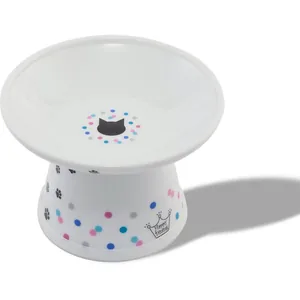
Necoichi Extra Wide Elevated Ceramic Cat Food Bowl, Colorful Dots, 2-cup
Best Elevated for Senior Cats
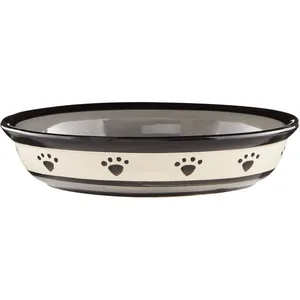
PetRageous Designs Metro Oval Ceramic Dog & Cat Dish, 1-cup
Best Budget Ceramic
Comparison Table
| Bowl | Best for | Material | Price |
|---|---|---|---|
| NonoPets Bohemian Wide Shallow Raised Cat Bowl | Best for Whisker Fatigue | Ceramic | ~$14 |
| Necoichi Extra Wide Elevated Ceramic Cat Food Bowl, Colorful Dots, 2-cup | Best Elevated for Senior Cats | Ceramic | ~$23 |
| Necoichi 15° Tilted Elevated Ceramic Cat Food Bowl, 2 cup, Sakura | Best Tilted Anti-Vomit | Ceramic | ~$28 |
| PetRageous Designs Metro Oval Ceramic Dog & Cat Dish, 1-cup | Best Budget Ceramic | Ceramic | ~$11 |
| Frisco Marble Print Stainless Steel Double Elevated Dog Bowl, Black Stand, Medium: 3 cup | Best Double Diner | Stainless steel | ~$19 |
| Frisco Fish Shaped Ridges Slow Feed Bowl, Light Blue, Small: 1 cup, 1 count | Best Slow Feeder | Plastic | ~$8 |
| Frisco Non-Skid Stainless Steel Bowl, X-Large: 12 cup, 1 count | Best Heavy-Duty Stainless Steel | Stainless steel | ~$18 |
| Necoichi Ceramic Elevated Cat Food & Water Bowl Set, Whisker Relief | Best Elevated Set | Ceramic | ~$24 |
Why Your Cat’s Food Bowl Matters More Than You Think
Here’s a stat that might gross you out: NSF International tested 30 common household items and found that pet bowls were the 4th germiest, behind only kitchen sponges, sinks, and toothbrush holders. Yikes. But germs aren’t the only issue. The wrong bowl can cause:- Chin acne. Plastic bowls develop tiny scratches that trap bacteria. That bacteria irritates your cat’s chin and causes those black or red bumps you might’ve blamed on something else.
- Whisker fatigue. A cat’s whiskers are wildly sensitive. When they brush against the sides of a deep bowl every single bite, it’s like wearing scratchy wool against a sunburn. Your cat gets stressed, eats less, or starts pawing food onto the floor before eating it.
- Vomiting. If your cat regularly throws up after meals, the bowl height and angle might be working against her digestion. Flat or tilted bowls help.
- Fast eating and bloating. Some cats gulp food so fast they bring it right back up. A slow feeder bowl forces them to pace themselves.
The 5 Types of Cat Food Bowls (And Who Each One Is For)
Before you start shopping, it helps to know what’s actually out there. There are five main types of cat food bowls, and the right one depends entirely on your cat.1. Standard Bowls
These are your basic round bowls, usually 4 to 6 inches deep. They’re cheap and easy to find, but they’re also the worst offender for whisker fatigue. If your cat has long whiskers or a wide face, skip these. Best for: Cats who genuinely don’t seem to mind, or as backup bowls during cleaning rotation.2. Shallow / Whisker-Friendly Bowls
Wide and shallow, usually under 1.5 inches deep. Your cat’s whiskers stay free, food stays accessible, and meals get a lot less stressful. These are the gold standard for most cats. Best for: Pretty much every cat, especially picky eaters, long-whiskered breeds, and any cat who walks away from food without finishing.3. Elevated Bowls
Raised on a base, usually 2 to 4 inches off the floor. This brings the food up to your cat’s chest level so she doesn’t have to crane her neck down to eat. Best for: Senior cats, cats with arthritis, cats who vomit after meals, and any cat who eats hunched over.4. Tilted Bowls
Angled at about 15 degrees so food pools toward the front. Your cat doesn’t have to dig into the back of the bowl, and the angle is gentler on her neck. Best for: Flat-faced breeds like Persians, Exotic Shorthairs, and Sphynx cats. Also great for senior cats and frequent vomiters.5. Slow Feeder Bowls
These have ridges, bumps, or maze patterns that force your cat to work for each bite. Mealtime goes from 30 seconds to 5 minutes. Best for: Cats who scarf and throw up, overweight cats, and cats who need mental stimulation.What Material Should Your Cat’s Food Bowl Be Made Of?
This is where a lot of cat parents go wrong, and it really does matter. Here’s the breakdown:Stainless Steel (Best Overall)
Stainless steel is the safest, most hygienic material you can buy. It’s non-porous, so bacteria can’t burrow into the surface. It’s dishwasher safe, doesn’t hold odors, and lasts forever. Look for food-grade 304 (18/8) stainless steel for the best quality. Downsides: Can be lightweight enough to slide around (look for non-skid bases) and some cats are spooked by the noise of metal tags clinking against it.Ceramic (Great, With Caveats)
Ceramic bowls are heavy, dishwasher safe, and won’t scratch as easily as plastic. They come in cute designs and they don’t slide around. The catch is chips and cracks. Once a ceramic bowl chips, that exposed surface becomes a bacteria trap, just like plastic. Always toss chipped bowls. One more thing: Make sure the bowl is labeled lead and cadmium free. Cheap imported ceramic can sometimes have unsafe glazes.Glass (Safe, but Fragile)
Glass is non-porous and totally safe, just like stainless steel. The obvious problem is breakage. One excited 3am sprint past the feeding station and you’ve got shattered glass everywhere.Plastic (Skip It)
Plastic is cheap, light, and basically everywhere. It’s also the worst option for your cat. Here’s why:- Tiny scratches accumulate and trap bacteria you can’t clean out
- Linked to feline chin acne and bacterial infections
- Can leach BPA and phthalates into food
- Holds onto smells, which can make picky cats reject their food
Quick Material Comparison
| Material | Safety | Durability | Best For |
|---|---|---|---|
| Stainless Steel | Excellent | Lifetime | Most cats, daily use |
| Ceramic | Good (lead-free) | Years if cared for | Heavy bowls, design lovers |
| Glass | Excellent | Fragile | Calm households |
| Plastic | Poor | Replace often | Honestly, nothing |
The 8 Best Cat Food Bowls You Can Buy on Chewy
Okay, here’s the part you came for. These are real, in-stock picks organized by what problem they solve, not by some arbitrary ranking. Pick the one that matches your cat.1. NonoPets Bohemian Wide Shallow Bowl: Best for Whisker Fatigue
If whisker fatigue is your cat’s problem, this NonoPets bowl is built to fix it. It’s wide, shallow, and slightly raised, so your cat’s sensitive whiskers never brush the sides during a meal. The dishwasher-safe design and low price make it an easy everyday pick.
The gentle elevation also eases the neck strain that bothers older cats, and the wide mouth keeps food where your cat can see and reach it. If your cat paws food onto the floor or walks away from a full bowl, a wide shallow dish like this often fixes it overnight.
Pros:
- Wide, shallow shape prevents whisker fatigue
- Slightly raised to ease neck and joint strain
- Dishwasher-safe and easy to clean
- Budget-friendly at around $14
Cons:
- Holds less than a deep bowl, so big eaters need refills
- Lightweight, so determined cats may nudge it around
2. Best Elevated Bowl for Senior Cats: Necoichi Extra Wide Ceramic Elevated Cat Food Bowl
3. Best Tilted Anti-Vomit Bowl: Necoichi Tilted Stress Free Raised Cat Food Bowl
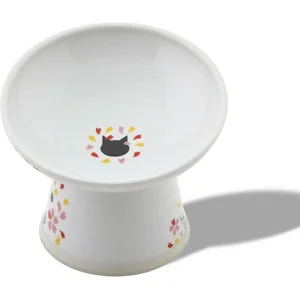
4. Best Budget Ceramic Bowl: PetRageous Designs Metro Oval Ceramic Cat Dish
5. Best Double Diner for Food and Water: Frisco Premium Stainless Steel Double Diner
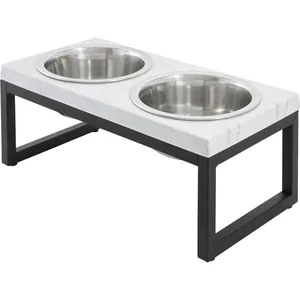
6. Best Slow Feeder for Fast Eaters: Frisco Fish Shaped Ridges Slow Feed Bowl
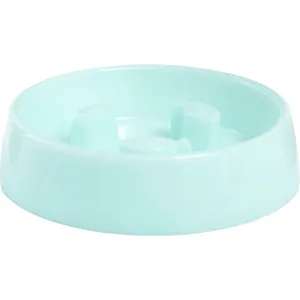
7. Best Heavy-Duty Stainless Steel: Frisco Non-Skid Stainless Steel Bowl
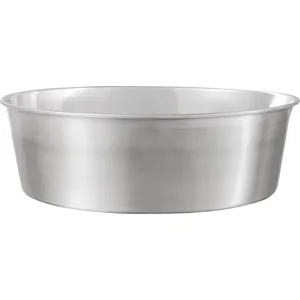
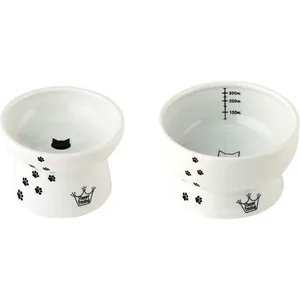
8. Best Elevated Set: Necoichi Ceramic Elevated Cat Food & Water Bowl Set
What to Look for When Buying a Cat Food Bowl
If none of those picks quite fit your cat, here’s what to keep in mind when you’re shopping around.Width and Depth
Aim for at least 5 inches wide and less than 2 inches deep. That gives your cat’s whiskers space to breathe and stops her from having to shove her whole face in.Weight and Base
Lighter bowls slide around. A heavy ceramic bowl or a stainless steel bowl with a rubber non-skid base means your cat isn’t chasing dinner across the kitchen floor.Easy to Clean
Dishwasher safe is non-negotiable. You’re going to be cleaning this thing daily, and hand-washing 7 bowls a week is no one’s idea of fun.Capacity
Most cats eat about ½ to 1 cup of food per day total. A 1 to 2 cup bowl is plenty. Bigger than that and food just sits there going stale.Lead-Free and BPA-Free
For ceramic and stainless steel, make sure these certifications are listed. It’s a tiny detail that matters a lot.How Many Cat Food Bowls Do You Actually Need?
This is the question nobody talks about, but it’s a real one. Here’s the breakdown most vets and longtime cat parents agree on:One Cat Household
You’ll want at least 2 food bowls and 2 water bowls minimum. That way, when one set is in the dishwasher, the other set is in use. If you feed wet food, double that. Wet food bowls should be cleaned after every single meal because moist food grows bacteria fast.Multi-Cat Household
The general rule is one food bowl per cat, plus one extra. So three cats means four bowls total. This matters because cats are territorial about food. Two cats sharing one bowl often means the bigger cat eats more and the smaller cat eats less. Also, place water bowls in different locations than food bowls. Cats instinctively avoid drinking near food (a wild instinct, since prey can contaminate water sources). A bowl across the room or in another room entirely encourages more drinking.If Your Cat Eats Raw Food
Clean or swap the bowl after every meal. Raw food can grow Salmonella, E. coli, and Listeria fast.How to Clean Cat Food Bowls (And How Often)
Remember that NSF stat about pet bowls being the 4th germiest household item? Yeah, this section matters.Daily Cleaning
- Wet food bowls: Wash after every meal with hot water and mild dish soap. No exceptions.
- Dry food bowls: Wash at least once a day. Don’t just dump fresh kibble on top of stale leftovers (this is a real thing people do, please stop).
- Water bowls: Empty, scrub, and refill every single day. Water bowls develop biofilm (that slimy stuff) within 24 hours.
Weekly Deep Clean
Once a week, run all bowls through the dishwasher on a hot cycle, or hand-wash with hot water and let them air dry completely. If you use a water fountain, take it apart and clean every piece, including the pump.Pro Cleaning Tips
- Use unscented dish soap. Cats hate strong smells and might avoid the bowl.
- Triple rinse to get all soap residue out (soap residue tastes bitter to cats).
- Use a dedicated sponge or cloth just for pet bowls, not your dishes.
- Inspect bowls regularly for chips, cracks, or scratches. Toss them when you see damage.
Bowls for Special Situations
Flat-Faced Cats (Persians, Sphynx, Exotic Shorthairs)
These breeds have shorter snouts, so they really struggle with deep bowls. They need wide, shallow, tilted designs that bring food closer to their face. The Necoichi Tilted Stress Free bowl is perfect for them.Senior Cats
Older cats often have arthritis, dental issues, and weaker neck muscles. An elevated bowl reduces the strain of bending down. Pair it with softer food and you’ll see them eating more comfortably.Kittens
Kittens are small, so go with a low, wide bowl (under 1 inch deep). Avoid elevated bowls until they’re full-grown. Stainless steel is great because it’s light enough for them to nudge without spilling everything.Cats Who Vomit Often
If your cat vomits regularly after meals, three things to try in this order: switch to a tilted bowl, switch to an elevated bowl, switch to a slow feeder. One of these usually solves the issue, but if vomiting continues, talk to your vet because it could be a digestive issue.Multi-Cat Households
Spread the bowls out. Don’t line them all up next to each other. Cats prefer their own space at mealtime, and spacing reduces food guarding and stress eating.What to Do If Your Cat Refuses a New Bowl
So you bought the perfect new bowl, you’re feeling proud of yourself, and your cat just stares at it like you’ve betrayed her. Don’t panic. Cats are notorious for being skeptical of change. Here’s how to transition:- Start gradually. Place the new bowl next to the old one for a few days. Let her sniff it, walk around it, get used to the smell.
- Try a treat first. Put a few of her favorite treats in the new bowl. Once she eats from it once, the mental block is usually broken.
- Mix old and new. Use both bowls for a few days. Switch between them so neither feels new or strange.
- Wash with unscented soap. Sometimes the smell of detergent or factory residue is what’s putting her off. Run the new bowl through a hot wash and rinse thoroughly.
- Give it a week. Most cats come around within 3 to 7 days. If she still refuses after that, the bowl might genuinely be wrong for her (too deep, too tall, too small) and you might need to try a different style.
The American Animal Hospital Association notes clean, appropriately sized dishes support healthy eating. The ASPCA also covers general cat-care basics.
Frequently Asked Questions
Q: What is the best material for cat food bowls?
Stainless steel is the best material for cat food bowls. It’s non-porous, doesn’t trap bacteria, is dishwasher safe, and doesn’t hold odors. Ceramic is a close second as long as it’s lead-free and you replace any bowls that chip or crack.Q: Are plastic cat food bowls bad?
Yes. Plastic bowls develop scratches that trap bacteria, are linked to feline chin acne, and can leach BPA and phthalates into food. They also hold onto smells, which can make picky cats refuse meals. Replace plastic bowls with stainless steel or ceramic.Q: How often should I clean my cat’s food bowl?
Wash wet food bowls after every meal. Wash dry food bowls at least once a day. Water bowls should be emptied, scrubbed, and refilled daily because biofilm builds up within 24 hours. Run all bowls through a hot dishwasher cycle weekly for a deeper clean.Q: What is whisker fatigue and how do I prevent it?
Whisker fatigue happens when a cat’s sensitive whiskers repeatedly touch the sides of a deep bowl during meals. The constant overstimulation causes stress, picky eating, or pulling food out of the bowl to eat it off the floor. Prevent it with shallow, wide bowls (at least 5 inches wide and less than 2 inches deep).Q: Should cats have elevated food bowls?
Elevated food bowls aren’t strictly necessary for every cat, but they help senior cats, cats with arthritis, and cats who vomit after meals. The raised height (usually 2 to 4 inches) reduces neck strain and supports better digestion by allowing food to travel down the esophagus more naturally.Q: How many food bowls does my cat need?
For one cat, have at least 2 food bowls and 2 water bowls so you always have a clean set ready while others are being washed. For multi-cat homes, use one food bowl per cat plus one extra, and place water bowls in different rooms than food bowls.Q: Why does my cat paw food out of the bowl before eating it?
This usually means whisker fatigue. Your cat is pulling food out so she can eat it off a flat surface without her whiskers touching the bowl’s sides. Switch to a wide, shallow bowl or a flat plate and the behavior usually stops within a few days.Q: Are ceramic cat food bowls safe?
Yes, ceramic cat food bowls are safe as long as they’re labeled lead-free and cadmium-free. Avoid cheap imported ceramics with unknown glazes. Replace any ceramic bowl that develops chips or cracks because those exposed surfaces trap bacteria similar to scratched plastic.Final Thoughts: Picking the Right Cat Food Bowl
Here’s the truth: the best cat food bowls aren’t the prettiest ones or the most expensive ones. They’re the ones that match what your specific cat actually needs. A senior cat needs height. A picky eater needs width. A scarfer needs ridges. A flat-faced cat needs a tilt. If you’re not sure where to start, get a wide, shallow stainless steel bowl like the Dr. Catsby’s. It solves the biggest problem (whisker fatigue) and works for almost every cat. From there, you can add specialty bowls if your cat has specific needs. And don’t forget the cleaning routine. The fanciest cat food bowls on the market won’t help if they’re crawling with biofilm. Wash daily, run through the dishwasher weekly, and replace anything that chips or scratches. Your cat eats out of that bowl twice a day, every day, for years. It’s worth getting it right.
Hello and welcome to The Ideal Cat!
We are some passionate cat owners from different professions. We love our cats and have a lot of experience in how to care for our pets. We are incredibly excited to share our knowledge, experience, and research with you. So you can take good care of your loving cat. We will answer most of the common questions about owning cats, taking care of them, etc. If you have any question contact with us. Thanks for visiting! Enjoy the content.
)