You’re standing in the pet aisle, flipping a bag over to read the back, and the word “grain-free” is stamped across the front in big friendly letters. Sounds healthy, right? But you pause. Is grain-free cat food actually better for your cat, or is it just clever packaging?
Here’s the honest version. Grain-free cat food skips corn, wheat, and rice, and it often (not always) comes with more protein. That can be a nice fit for cats who thrive on meat-heavy meals. But grain-free is not automatically healthier, and true grain allergies in cats are genuinely rare.
Below are 7 grain-free foods worth your money, dry and wet, plus a plain-talk buying guide so you know what you’re really paying for.
- Grain-free cat food removes corn, wheat, and rice, and it usually leans higher in animal protein.
- True grain allergies in cats are uncommon; animal proteins like chicken, beef, and fish are the far more typical food allergens.
- Grain-free is a valid choice for high-protein feeders, but it is not automatically healthier than food with grains.
- Always pick a food labeled AAFCO complete and balanced for your cat’s life stage, grain-free or not.
- Switch foods gradually over 7 to 10 days to avoid stomach upset.
Our Top Picks
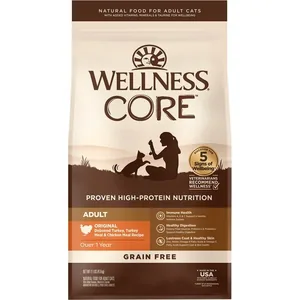
Wellness CORE Grain-Free Original Formula Natural Dry Cat Food, 11-lb bag
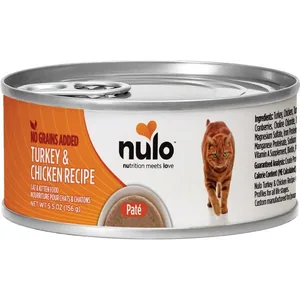
Nulo Grain-Free Turkey & Chicken Recipe Pate Wet Canned Food for Cats & Kittens, 5.5-oz can, bundle of 48
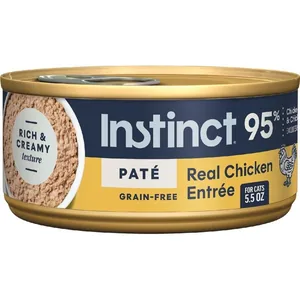
Nature’s Variety Instinct Grain-Free Chicken Formula Canned Cat Food
Grain-free cat food compared at a glance
| Food | Best for | Type | Price |
|---|---|---|---|
| Wellness CORE Grain-Free Original Formula Natural Dry Cat Food, 11-lb bag | Best overall grain-free | Grain-free dry | $42.79 |
| Nulo Grain-Free Turkey & Chicken Recipe Pate Wet Canned Food for Cats & Kittens, 5.5-oz can, bundle of 48 | Best premium pate | Grain-free pate | $113.54 |
| Nature’s Variety Instinct Grain-Free Chicken Formula Canned Cat Food | Best wet pate | Grain-free wet | $33.48 |
| Tiki Cat After Dark Variety Pack Grain-Free Wet Cat Food, 2.8-oz can, case of 12 | Best variety wet | Grain-free wet | $24.99 |
| Blue Buffalo Wilderness Natures Evolutionary Diet Chicken High-Protein Grain-Free Adult Dry Cat Food, 4-lb bag | Best high-protein | Grain-free dry | $22.98 |
| Dr. Elsey’s cleanprotein Chicken Kibble Cat Dry Food, 2.0-lb bag | Best high-protein kibble | Grain-free dry | $19.99 |
| Merrick Purrfect Bistro Grain-Free Salmon & Sweet Potato Recipe Dry Cat Food, 24-lb bundle | Best limited-ingredient | Grain-free dry | $85.12 |
The 7 best grain-free cat food picks, reviewed
Wellness CORE Grain-Free Original Formula Natural Dry Cat Food, 11-lb bag: best overall grain-free
Wellness CORE Grain-Free Original is our top pick, and it’s an easy one to recommend. It’s a high-protein dry food built around deboned turkey and chicken, with no corn, wheat, or soy. The kibble is nutrient-dense, so a little goes a reasonable way.
Best for cat parents who want a solid all-rounder from a trusted brand. It’s a richer food, so if your cat has a very sensitive stomach, transition slowly and watch how they settle in.
Nulo Grain-Free Turkey & Chicken Recipe Pate Wet Canned Food for Cats & Kittens, 5.5-oz can, bundle of 48: best premium pate
Nulo Grain-Free Turkey & Chicken Pate is the splurge pick, and it earns it. This wet food is heavy on animal protein, low in carbs, and comes in a smooth pate that most cats hoover up. The 48-can bundle also means you’re not running to the store every week.
Best for cats who do well on high-protein, low-carb wet food, and for parents who don’t mind paying more for quality. Not the budget option, so it’s less ideal if you’re feeding a big household of cats.
Nature’s Variety Instinct Grain-Free Chicken Formula Canned Cat Food: best wet pate
Nature’s Variety Instinct Grain-Free Chicken is a real-meat wet food with cage-free chicken as the star. It’s grain-free, made without potatoes or artificial colors, and the pate texture works well for cats who like to lap rather than chew.
Best for cat parents who want a simple, protein-forward wet food without a long ingredient list. If your cat prefers shreds or gravy over smooth pate, this one may not win them over.
Tiki Cat After Dark Variety Pack Grain-Free Wet Cat Food, 2.8-oz can, case of 12: best variety wet
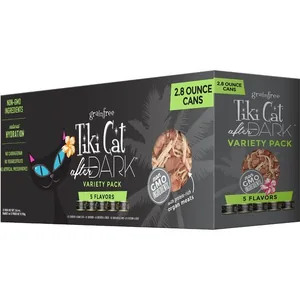
Tiki Cat After Dark Variety Pack is for the picky eater who gets bored fast. This grain-free wet food leans on shredded meats like chicken and duck in broth, and the variety pack keeps mealtime interesting. Protein is high and fillers are minimal.
Best for fussy cats and rotational feeders who like to mix flavors. Because these are smaller 2.8-ounce cans, they can work out pricier per meal for a large or very hungry cat.
Blue Buffalo Wilderness Natures Evolutionary Diet Chicken High-Protein Grain-Free Adult Dry Cat Food, 4-lb bag: best high-protein
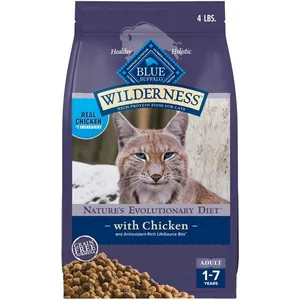
Blue Buffalo Wilderness Chicken is a high-protein grain-free kibble inspired by the diet of wild cats. Real chicken leads the ingredients, and it includes Blue’s LifeSource Bits, a blend of vitamins and antioxidants. It skips corn, wheat, and soy.
Best for active adult cats who do well on meat-forward dry food. As with any protein-rich kibble, introduce it gradually and keep fresh water available, since dry diets are low in moisture.
Dr. Elsey’s cleanprotein Chicken Kibble Cat Dry Food, 2.0-lb bag: best high-protein kibble
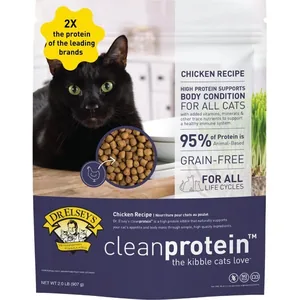
Dr. Elsey’s cleanprotein Chicken Kibble takes a focused approach: over 90 percent of its protein comes from animal sources, with very low carbohydrates. It’s grain-free and made without the pea and potato heavy fillers some grain-free foods rely on.
Best for cat parents who want kibble that stays genuinely high in animal protein and low in plant fillers. The smaller 2-pound bag suits one-cat homes or a trial run more than a big multi-cat crew.
Merrick Purrfect Bistro Grain-Free Salmon & Sweet Potato Recipe Dry Cat Food, 24-lb bundle: best limited-ingredient
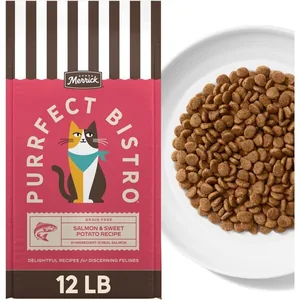
Merrick Purrfect Bistro Grain-Free Salmon & Sweet Potato is the limited-ingredient pick. Deboned salmon leads, sweet potato stands in for grains, and the shorter ingredient list makes it easier to spot what your cat is actually eating. The 24-pound bundle is built for value.
Best for cats sensitive to chicken who do better on fish, and for multi-cat homes buying in bulk. If you suspect a real food allergy, though, loop in your vet before assuming this is the fix.
How to choose the best grain-free cat food
What grain-free cat food actually means
Grain-free cat food simply means the recipe leaves out grains like corn, wheat, rice, barley, and oats. That’s the whole definition. It does not automatically mean higher quality, more protein, or fewer carbs, though many grain-free foods do lean higher in animal protein. Read the label, not just the front of the bag.
Protein source and where the carbs come from
Grains don’t vanish for free. Most grain-free foods swap in other carbohydrates, usually peas, lentils, chickpeas, potato, or sweet potato. A food can be grain-free and still be fairly high in plant carbs. So look for a named animal protein (chicken, turkey, salmon) at the top of the ingredient list, and don’t assume grain-free equals low-carb. Cats are obligate carnivores and do best on diets built around animal protein, as the Cornell Feline Health Center notes.
When grain-free actually helps
Grain-free earns its spot in a few cases. If your cat has a confirmed grain sensitivity (rare, but it happens), removing grains helps. It’s also a natural fit if you simply prefer feeding a high-protein, meat-forward diet and the grain-free option you’re eyeing happens to deliver that. Some parents also like the shorter ingredient lists on limited-ingredient grain-free foods.
When grain-free doesn’t matter
For most healthy cats, whether the food contains grains or not is not the deciding factor. Grains like rice and corn are digestible for cats and aren’t a common allergen. If your cat is thriving on a food with grains, there’s no need to switch. Nutritional completeness and protein quality matter far more than the grain-free label itself.
Always check for AAFCO complete and balanced
This is the line that matters most. Look for a statement on the package saying the food is formulated to meet the nutritional levels established by the Association of American Feed Control Officials (AAFCO) for your cat’s life stage (kitten, adult, or all life stages). Complete and balanced means the food can serve as your cat’s sole diet. A trendy label means nothing without this.
Transition slowly
Switching foods too fast is a fast track to an upset stomach. Move over 7 to 10 days: start with about 25 percent new food mixed into the old, then increase the new portion every couple of days until you’re fully switched. If you suspect a real food allergy, don’t play guessing games at the shelf. Talk to your vet about a proper vet-guided elimination diet, which the American Animal Hospital Association (AAHA) describes as the reliable way to pin down a true food allergy. This article is educational, so check with your vet before making diet changes for a cat with health concerns.
Is grain-free cat food actually better?
Grain-free cat food is not automatically better than food with grains. It’s a valid choice for some cats, but it’s not a cure-all, and the label alone doesn’t make a food healthier.
Here’s the balanced truth. Grains are not a common allergen for cats, and they’re not inherently bad. The real drivers of a good cat food are high-quality animal protein, complete and balanced nutrition, and a recipe that suits your individual cat. A grain-free food can be excellent, and so can a food that contains rice or oats.
- Grain-free helps most when a cat has a confirmed grain sensitivity or you’re specifically after a high-protein, low-carb recipe.
- Grain-free matters little for the average healthy cat already doing well on their current food.
- A grain-free food loaded with peas and potatoes but light on animal protein is not a step up.
Bottom line: judge the food on protein quality and AAFCO completeness, not on whether the bag says grain-free.
Common mistakes to avoid
- Assuming grain-free automatically means healthier. The label describes what’s left out, not the overall quality of the food.
- Self-diagnosing a grain allergy. True grain allergies in cats are rare, and animal proteins are the usual culprits, so get a vet’s help before guessing.
- Ignoring the AAFCO complete and balanced statement. Without it, you don’t know the food can be your cat’s sole diet.
- Picking a grain-free food that’s low in protein and heavy on peas or potato. That defeats the point for a meat-loving carnivore.
- Switching foods abruptly. A sudden change often causes vomiting or diarrhea, so transition over 7 to 10 days.
Related guides
Related guides:
- Start with our full roundup of the best cat food for every budget and life stage.
- Prefer crunch? See our picks for the best dry cat food.
- For moisture-rich meals, browse the best wet cat food.
- Got a queasy kitty? Check the best sensitive stomach cat food.
- Not sure how to compare labels? Read our guide on how to choose cat food.
Frequently asked questions
Q: Is grain-free cat food better for cats?
Not automatically. Grain-free is a valid choice for some cats, especially high-protein feeders, but it isn’t inherently healthier than food with grains. Protein quality and AAFCO complete and balanced nutrition matter far more than the grain-free label.
Q: Do cats have grain allergies?
True grain allergies in cats are uncommon. Food allergies in cats are usually triggered by animal proteins like chicken, beef, or fish rather than grains. If you suspect an allergy, a vet-guided elimination diet is the reliable way to find the cause.
Q: Is grain-free cat food safe for cats?
Yes, grain-free cat food is safe for most cats when it is complete and balanced to AAFCO standards for their life stage. The safety comes from proper nutrition and quality ingredients, not from the absence of grains itself.
Q: Why would I feed my cat grain-free food?
Good reasons include a vet-confirmed grain sensitivity, a preference for a high-protein and lower-carb recipe, or wanting a limited-ingredient food. For a cat already thriving on food with grains, there’s usually no need to switch.
Q: Grain-free versus high-protein: what’s the difference?
Grain-free just means no corn, wheat, or rice, while high-protein describes the amount of animal protein in the food. A food can be grain-free but still fairly high in plant carbs like peas, so check the ingredient list for a named meat at the top.
Q: Is grain-free cat food linked to heart disease in cats?
The FDA investigation into grain-free diets and heart disease focused on dogs, not cats. That concern is dog-specific, so it should not be misapplied to cats. If you have any worries, talk to your veterinarian about your cat’s individual diet.
Q: Is grain-free the same as low-carb?
No. Grain-free foods often replace grains with peas, lentils, or potatoes, which still add carbohydrates. If low-carb is your goal, read the guaranteed analysis and ingredient list rather than trusting the grain-free label alone.
Q: How do I switch my cat to grain-free food?
Transition gradually over 7 to 10 days. Mix in about 25 percent new food at first, then slowly increase the new portion every couple of days until the switch is complete. A slow change helps avoid vomiting and diarrhea.
The bottom line
If you want one pick, Wellness CORE Grain-Free Original is our top overall choice, with Nulo’s pate leading the wet options. But here’s the honest close: the best grain-free cat food is simply a complete, high-protein food your cat loves and digests well. Grain-free isn’t magic, and grains aren’t the enemy for most cats, so choose an AAFCO complete and balanced recipe, transition slowly, and loop in your vet if you suspect a real allergy.

Hello and welcome to The Ideal Cat!
We are some passionate cat owners from different professions. We love our cats and have a lot of experience in how to care for our pets. We are incredibly excited to share our knowledge, experience, and research with you. So you can take good care of your loving cat. We will answer most of the common questions about owning cats, taking care of them, etc. If you have any question contact with us. Thanks for visiting! Enjoy the content.
)