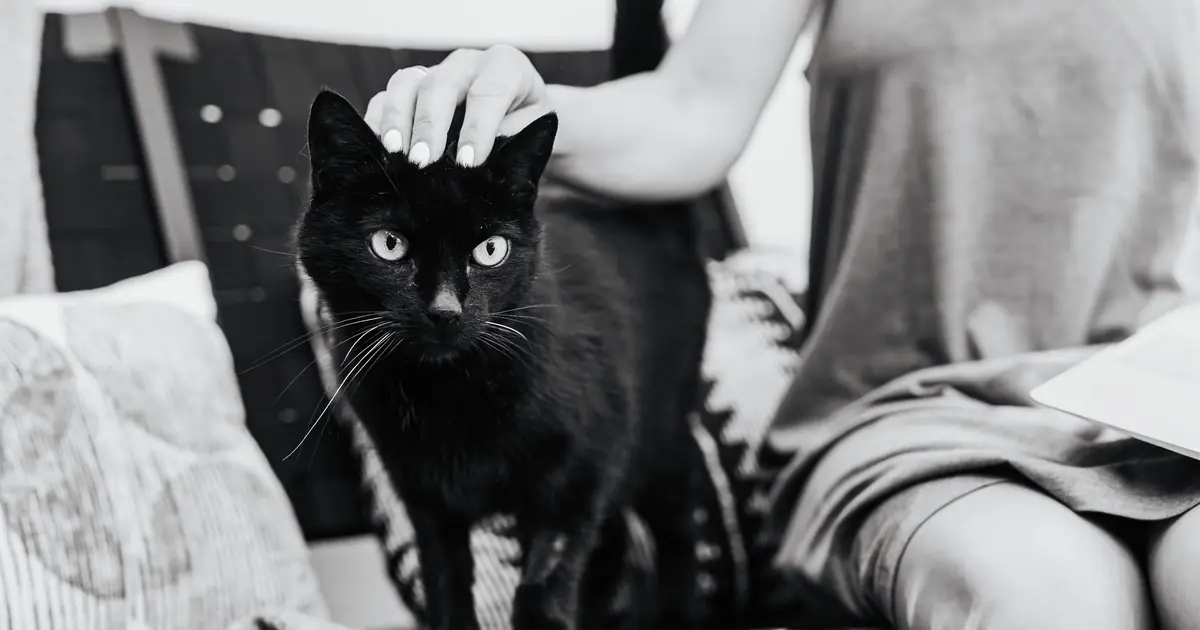
You sit down to watch TV, and within thirty seconds your cat has appeared out of nowhere and planted itself right on top of you. Sound familiar? There’s something almost magnetic about a lap once you’re sitting still, and cats know it.
It’s not random. A cat climbing into your lap is running through a whole checklist without you ever seeing it happen: is this spot warm, is this person safe, does this smell like home. When the answer is yes across the board, your lap wins. Let’s get into exactly why cats do this, what it means about your bond, and what to do if your cat is more of a “sits three feet away” type.
- Cats sit on laps mainly for warmth, since human body temperature runs around 98.6°F, well above a cat’s own comfortable resting range.
- A resting or sleeping cat is at its most vulnerable, so choosing to nap on your lap is a direct sign it feels safe with you.
- Cats bond partly through scent, and sitting on you mixes their scent with yours, which is a form of claiming you as part of their group.
- Not being a lap cat doesn’t mean a cat loves you less. Personality, past experience, and even breed all shape how a cat shows affection.
- A sudden change in lap-sitting habits, either much more clingy or suddenly avoidant, is worth mentioning to your vet.
Why Do Cats Like to Sit on Laps?
Cats sit on laps because it checks off several needs at once: warmth, a soft resting spot, physical closeness to someone they trust, and a place that smells familiar. No single reason explains every lap cat. It’s usually a mix, and the exact blend is different for every cat.
Think of your lap as prime real estate from a cat’s point of view. It’s elevated off the cold floor, it moves gently when you breathe, and it comes with a built-in bonus: you. Cats that already feel secure around people are the most likely to use it.
| What Your Cat Seems to Want | What It Says About Your Cat |
|---|---|
| Warmth | Seeking your body heat, often more common in short-haired cats or during cold months |
| Comfort | Finding your lap physically soft and supportive, similar to a heated cat bed |
| Security | Feels safe enough to fully relax and lower its guard near you |
| Scent and bonding | Mixing scent with yours as a sign of social closeness and attachment |
| Attention | Wants interaction, petting, or simply to be near its favorite person |
Why Is Your Lap So Warm and Comforting to a Cat?
Your lap is warm because human body temperature sits around 98.6°F, which is warmer than most rooms and warmer than a cat can generate lying alone on a couch cushion. Cats are drawn to heat the way most of us are drawn to a fireplace on a cold night.
Cats naturally seek out sunny windowsills, laptop keyboards, and fresh laundry for the same reason: they’re all warmer than the surrounding air. Your lap has an added perk those spots don’t: it’s a living heat source that doesn’t shut off or cool down while your cat naps. That’s a big part of why cats seem to gravitate toward laps most in fall and winter, or in a chilly house.
Does Sitting on Your Lap Mean My Cat Trusts Me?
Yes. A cat resting or sleeping on your lap is showing real trust, because sleep is when a cat is most vulnerable and least able to react to danger. Choosing to do that on top of you, rather than tucked away alone, is a strong vote of confidence in your presence.
In the wild, a resting cat is an exposed cat. Domestic cats still carry that instinct, even in a totally safe living room. So when your cat curls up and shuts its eyes on your lap instead of retreating to a hiding spot, it’s telling you plainly: I don’t need to watch my back right now. That’s also part of why some cats choose to sleep right next to their owners at night instead of alone somewhere else in the house.
Why Do Cats Like the Way You Smell?
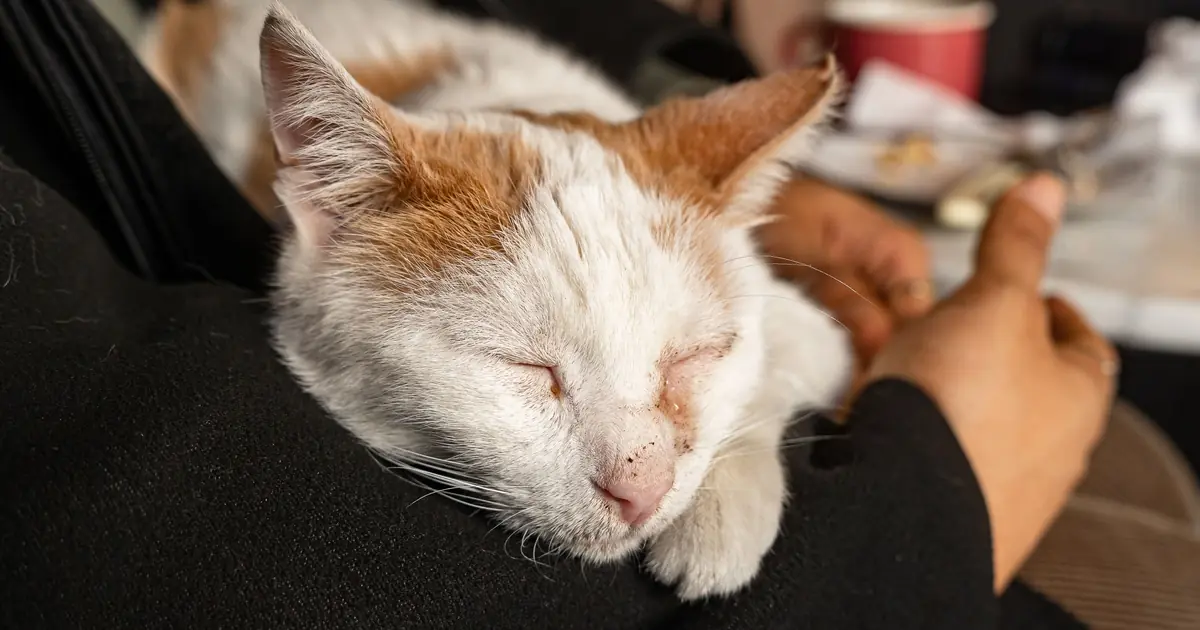
Cats like your scent because it’s familiar, and familiar scent equals safety in a cat’s world. Sitting on your lap lets a cat pick up your smell while also leaving a bit of its own scent on you, which cats use to mark you as part of their trusted social circle.
This scent exchange is the same instinct behind a cat rubbing its face against your legs when you walk in the door, a behavior researchers call bunting. According to International Cat Care, cats use scent glands on their face and body to mark people and objects in their core territory, essentially building a shared “group scent.” A lap is just a longer, cozier version of that same greeting. If you’ve ever wondered whether your cat actually loves you, this kind of scent bonding is one of the clearer signs that it does.
Why Are Some Cats Lap Cats and Others Aren’t?
Some cats are lap cats and others aren’t because of personality, early life experience, and sometimes breed tendencies, not because one cat loves its owner more than another. A cat that never sits on your lap can still be deeply bonded to you; it just shows affection differently, maybe by following you room to room or sleeping nearby instead of on top of you.
Kittens handled gently and often by people between about two and seven weeks old tend to grow into more physically affectionate adults, simply because they learned early that human touch is safe. Cats adopted later in life, or ones with a rougher start, may take longer to warm up to close contact, or may never fully become lap sitters. Certain breeds, like Ragdolls and Persians, are known for being unusually snuggly, while others, like many Bengals or Abyssinians, tend to prefer being near you rather than on you. Neither style is better. If your cat leans more independent, you might also notice it acting clingy in other ways instead, like shadowing you around the house.
Why Does My Cat Sit on My Lap, Then Jump Off a Minute Later?
Cats often hop off a lap quickly because they got too warm, felt a sudden noise or movement, or simply decided they’d had enough contact for now. Cats regulate affection in short bursts more often than people do, and a quick exit doesn’t undo the trust behind climbing up there in the first place.
It helps to think of lap time as being on your cat’s terms, not yours. If you shift positions, laugh loudly, or your phone buzzes against the cushion, that can be enough to send a cat packing. Some cats also just run warmer than others and need to hop off before they overheat. It’s fine to gently move a cat off your lap if you need to get up, but avoid picking it up and dropping it suddenly, since that can make it warier about climbing back on next time. A calm nudge or standing up slowly works better than scooping your cat off mid-nap.
How Can I Encourage My Cat to Be More of a Lap Cat?
You can encourage more lap time by staying calm and predictable, letting your cat choose when to approach, and rewarding closeness with gentle attention instead of chasing it. Forcing a cat onto your lap almost always backfires and makes it less likely to come back on its own.
- Sit still and let your cat come to you instead of picking it up and placing it on your lap.
- Keep a soft blanket on your lap so it feels like a familiar, cozy surface your cat already trusts.
- Offer a small treat or gentle chin scratch the moment your cat hops up, so it associates your lap with good things.
- Stay quiet and avoid sudden movements for the first minute or two, since a startled cat won’t stick around.
- Be consistent. Cats build trust slowly, and a relaxed routine at the same time each day, like during evening TV time, helps.
- Never punish a cat for leaving your lap early. That teaches it lap time is unpredictable, which works against you.
If your cat enjoys close contact but isn’t quite a lap sitter yet, it may still enjoy other forms of touch. Plenty of cats that avoid laps are still happy to be pet along the head and cheeks, or to settle in beside you rather than on top of you, and some prefer lying on your chest over your lap entirely.
This article is educational and not a substitute for veterinary advice. A cat that’s normally independent and suddenly becomes clingy and glued to your lap, or one that always loved lap time and abruptly stops, can occasionally be signaling stress, pain, or an underlying illness rather than a personality shift. The Cornell Feline Health Center notes that sudden behavior changes are worth flagging to a vet, and routine checkups, as recommended by the ASPCA, help rule out health issues behind any sudden shift. If the change happened quickly or comes with other symptoms like hiding or appetite changes, it’s worth a vet visit rather than waiting it out.
Frequently Asked Questions
Q: Why does my cat only sit on my lap at certain times of day?
Most cats seek laps when they’re winding down, often in the evening or after a meal, since that’s when a cat’s activity naturally drops. Cats are also more likely to want a warm lap during cooler parts of the day, like early morning or nighttime.
Q: Is it bad to let my cat sleep on my lap all the time?
No, letting a cat sleep on your lap is not harmful and is actually a normal, healthy bonding behavior. The only exception is if the weight or position causes your foot or leg to fall asleep for long stretches, in which case it’s fine to gently shift your cat rather than stay uncomfortable.
Q: Why does my cat knead my lap before sitting down?
Kneading before settling in is a leftover kitten behavior from nursing, when kittens pressed on their mother to encourage milk flow. According to VCA Animal Hospitals, adult cats keep kneading as a sign of contentment and comfort, so a cat kneading your lap is settling in and feeling relaxed.
Q: Do male or female cats prefer laps more?
There’s no strong evidence that sex alone determines whether a cat likes laps. Individual personality, socialization as a kitten, and breed tendencies matter far more than whether a cat is male or female.
Q: My cat never sits on my lap. Does that mean it doesn’t love me?
No, plenty of deeply bonded cats never become lap cats and instead show affection by following their owner around, sleeping nearby, or greeting them at the door. Lap sitting is one form of affection among many, not a required one.
Q: Can I train an older cat to become more of a lap cat?
Yes, though it usually takes patience since older cats have already settled into their habits. Consistent, low-pressure routines, like sitting calmly at the same time each day and rewarding any approach with a gentle scratch, can gradually build enough trust for lap sitting.
Q: Why does my cat sit on my lap and then bite or scratch me?
This is often overstimulation, where petting continues past the point a cat can comfortably tolerate, leading to a quick nip or swat. Watching for early warning signs, like a twitching tail or flattened ears, and stopping petting before that point usually prevents it.
Q: Why does my cat prefer one family member’s lap over everyone else’s?
Cats often gravitate toward whoever handles them most gently, spends the most calm one-on-one time with them, or simply has the warmest, stillest lap. It’s less about favoritism and more about which person a cat has learned feels safest and most predictable.

Hello and welcome to The Ideal Cat!
We are some passionate cat owners from different professions. We love our cats and have a lot of experience in how to care for our pets. We are incredibly excited to share our knowledge, experience, and research with you. So you can take good care of your loving cat. We will answer most of the common questions about owning cats, taking care of them, etc. If you have any question contact with us. Thanks for visiting! Enjoy the content.
