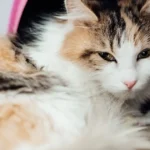
You’re mid-sentence in an important email when a warm, furry weight lands directly on your hands. Your cat has arrived, sat down on the “F” through “L” keys, and is now staring at you like this was always the plan.
It kind of was. Cats aren’t trying to sabotage your inbox. They’re trying to get your eyes off the screen and onto them, and your keyboard happens to be the warmest, closest, most “you-scented” flat surface in the room. Once you understand what your cat is actually after, the behavior stops feeling random and starts making a lot of sense.
Why do cats like keyboards?
Cats like keyboards because they combine three things a cat actively seeks out: attention, warmth, and your scent, all in one small, easy-to-claim spot. A keyboard sits right at your eye level when you’re working, which makes it the single best piece of “furniture” in the house for interrupting you. Add in the gentle heat coming off the machine and the fact that it smells like your hands, and you’ve built the feline equivalent of a five-star lounge chair, positioned exactly where your cat wants to be seen.
Is my cat just trying to get my attention?

Yes, attention is the biggest driver of keyboard-sitting, and it’s a well documented cat behavior, not a personality flaw. When you’re typing, your body language tells your cat everything: you’re still, focused, and looking away from them. Cats read that as “unavailable,” and plenty of cats respond to unavailable owners by inserting themselves directly into the situation. Sitting on the keyboard forces you to stop, look down, and usually touch them, which is exactly the payoff they’re after. It’s the same instinct behind a cat who suddenly needs to sit on your lap the moment you open a book, or one who’s a little clingy whenever you’re on the phone. The ASPCA notes that cats enjoy social contact and some are quite vocal in asking for attention. In a 2017 preference study, most pet and shelter cats chose human interaction over food, toys, and scents, so your hands really might beat dinner.
Why do keyboards and laptops feel so warm to cats?
Keyboards and laptops feel warm to cats because the internal components (the processor, battery, and fan vents) give off steady heat while you work, and cats are natural heat-seekers. A resting laptop runs noticeably warmer than the desk around it, and a cat’s whole body is built to notice and chase that kind of warmth. This is the same drive that sends your cat to sunbathe on a windowsill for an afternoon nap or straight onto a heating pad the second the temperature drops. A keyboard is basically a smaller, more portable, more inconveniently-timed version of both.
Does my keyboard smell like me, and does that matter to my cat?
Yes, your keyboard smells strongly of you, and that scent is a big part of why your cat wants to sit there. You touch it for hours every day, so it carries your scent more concentrated than almost anything else in your workspace. Cats mark objects and people they consider part of their territory by rubbing their scent glands against them, a behavior called bunting, and resting on something that already smells like you lets them mix their scent with yours. International Cat Care explains that scent and pheromones help cats identify their territory and friendly individuals, so a surface that smells like you is a reassuring place to be.
Why do cats love small, flat spaces like a keyboard?
Cats love keyboards partly because they’re small, flat, and clearly defined, which taps into the same “if I fits, I sits” instinct that makes cats climb into boxes, sinks, and laundry baskets. A defined space with edges feels safer to a cat than open, exposed real estate, even when that space is objectively terrible for actually sitting on. It’s the exact same logic that makes cats sit on a sheet of paper on your desk instantly, rather than the empty desk around it. Keyboards just happen to combine that shape with warmth and your scent, which makes them nearly impossible for a cat to resist. A cat bed for your desk gives her the same three things without the typos.
Why do cats like the feel of keys under their paws?
Some of it comes down to texture and a little bit of fun. The slightly springy give of individual keys is a different sensation than a flat desk or a soft blanket, and cats explore new textures with their paws the way toddlers explore with their hands. Watch closely and you’ll often see a cat kneading or lightly pawing at keys before settling down, almost testing the surface first. It’s not calculated chaos. It’s curiosity, followed by a cat deciding this weird bumpy thing is now a bed.
Is my cat being spiteful or jealous when it sits on my keyboard?
No, cats aren’t capable of spite in the human sense, and keyboard-sitting isn’t a jealousy tantrum aimed at your laptop. It’s connection-seeking behavior, plain and simple. Your cat isn’t punishing you for working, it’s asking you to stop. If you’ve ever wondered whether your cat actually loves you, this is one of the more convincing signs that it does: a cat that didn’t care about your attention wouldn’t bother interrupting you for it. Cats who are especially insistent about it, following you from room to room or protesting every time you sit at a desk, may just be on the more clingy end of the personality spectrum, which is normal and not something to worry about.
How do I gently keep my cat off the keyboard?
You can redirect keyboard-sitting without ever punishing your cat for it, and punishment is genuinely the wrong tool here since it’s an attention-seeking behavior at its core. Try these steps instead:
- Set up a warm, cozy bed or blanket within arm’s reach of your desk, so your cat can be close to you without being on your hands.
- Offer a decoy: an empty box, a folded towel, or a spare keyboard cover placed just beside your laptop often satisfies the same “small warm space” urge.
- Build in short, scheduled play or petting breaks during long work sessions, so your cat gets guaranteed attention instead of having to steal it.
- Gently lift your cat off and place them on their bed every time, calmly and without scolding, so they learn where the reward is without learning that keyboard time gets a reaction out of you.
| Reason Your Cat Loves the Keyboard | What Your Cat Actually Gets |
|---|---|
| Attention | Your eyes, your voice, and usually a hand for petting, all redirected straight at them |
| Warmth | Steady heat from the laptop’s internal components and fan vents |
| Scent | A surface already saturated with your smell, which they can mix with their own |
| Cozy, defined space | A small, edged spot that feels safer than open desk space |
Should I scold my cat for sitting on my keyboard?
No, scolding usually makes keyboard-sitting worse, since even negative attention can reinforce it. Never yell, spray water, or punish your cat for this. A calmer approach is to move your cat to a nearby bed every time, and to schedule real interaction so it doesn’t have to be stolen.
None of this is a medical issue, so there’s nothing urgent to worry about here. This article is meant to explain a normal, common cat behavior. If your cat’s clinginess or attention-seeking suddenly gets much more intense, or comes with changes in appetite, litter box habits, or energy, it’s worth mentioning to your veterinarian, since sudden behavior shifts can sometimes point to an underlying health issue.
More questions about cats and keyboards
Q: Why does my cat walk across the keyboard and hit random keys?
Walking across the keyboard usually happens on the way to somewhere more comfortable, like your lap, your mouse hand, or a warm spot near the vents. The random keystrokes are just a side effect of paws landing on a surface built for much smaller, more precise fingers.

Hello and welcome to The Ideal Cat!
We are some passionate cat owners from different professions. We love our cats and have a lot of experience in how to care for our pets. We are incredibly excited to share our knowledge, experience, and research with you. So you can take good care of your loving cat. We will answer most of the common questions about owning cats, taking care of them, etc. If you have any question contact with us. Thanks for visiting! Enjoy the content.