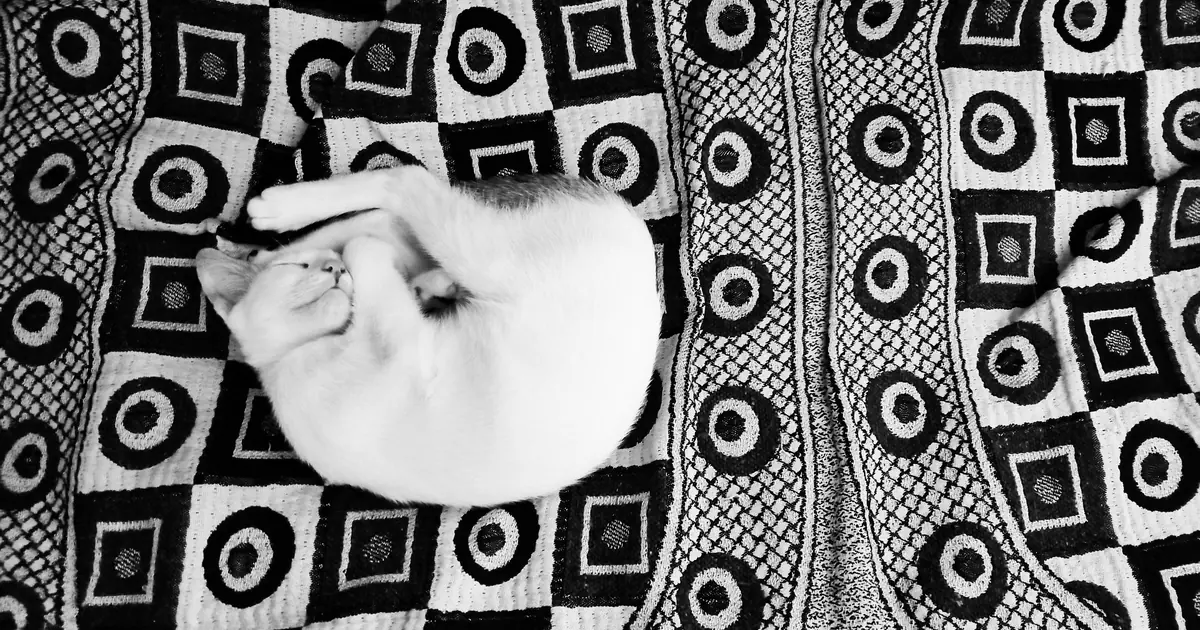
If you’ve ever walked into a room and found your cat curled up in a nest of blankets that definitely wasn’t there an hour ago, you already know the answer to this one. Cats and blankets go together like coffee and Monday mornings.
But it’s not just about being cute. There’s real biology behind why your cat drags a blanket across the house, kneads it like bread dough, or tunnels underneath one and refuses to come out. Let’s get into what’s actually going on.
- Cats have a normal body temperature of 100.5 to 102.5°F, higher than humans, so they naturally seek out warm surfaces like blankets.
- Kneading and suckling on soft fabric often traces back to nursing behavior from kittenhood.
- A blanket that smells like you can lower a cat’s stress by giving off familiar, comforting scent cues.
- Burrowing under blankets taps into a cat’s instinct to den, hide from predators, and stay warm at the same time.
- Chewing or swallowing blanket fabric can cause a dangerous intestinal blockage and needs a vet visit.
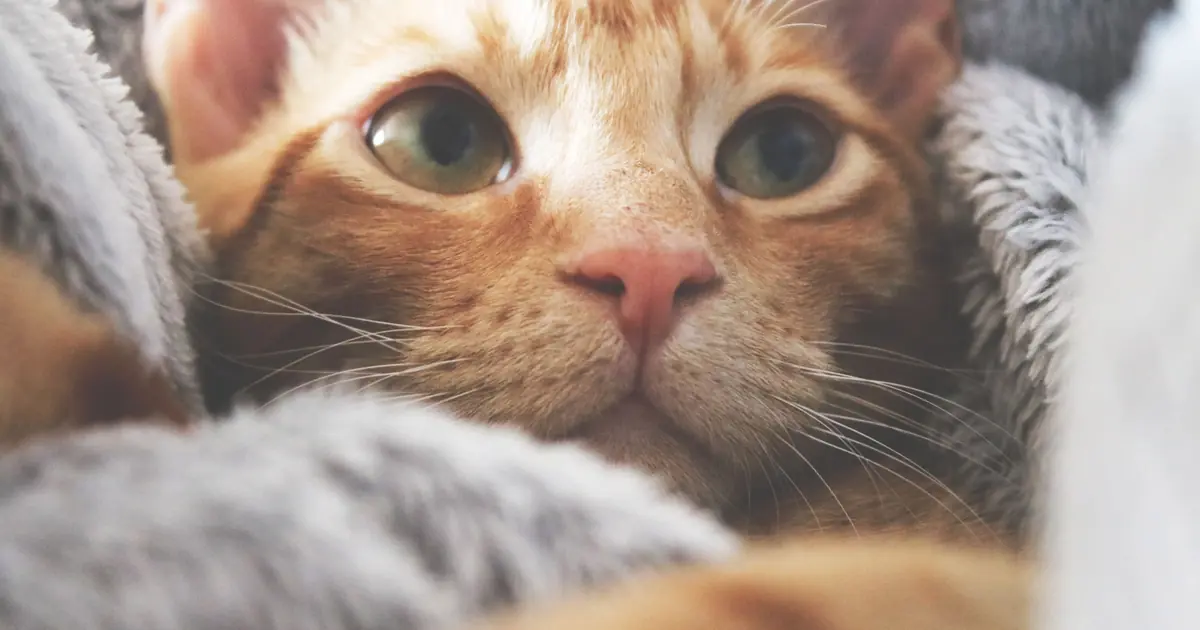
Do Cats Actually Like Blankets?
Yes, the vast majority of cats genuinely like blankets, and it’s not just a coincidence of where they happen to nap. Cats gravitate toward blankets because they check off several boxes at once: warmth, softness, and safety. A blanket also holds still and molds around a cat’s body in a way that a hard floor or a slippery countertop never will.
Cats are also just wired to seek out enclosed, cushioned spots. A folded blanket on a couch or the end of a bed looks, to a cat, like a ready-made nest. It’s soft on the paws, it traps body heat, and it doesn’t demand anything from them. From a cat’s point of view, that’s basically perfect.
Why Do Cats Like Blankets So Much for Warmth?
Cats like blankets so much partly because they run warmer than we do and feel the cold more easily. A healthy cat’s body temperature sits between 100.5°F and 102.5°F, several degrees above a typical human’s 98.6°F, according to VCA Hospitals. That higher baseline means cats feel chilly faster than we do and go looking for heat.
A blanket traps body heat and holds it close, which is exactly what a cat is after on a cool evening. This is also why so many cats gravitate toward sunny windowsills, laptop bases, and radiators. If your cat seems obsessed with warm spots in general, you might notice the same pull toward heating pads, which work on the same principle as a cozy blanket but with an added heat source.
Do Cats Like Blankets for Comfort and Security, Not Just Warmth?
Yes, blankets offer emotional security for cats, not just physical warmth. A soft, enclosed spot mimics the feeling of being tucked against a parent or littermate, which lowers a cat’s stress in a way a bare floor never could. Cats are prey animals at heart, and having something soft around their body reduces the sense of being exposed.
This matters more than people realize. International Cat Care notes that cats rely heavily on a sense of safety and predictability to feel relaxed in their environment, and a familiar soft surface is part of building that. A blanket that’s always in the same spot, smelling the same way, becomes a small anchor of stability in your cat’s day.
Does a Blanket Comfort a Cat Because It Smells Like You?
Yes, scent is a huge part of why cats claim your blankets specifically. Cats have a sense of smell many times stronger than ours, and they use it to build a picture of what’s safe and familiar. A blanket soaked in your scent (and theirs, once they’ve rubbed against it a few times) reads as “safe territory.”
This is also why a lot of cats pick your side of the bed, your favorite sweater, or the blanket that’s been on the couch the longest. It’s not random. If your cat has ever gotten weirdly fixated on licking one particular blanket, that habit is worth a closer look, and you can read more in why is my cat licking my blanket.
Why Do Cats Knead and Suckle on Blankets?
Cats knead and suckle on blankets because the motion goes all the way back to kittenhood. Kittens knead against their mother while nursing to encourage milk flow, and many cats never fully drop the habit, even as adults who were weaned months or years ago. Kneading a blanket, sometimes paired with light suckling on the fabric, is basically a comfort ritual left over from being a baby.
It usually shows up when a cat is relaxed, sleepy, or about to settle in for a nap. Purring often comes along with it. If your cat does this constantly on your lap or bedding, it’s a sign of contentment, not a problem, and you can learn more about the behavior in our full breakdown of why cats knead.
Do Cats Like Being Covered or Tucked in With a Blanket?
Some cats genuinely enjoy being gently covered with a blanket, while others want nothing to do with it. Cats that like it tend to relax under light pressure and warmth the same way some enjoy being petted firmly. Cats that don’t like it will usually wriggle, tense up, or bolt within seconds.
The key word is gentle and optional. Never pin a blanket down or box a cat in so it can’t get out on its own. Watch their body language: a loose, slow-blinking, purring cat is comfortable, while flattened ears or a swishing tail means it’s time to lift the blanket back up. And if you’ve ever wondered how a cat manages to breathe just fine tucked under a duvet, our guide on how cats breathe under blankets covers exactly that.
Why Do Cats Burrow Under Blankets?
Cats burrow under blankets because it satisfies two instincts at once: staying warm and hiding from view. In the wild, a hidden, enclosed space keeps a cat safe from predators and lets them rest without feeling watched. A blanket cave does the same job on your bed or couch.
Burrowing is also just an efficient way to trap heat, since a cat surrounded on all sides by fabric loses far less body warmth than one sleeping out in the open. It’s a favorite move for cats who also like squeezing into small boxes or wedging themselves into tight spots, which is the same logic behind cats that like to sleep between your legs at night.
How Do You Choose a Cat-Safe Blanket?
The best blanket for a cat is soft, breathable, machine washable, and free of loose threads or trims a cat could chew off and swallow. Fleece and cotton blends are popular because they’re warm without trapping too much heat, and they hold up well to frequent washing, which matters since cats shed and can bring litter dust or dirt onto fabric.
Skip blankets with fringe, tassels, buttons, or anything with a loose weave that unravels easily. Cats that like to chew or suck on fabric are more likely to pull a thread loose and swallow it, which is exactly the kind of thing you want to avoid.
| Blanket Behavior | Why Cats Do It |
|---|---|
| Kneading | Leftover nursing instinct from kittenhood, tied to comfort and relaxation |
| Burrowing under | Combines warmth with hiding from perceived threats, like a den |
| Suckling or chewing | Comfort behavior from early weaning, sometimes a sign of stress if excessive |
| Sleeping on top | Simple warmth, softness, and a familiar resting spot |
When Is Blanket Suckling or Eating Fabric a Problem?
Occasional light suckling on a blanket is normal and not something to worry about. It becomes a concern when a cat starts actually chewing off and swallowing pieces of fabric, a behavior sometimes called wool sucking or fabric pica. Swallowed fabric can bunch up in the stomach or intestines and cause a blockage, which is a real emergency.
Watch for repeated vomiting, not eating, straining in the litter box, or a cat who seems to be hunting down fabric specifically to chew rather than just resting on it. This article is meant to be educational, not a substitute for veterinary care, so if you suspect your cat has swallowed fabric, call your vet right away rather than waiting it out. The ASPCA and most emergency vet clinics treat suspected foreign body ingestion as urgent, since blockages can turn serious within a day or two.
Frequently Asked Questions
Q: Do all cats like blankets?
Most cats like blankets, but not every cat wants to be covered by one. Some love resting on top of a blanket for warmth but get uneasy if a blanket is draped over their body, so it really comes down to individual preference.
Q: Why does my cat only sleep on one specific blanket?
Your cat likely picked that blanket because it carries a strong, familiar scent, often yours or their own from repeated use. Cats build strong associations between scent and safety, so one blanket can become their go-to spot over dozens of others in the house.
Q: Is it okay to cover my cat with a blanket while they sleep?
It’s okay as long as the cover is light and your cat can easily get out from under it on their own. Never tuck a blanket in tightly or trap a cat so they can’t move freely, since that can cause panic even in a cat who normally enjoys being covered.
Q: Why does my cat knead a blanket before lying down?
Kneading before settling in is a leftover kitten instinct tied to nursing and comfort. Many cats knead a soft surface, sometimes with light purring, as part of their pre-nap routine well into adulthood.
Q: Can cats get too hot under a blanket?
Yes, a cat can overheat under a heavy blanket, especially in a warm room or during summer. Cats will usually move to a cooler spot or poke a paw out if they’re too warm, so give them room to adjust rather than blocking them in.
Q: Why does my cat suck on my blanket instead of just lying on it?
Suckling on fabric usually traces back to being weaned from their mother too early or simply carrying the habit into adulthood as a comfort behavior. Occasional suckling is normal, but frequent chewing or swallowing of fabric needs a vet’s attention.
Q: What kind of blanket is best for a cat bed?
A soft, breathable, machine-washable fleece or cotton blend works best for cat beds. Avoid blankets with fringe, tassels, or loose threads that a cat could chew off and accidentally swallow.
Q: Why does my cat dig or scratch at a blanket before lying down?
Digging or scratching at a blanket is an instinctive nesting behavior, similar to how a cat might paw at grass or dirt outdoors before settling. It helps them shape a comfortable resting spot and check the surface before they commit to lying down.

Hello and welcome to The Ideal Cat!
We are some passionate cat owners from different professions. We love our cats and have a lot of experience in how to care for our pets. We are incredibly excited to share our knowledge, experience, and research with you. So you can take good care of your loving cat. We will answer most of the common questions about owning cats, taking care of them, etc. If you have any question contact with us. Thanks for visiting! Enjoy the content.
