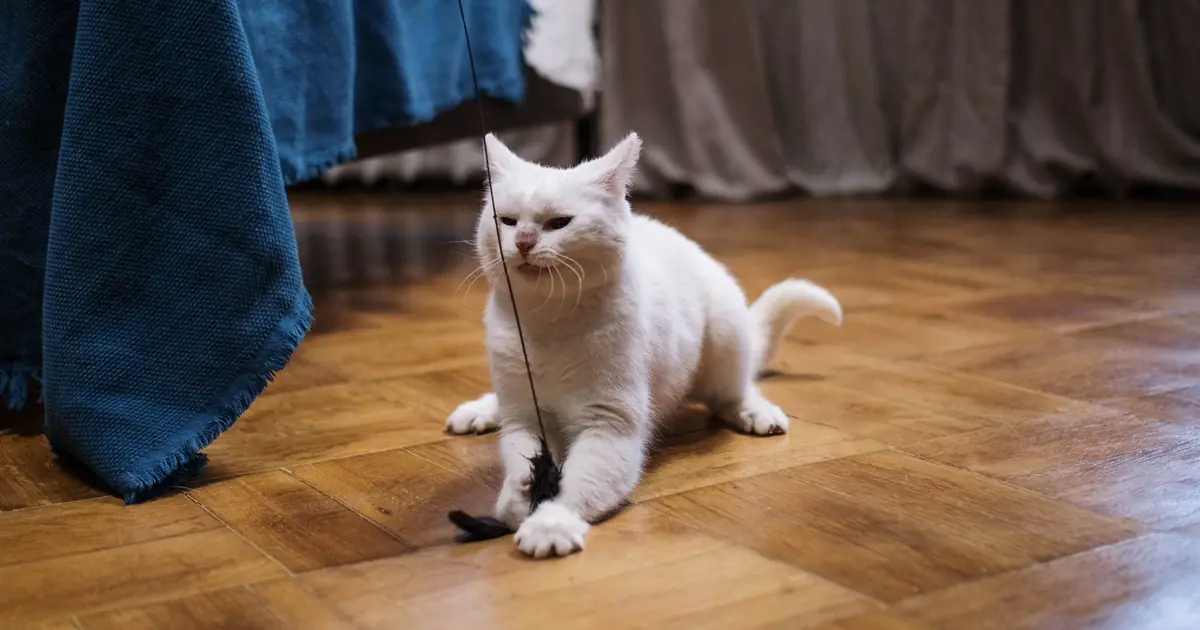
If your cat spends most of the day snoozing in a sunbeam, you might wonder if exercise even matters to them. It’s a fair question. Cats aren’t exactly known for their marathon training schedules. (Give one a cat wheel, though, and plenty will happily prove you wrong.)
But here’s the thing: a cat’s body and brain were built for hunting, chasing, and pouncing, even if the closest thing yours ever hunts is a stray sock. Skip that outlet for too long and you often end up with a bored, overweight, or downright cranky cat. The good news is that a little daily play goes a long way, and it doesn’t take much time or gear to get it right.
- Cats need at least 20 to 30 minutes of active play daily, split into two or three short sessions rather than one long one.
- Regular play helps prevent obesity, which affects a large share of pet cats and raises the risk of diabetes and joint problems.
- Indoor cats need more structured exercise than outdoor cats because they can’t hunt, climb, or patrol territory on their own.
- Wand toys that mimic prey movement, letting your cat “catch” the toy, satisfy the hunting instinct better than toys that just sit there.
- Kittens need more frequent bursts of play, while senior cats and overweight cats need gentler, shorter sessions and a vet check first.
Do Cats Really Need Exercise?
Yes, cats need regular exercise just like dogs and people do, even though they sleep most of the day away. A healthy adult cat sleeps around 12 to 16 hours a day, but the hours they’re awake matter a lot for their physical and mental health. Without some form of daily activity, cats can pack on weight fast, get bored, and develop behavior problems that make life harder for everyone in the house.
Think about it from a cat’s point of view. In the wild, a cat’s day is built around short, intense bursts of stalking and pouncing, followed by long rest periods to conserve energy for the next hunt. A pampered house cat still has that wiring. Take away the hunting and you’re left with all that pent-up energy and nowhere for it to go.
How Much Exercise Does a Cat Need Each Day?
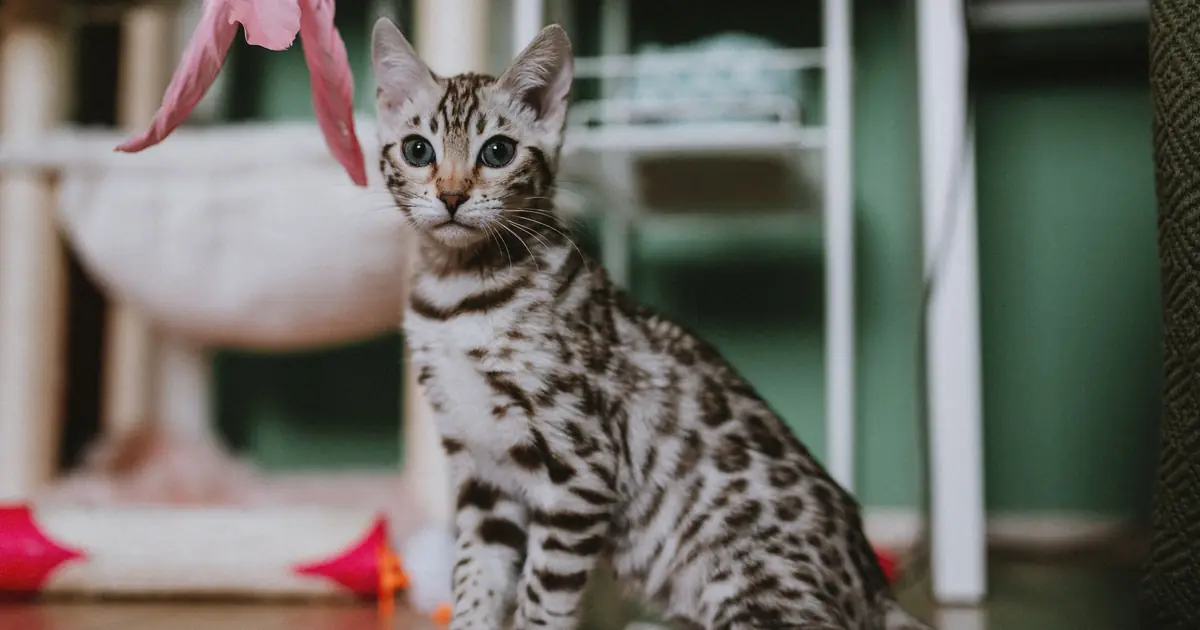
Most healthy adult cats need at least 20 to 30 minutes of active play a day, broken into two or three shorter sessions instead of one long marathon. Cats are sprinters, not distance runners, so five to ten minutes of focused, high-energy play two or three times a day usually works better than trying to force one 30-minute block.
Age changes the math a little. Kittens are basically tiny bundles of energy and often want to play in short, frequent bursts throughout the day, sometimes adding up to well over an hour. Senior cats, on the other hand, still need daily movement, but shorter, gentler sessions that don’t put too much strain on aging joints work best. If you’ve got a multi-cat household, each cat may need their own one-on-one play session, since not every cat wants to share the spotlight.
Why Does Exercise Matter So Much for Cats?
Exercise matters because it keeps a cat’s body and mind in balance, not just their waistline. Regular play helps prevent obesity, which is one of the most common health problems vets see in house cats, and carrying extra weight raises the risk of diabetes, arthritis, and joint strain down the line. According to the Cornell Feline Health Center, excess weight is one of the biggest preventable health risks facing pet cats today.
Beyond the physical side, exercise gives cats mental stimulation they genuinely need. A cat that never gets to stalk, chase, or pounce is a cat that’s more likely to turn that energy into problem behavior instead, like overeating out of boredom, swatting at your ankles, scratching furniture, or getting into fights with a housemate cat. If you’ve ever wondered why your cat seems unusually lazy, a lack of daily activity is often part of the answer.
Do Indoor Cats Need More Exercise Than Outdoor Cats?
Yes, indoor cats generally need more deliberate exercise than cats who go outside, simply because they can’t hunt, climb trees, or patrol a territory on their own. An outdoor cat naturally burns energy exploring, chasing bugs, and covering ground. An indoor cat’s whole world is your living room, so without your help, that instinct to stalk and chase has nowhere to go.
This doesn’t mean indoor cats are worse off. Keeping cats indoors protects them from cars, predators, and disease, and groups like the International Cat Care actually recommend it for most pet cats. It just means the responsibility for exercise falls squarely on you. A daily play routine is basically the trade-off for keeping your cat safe indoors.
What Are the Best Ways to Exercise a Cat?
The best ways to exercise a cat are the ones that tap into their natural hunting instinct, like wand toys, food puzzles, and vertical spaces to climb. Here’s a rundown of what actually works:
- Interactive wand toys: A feather or fabric toy on a string lets you mimic the darting, unpredictable movement of real prey, which is far more exciting to a cat than a toy that just sits still. Check out our guide to the best interactive cat toys for options that hold up to daily chasing.
- Laser pointers: Great for getting a cat sprinting and pouncing, but always end the session by letting them catch a real toy or treat, since a laser dot they can never physically catch can lead to frustration over time. Our piece on whether laser pointers are bad for cats covers how to use them safely.
- Food puzzles and treat balls: These make your cat work for their meal, combining mental stimulation with physical movement.
- Cat trees and climbing shelves: Vertical space lets cats jump, climb, and survey their territory, which burns energy and satisfies a natural urge to get up high.
- Fetch: Some cats genuinely love chasing and bringing back small balls or crumpled paper, especially breeds known for being dog-like in personality.
- A catio or leash walks: A secure outdoor enclosure or a harness and leash lets cautious cats safely experience fresh air and new smells, which adds both movement and enrichment.
| Exercise Option | Main Benefit |
|---|---|
| Wand toy | Mimics real prey movement, satisfies the stalk-and-pounce instinct |
| Laser pointer | High-speed sprinting and chasing, best paired with a catchable toy at the end |
| Food puzzle | Combines mental work with physical movement, slows down fast eaters |
| Cat tree or shelves | Encourages climbing and jumping, adds vertical territory |
| Catio or leash walk | Safe outdoor movement and sensory enrichment for indoor cats |
How Do You Play With a Cat in a Way They Actually Love?
Cats enjoy play that follows the same pattern as a real hunt: stalk, chase, pounce, and catch. If a toy just sits still or moves in a smooth, predictable circle, most cats lose interest fast. Instead, drag a wand toy through grass-like hiding spots, let it “escape” under furniture, and pause every so often like real prey would freeze in place.
Let your cat win. Ending a session with an empty-pawed cat isn’t satisfying for them, so let them catch the toy every few minutes and give them a second to bite and kick it. Keep sessions short and intense rather than long and low energy, since that matches how cats naturally hunt in quick bursts, not steady jogs. And pay attention to their body language. Dilated pupils, a swishing tail, and crouched stalking usually mean they’re locked in and having fun.
How Do You Exercise a Lazy, Overweight, or Senior Cat?
Start slow and keep it low-impact if your cat is out of shape, carrying extra weight, or getting up in years. Trying to sprint an out-of-condition cat straight into a 20-minute play session usually backfires, so shorter, gentler sessions a few times a day work better than one big push.
For an overweight cat, try dragging a wand toy along the floor instead of high in the air, so they can chase without jumping too much on stressed joints. For a senior cat, low platforms instead of tall cat trees, soft toys instead of fast-moving ones, and plenty of rest breaks all help. If your cat seems unusually low-energy, it’s worth reading up on why your cat might be so lazy, since sometimes it points to a health issue rather than just personality.
A quick, non-alarming note: this article is meant to be educational, not a substitute for veterinary advice. Check with your vet before starting a new exercise routine for a cat who is overweight, senior, or already dealing with a health condition, and stop the session if your cat starts panting, breathing heavily, or tiring out much faster than usual.
What Are the Signs Your Cat Needs More Exercise?
A cat that needs more exercise often shows it through weight gain, restlessness, or attention-seeking behavior rather than telling you outright. Watch for these signs:
- Noticeable weight gain or a body shape where you can no longer easily feel the ribs
- Sudden bursts of running around the house, especially at night (often called the zoomies)
- Scratching furniture, knocking things off counters, or other destructive habits
- Excessive meowing or following you around demanding attention
- Overeating or begging for food more than usual, since boredom can look a lot like hunger
If several of these sound familiar, it’s usually less about your cat being “bad” and more about them needing an outlet. A few extra play sessions a day often clears up the behavior within a couple of weeks.
Q: How many minutes a day should I play with my cat?
Aim for 20 to 30 minutes total, split into two or three shorter sessions rather than one long block. Cats hunt in short, intense bursts, so five to ten minutes of focused wand-toy play a couple of times a day usually keeps them satisfied.
Q: Can indoor cats get enough exercise without going outside?
Yes, indoor cats can get plenty of exercise through daily interactive play, food puzzles, and climbing on cat trees. The key is consistency, since indoor cats rely entirely on you to provide the activity they’d naturally get from hunting and roaming outdoors.
Q: What happens if a cat doesn’t get enough exercise?
A cat that doesn’t get enough exercise is at higher risk for obesity, joint problems, and diabetes, along with boredom-driven behaviors like overeating, aggression, or destructive scratching. Regular play helps prevent both the physical and behavioral fallout of an inactive lifestyle.
Q: Are laser pointers a good way to exercise a cat?
Laser pointers can get a cat running and pouncing, but they should always end with a real toy or treat the cat can actually catch. Chasing a light they can never physically grab can lead to frustration if it’s the only form of play you use.
Q: Do kittens need more exercise than adult cats?
Yes, kittens typically need more frequent play throughout the day, since they have higher energy levels and are still developing coordination and hunting skills. Short, frequent bursts of play work better for kittens than a couple of long sessions.
Q: How can I tell if my cat is overweight and needs more activity?
You should be able to feel your cat’s ribs easily under a thin layer of fat without pressing hard, and they should have a visible waist when viewed from above. If you can’t feel the ribs or there’s no waist tuck, it’s worth discussing a weight and exercise plan with your vet.
Q: What’s the best toy for exercising a lazy cat?
A wand toy with feathers or fabric tends to work best for lazy or out-of-shape cats because you control the movement and can keep it low to the ground, easy, and engaging. Dragging the toy in short, prey-like bursts usually gets even reluctant cats interested.
Q: Can senior cats still exercise safely?
Yes, senior cats can and should still get daily movement, just in shorter, gentler sessions that go easy on aging joints. Low platforms, soft toys, and slower-paced play work better than high jumps or fast sprinting for older cats.

Hello and welcome to The Ideal Cat!
We are some passionate cat owners from different professions. We love our cats and have a lot of experience in how to care for our pets. We are incredibly excited to share our knowledge, experience, and research with you. So you can take good care of your loving cat. We will answer most of the common questions about owning cats, taking care of them, etc. If you have any question contact with us. Thanks for visiting! Enjoy the content.
