Your cat knocks a glass off the counter, again, and in a moment of frustration you scoop them up and shut them in the bathroom to “think about it.” Totally understandable. But here’s the hard truth: your cat has no idea why.
Time-outs work on toddlers because they grasp cause and effect and social consequences. Cats don’t process it that way. Let’s look at why, and what actually changes cat behavior.
- Cats don’t understand time-outs; they can’t link a delayed punishment to an earlier action.
- Punishment often backfires, making cats fearful of you rather than teaching them anything.
- Cats learn through immediate association, so rewards and redirection work, scolding doesn’t.
- “Bad” behavior is usually normal cat behavior that needs an outlet, not discipline.
- Sudden behavior changes can signal stress or illness, so rule out medical causes first.
Do cats understand the concept of a time-out?
Cats do not understand time-outs. A time-out relies on the animal connecting isolation with a specific “wrong” behavior and reflecting on it, which requires a kind of reasoning cats don’t apply to human rules. By the time you’ve carried your cat to another room, the moment has passed. Your cat only knows it was suddenly grabbed and confined, with no clear reason.
Why don’t cats connect a time-out to their behavior?
Cats learn by immediate association, within a second or two of an action. If a consequence doesn’t happen right as the behavior occurs, the link is lost. So a cat that jumps on the counter, wanders off, then gets a time-out five minutes later can’t tie the two together. Instead of “counters are off-limits,” the lesson becomes “my human sometimes grabs me for no reason,” which erodes trust.
Does punishing a cat ever work?
Punishment rarely teaches cats what you want and often makes things worse. Yelling, spraying water, or isolating a cat tends to create fear and anxiety, not understanding. A scared cat may hide, avoid you, or even act out more. At best, the cat only learns to avoid the behavior when you’re watching. The Humane Society stresses that positive reinforcement, not punishment, is what changes cat behavior. Our full guide on whether you can discipline a cat covers this in depth.
What actually works instead of a time-out?
Redirection and reward beat punishment every time. Instead of trying to punish the “bad” thing, you make the right thing easy and rewarding, and the wrong thing boring or impossible.
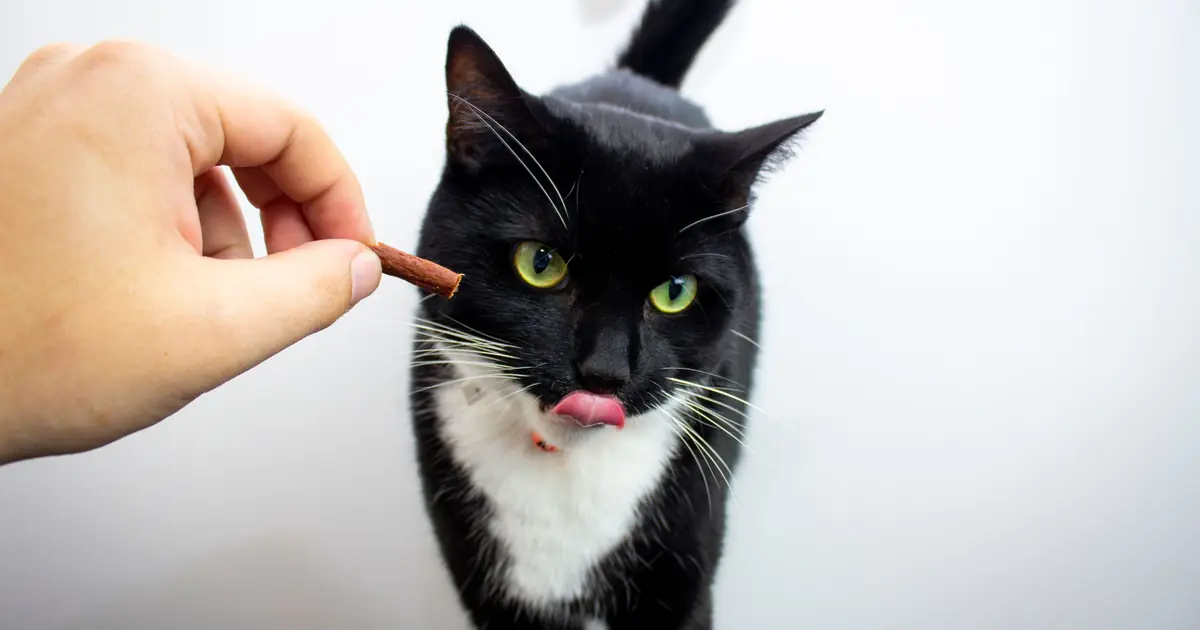
- Redirect in the moment: if your cat scratches the couch, calmly move them to a scratching post and reward them there.
- Reward what you want: treats, praise, or play the instant your cat does the right thing.
- Remove the temptation: tidy counters, cover cords, close doors.
- Give an outlet: more play, climbing space, and enrichment prevent boredom-driven mischief.
- Ignore attention-seeking acts: reacting, even negatively, can reward the behavior.
Time-out versus redirection: what changes behavior?
The difference comes down to what the cat actually learns. One method confuses, the other teaches.
| Approach | What the cat learns | Result |
|---|---|---|
| Time-out / isolation | “I get grabbed randomly” | Fear, distrust, no change |
| Yelling / water spray | “My human is scary sometimes” | Anxiety, hiding, sneaky behavior |
| Redirection + reward | “Doing X gets me good things” | Real, lasting behavior change |
What if the “bad” behavior keeps happening?
Persistent problem behavior is usually unmet needs or a medical issue, not defiance. Scratching, counter-surfing, and knocking things over are normal cat instincts that need appropriate outlets. But a sudden change, new aggression, house-soiling, or over-grooming, can signal stress, pain, or illness. If redirection isn’t helping or behavior shifts suddenly, talk to your vet; issues like spraying and wall-scratching often have specific fixes. This article is educational and not a substitute for veterinary or behaviorist advice. The ASPCA’s cat behavior resources are a solid, science-based reference.
Frequently Asked Questions
Q: Do cats know when they did something wrong?
Not the way humans do. Cats don’t feel guilt about breaking rules they never understood. The “guilty look” is usually a fear or appeasement response to your body language, not an admission of wrongdoing.
Q: Is putting a cat in another room an effective punishment?
No. By the time you move your cat, it can’t link the isolation to the earlier behavior. It just experiences confusing confinement, which can increase stress and damage your bond.
Q: How do you actually discipline a cat?
You don’t discipline in the traditional sense. You redirect unwanted behavior to an acceptable outlet, reward good behavior immediately, and remove temptations. Positive reinforcement is the only approach cats reliably learn from.
Q: Will spraying my cat with water teach it a lesson?
It teaches your cat to fear you or to avoid the behavior only when you’re nearby. It doesn’t create real understanding and can harm trust. Redirection is more effective and kinder.
Q: Why does my cat keep doing something even after I react?
Your reaction may be the reward. Attention, even scolding, can reinforce attention-seeking behavior. Ignore the act, remove the temptation, and reward the behavior you do want instead.
Q: Could bad behavior mean my cat is sick?
Yes. Sudden changes like house-soiling, aggression, or over-grooming can signal pain, stress, or illness. If behavior changes abruptly, rule out medical causes with your vet before assuming it’s “misbehavior.”

Hello and welcome to The Ideal Cat!
We are some passionate cat owners from different professions. We love our cats and have a lot of experience in how to care for our pets. We are incredibly excited to share our knowledge, experience, and research with you. So you can take good care of your loving cat. We will answer most of the common questions about owning cats, taking care of them, etc. If you have any question contact with us. Thanks for visiting! Enjoy the content.
