
Fireworks are a nightmare for many cats, all those sudden booms and flashes send them diving under the bed. The good news is a little preparation goes a long way toward keeping your cat calm.
Here’s how to help your cat through fireworks night.
- Set up a quiet safe room with hiding spots before the fireworks start.
- Close windows, doors, and curtains to muffle noise and block flashes.
- Mask the bangs with soft background sound like the TV, music, or white noise.
- Stay calm and let your cat hide, never force it out or comfort-smother it.
- For very anxious cats, ask your vet ahead of time about calming aids or medication.
How do you calm a cat during fireworks?
You calm a cat during fireworks by preparing a safe, quiet environment and letting your cat cope on its own terms. The core steps: give it a secure hiding spot in a quiet room, close windows and curtains to reduce noise and light, and play soft background sound to blur the sudden bangs. Stay relaxed yourself, keep your cat indoors, and don’t force interaction. Preparation before the noise begins matters most, once a cat is panicking, it’s much harder to soothe.
Why are cats so scared of fireworks?
Cats fear fireworks because the sudden, loud, unpredictable bangs and flashes trigger their instinctive threat response. With hearing far sharper than ours, cats find the booms genuinely startling, and the unpredictability makes it worse, they can’t anticipate or escape the noise. Add flashing lights and vibrations, and it’s deeply unsettling. This is the same fear reaction cats have to other loud, sudden sounds, and understanding it helps you respond with calm support rather than frustration, related to why cats fear sudden pops and general sudden fear.
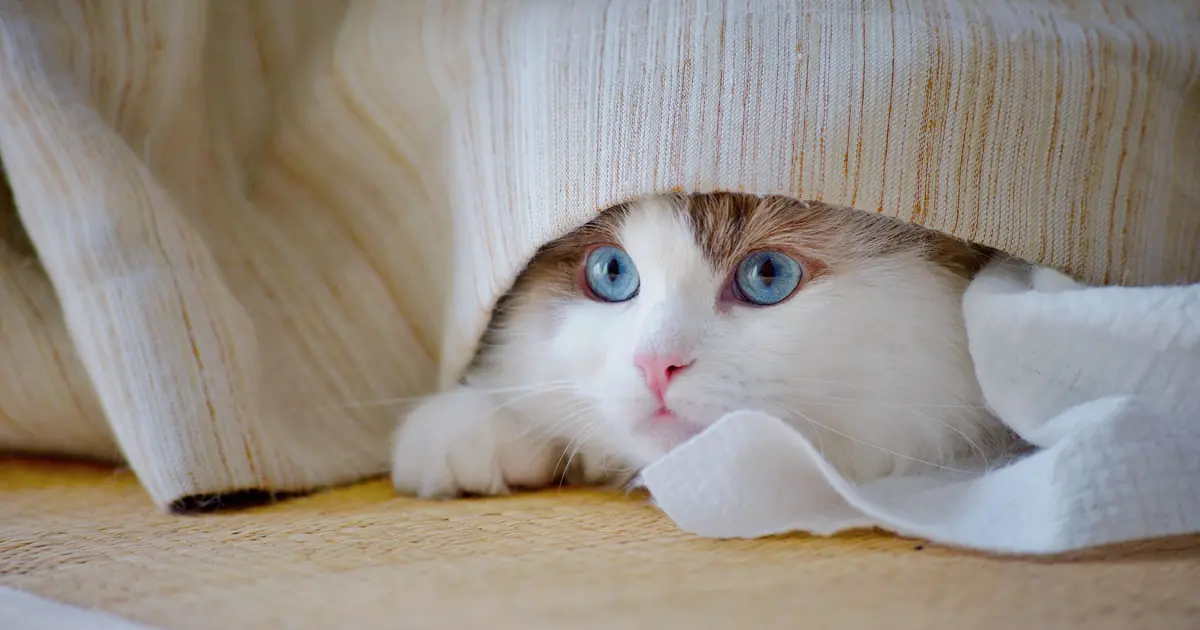
How do you prepare before fireworks start?
Prepare in advance so your cat feels secure before the first boom. Do this ahead of time:
- Set up a safe room with familiar bedding, hiding spots, food, water, and a litter box.
- Keep your cat indoors and make sure it can’t bolt outside.
- Close windows, doors, and curtains to muffle sound and block flashes.
- Turn on soft background noise, TV, calm music, or white noise, to mask bangs.
- Provide hiding options (covered beds, boxes) and never block them.
- Microchip and ID your cat in case it does escape in a panic.
What should you do (and avoid) during the show?
During fireworks, stay calm and let your cat manage its fear. Here’s what helps versus what backfires.
| Do | Avoid |
|---|---|
| Stay relaxed and act normally | Fussing anxiously or reacting to each bang |
| Let your cat hide where it feels safe | Dragging it out or forcing cuddles |
| Keep background sound on | Sudden loud reactions or opening doors |
| Offer treats or play if the cat wants | Punishing hiding or fearful behavior |
| Keep it safely indoors | Letting the cat outside during fireworks |
When should you get extra help?
If your cat is severely anxious during fireworks, talk to your vet before the event about options. Vets can recommend calming aids like pheromone diffusers, calming supplements or treats, or, for extreme cases, prescription anti-anxiety medication, best arranged in advance, not on the night. Signs of severe distress include frantic hiding, trembling, panting, refusing to eat for a long period, or trying desperately to escape. This article is educational and not a substitute for veterinary advice; never give human medications, and consult your vet for a safe plan. For general soothing techniques, see how to calm a scared cat. Trusted guidance on noise fear comes from the ASPCA and International Cat Care.
Frequently Asked Questions
Q: How do I calm my cat during fireworks?
Prepare a quiet safe room with hiding spots, close windows and curtains, and mask the bangs with soft background sound. Stay calm, keep your cat indoors, and let it hide. For very anxious cats, ask your vet about calming aids beforehand.
Q: Why are cats so scared of fireworks?
The sudden, loud, unpredictable bangs and flashes trigger a cat’s instinctive threat response. Their sharp hearing makes the booms genuinely alarming, and the unpredictability means they can’t anticipate or escape it, which heightens the fear.
Q: Should I comfort my cat during fireworks?
Offer gentle comfort only if your cat seeks it, but don’t force cuddles or drag it from hiding. The best help is staying calm yourself and letting your cat hide where it feels safe. Forcing interaction can increase stress.
Q: Can I give my cat something to calm it for fireworks?
Ask your vet in advance. Options include pheromone diffusers, calming supplements or treats, and, for severe anxiety, prescription medication. Arrange this before the event, and never give human medications, which can be dangerous to cats.
Q: Should I keep my cat inside during fireworks?
Absolutely. Keep your cat indoors and prevent it from bolting out a door or window in a panic, as frightened cats can flee and get lost. Make sure it’s microchipped and has ID in case of escape.
Q: How far in advance should I prepare for fireworks?
Set up the safe room and calming measures before the fireworks begin, ideally earlier in the day. If using vet-recommended calming aids or medication, arrange them days ahead. Preparing early is far more effective than reacting once your cat is already panicking.

Hello and welcome to The Ideal Cat!
We are some passionate cat owners from different professions. We love our cats and have a lot of experience in how to care for our pets. We are incredibly excited to share our knowledge, experience, and research with you. So you can take good care of your loving cat. We will answer most of the common questions about owning cats, taking care of them, etc. If you have any question contact with us. Thanks for visiting! Enjoy the content.
