Maybe you’ve adopted a rescue with a mystery past, or you’re just curious. Either way, figuring out whether a cat still has its claws is pretty simple once you know what to look for.
Here’s how to check, gently and safely, and what declawing actually involves.
- Gently press each front toe: a clawed cat’s nail extends, a declawed cat’s does not.
- Declawing usually affects only the front paws, so always check the back paws too for comparison.
- Declawed toes often look shorter, smoother, or rounded at the tips, with no claw sheath.
- Behavioral clues include not scratching furniture and kneading without claws catching.
- Declawing is amputation of the toe bone, not just nail removal, and a vet can confirm it instantly.
How can you tell if a cat is declawed?
You can tell if a cat is declawed by gently checking whether claws extend from the front toes. Hold a paw and softly press the top and pad of each toe: a cat with claws will have the nail slide out, while a declawed cat has no claw to extend. Declawing almost always involves the front paws only, so compare them to the back paws, which usually still have claws. If in doubt, your vet can confirm it in moments.
How do you check a cat’s paws for claws?
Check a cat’s paws by gently pressing each toe to reveal (or not reveal) a claw. Go slowly so you don’t startle your cat:
- Hold the paw gently and pick a calm moment; stop if your cat resists.
- Press the toe softly between your thumb (on top) and finger (on the pad) to extend the claw.
- Look for a claw sliding out; no claw at all suggests that toe is declawed.
- Repeat on all front toes, then check the back paws for comparison.
- Feel the toe tips, declawed toes often feel shorter or rounded at the end.
Cats naturally sheathe their claws, so understanding how cats retract their claws helps you know what a normal, clawed toe should do.
What does a declawed paw look like?
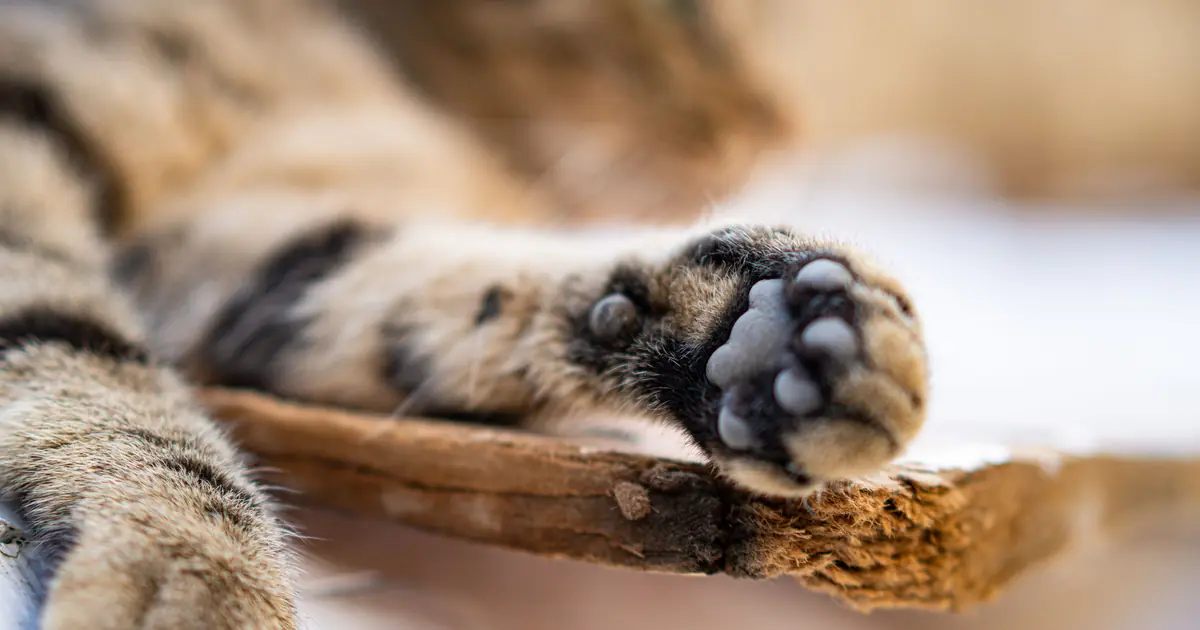
A declawed paw typically looks shorter and smoother at the toe tips, with no claws and no visible nail sheaths. Because declawing removes the last toe bone (not just the nail), the toes may appear slightly stubby or rounded compared to a clawed cat’s. You won’t see or feel the hard, curved claws that normally tuck into the fur. Freshly declawed paws show surgical scars, but in long-healed cats the tips simply look neat and clawless.
Are there behavior clues a cat is declawed?
Yes, a declawed cat’s behavior often gives it away. Declawed cats can’t scratch furniture or scratching posts effectively, don’t leave claw marks, and knead without their claws catching on blankets or your lap. Some become more likely to bite, since scratching is no longer an option for defense, and a few are more sensitive about having their paws touched. These clues, combined with a paw check, usually make it clear.
Clawed vs declawed: quick comparison
Here’s how the two compare at a glance.
| Feature | Clawed cat | Declawed cat |
|---|---|---|
| Claw extends when toe is pressed | Yes | No |
| Front toe tips | Firm, with tucked claws | Shorter, smoother, rounded |
| Scratches furniture or posts | Yes | No |
| Kneading | Claws may catch fabric | Soft, no claw catch |
| Back paws | Clawed | Usually still clawed |
What does declawing actually involve?
Declawing is not simply trimming or removing the nail, it’s the surgical amputation of the last bone of each toe. Because of the pain and long-term effects, declawing is now discouraged or banned in many places, and major veterinary groups recommend humane alternatives like regular nail trims and scratching posts instead. This article is educational and not a substitute for veterinary care; if you’re unsure whether your cat is declawed or worried about paw sensitivity, ask your vet. To keep claws healthy the humane way, see how often to trim cat nails and pick a good scratching post. The AVMA and Humane Society explain the procedure and alternatives.
Frequently Asked Questions
Q: How do I know if my cat has been declawed?
Gently press each front toe. If no claw extends and the toe tip feels short or rounded, the cat is likely declawed. Compare to the back paws, which usually still have claws, or ask your vet to confirm.
Q: Do declawed cats have claws on their back feet?
Usually yes. Declawing is almost always done on the front paws only, so most declawed cats still have claws on their back feet. Checking the back paws is a quick way to compare and confirm.
Q: Can you tell a cat is declawed by how it behaves?
Often, yes. Declawed cats don’t scratch furniture or posts effectively, leave no claw marks, and knead without claws catching. Some are more prone to biting or sensitive about their paws. Behavior plus a paw check usually confirms it.
Q: Is declawing just removing the nail?
No. Declawing amputates the last bone of each toe, not just the nail. Because it’s painful and has lasting effects, it’s discouraged or banned in many areas. Vets recommend nail trims and scratching posts as humane alternatives.
Q: Does declawing hurt cats long-term?
It can. Some declawed cats experience lasting pain, paw sensitivity, litter-box aversion, or increased biting. Effects vary by cat and how the surgery healed. If your declawed cat seems uncomfortable, have your vet examine its paws.
Q: Should I check a rescue cat for declawing?
It’s helpful, since it affects care. A quick, gentle paw check tells you if front claws are present. Knowing helps you provide the right scratching options and handle a possibly paw-sensitive cat with extra care.

Hello and welcome to The Ideal Cat!
We are some passionate cat owners from different professions. We love our cats and have a lot of experience in how to care for our pets. We are incredibly excited to share our knowledge, experience, and research with you. So you can take good care of your loving cat. We will answer most of the common questions about owning cats, taking care of them, etc. If you have any question contact with us. Thanks for visiting! Enjoy the content.
